
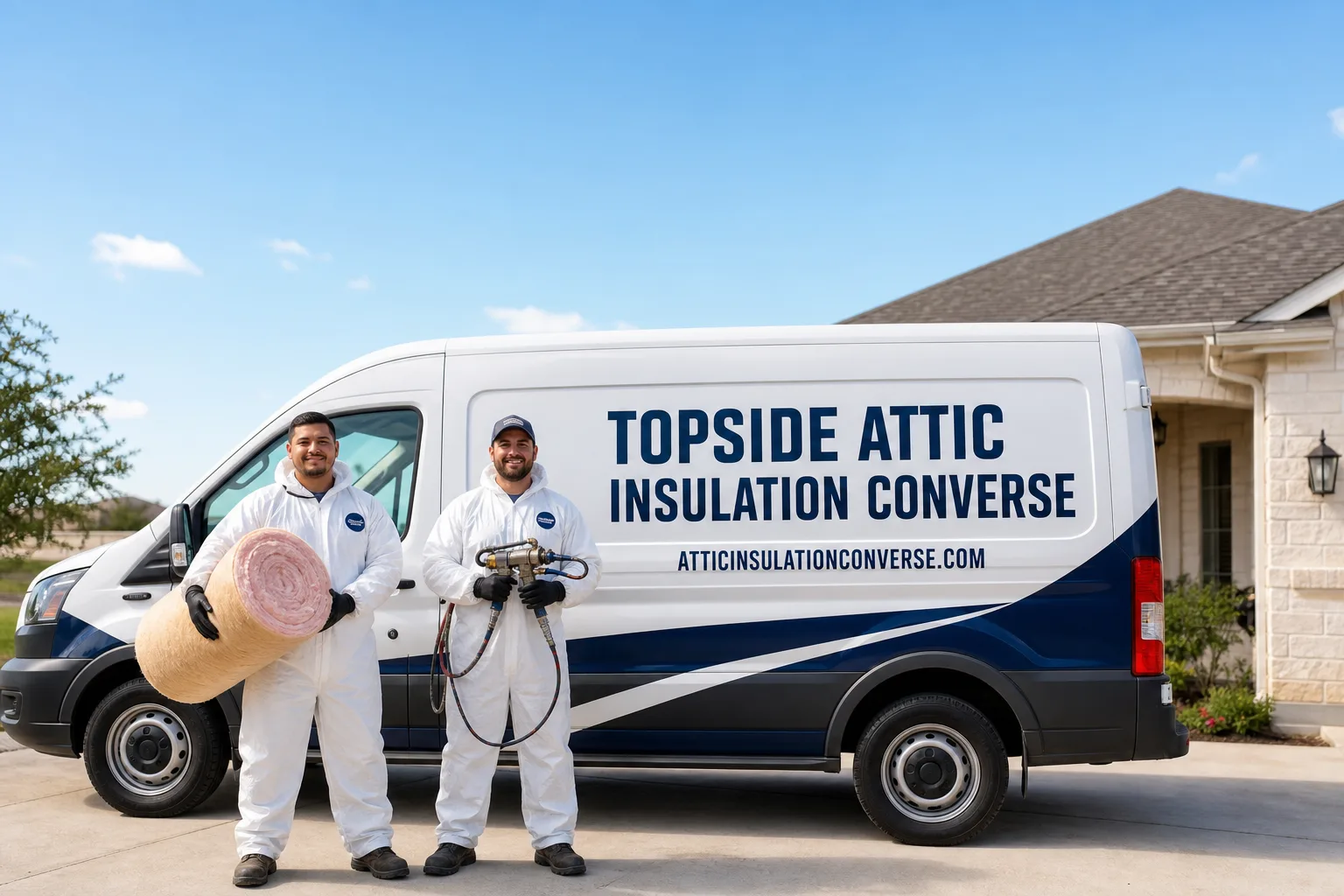
Fast, Reliable Blown-In Insulation Across Live Oak
Blown-in insulation in Live Oak, TX typically runs $1.80-$3.20 per square foot for attic work, with most ranch-style homes falling in the $2,400-$4,800 range for a full attic treatment. Most jobs are completed in a single day, and our crews can usually be on-site within 24-48 hours of your call. Call (830) 420-0953 for a written price before any work starts.
We know Live Oak’s housing stock because we’ve measured it. Our Blown-In Insulation team has crawled through hundreds of attics in the 1960s-1980s ranch tracts near Joint Base San Antonio-Randolph, and the pattern is consistent: original fiberglass batts compressed to a fraction of their rated R-value, low-pitched roofs that limit clearance, and alley-load or side-yard access that shapes how the work gets done. Dispatch and scheduling are coordinated from our San Antonio office, but crews serve Live Oak locally with the same-day urgency that hot-climate attics demand.
Why Topside Attic Insulation Converse Is Live Oak’s Preferred Blown-In Insulation Company
We’ve sealed and insulated 9,000+ homes since 2016, and a disproportionate share of those have been in Live Oak’s Randolph-corridor neighborhoods where the housing stock’s age and turnover history create specific retrofit challenges. Our reviews from Live Oak customers consistently cite two things: the before-and-after blower-door numbers we publish on every job, and the fact that we seal first, insulate second - never the reverse.
Response time to Live Oak is typically same-day or next-day. When you’re running attic temperatures above 140°F and your ceiling is performing at R-6 instead of R-38, waiting a week for a callback isn’t viable. A live person answers our phones 24/7, and you’ll get a text when your technician is en route - Haven Standard: Arrive on schedule, named technician, no voicemail loops.
Local knowledge matters here because Live Oak’s building stock isn’t generic. The low-pitched rooflines common to 1970s ranches off Pat Booker Road and Judson Road leave tight clearances that rule out batt installation. Alley-load furnace closets in the 1980s tracts near O’Connor Road can block blower-hose access to half the attic if the crew doesn’t plan for it. We’ve done this work in Live Oak long enough to know which tracts have which constraints.
Our Blown-In Insulation Services in Live Oak
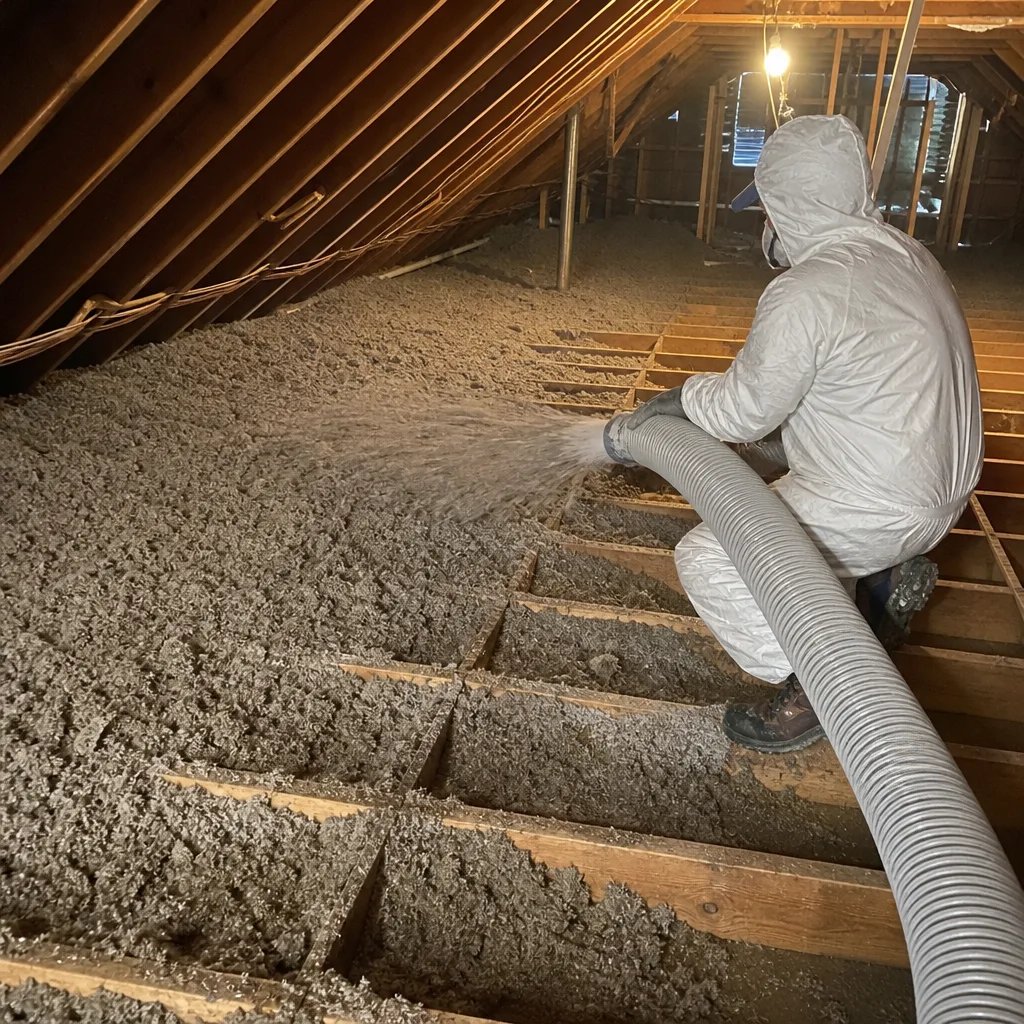
Blown-In Cellulose
Blown-in cellulose is our most common recommendation for Live Oak attics, and for specific reasons tied to this city’s housing. Cellulose - treated borate-fired recycled paper fiber - packs density at R-3.2 to R-3.8 per inch, which matters when you only have 8-10 inches of clearance under a low-pitched 1970s roof to reach R-38. We source from GreenFiber and other manufacturers, and we mark and clear soffit vents before blowing so the new depth doesn’t choke intake airflow. That’s a specific failure mode we see repeatedly in Live Oak: crews blow cellulose deep and straight, blocking vents, and the attic cooks past 140°F instead of venting properly.
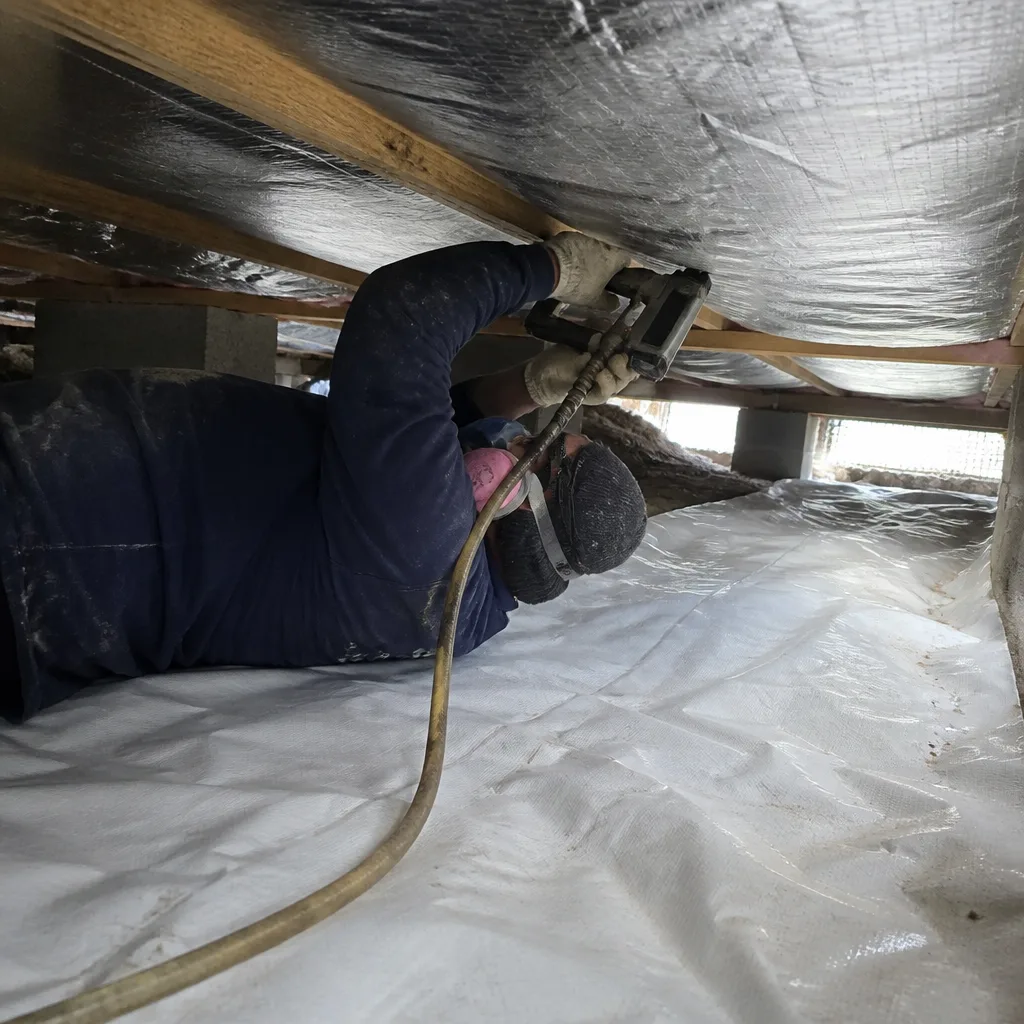
Blown-In Fiberglass
Fiberglass loose-fill works best in Live Oak homes where moisture management is already handled and the attic floor is relatively flat. We use Owens Corning and Johns Manville products at R-2.5 per inch, which means deeper fills to reach R-38 - sometimes 14-16 inches. That’s feasible in the higher-clearance attics of some 1980s Live Oak tracts, but less practical in the 1960s-70s ranches where roof pitch is minimal. We assess clearance during our initial inspection and recommend fiberglass only when it won’t compromise vent access or create uneven depth.
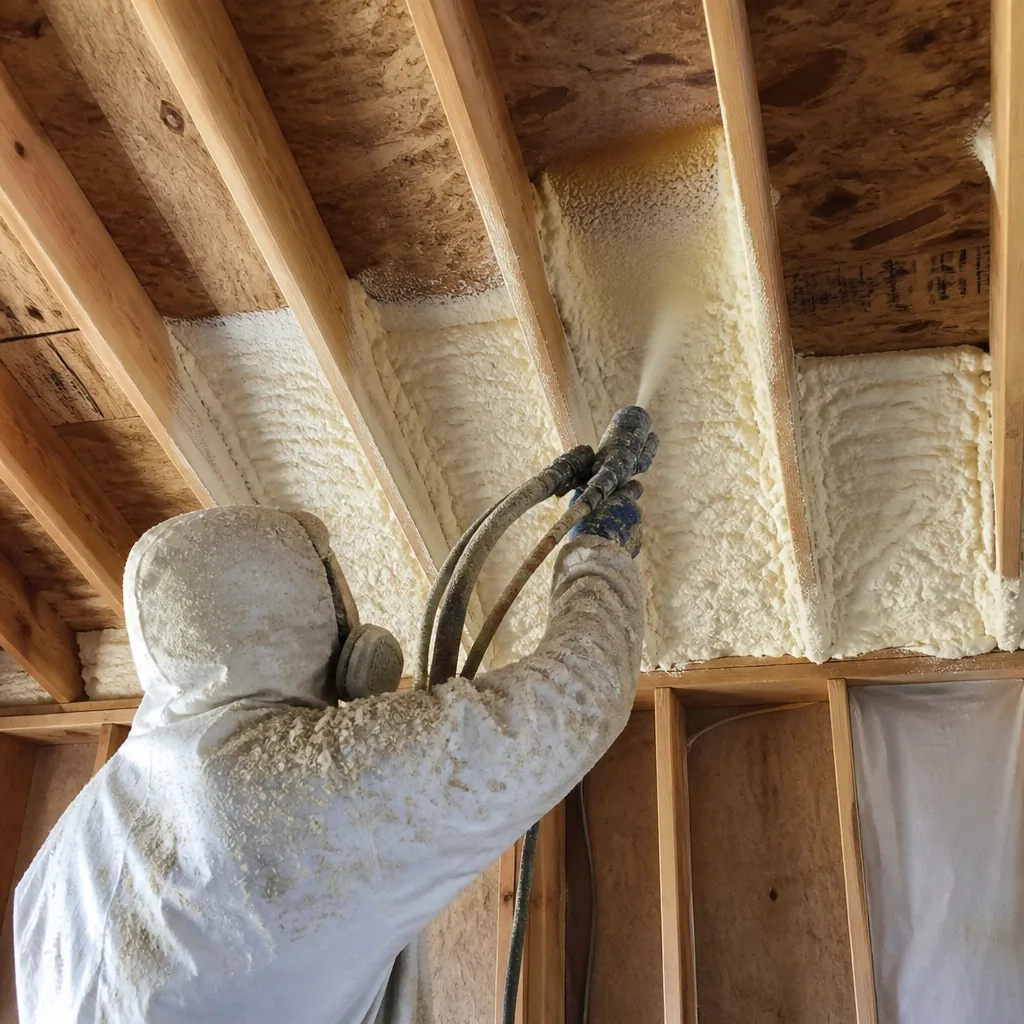
Dense-Pack Wall Insulation
Dense-pack is the method for Live Oak’s slab-on-grade ranch homes where the walls were built empty or with minimal insulation. We drill access holes at stud bay intervals, pack cellulose to 3.5 pounds per cubic foot - dense enough to resist settling and air movement - then patch and match texture. This matters especially for Live Oak’s older slab homes, where Winter Storm Uri exposed how little protection these walls provide when temperatures drop into the teens. Dense-pack doesn’t require attic access at all, making it the right choice when the blower hose can’t reach or when the attic is already addressed but the walls are still bleeding conditioned air.
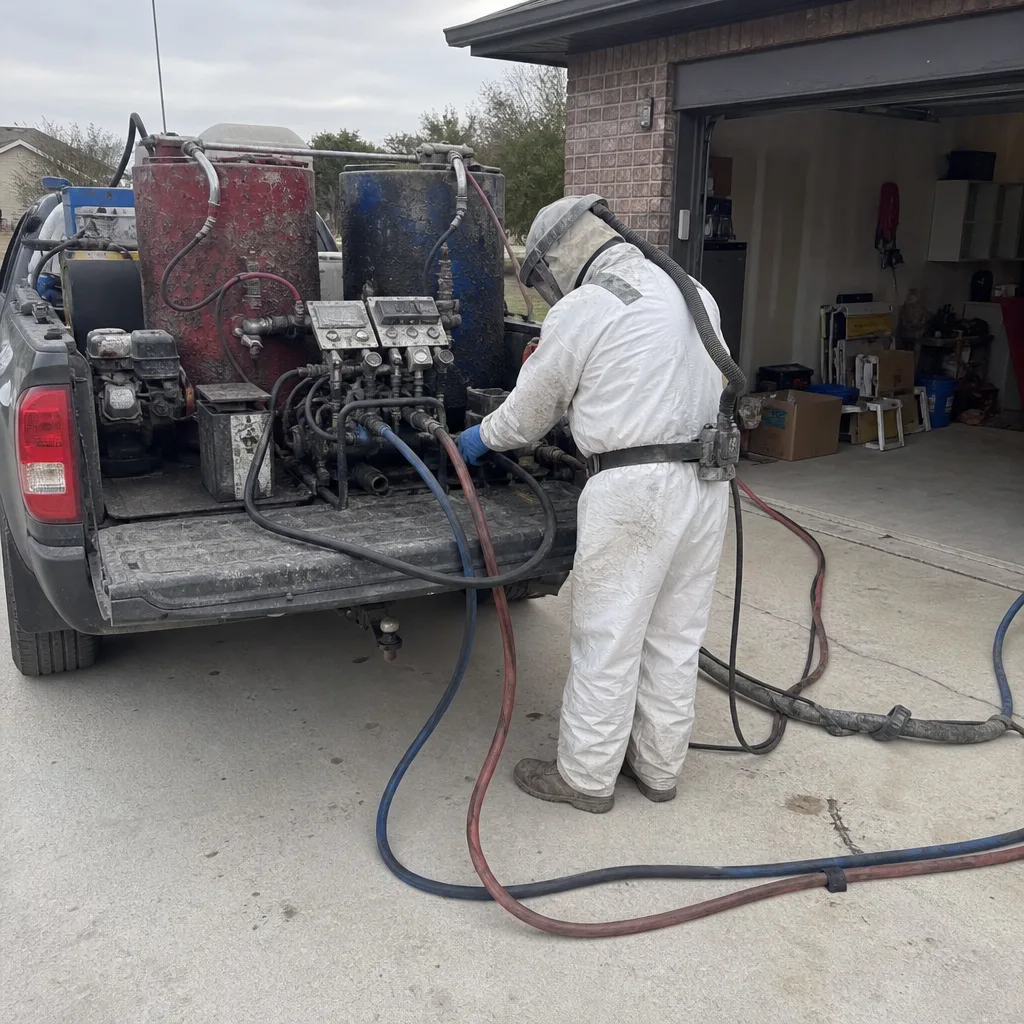
Blown-In Top-Up
Top-up work is unusually prevalent in Live Oak compared to neighboring cities, and the reason is in the housing history. The military community’s high turnover meant successive owners rarely invested in full insulation upgrades - they’d patch, paint, and resell. So we see many attics with original batts still in place, compressed and patchy, where a full removal isn’t necessary but the existing layer is nowhere near adequate. A blown-in top-up adds cellulose or fiberglass over the degraded batt layer, bringing the assembly toward R-38 without the cost of full removal. We inspect first: if the existing insulation is mold-free, dry, and reasonably distributed, top-up is the cost-effective path. If it’s urine-contaminated from rodent activity or water-stained from roof leaks, we recommend removal and replacement instead.
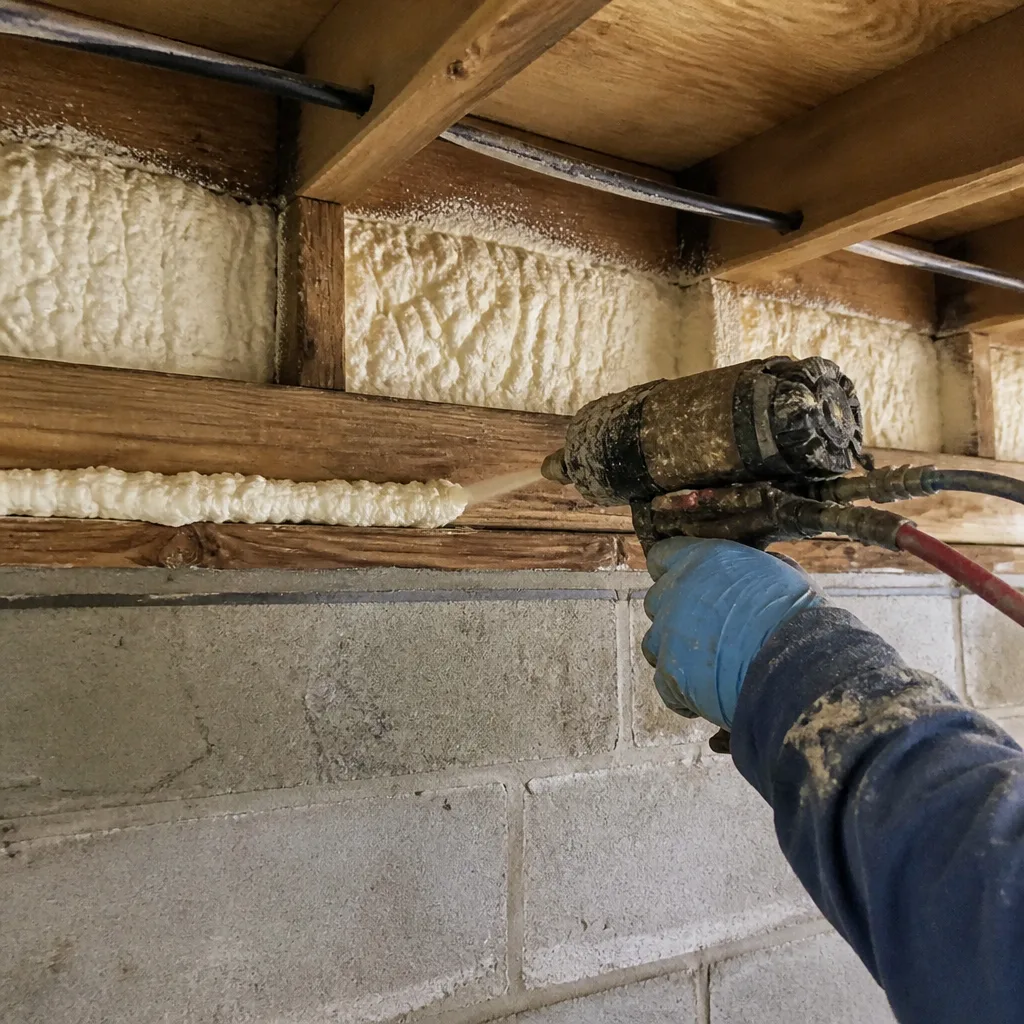
What happens when you call
- 1
A real person answersNo phone trees - you reach a local pro.
- 2
You get an upfront price rangeHonest numbers before anyone is dispatched.
- 3
A background-checked tech heads outLicensed & insured, dispatched right away.
- 4
You approve before work beginsNothing starts until you say go.
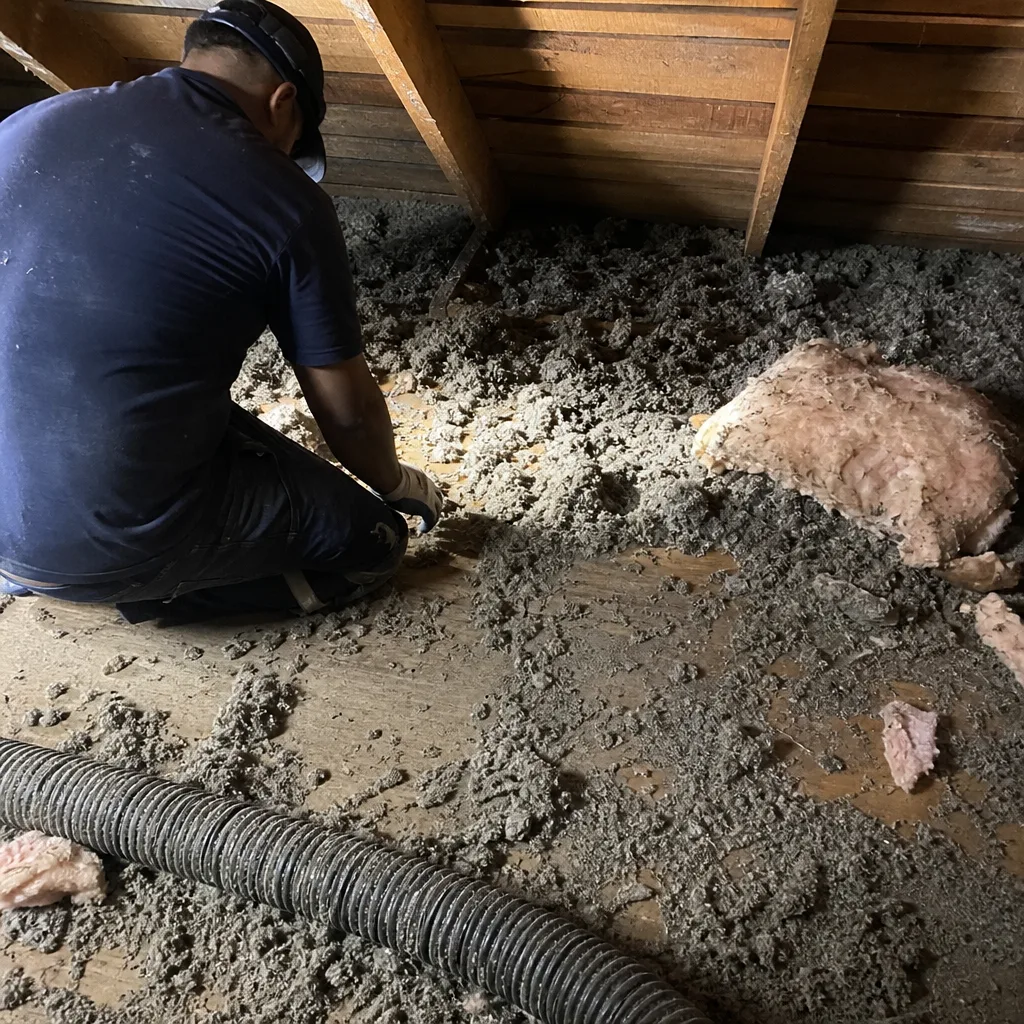 Before
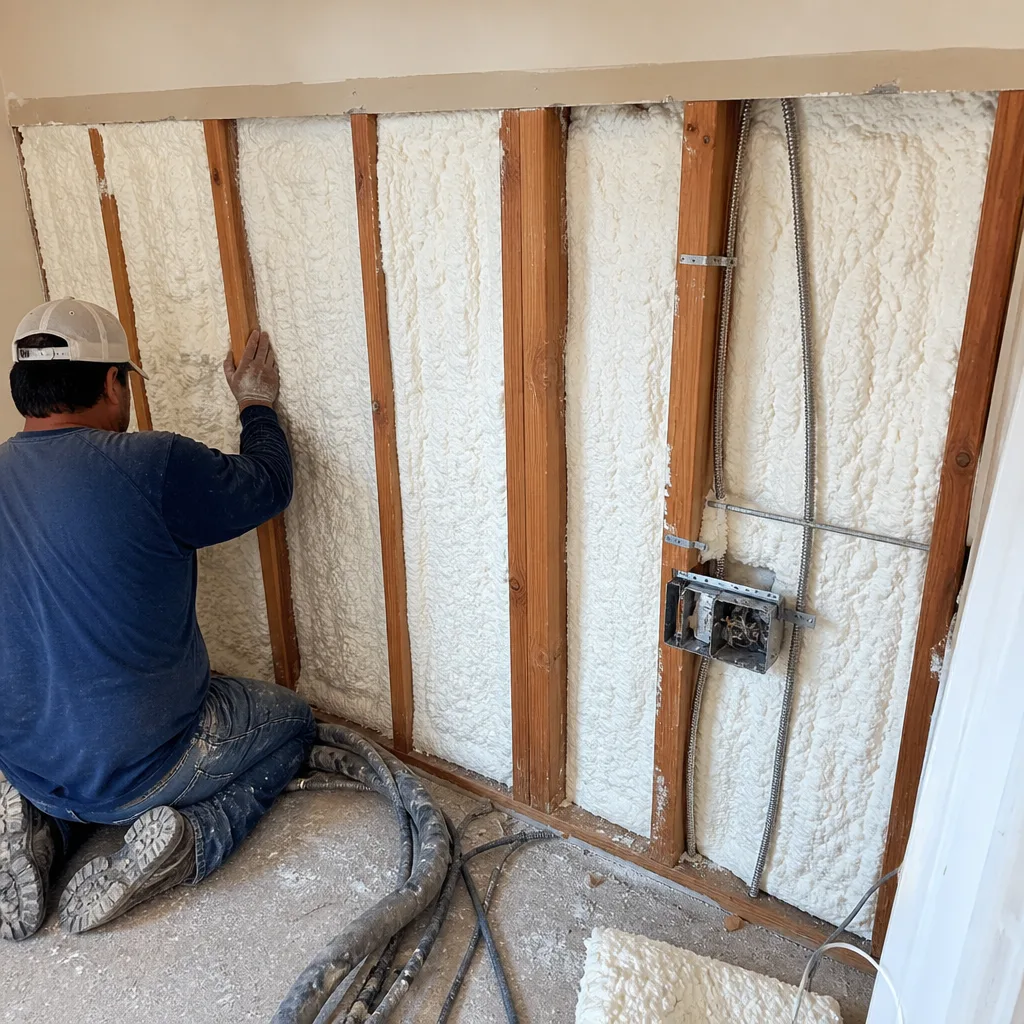 After
AfterTrusted Brands We Service in Live Oak
We source blown-in materials from GreenFiber, Owens Corning, Johns Manville, Knauf, and other major manufacturers - no proprietary lock-in that limits your options or inflates cost. For Live Oak customers, this means we stock common cellulose and fiberglass specifications locally and can match or exceed the thermal performance of any competing estimate without waiting on special orders. If your home already has Knauf EcoFill or Owens Corning AttiCat in place and you need a top-up, we can match the existing material type for consistent density and performance. Every bag lot is documented in your job record.
Common Blown-In Insulation Problems We See in Live Oak Homes
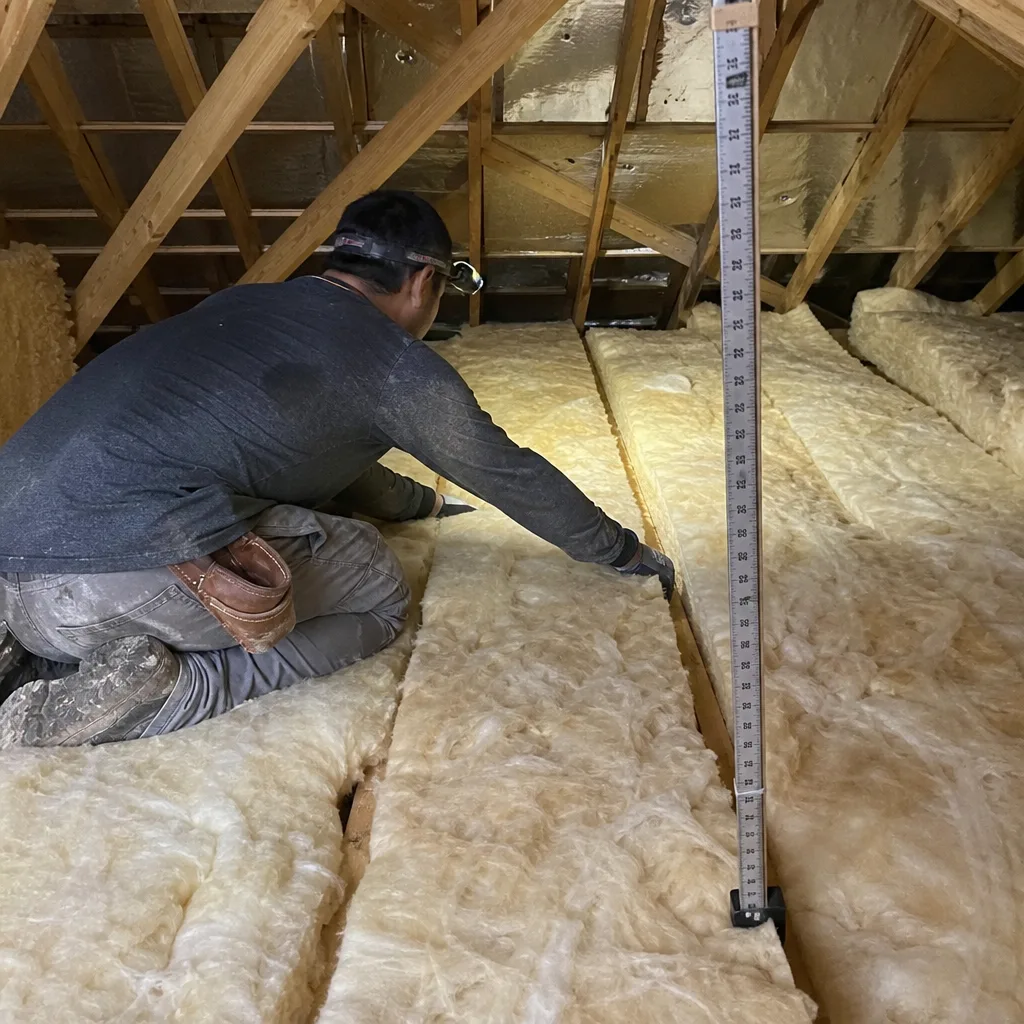
- Crushed batts at HVAC platforms. On a low-pitched 1972 ranch off Pat Booker Road near the Randolph corridor, our crew found the original fiberglass batts crushed flat and shoved aside around the HVAC platform from decades of service calls, leaving most of the ceiling plane near R-6. Because roof clearance was too tight to lay new batts, we dense-packed the wall cavities and blew GreenFiber cellulose across the attic to bring the ceiling back toward R-38, then marked and cleared the soffit vents so the new depth didn’t block intake airflow.
- Soffit vent blockage from over-blowing. Live Oak’s low-pitched 1960s-70s rooflines leave so little clearance that inexperienced crews blow past the soffit vents, choking intake airflow. The attic then superheats instead of venting, accelerating degradation of whatever insulation is present. We use vent baffles and marked depth gauges to prevent this.
- Alley-load access leaving half the attic short. Dense 1980s tracts in Live Oak mean alley-load and side-yard furnace closets. If the blower hose can’t reach the far side of the attic, some crews top-up only the accessible half and leave the rest at original R-6. We measure hose reach during inspection and plan access cuts or alternative equipment when needed.
- Wall cavities left empty after Uri. Winter Storm Uri exposed how many Live Oak slab homes lack any wall insulation. The conditioned air lost through uninsulated stud bays in a 1,200-square-foot ranch can equal the loss through an inadequately insulated attic - but because walls are invisible, they’re often ignored until a cold snap proves the problem.
Pricing for Blown-In Insulation in Live Oak, TX
A typical blown-in cellulose attic job in Live Oak runs $2,400-$4,800 for a 1,500-2,500 square foot ranch, depending on existing conditions and target R-value. Blown-in fiberglass runs slightly less per bag but requires greater depth, so total cost usually lands in a similar range. Dense-pack wall insulation is priced per square foot of wall area, typically $1.20-$2.00 per square foot in Live Oak’s standard 8-foot slab-home construction. Blown-in top-up work, where existing insulation can remain, runs $1.20-$1.80 per square foot - the most cost-effective path when the existing layer is dry and uncontaminated.
What moves the number: attic accessibility (low-pitch roofs take longer), whether removal of degraded material is required, soffit vent remediation, and whether dense-pack wall work is added. We provide a written price before any work starts - Haven Standard Clause 1 - and a free second opinion on any competing written estimate. Call (830) 420-0953 for exact pricing on your specific home.
We Also Serve Cities Near Live Oak
Our crews work throughout the northeast Bexar County corridor, including Live Oak and the surrounding communities of Converse, Universal City, Windcrest, and Schertz. Each city has distinct housing stock and retrofit patterns, and we adjust our approach accordingly - but the Haven Standard applies everywhere: written price first, documented record last, blower-door numbers when applicable.
Serving Live Oak, TX - Our Local Coverage Area
We’re based in the Live Oak area and know this community well. Use the map below to see our service coverage - if you’re nearby, we can almost certainly help.
FAQs - Blown-In Insulation in Live Oak
Because “already insulated” in a 1960s-1980s Live Oak ranch usually means original fiberglass batts compressed to R-6 or R-8, far below the Climate Zone 2 minimum of R-38. The batts look intact from the hatch, but measured performance is a fraction of rated value after decades of thermal stress and HVAC service disturbance. We verify with probe measurements and infrared imaging, then quote a written price to bring the assembly to code-minimum or better. Call (830) 420-0953 - estimates are free.
Yes, and it’s often the only practical method. Low-pitched 1960s-70s roofs near the Randolph corridor leave 8-12 inches of clearance at the eave, too tight for batt installation but workable for blown cellulose at R-3.2+ per inch. We use low-clearance hoses and mark soffit vents before blowing to prevent the blockage that turns these attics into ovens. Your written scope will specify target depth and vent protection.
Top-up adds blown material over existing insulation; full removal strips the attic to the ceiling drywall before installing new. Top-up is appropriate when existing insulation is dry, mold-free, and reasonably distributed - common in Live Oak’s military-turnover housing where no owner ever invested enough to degrade it severely, but none invested enough to make it adequate. Full removal is necessary when insulation is rodent-contaminated, water-stained, or so compressed that it blocks proper distribution of new material. We inspect and document with photos; you get our recommendation and a fixed price for either path.
They can determine whether the entire attic gets treated or only the half near the hatch. Dense 1980s tracts in Live Oak often place the furnace in a side-yard closet or alley-load utility area, and standard blower hoses have finite reach. If we can’t access the far side, we specify alternative equipment or access cuts in your written scope - never a surprise halfway through the job. We measure reach during inspection and price accordingly.
Yes, if the walls are uninsulated or minimally insulated - which describes most pre-1990 Live Oak slab ranches. Winter Storm Uri proved that ceiling-only insulation leaves major thermal bridges through the wall studs and bottom plate, and in a slab home there’s no crawl space buffer. Dense-pack wall insulation runs $1.20-$2.00 per square foot and typically pays back faster in Live Oak than in mixed-climate cities because cooling-season wall heat gain extends from May through October. We can bundle wall and attic work under a single written price and warranty. Call (830) 420-0953 to schedule inspection.
Ready to see what your attic is actually performing at? Call (830) 420-0953 for a free inspection and written price. Every job ends with a Documented Photo Record and, on applicable work, before-and-after blower-door numbers so you can verify the result. The 365-Day Done Right Promise applies to all completed work - if it’s not done right, we make it right.
Written by Wes Okafor, Owner at Topside Attic Insulation Converse, serving Live Oak since 2016 under The Haven Standard.