
How Much Does Spray Foam Insulation Cost in Converse?
Spray foam insulation in Converse, TX typically costs between $1.50 and $4.50 per board foot, with most whole-attic or crawl space jobs landing between $2,800 and $7,500 depending on the application type, square footage, and whether air sealing work is needed first. Open-cell foam runs cheaper, closed-cell runs higher, and the difference matters more than most contractors explain upfront. At Envelope Insulation Co., every job starts with a written price before a single tool comes off the truck – that’s not a policy, it’s the foundation of how we work under The Haven Standard.
Spray Foam Insulation Cost Breakdown (2026)
Spray foam insulation in Converse, TX falls into two distinct product categories – open-cell and closed-cell – and they behave differently, cost differently, and suit different parts of a building envelope. Here’s what you can expect to pay in this market in 2026:
| Application | Product Type | Typical Cost Range | Notes |
|---|---|---|---|
| Attic rafters / roof deck (1,000 sq ft) | Open-cell (0.5 lb) | $1,800 – $2,800 | Good vapor permeance; common in Converse’s humid climate |
| Attic rafters / roof deck (1,000 sq ft) | Closed-cell (2 lb) | $3,200 – $5,000 | Higher R-value per inch; better moisture resistance |
| Attic floor air sealing + foam encapsulation (1,500 sq ft) | Mixed (seal first, foam second) | $3,500 – $6,500 | This is the correct sequence; air sealing completed before foam is applied |
| Crawl space encapsulation with spray foam rim joists | Closed-cell (2 lb) | $1,200 – $3,000 | Rim joist sealing is one of the highest-return applications in Converse homes |
| Wall cavities (new construction or retrofit, per 1,000 sq ft) | Open-cell (0.5 lb) | $2,200 – $4,000 | Retrofit requires opening walls; cost varies significantly by access |
| Pole barn / metal building (per 1,000 sq ft) | Closed-cell (2 lb) | $2,800 – $5,500 | Metal buildings in Converse’s heat require higher R-values to see real savings |
| Garage ceiling / bonus room over garage | Open- or closed-cell | $900 – $2,400 | Common in Converse neighborhoods built 2000-2018 |
| Blower-door test (before and after) | Diagnostic service | Included on applicable jobs | Measures air changes per hour; shows the actual performance delta |
These ranges reflect actual Converse market conditions as of 2026. They account for the material cost increases that followed the 2023-2025 polyol supply constraints, current local labor rates in the Bexar County and San Antonio metro fringe, and the fact that Converse homes – many built in the rapid-growth period between 2002 and 2016 – frequently have more penetrations, can lights, and top-plate gaps than the original plans show. That’s work that has to happen before foam goes in, and it affects the final number.
A written price – covering scope, materials, labor, and warranty – is given to every homeowner before any work begins. That’s Haven Standard Clause 1, and it’s non-negotiable for every job Wes Okafor’s crew takes on.
What Affects Spray Foam Insulation Pricing in Converse
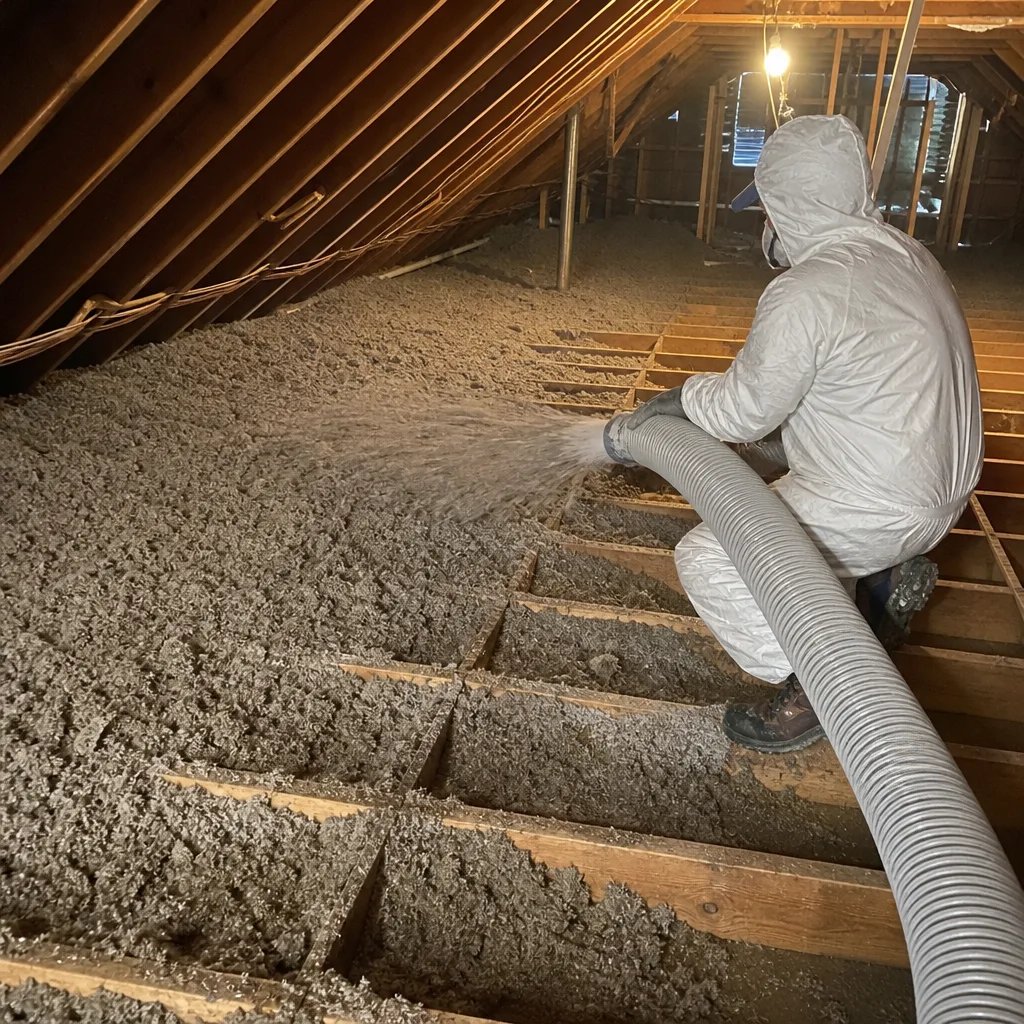
Six factors move the price on a spray foam job in Converse more than anything else. Understanding them helps you read a quote critically – and tells you when a low bid is low for the wrong reasons.
- Open-cell vs. closed-cell foam. Open-cell foam (0.5 lb density) costs roughly $1.50-$2.50 per board foot and gives you around R-3.7 per inch. Closed-cell (2 lb density) runs $3.00-$4.50 per board foot but delivers R-6.5 to R-7 per inch and acts as a vapor retarder – which matters in Converse’s high-humidity summers when attic moisture is a real problem, not a theoretical one. The right choice depends on where the foam is going and what you need it to do.
- Whether air sealing is done first. At Envelope Insulation Co., air sealing of top plates, can lights, and penetrations is completed before any insulation is applied – always. Some contractors skip this step entirely, or treat it as an optional add-on. That’s a problem because spray foam applied over an unsealed attic floor traps air leaks underneath it. The air sealing step adds to the upfront cost but changes the performance outcome. On applicable jobs, we publish before-and-after blower-door numbers so you can see the difference in a single figure – a pressurization reading in CFM50 that measures exactly how much conditioned air your building envelope was losing before and after.
- Square footage and access conditions. More square footage costs more. Tight attic access – common in the patio-home and townhome sections of Converse near Kitty Hawk Road – adds setup time and slows the crew. Attics with HVAC equipment, ductwork running through the spray zone, or shallow pitch require more careful work and longer job times.
- Existing insulation removal. Many Converse homes built before 2010 have original blown fiberglass or batt insulation that needs to come out before spray foam can go in correctly. Removal and disposal runs $1.00-$2.00 per square foot on top of the foam cost. Any quote that doesn’t account for this – when removal is needed – is missing a real line item.
- Roof deck vs. attic floor application. Spraying foam directly to the underside of the roof deck (creating an unvented, conditioned attic) costs more per square foot than sealing the attic floor and adding blown insulation on top. The roof deck approach brings the HVAC system inside the thermal envelope, which is a meaningful efficiency gain in Converse summers where attic temps routinely hit 140-150 degrees F. That performance benefit has a real price, and it’s usually worth it when the ductwork is in the attic.
- Local climate and R-value targets. Converse sits in IECC Climate Zone 2A – hot and humid. The 2021 International Energy Conservation Code recommends R-38 minimum for attic assemblies in this zone, and some Converse homeowners choosing roof-deck spray foam target R-20 to R-30 closed-cell as part of a hybrid assembly. More inches of foam means more material and a higher job cost. Getting this right the first time is cheaper than going back to add thickness later.
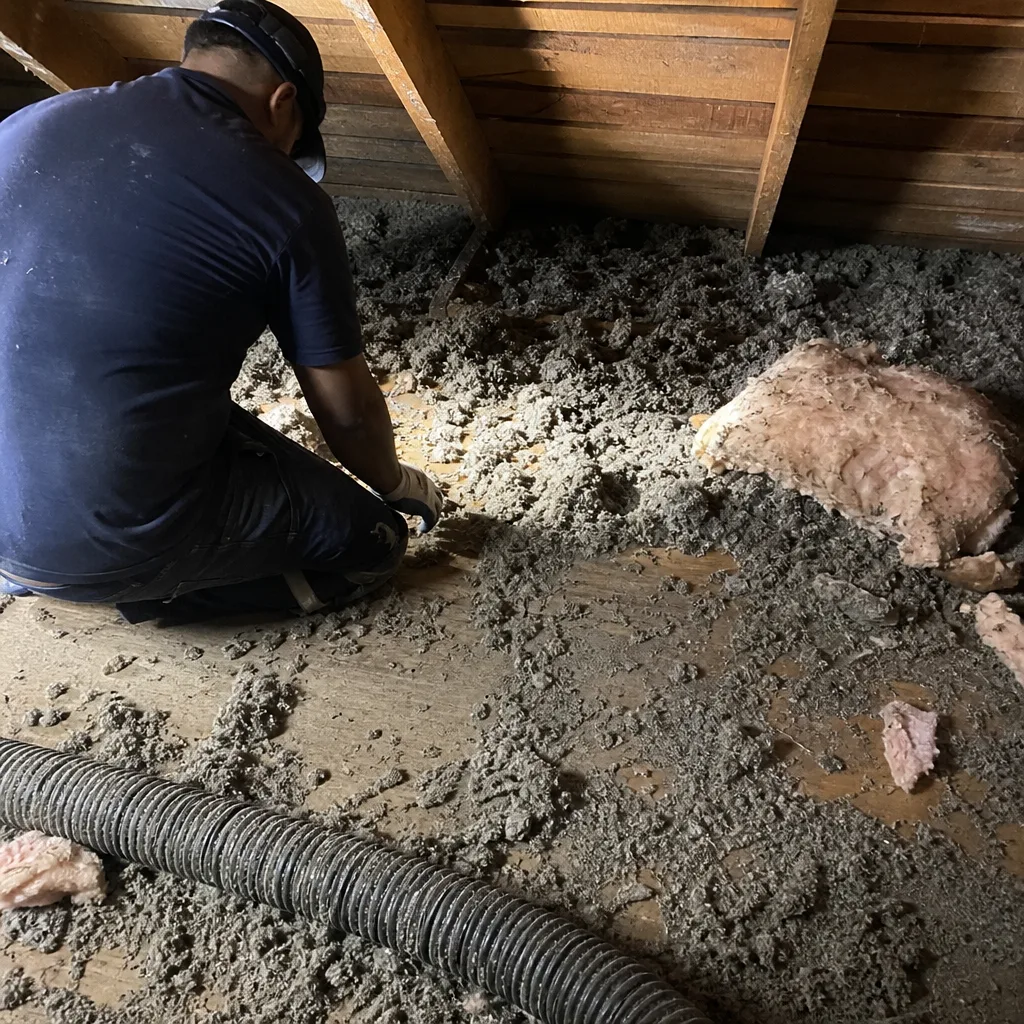 Before
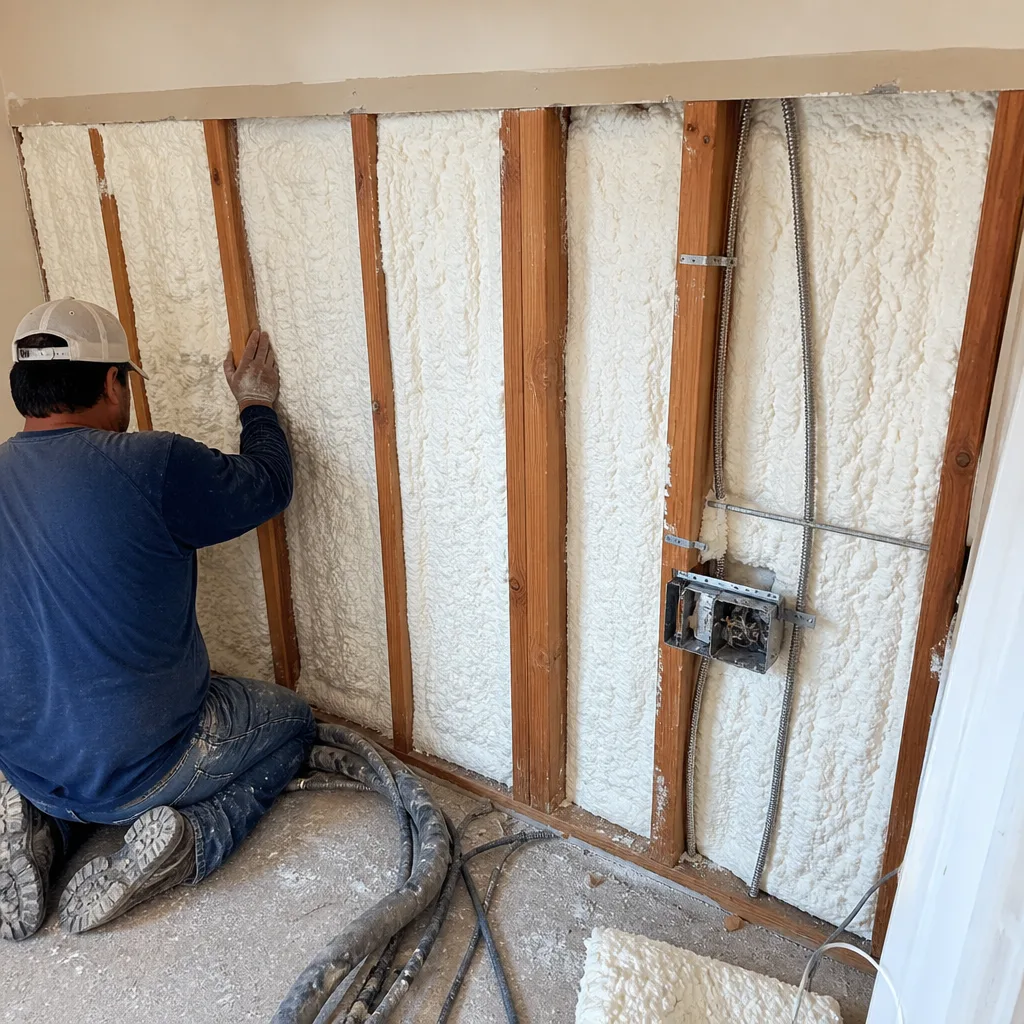 After
AfterOpen-Cell vs. Closed-Cell in Converse’s Climate: Which Is Right?
This comes up on almost every estimate call, and the answer isn’t universal. Here’s how it breaks down for this market specifically.
Converse sees hot, humid summers and mild winters. The attic is typically the biggest thermal liability – and a significant source of moisture movement. Open-cell foam handles that well in most attic floor applications because it’s vapor-permeable, meaning it won’t trap moisture against wood framing the way a poorly applied vapor barrier can. For attic floor sealing – topping off with blown insulation afterward – open-cell is often the right call.
Closed-cell foam earns its higher price in three situations: roof deck application (where you want both thermal resistance and moisture control in a thin profile), rim joists in crawl spaces (where you need rigidity and a true vapor retarder), and any application where structural reinforcement of the substrate matters. In the older Converse neighborhoods around Foster Road and Kitty Hawk, where crawl spaces and pier-and-beam foundations are more common, closed-cell on rim joists and subfloor framing makes a measurable difference in floor temperature and moisture readings.
The choice should be driven by the specific application, the moisture dynamics of your home, and a clear understanding of what R-value you’re targeting. A quote that doesn’t explain which product is being used and why is missing information you need to evaluate it fairly.
How to Save on Spray Foam Insulation in Converse
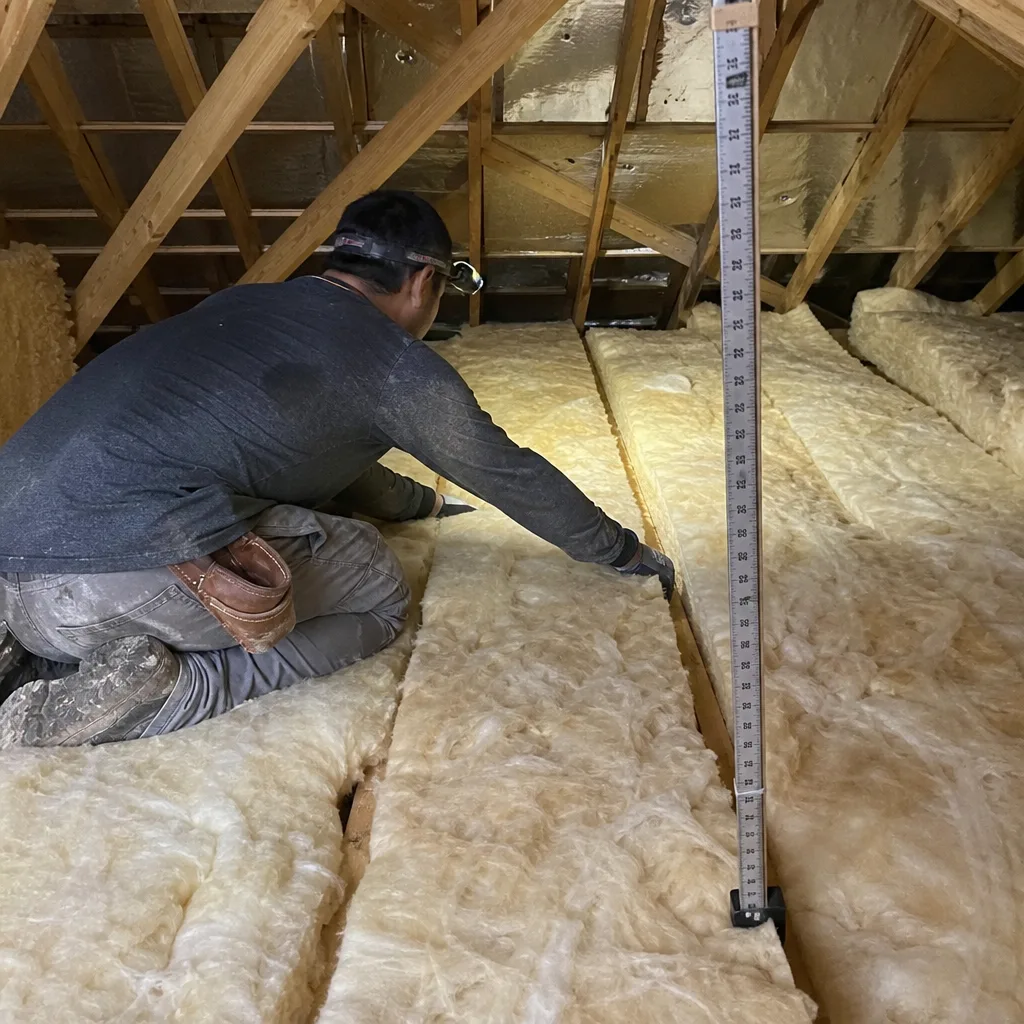
There are real ways to reduce the cost of a spray foam job without cutting into the performance. And there are false economies that look like savings on paper and cost more over time. Here’s the difference.
- Take the free second opinion seriously. Envelope Insulation Co. offers a free second opinion on any written estimate – bring a competing quote and we’ll read it with you, line by line. This is especially useful if you’ve received a quote that doesn’t break out materials, thickness, and air sealing separately, because those numbers tell you whether the job is being priced to actually perform or priced to win the bid.
- Check for utility rebates through CPS Energy. CPS Energy – the utility serving most of the San Antonio metro including Converse – has offered rebates for qualifying insulation upgrades. The program terms change year to year, so verify current availability before signing anything, but the rebates can take $200-$800 off a qualifying job when the documentation is done correctly.
- Bundle the air sealing work with the foam job. When air sealing and insulation are done by the same crew on the same visit, you avoid two mobilization costs. Splitting the work between contractors – or adding air sealing as an afterthought after the foam is already in – typically costs more and produces a worse result.
- Don’t skip insulation removal to save money when removal is needed. Blowing or spraying over contaminated, water-damaged, or rodent-affected existing insulation creates a bigger problem. The cost of removing it now is always lower than the cost of removing spray foam plus original insulation later after damage has continued.
- Time the job during the shoulder season. Contractor availability in Converse tends to be highest in late October through February. Summer emergency calls – when the AC is struggling – carry the highest demand. A job scheduled in November or December typically gets more attention and sometimes better pricing, because the crew isn’t booked solid through the week.
- Get the scope in writing before any work starts. This isn’t just about trust. A written scope prevents scope creep and protects you if the job takes longer than expected. Haven Standard Clause 1 makes this mandatory on every Envelope Insulation Co. job. If a contractor won’t give you a written price before starting, that’s a signal worth paying attention to.
For a no-obligation estimate on your Converse home, call (830) 420-0953. A written price, full scope, and written warranty are provided before any work begins – that’s not a sales pitch, it’s how every job starts.
What the Spray Foam Process Looks Like at Envelope Insulation Co.
Understanding the process helps you evaluate whether any contractor is doing the job correctly. Here’s what the sequence looks like on a properly executed spray foam job for a Converse home.
Before anything is sprayed, the crew documents what they find. Every visit includes a documented photo record – taken before and after work – so there’s no ambiguity about existing conditions, what was done, and what the finished result looks like. On applicable jobs, a blower-door test is performed before work starts. A blower-door test is a pressurization measurement: the crew depressurizes the home and measures how much air moves through the building envelope in a standardized unit called CFM50. A typical Converse home built between 2005 and 2015 often reads between 3,500 and 6,000 CFM50 before any air sealing work. We publish the number we start with and the number we end with, so you’re not taking anyone’s word for the performance improvement.
Air sealing comes next, before any foam is applied. Top plates – the framing members at the top of interior walls where they meet the attic floor – are a major air leak path in most Converse homes. Can lights, plumbing penetrations, electrical chases, and HVAC boot connections are also sealed at this stage. This step is completed before insulation is added, every time, without exception. We won’t blow insulation over an unsealed attic floor. That sequencing matters because it determines whether the insulation actually performs at the R-value it’s rated for, or whether conditioned air just moves around it.
After sealing is verified, foam is applied at the specified thickness to meet the target R-value. The crew uses materials from manufacturers including Icynene and Demilec, with product selection matched to the specific application. You receive a documented photo record of the finished work and, on applicable jobs, a post-job blower-door reading that lets you see the before-and-after comparison in a single number.
The 365-Day Done Right Promise backs every completed job: if it’s not done right, Wes Okafor’s team makes it right. The written warranty is delivered before anyone starts.
Spray Foam Insulation and Converse’s Specific Building Stock
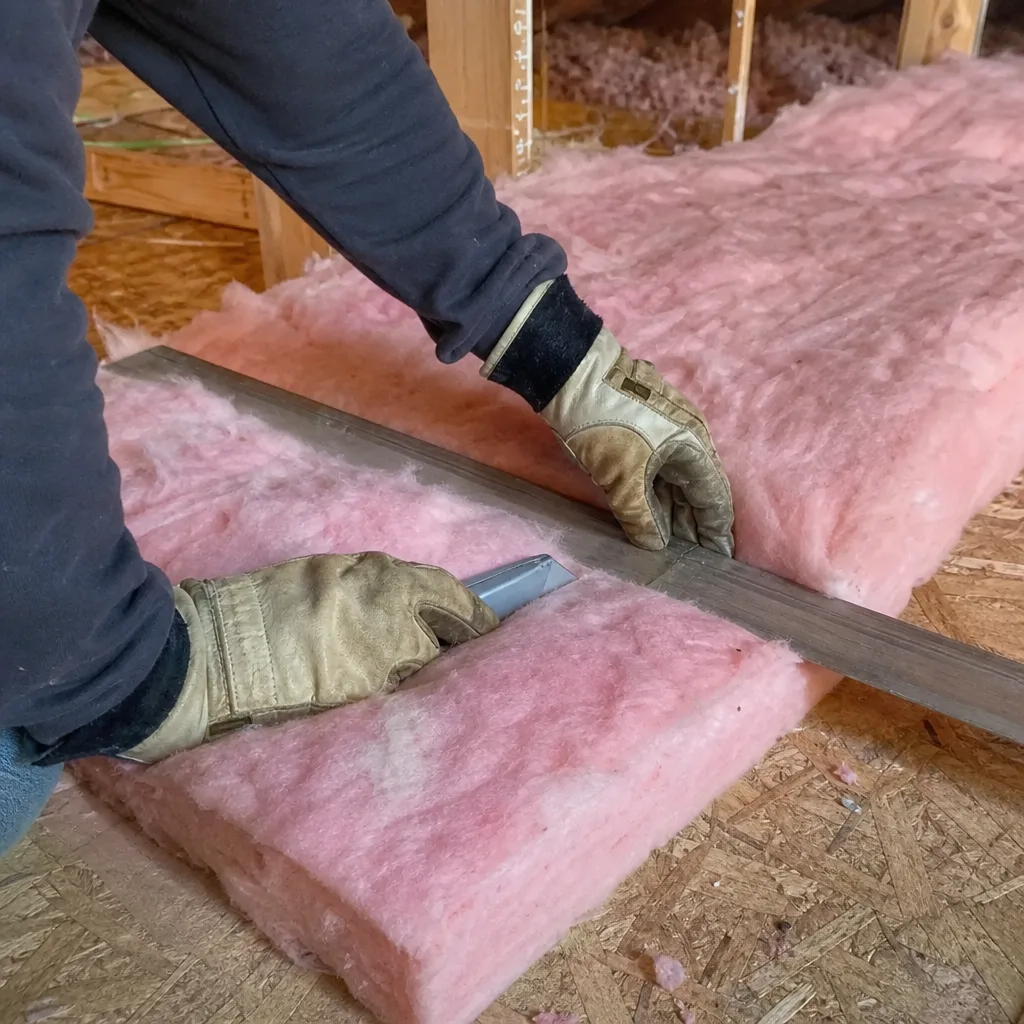
Converse isn’t a monolithic housing market. The homes along Kitty Hawk Road and the newer sections north of Loop 1604 were built mostly between 2003 and 2018 in a variety of production builder styles – and the insulation that went in during that era ranges from adequate to genuinely poor. Some of those homes got R-30 blown fiberglass in the attic floor and nothing more. A significant number have uninsulated or under-insulated knee walls in the upper stories. Many have recessed can lights – the original style, not the airtight IC-rated type – that function as open chimneys between conditioned space and the attic.
The older stock closer to the FM 78 corridor tends to have crawl spaces and pier-and-beam foundations where rim joist insulation was never a priority. Closed-cell spray foam at the rim joists in these homes makes a fast, measurable difference in floor temperature and humidity levels.
We’ve also done a fair amount of work in the semi-rural residential pockets east of Converse toward the Bexar-Guadalupe county line, where metal buildings and large shop structures need closed-cell foam to handle the radiant heat load that metal roofing creates. The application is different, the R-value targets are different, and the pricing reflects that.
None of this is background information for its own sake. It’s context for why a flat per-square-foot rate doesn’t tell you much until someone has actually looked at your specific home. The estimate visit is where the real numbers come from.
A Note on Safety: Why Spray Foam Is a Job for Trained Technicians
Spray foam is not a DIY application. The two-component chemicals – polyol and isocyanate – react exothermically during application, and improper mixing ratios, temperature conditions, or application thickness can result in off-ratio foam that off-gasses for extended periods, doesn’t cure correctly, or creates a surface that requires professional remediation. The isocyanate component is a respiratory sensitizer; direct exposure without proper respirators and PPE causes permanent lung sensitization in some cases.
Beyond chemistry, working in an attic in Converse in the summer months – when attic temperatures can exceed 140 degrees F – adds serious heat exposure risk. Roof deck applications near electrical fixtures and HVAC components require experience with safe clearances and sequencing.
This isn’t a caveat designed to sell you a service call. It’s the reason the industry has training and certification pathways for spray foam technicians. Background-checked, uniformed technicians handle every Envelope Insulation Co. job, and calls are answered by a live person around the clock – no voicemail loops, no multi-day callback windows.
How Spray Foam Compares to Other Insulation Types in Converse
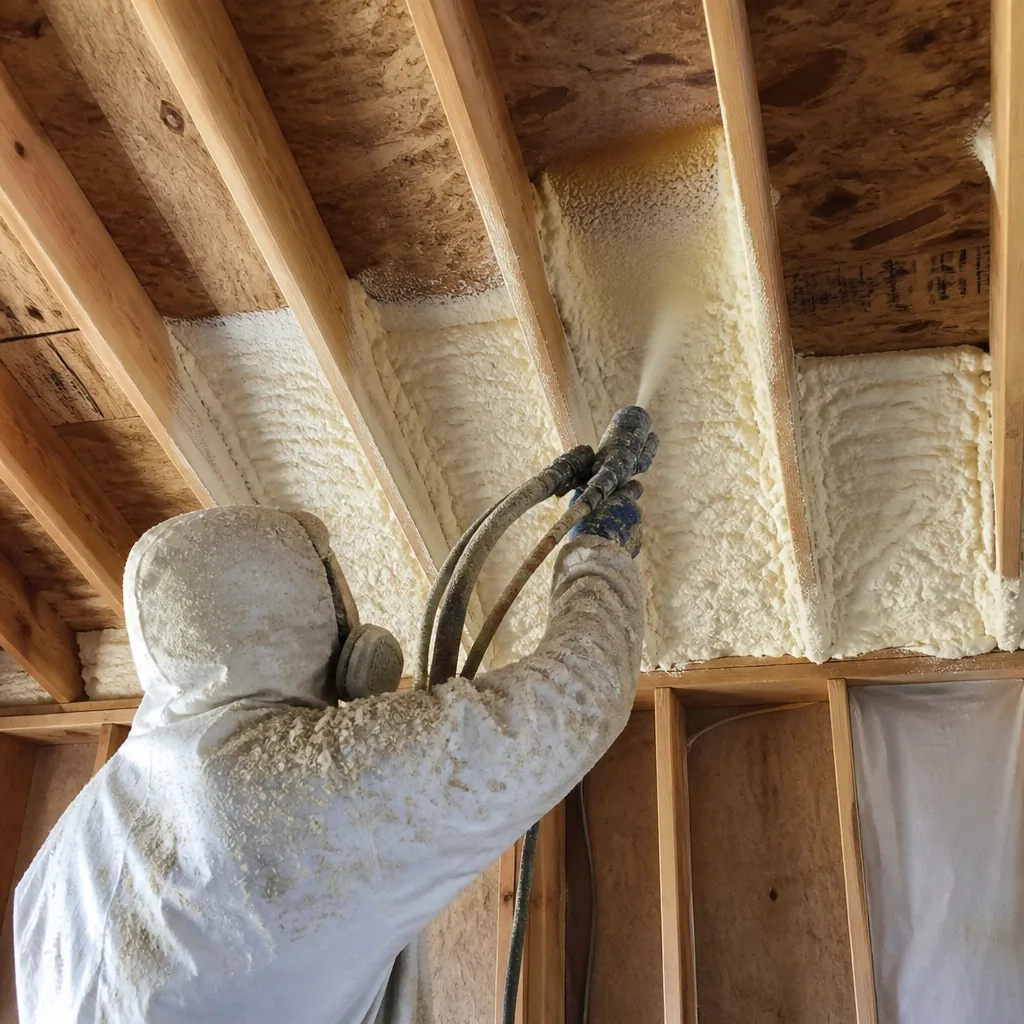
Spray foam costs more upfront than blown-in fiberglass or cellulose. For context, blown-in insulation in a Converse attic typically runs $1.20-$2.00 per square foot for the material and labor combined. Spray foam runs $1.50-$4.50 per board foot depending on density. The cost difference is real, and it’s worth understanding what you get for it.
Spray foam – applied correctly – seals and insulates in a single step. Blown-in insulation insulates but does not air seal; it sits in gaps rather than bonding to framing and filling them. In an attic with significant penetrations, can lights, and top-plate gaps, blown-in without prior air sealing will underperform its rated R-value because conditioned air is still moving around it. That’s not an argument against blown-in insulation – it’s the right product in the right application, and many Converse homeowners get excellent results from a properly sealed attic floor with R-49 blown-in on top. But it requires the air sealing step to happen first.
Spray foam at the roof deck – creating what’s called an unvented conditioned attic – moves the thermal boundary from the attic floor up to the roof line. That means the HVAC system and ductwork are no longer sitting in 140-degree air. In homes where the ductwork is in the attic, which describes a large percentage of Converse construction from the past 25 years, this configuration can have a meaningful effect on cooling load and equipment runtime. The upfront cost is higher. The performance delta is also higher.
You can read more about the full range of insulation options we offer as part of our Spray Foam Insulation in Converse service, or return to the home page to see the complete service line.
FAQs: Spray Foam Insulation Cost in Converse, TX
How much does spray foam insulation cost per square foot in Converse, TX?
Spray foam insulation in Converse costs between $1.50 and $2.50 per board foot for open-cell foam and $3.00 to $4.50 per board foot for closed-cell foam. A board foot is one square foot applied at one inch of thickness, so a 2-inch application doubles the material cost. Most whole-attic jobs in Converse homes between 1,400 and 2,200 square feet run between $2,800 and $7,500 all-in. Call (830) 420-0953 for a written estimate specific to your home – the visit is free and the price is in writing before anything starts.
Is open-cell or closed-cell spray foam better for Converse’s climate?
Closed-cell foam is better for roof deck applications, rim joists, and anywhere you need a true vapor retarder – which matters in Converse’s humid climate where moisture management is a real concern. Open-cell foam is typically sufficient for attic floor air sealing and for wall cavities where vapor permeance is desirable. The right choice depends on where the foam is going, your R-value target, and the moisture dynamics of your specific home – not a blanket rule.
Does spray foam insulation actually lower energy bills in Converse?
Yes, when installed correctly with air sealing done first. The documented results vary by home, but homes in Converse that move from poorly sealed, under-insulated attic floors to a properly sealed and insulated envelope often see cooling season reductions in HVAC runtime. On applicable jobs, we measure this with before-and-after blower-door tests – a CFM50 reading taken before work starts and again after – so you have an actual number, not an estimate. Homes that started at 5,000+ CFM50 and came down to 2,000-2,500 CFM50 after sealing show the clearest performance change.
How long does spray foam insulation last in a Converse home?
Properly applied spray foam insulation is expected to last the life of the building – typically 80+ years for the foam itself, assuming no mechanical damage, water intrusion events, or pest activity disturbs it. Closed-cell foam is more resistant to moisture and physical compression than open-cell. The bigger variable in Converse is whether the original application was done at the correct thickness and off-ratio foam was avoided – which comes back to who applied it and whether they documented the work. Every Envelope Insulation Co. job includes a documented photo record so there’s a permanent reference for what was installed.
Can spray foam insulation be installed in an existing Converse home, or only new construction?
Spray foam can be installed in existing homes. The most straightforward retrofit applications are attic floors, attic roof decks (accessed through the attic), rim joists in crawl spaces, and bonus rooms or garage ceilings. Wall cavity retrofits are possible but require either opening the wall finish or drilling injection ports – which adds cost and access complexity. Most Converse homeowners retrofitting an existing home focus on the attic and crawl space first because those applications deliver the highest return per dollar and don’t require disturbing finished interior surfaces. Call (830) 420-0953 and describe your home’s situation – a written estimate covers exactly what’s applicable and what it will cost.
What should I look for in a spray foam insulation quote in Converse?
Any written quote for spray foam work in Converse should specify the product type (open-cell or closed-cell), the density, the target thickness in inches, the total R-value being achieved, whether air sealing is included as a step before the foam is applied, and the warranty terms in writing. A quote that gives you a single dollar figure without breaking out those line items doesn’t have enough information to evaluate. Under Haven Standard Clause 1, Envelope Insulation Co. provides a written price, a written scope, and a written warranty before any work begins – bring any written competing quote and we’ll read it with you at no cost.
Written by Wes Okafor, Owner at Envelope Insulation Co. (operating as Topside Attic Insulation Converse), serving Converse, TX since 2016. Pricing reflects Converse market conditions as of 2026. Envelope Insulation Co. offers free, written estimates – call (830) 420-0953 to schedule yours.
What Our Customers Say
"Crawl space encapsulation done properly. Photographs of the vapour barrier at every seam, and the damp smell in the hallway is gone."
- Ainsley P."Two other companies quoted to blow more insulation on top of what was there. These were the only ones who said the existing material had to come out first, and explained why."
- Clifford E."The winter gas bill dropped by about a third. They had estimated a quarter, so they under-promised."
- Genevieve R.