
Johns Manville Blown-In Insulation in Converse: What to Know First
We provide independent Johns Manville blown-in insulation service in Converse, with most attic jobs completed in one day and pricing put in writing before any work starts. Most Converse homeowners with Johns Manville systems pay between $1,800 and $3,400 for full attic blown-in insulation with air sealing, or $900 to $1,500 for a top-up of existing material. Call (830) 420-0953 for a free estimate with a written price you can hold in your hand.
This page is for homeowners in Converse who already have Johns Manville insulation in their attic or walls and need service, top-up, or replacement. Whether you’re in the older ranch homes near Foster Road or newer construction off Loop 1604, we treat Johns Manville products as a specific system with its own failure patterns, not a generic blown-in job.
How Johns Manville Products Fail - and How We Fix Them
- Climate Pro Fiberglass settles below labeled R-value in Converse heat. The fiberglass binder softens during our 100-plus-degree attic summers, letting the material compact over 5-7 years. We’ve pulled Climate Pro batts in Converse attics that measured R-19 where R-30 was specified. We remove the settled layer, seal the deck, and reinstall to true depth with fresh blown-in fiberglass or cellulose.
- Spider Plus blown-in system clogs at the machine when humidity spikes. The loose-fill adhesive in Spider Plus activates early in Converse’s spring humidity, jamming the blower and leaving gaps in wall cavities. We see this most in April and May. Our fix: switch to dense-pack cellulose for the same cavity, or run Spider Plus on a dry day with a dehumidified hose line.
- Attic Protector cellulose bridges over recessed can lights. The fine fiber in Attic Protector packs tight around hot fixtures, creating a void that lets conditioned air escape. In Converse homes built 2015-2020, we find this above kitchens and bathrooms regularly. We pull back the material, install fire-rated covers, seal the penetration, and redistribute.
- Submittal Series batts gap at truss chords in older Converse framing. The 16-inch width doesn’t seat cleanly against the irregular 24-inch truss spacing common in 1970s ranch homes near Randolph Air Force Base. We fill the gaps with blown-in fiberglass top-up after air sealing, never stuffing compressed batts that lose half their R-value.
- Formaldehyde-free binder in newer JM lines attracts rodent nesting. Without the older chemical deterrent, mice tear into Attic Protector and Climate Pro for bedding material. We document the damage with photos, remove contaminated sections, rodent-proof the attic, then reinstall. The photo record goes to your email before we leave.
Our Johns Manville Blown-In Insulation Process
- 1
Call and schedule. A live person answers at (830) 420-0953 24/7. We book a 2-hour arrival window, not “morning or afternoon.”
- 2
Attic inspection and blower-door test. We pressurize the house to 50 pascals and record the CFM50 reading - a single number showing how much air your envelope leaks. Most Converse homes we test read 3,500-5,500 CFM50 before any work.
- 3
Air sealing first, always. Top plates, can lights, plumbing and electrical penetrations, chimney chases. We seal every leak we can reach before insulation touches the deck. Seal the leaks first. Then insulate. The numbers will tell you if it worked.
- 4
Material selection and written price. We match the replacement to your Johns Manville system or recommend a cross-brand alternative if it’s the better fit. You get the price in writing, the scope in writing, and the warranty in writing before anyone starts - Haven Standard Clause 1.
- 5
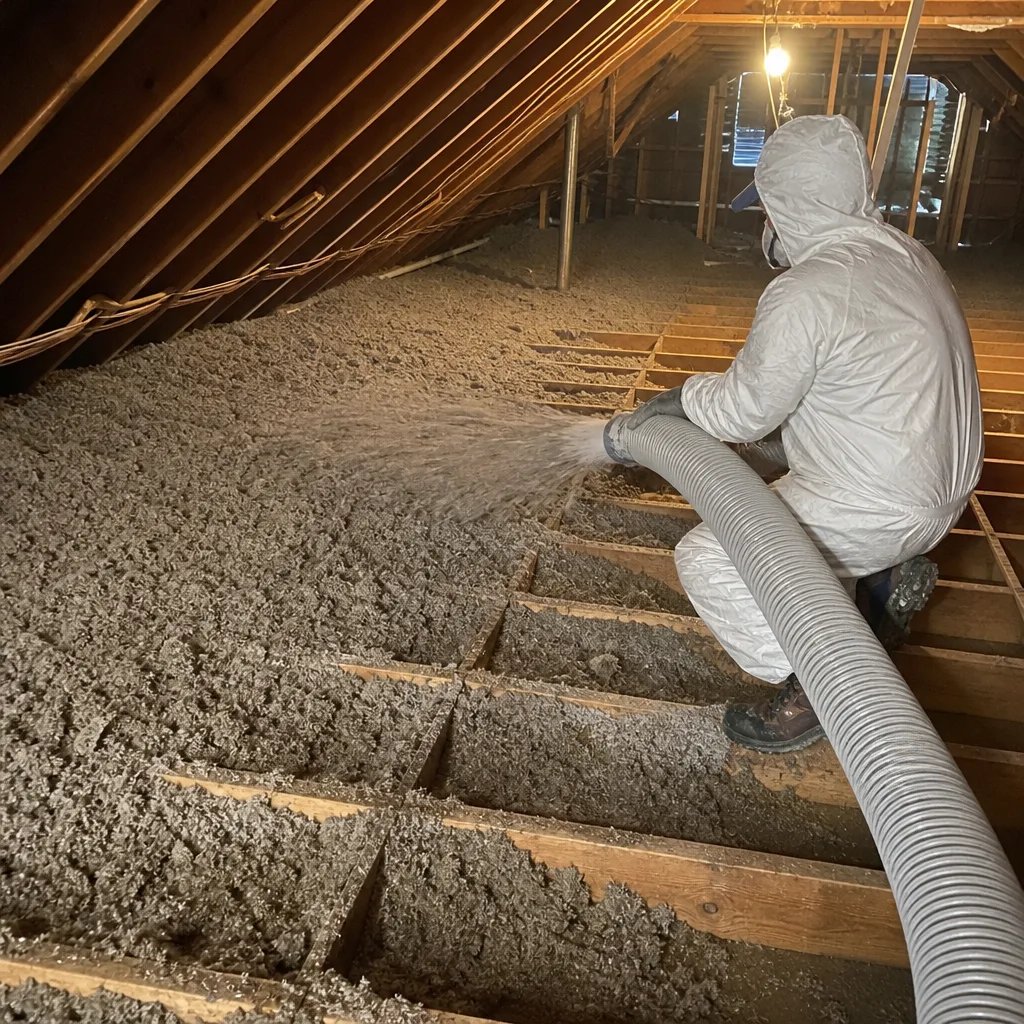
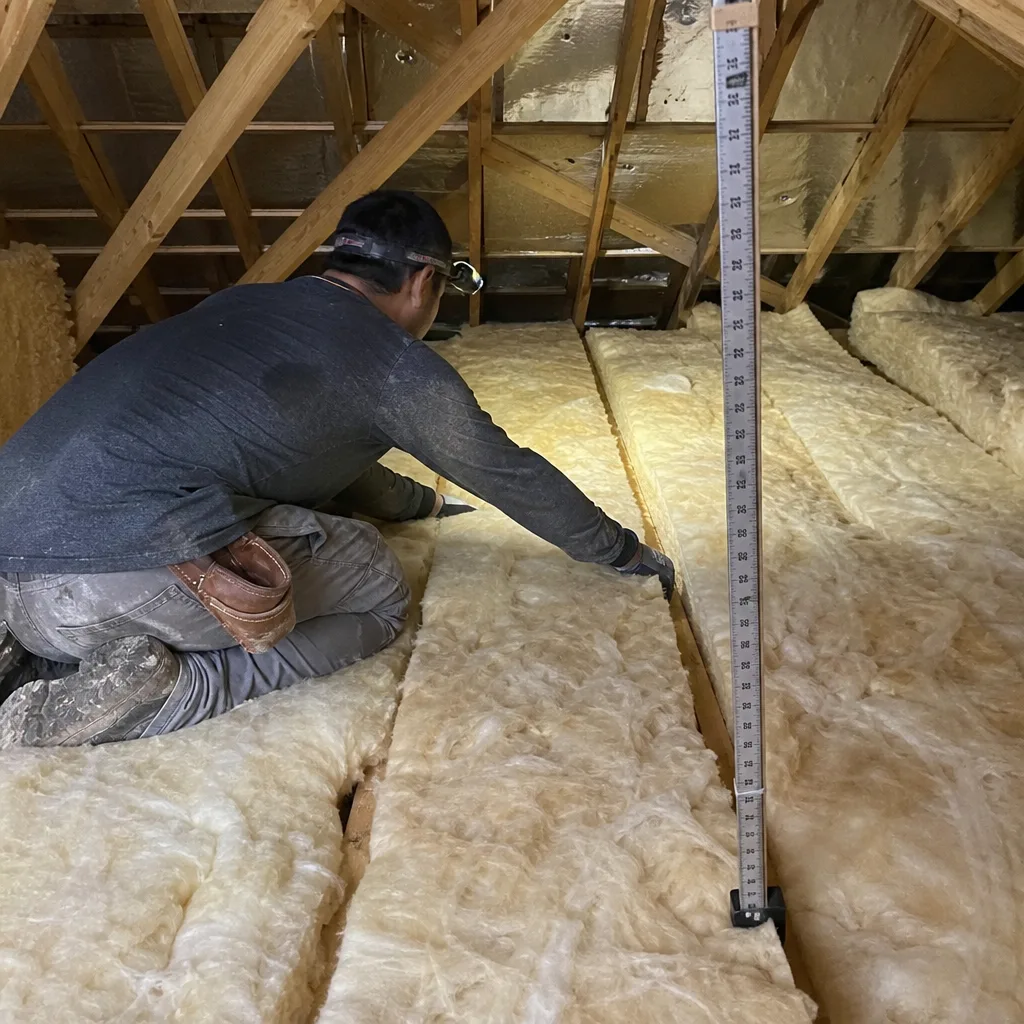
Installation and documentation. The crew runs the blower, verifies depth and coverage with a yardstick at five points, and photographs the completed attic. On applicable jobs, we run the blower-door test again and hand you the before-and-after report.
- 6
Cleanup and follow-up. We haul out old material, vacuum the access path, and text you the photo record. The 365-Day Done Right Promise starts the moment we leave.
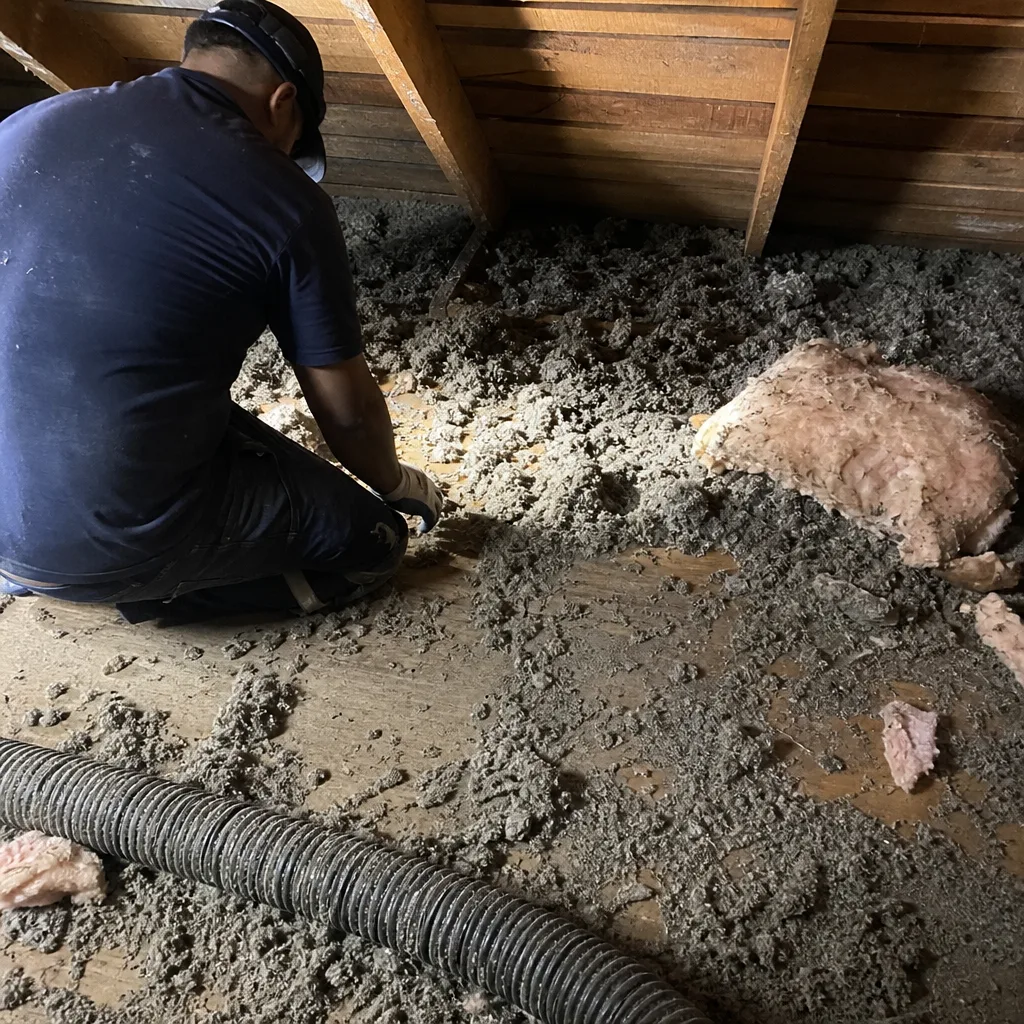 Before
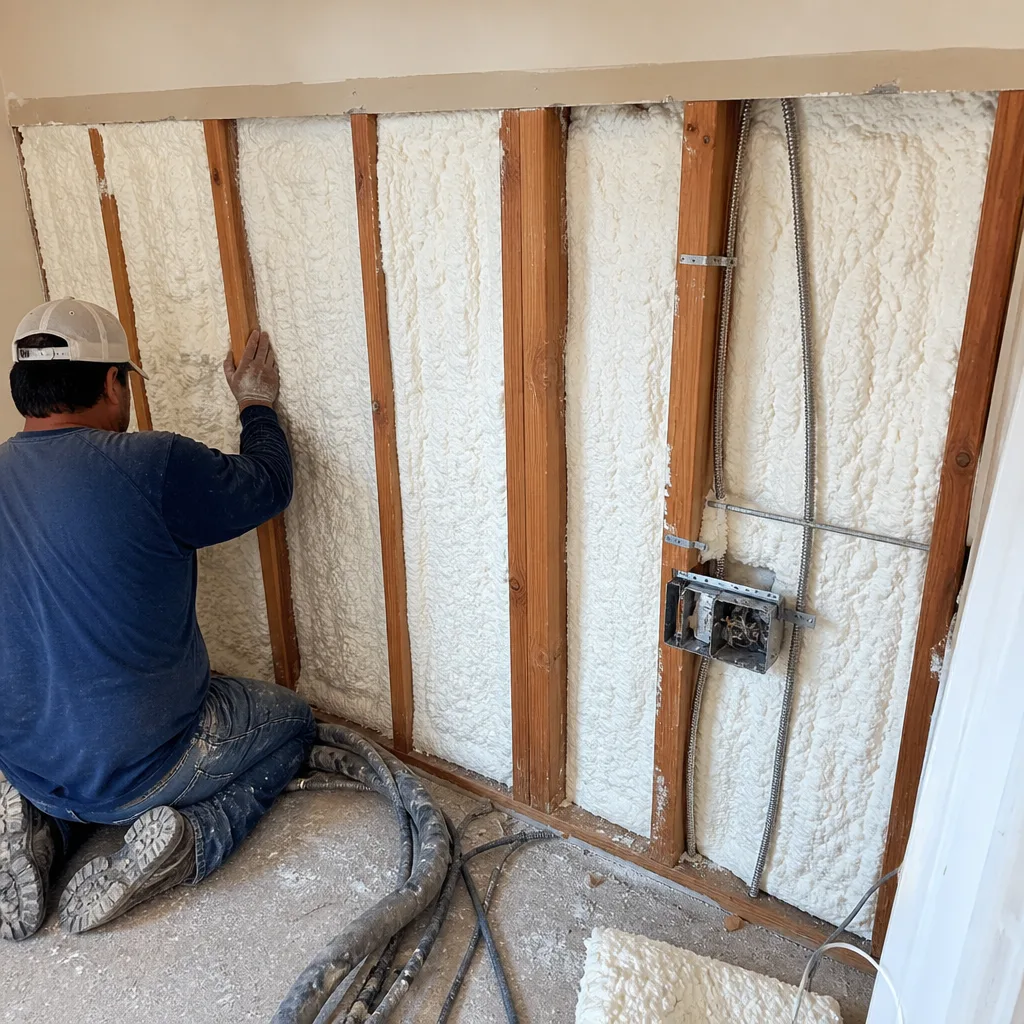 After
AfterWhat Johns Manville Blown-In Insulation Costs in Converse
These are real ranges for jobs we’ve completed in Converse and Bexar County. Your written estimate locks the number.
| Job Type | Typical Range | What Moves It |
|---|---|---|
| Attic top-up (existing JM, no removal) | $900 - $1,500 | Square footage, access difficulty, current depth |
| Full attic replacement (remove + reinstall JM or equivalent) | $1,800 - $3,400 | Attic square footage, amount of old material, air sealing extent |
| Dense-pack wall insulation (JM Spider or cellulose replacement) | $2,200 - $4,000 | Wall cavity count, interior or exterior access, repair work needed |
| Attic removal only (contaminated or water-damaged JM) | $1,200 - $2,000 | Contamination level, disposal requirements, rodent damage repair |
Factors that push price up: multiple attic hatches, active rodent issues requiring proofing, knob-and-tube wiring that needs electrician coordination, or truss framing that limits blower-hose access. Factors that don’t change our price: what brand name is on your existing insulation. We service Johns Manville, Owens Corning, Knauf, Rockwool, and others - no proprietary lock-in.
Call (830) 420-0953 for a free estimate. We’ll read any written quote you’ve already received, no charge - our Free Second Opinion on Any Written Estimate.
Why Converse Homeowners Call Topside Attic Insulation Converse for Johns Manville Work
We’ve sealed and insulated over 9,000 homes since 2016, and the Converse jobs stick in our memory: the 1978 ranch on Foster Road with unsealed top plates bleeding 800 CFM50 through the attic floor alone; the new build off Loop 1604 where the builder’s JM install missed the scuttle hatch entirely. Wes Okafor grew up on Chicago’s South Side, trained at Kennedy-King College’s building trades program, and spent two decades applying that classroom work in Texas attics. He still carries a phone full of job-site photos - thermal bridges caught on infrared, settled fiberglass that lost its loft, sealed top plates with the blower-door numbers to prove the fix.
We don’t sell insulation. We sell measured performance: a tighter envelope you can verify in a printed report. The 365-Day Done Right Promise means if the numbers don’t hold, we return. Materials come from Johns Manville, Owens Corning, Knauf, Rockwool, CertainTeed, and others - we match the product to the cavity, not the other way around. Calls are answered by a live person, 24/7. Background-checked, uniformed technicians. No voicemail loops.
FAQs
No. As an independent Johns Manville service provider, we use warranty-safe practices: matching or exceeding labeled R-value, maintaining proper depth, and documenting installation per manufacturer specs. The original material warranty covers product defects, not installation - and our 365-Day Done Right Promise covers our workmanship separately. Call (830) 420-0953 if you need help interpreting your specific warranty terms.
We source Johns Manville materials through standard distribution channels, same as any contractor. For blown-in applications, we often recommend cross-brand equivalents - Knauf Jet Stream or GreenFiber cellulose, for instance - when they perform better for your specific cavity and budget. We never lock you into a single brand. The written scope lists exactly what material goes where, by name, before work starts.
Repair is cheaper when the material is uncontaminated, evenly distributed, and simply thin - a top-up runs $900-$1,500 in most Converse attics. Replacement makes sense when the material is water-stained, rodent-compromised, or settled below recoverable depth. We’ll tell you which category you’re in during the free estimate, with photos. Call (830) 420-0953 to schedule.
Most attic jobs finish in one day. Dense-pack wall work or full removal-plus-replacement may run two days. We schedule within 48 hours of your call for non-emergency work, and same-day for active water intrusion or exposed electrical. A live person answers (830) 420-0953 to check current availability.
Yes. We install and repair Reflectix radiant barriers and duct insulation in Converse homes, often in combination with blown-in systems. If your attic has Reflectix stapled to rafters with degraded JM below, we can assess whether the radiant barrier is still performing or if it’s trapping moisture. The written scope addresses both layers.
Written by Wes Okafor, Owner & Lead Insulation Technician, Topside Attic Insulation Converse at Topside Attic Insulation Converse, serving Converse and nearby areas.