
Johns Manville Attic Air Sealing: The Converse Owner’s Guide
Most Johns Manville attic air sealing jobs in Converse run $1,800-$3,400 installed, and we can typically inspect and quote same-day. We stock Johns Manville-compatible sealing components, including formaldehyde-free fiberglass batt systems and AP Foil-Faced foam board accessories, on every truck. Homeowners usually notice the problem when their upstairs rooms won’t stay cool in July despite the AC running nonstop, or when they spot dusty insulation around recessed can lights, a telltale sign that conditioned air is escaping through gaps the original sealing was meant to close.
Which Johns Manville Models This Applies To
Johns Manville doesn’t sell attic air sealing as a single branded “system” the way they sell insulation batts. What Converse homeowners are typically matching is the air-sealing layer that was installed alongside Johns Manville insulation products, most commonly their Climate Pro blown-in fiberglass (the loose-fill white stuff) or the pre-cut Kraft-faced batts used in attics from the 1990s through the mid-2010s.
To identify what you’ve got, check the paper facing on any exposed batts for the JM logo and R-value stamp. For blown-in, look for the small white glass fibers with a slight pinkish tint, distinct from the brighter pink of Owens Corning or the gray of CertainTeed. The critical compatibility issue is top-plate sealing: Johns Manville batts compress poorly at wall-to-attic junctions, so the original installer should have used a separate air barrier, typically caulked foam board or sealed rigid poly, before laying insulation. If that layer is missing or degraded, the insulation itself isn’t the problem, the air sealing underneath it is.
We carry both OEM Johns Manville accessories, like their AP Foil-Faced polyiso board for thermal bridging at pull-down stairs, and quality aftermarket equivalents, including closed-cell spray foam for irregular penetrations and fire-rated caulk for top plates. The aftermarket route usually saves 15-20% on materials without sacrificing performance, since air sealing is tested by blower-door results, not brand loyalty.
Signs Your Johns Manville Attic Air Sealing Is Failing
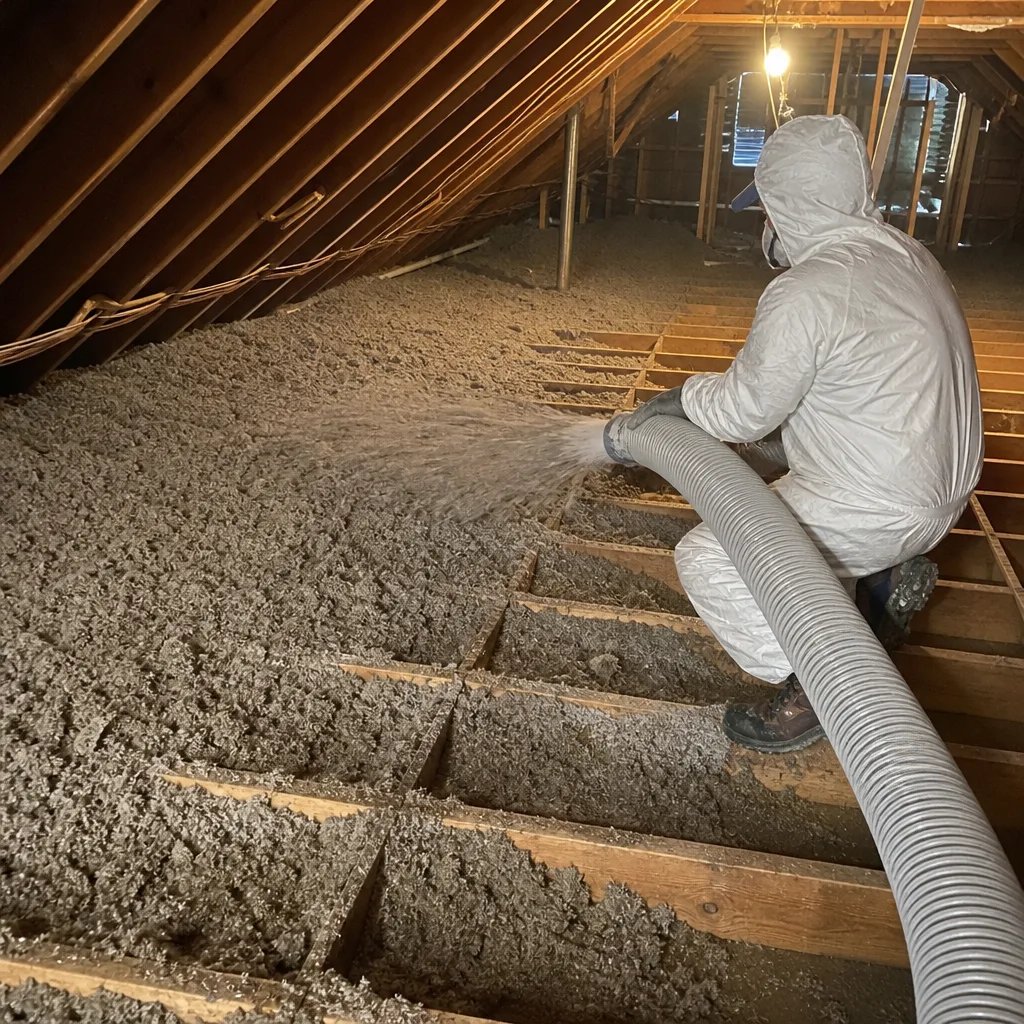
- Hot second-floor rooms in summer, cold ones in winter. Conditioned air is escaping through unsealed top plates and penetrations faster than your HVAC can replace it. In Converse, where attic temperatures hit 140°F in August, a 300 CFM50 leak at the attic floor can make a bedroom feel 8-10 degrees off from the thermostat setting.
- Dusty or darkened insulation around can lights, bath fans, or duct boots. This is filtration staining, outdoor air pulling through the insulation because the airtight gasket or foam seal has shrunk or cracked. Johns Manville blown-in fiberglass is especially prone to showing this pattern because the fine fibers act like a filter.
- Ice dams or sustained icicles in winter. Warm, moist air leaking into the attic melts roof snow from underneath; the water refreezes at the eaves. Converse doesn’t see Chicago-level ice dam damage, but a week below freezing with poor sealing will still lift shingles and saturate sheathing.
- Musty attic smell or visible mold on rafters. Humid Gulf air enters through gaps, condenses on cool roof decking, and feeds mold. We’ve found this in Converse ranch homes near Foster Road where the original builder stuffed batts over unsealed electrical penetrations, creating a slow vapor drive the insulation couldn’t block.
- Spikes in summer electric bills with no rate change. A blower-door test will usually reveal the culprit: pre-sealing readings of 3,500+ CFM50 in a 2,000-square-foot home, when 2,000 or below is achievable with proper air sealing.
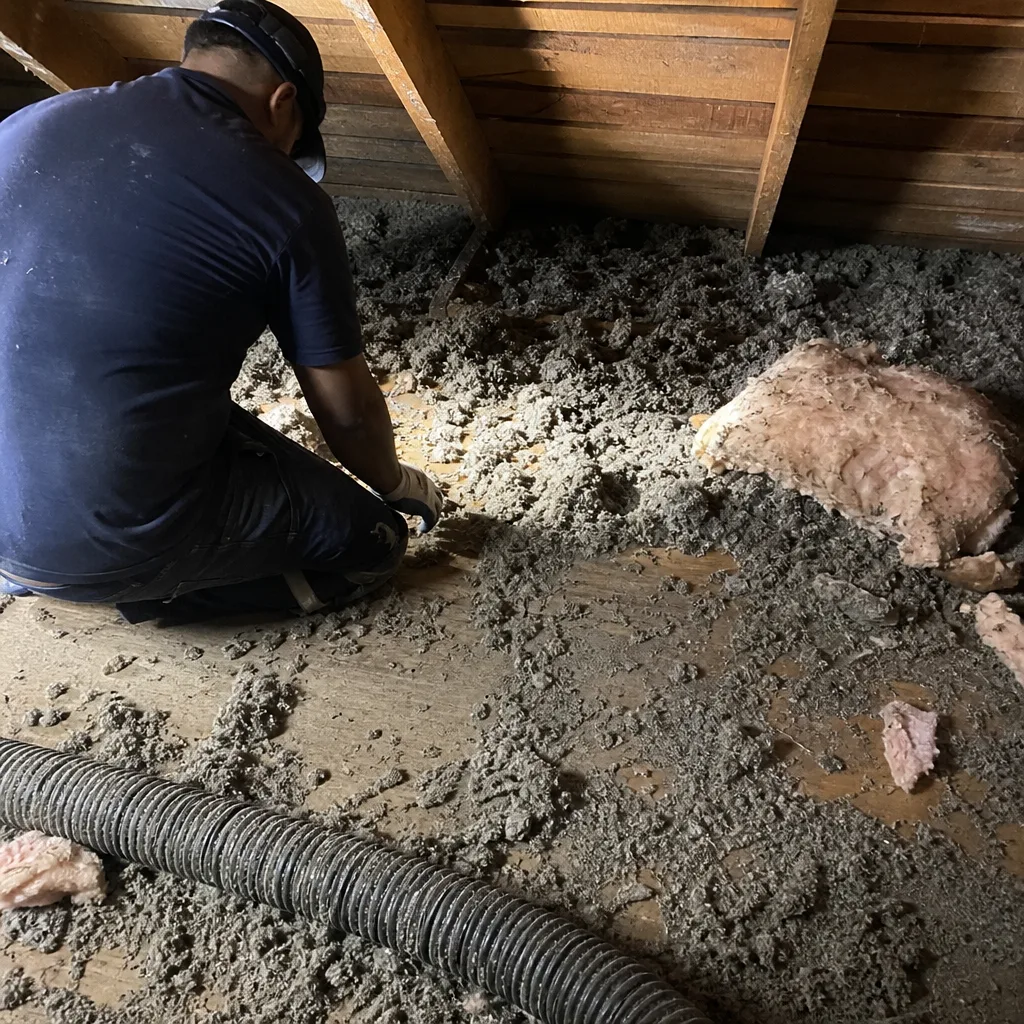 Before
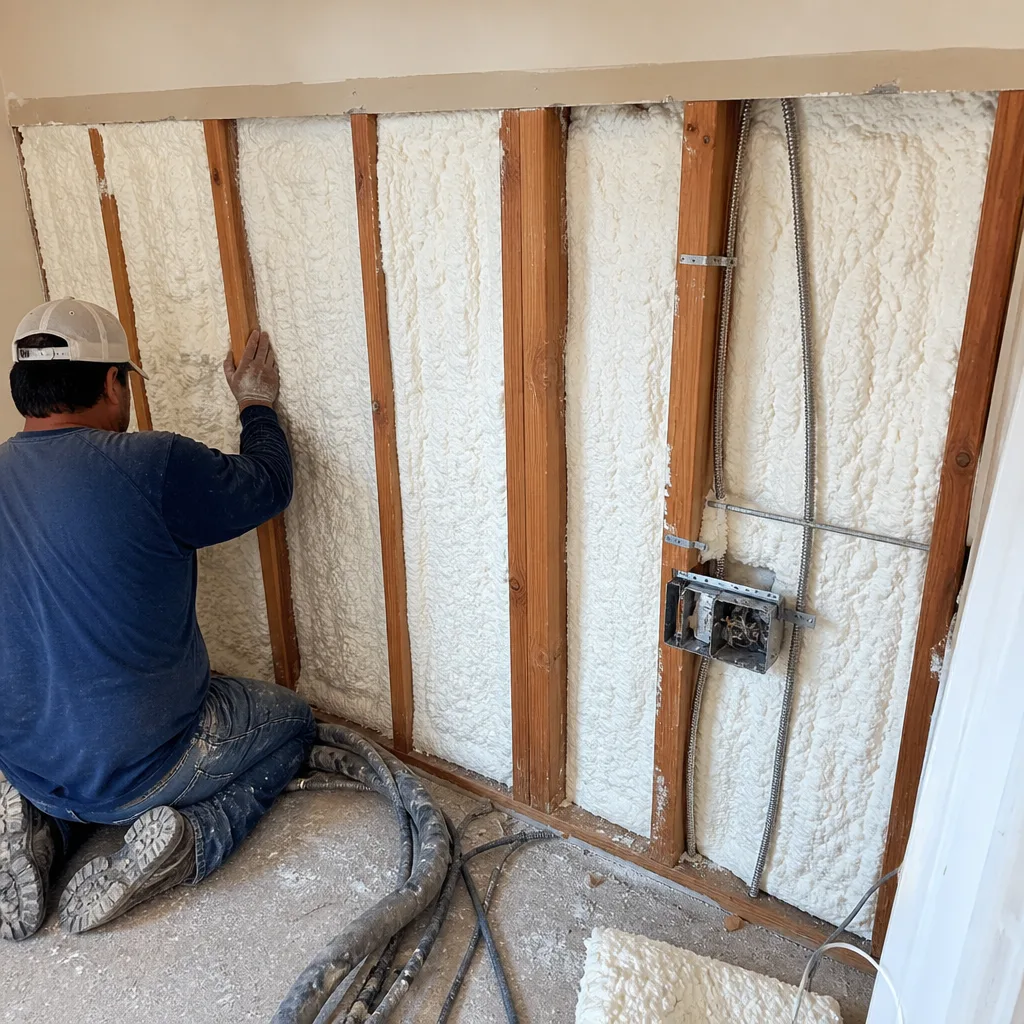 After
AfterReplacement Cost & What’s Included
Here’s how pricing breaks down for a typical Converse attic air sealing job where Johns Manville insulation is already in place and we’re addressing the air barrier underneath or around it:
| Small attic (under 1,000 sq ft, ranch) | $1,800 - $2,400 |
| Mid-size attic (1,000-2,000 sq ft, two-story) | $2,400 - $3,000 |
| Large or complex attic (2,000+ sq ft, multiple HVAC zones, vaulted ceilings) | $3,000 - $3,400+ |
That range covers labor, materials (fire-rated caulk, foam board, spray foam for irregular gaps, weatherstripping for attic access), and the blower-door test to verify results. What drives the price up: multiple can lights needing airtight covers, a furnace or ductwork relocated in the attic after original sealing, or rodent damage requiring cleanup before we seal. Every job gets a Written Price Before Any Work Starts, flat and itemized, plus a Documented Photo Record showing before, during, and after. We also publish your before-and-after blower-door numbers, a pressurization reading that shows, in one figure, how much the envelope tightened.
DIY or Call Us?
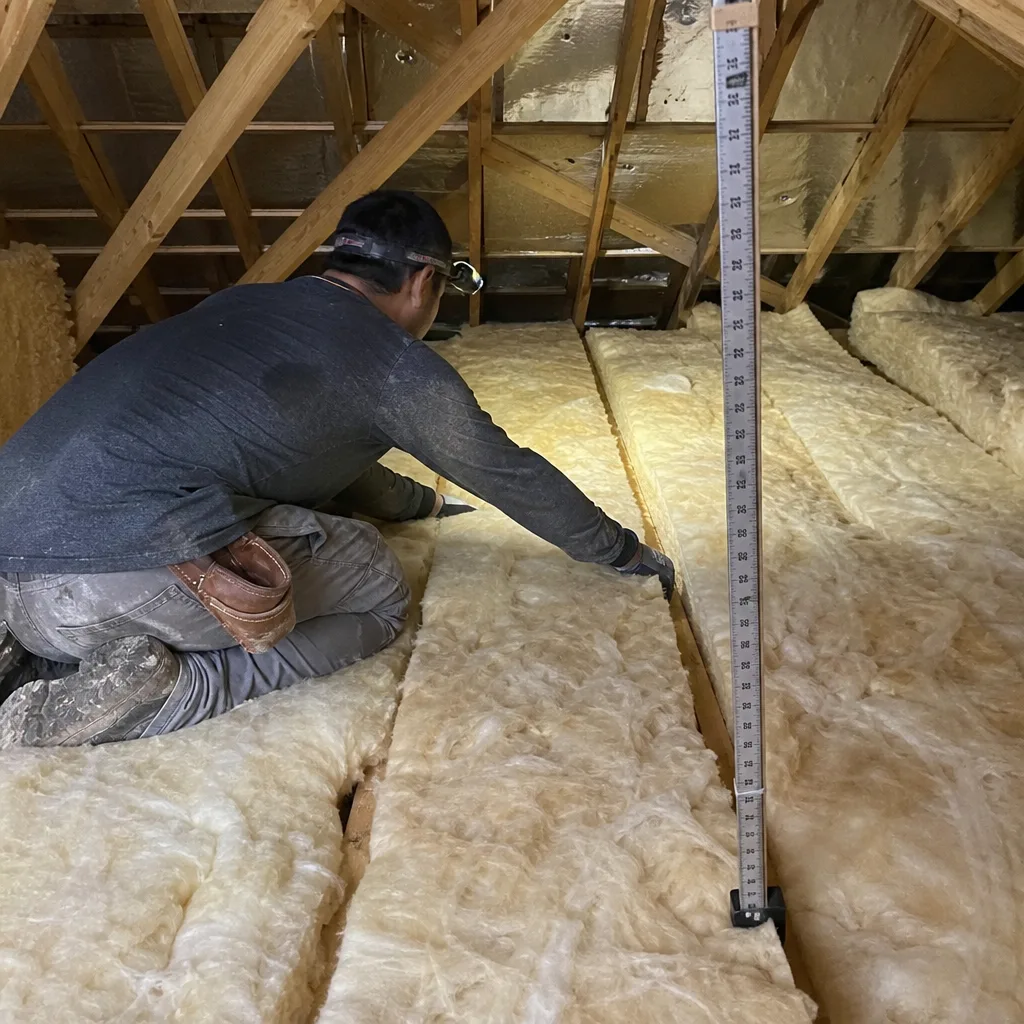
There’s a safe middle ground here, and then there’s where DIY gets expensive.
What you can check yourself: shine a flashlight into the attic during daylight and look for obvious gaps around chimneys, plumbing vents, and the attic hatch. If you see daylight through a top plate, that’s a leak you can mark with tape for reference. What you should not attempt: working near active knob-and-tube wiring (still present in some pre-1980 Converse homes), disturbing vermiculite insulation that may contain asbestos, or using spray foam around recessed can lights without verifying IC-rated housings. The fire risk is real, and the fix is cheap compared to a house fire.
More importantly, you can’t blower-door test your own work. We’ve been called to Converse homes where the owner spent a weekend with a dozen cans of Great Stuff, only to learn the house still leaked 2,800 CFM50 because they missed the chase wall behind the master bath. Seal the leaks first. Then insulate. The numbers will tell you if it worked. Call (830) 420-0953 and we’ll run the test, show you the photos, and give you a written price before anyone lifts a tool.
FAQs
In Converse’s climate, properly installed air sealing lasts 15-25 years, but caulk and foam degrade faster in attics that exceed 130°F regularly. We warranty our work for 365 days under the Done Right Promise, and the materials themselves carry manufacturer warranties of 10 years or more. Call (830) 420-0953 if you suspect premature failure, estimates are free.
Partial repair is viable if the failure is isolated to one or two penetrations, but spot-fixing often misses the systemic gaps that caused the original problem. We assess with a blower-door test and infrared camera to determine whether targeted repair or full replacement gives you the better CFM50 reduction per dollar. Call (830) 420-0953 for an exact quote, estimates are free.
Most Converse attic air sealing jobs take one full day for a crew of two; complex attics with multiple HVAC zones or finished cathedral ceilings may run into a second day. We schedule a hard arrival time, not a window, and text when the technician is en route.
We stock Johns Manville-compatible sealing materials, including AP Foil-Faced foam board and formaldehyde-free fiberglass accessories, on every truck. We’re an independent service provider, not affiliated with Johns Manville, and we also carry Reflectix and other major brands so we’re not locked into one product line. Same-day inspection and quote is standard.
Written by Wes Okafor, Owner & Lead Insulation Technician, Topside Attic Insulation Converse at Topside Attic Insulation Converse, serving Converse and nearby areas.