
Johns Manville Vapor Barrier Installation: The Converse Owner’s Guide
We stock and install Johns Manville-compatible vapor barrier systems for crawl spaces and slab-on-grade applications in Converse, with most residential jobs running between $1,800 and $3,400 installed. Same-day installation is available when we have your spec confirmed by 10 a.m., which is common for the 6-mil and 10-mil polyethylene rolls we keep on the truck. Most Converse homeowners discover their vapor barrier has failed when they notice musty odors returning after rain, soft spots developing over bare earth in the crawl space, or their HVAC running longer to pull humidity out of air that’s being re-saturated from below.
Which Johns Manville Models This Applies To
Johns Manville doesn’t sell vapor barrier as a standalone branded kit the way they package batts or loose-fill insulation. What we’re matching is their polyethylene sheeting spec, typically the 6-mil or 10-mil reinforced polyethylene used in crawl space encapsulation, or the poly layer integrated with their CI Max Silver or AP Foil-faced polyiso board systems in conditioned crawl builds. Check your existing material for the JM logo stamp and mil rating, usually printed in the seam margin every 36 inches. If you’re working from a prior contractor’s install, look for white or silver-faced rigid board with a poly vapor retarder bonded to the interior face, or black/white reinforced poly sheeting on the ground.
The OEM-versus-aftermarket question here is straightforward: Johns Manville manufactures the poly itself but doesn’t produce seam tape, termination bars, or sump-compatible fastening systems under their brand. We source virgin polyethylene that meets or exceeds JM’s permeance ratings, paired with 3M 8067 flashing tape or Sto Guard seam treatment depending on whether your application is ground-cover only or full encapsulation with conditioned air. The compatibility gotcha in Converse’s clay-heavy soils, especially around the Olympia and Rolling Meadows areas, is that 6-mil unreinforced poly tears at fastener points within 18 months. We spec 10-mil string-reinforced minimum for any ground contact application, and we note that in the written scope before anyone cuts a roll.
Signs Your Johns Manville Vapor Barrier Installation Is Failing
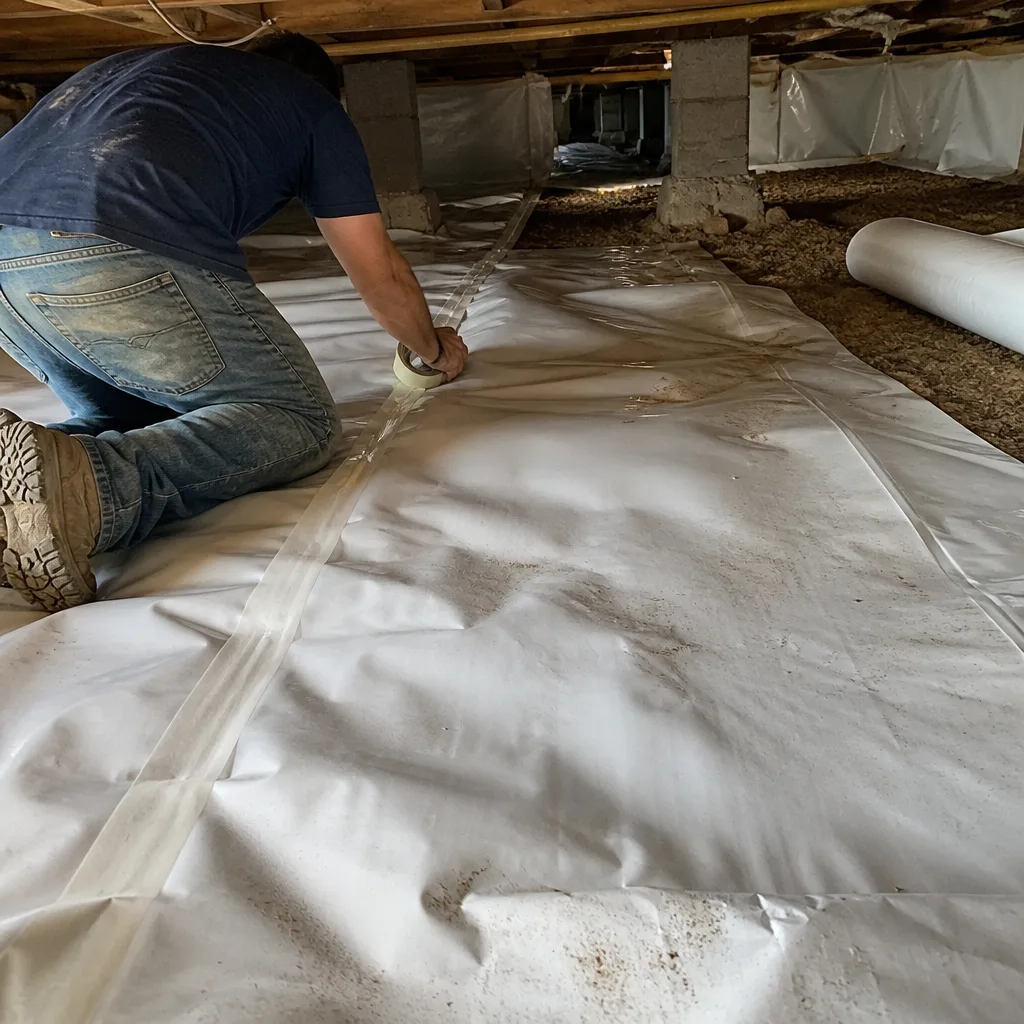
- Condensation beading on the underside of floor joists. This means your vapor barrier’s permeance has been compromised, either through punctures or an improperly lapped seam, letting soil moisture evaporate directly into the crawl space air and contact cooler framing.
- Soft or cupping hardwood floors above the crawl space. When the poly fails, relative humidity in the crawl space climbs above 70 percent, and that moisture migrates upward through the subfloor. In Converse’s spring and fall shoulder seasons, when the slab is cool and outdoor air is warm, this accelerates fast.
- Mold or mildew on insulation batts hanging between joists. Johns Manville fiberglass batts are often installed in crawl space ceilings for thermal value, but they’re not designed to handle sustained moisture. If the vapor barrier below them has failed, the batts become a filter for condensation and a growth medium.
- Musty odor that returns within 48 hours of running a dehumidifier. A dehumidifier treats symptoms. If the source, the bare earth or compromised poly below, isn’t sealed, you’re fighting a physics problem with electricity. We’ve seen this exact pattern in ranch homes near Randolph Air Force Base where the original 6-mil poly was installed in 2012 and has since degraded.
- Standing water or mud on top of the vapor barrier. This usually indicates a drainage failure, but it also destroys the barrier itself. Polyethylene left submerged loses tensile strength, and the silt that dries on it becomes an abrasive that tears the material at stress points.
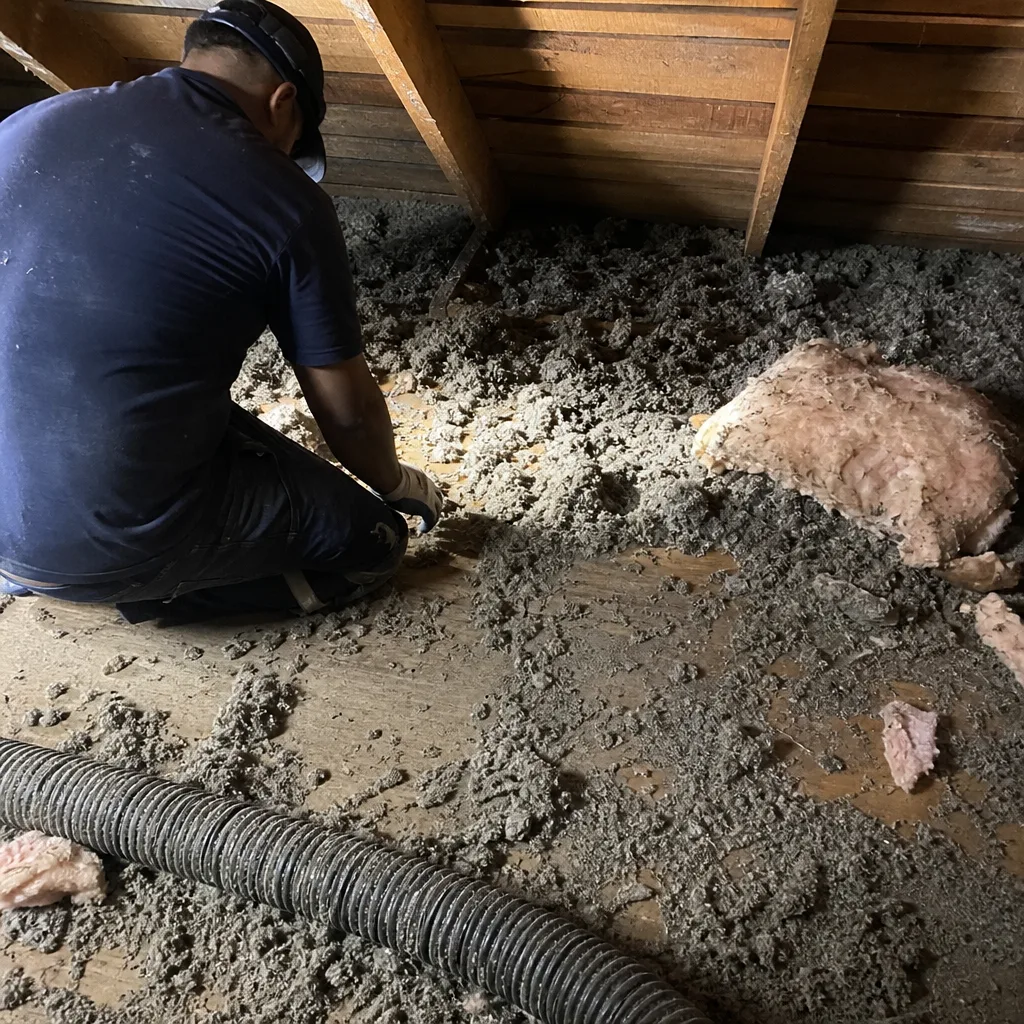 Before
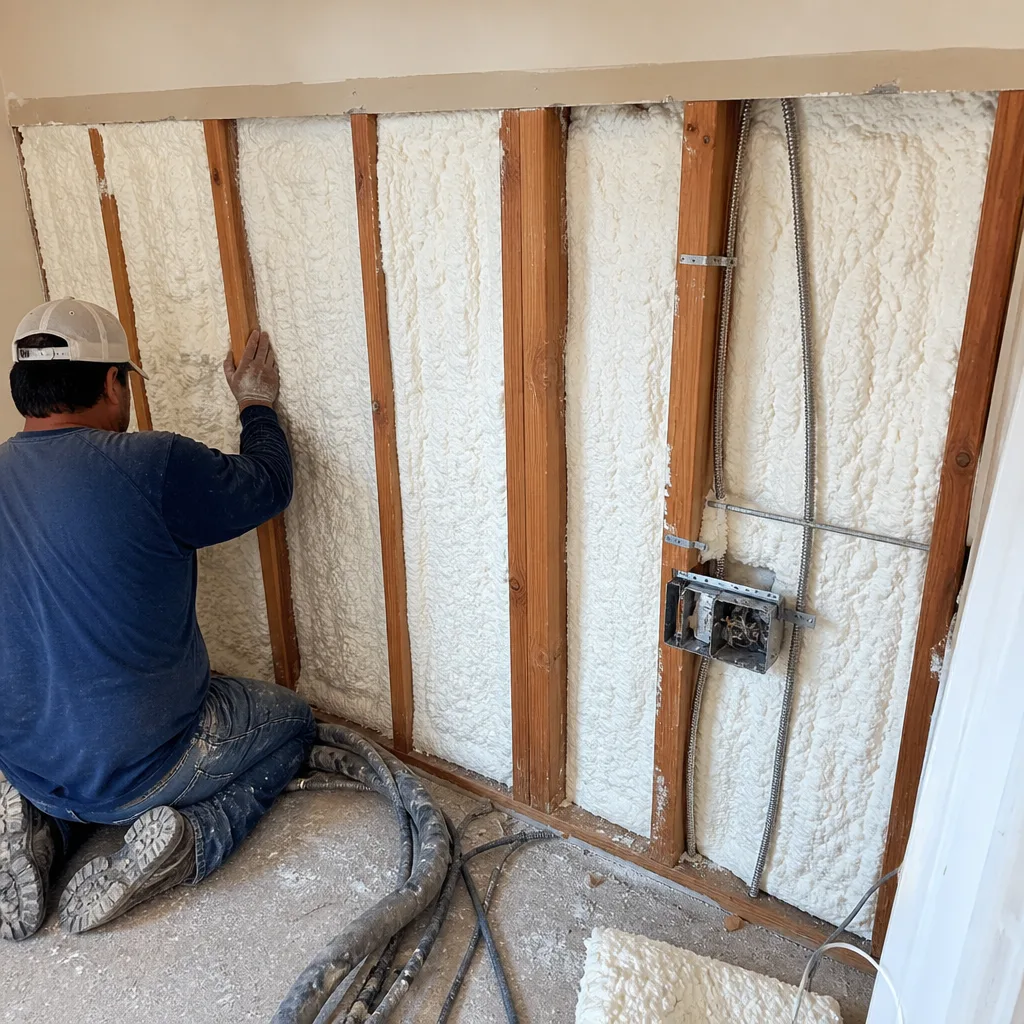 After
AfterReplacement Cost & What’s Included
| Component | Typical Range in Converse |
|---|---|
| 6-mil ground cover only, up to 1,000 sq ft | $1,800 - $2,400 |
| 10-mil reinforced, full encapsulation with seam sealing | $2,600 - $3,400 |
| Additional: sump pit and pump, if drainage is required | $900 - $1,500 |
| Additional: rigid foam board (Johns Manville AP Foil or equivalent) on walls | $3.50 - $5.20/sq ft |
What drives the range: crawl space height, accessibility, whether the existing poly needs removal, and whether we find unsealed penetrations, plumbing chases, or deteriorated sill seal that needs correction before the new barrier goes down. Every job starts with a written price, Haven Standard Clause 1, and includes the Documented Photo Record. The 365-Day Done Right Promise covers workmanship and material defect. We don’t charge to peel back a failed seam and show you why it failed.
DIY or Call Us?
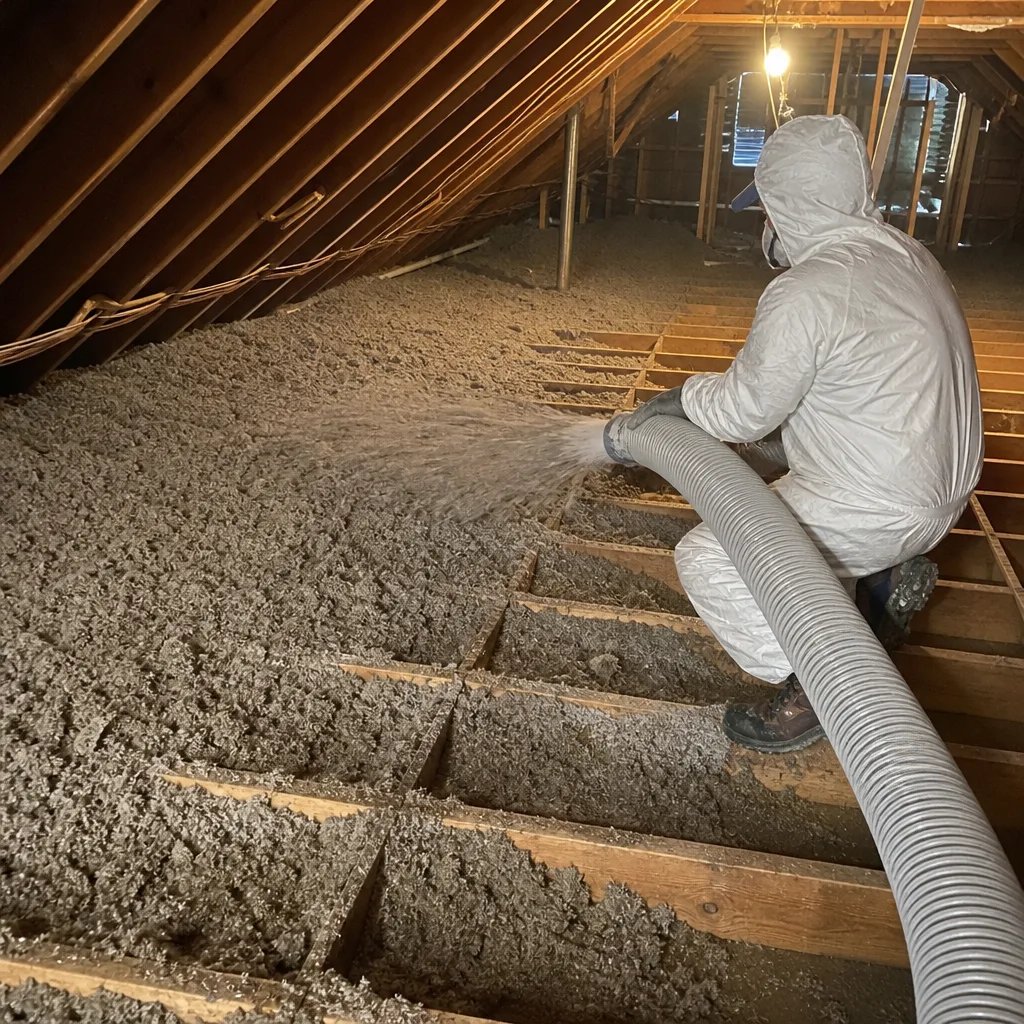
Here’s what you can safely check yourself: the mil rating stamped on your existing poly, whether seams are lapped 12 inches minimum and taped, and whether termination bars at the foundation walls are still secured. If any of those three are missing, the installation was incomplete to begin with.
Where DIY goes wrong: crawl space work involves confined-space entry, potential electrical hazards from exposed romex or junction boxes, and the respiratory risk of disturbed soil in homes built before 1990. More practically, most homeowners don’t own a seam roller that applies consistent pressure for tape adhesion, and without a blower-door test, you can’t verify whether the crawl space is still communicating with conditioned space above. We run that test, the pressurization reading in CFM50, before and after every encapsulation so you have a number that proves the envelope tightened. Call (830) 420-0953 if you want us to read what you’ve got and give you a written price before any work starts.
FAQs
Properly installed 10-mil reinforced polyethylene in a Converse crawl space typically lasts 15 to 20 years, though the clay soils and seasonal expansion-contraction near Foster Road can stress termination points earlier. The 6-mil unreinforced product, common in builder-grade installs from the 2010s, often shows punctures and seam separation within 5 to 8 years. Call (830) 420-0953 for a free inspection and written estimate on replacement timing.
Small punctures, under 2 inches, can be patched with compatible polyethylene tape if the surrounding material is still supple and the seam structure is intact. If you’re seeing multiple tears, delamination at seams, or brittle poly that cracks when flexed, replacement is the cost-effective call. We don’t sell patch jobs that fail in two seasons. Call (830) 420-0953 and we’ll show you what’s worth saving.
Most residential crawl spaces in Converse, 1,000 to 1,500 square feet, are completed in one day. Full encapsulation with wall foam, dehumidifier sizing, and sump integration typically runs two days. We don’t leave until the blower-door test is run and the photo documentation is complete. Call (830) 420-0953 to check same-week availability.
We stock 10-mil and 15-mil reinforced polyethylene that meets Johns Manville’s permeance specifications, along with JM-compatible seam tapes, termination hardware, and rigid foam board for wall applications. We also stock Reflectix radiant barrier products for hybrid systems where both moisture control and thermal reflection are specified. Topside Attic Insulation Converse is an independent service provider, not affiliated with Johns Manville or Reflectix. Call (830) 420-0953 to confirm spec match for your job.
Seal the leaks first. Then insulate. The numbers will tell you if it worked.
Topside Attic Insulation Converse has served Converse and nearby areas since 2016, with over 9,000 homes sealed and insulated under The Haven Standard. Every job begins with a written price and ends with a documented record. Wes Okafor, who learned his building envelope fundamentals at Kennedy-King College’s trades program on Chicago’s South Side, runs the blower-door test before and after every applicable job so homeowners leave with a printed report, not a promise. We source materials from Johns Manville, Owens Corning, Knauf, Rockwool, and other manufacturers, with no proprietary lock-in.
Written by Wes Okafor, Owner & Lead Insulation Technician, Topside Attic Insulation Converse at Topside Attic Insulation Converse, serving Converse and nearby areas.