
Knauf Spray Foam Insulation in Converse: What to Know First
We provide independent Knauf spray foam insulation service in Converse, with most jobs quoted same-day and completed within one to three business days. Most residential Knauf spray foam jobs in Converse run between $2,800 and $6,400 depending on cavity depth, foam type, and whether we’re treating a roof deck, rim joist, or full wall assembly. We don’t start work until you have a written price in hand, and we don’t insulate over leaks we haven’t sealed first.
This page is for Converse homeowners who already have Knauf insulation products in place and need repair, augmentation, or replacement with spray foam, or who are comparing Knauf against other brands for a new installation. If you’re seeing settled open-cell foam, moisture staining on closed-cell assemblies, or you’re simply not getting the R-value Knauf’s literature promised, we can diagnose why and document it. Call (830) 420-0953 for a free estimate with a written scope before any work starts.
How Knauf Products Fail - and How We Fix Them
- Knauf Insulation EcoSeal System gaps at top plates. The EcoSeal water-based elastomeric sealant, often paired with Knauf’s Jet Stream blown-in fiberglass in Converse builds from 2015-2020, shrinks in our heat-cycling attic conditions. We’ve pulled back Jet Stream in Live Oak-area homes to find 3/16-inch gaps at the sealant line where conditioned air streams through. We remove the compromised EcoSeal, reseal with closed-cell spray foam at the top plate, then redeploy compatible blown-in or transition to full spray foam if the cavity geometry allows.
- Knauf EcoBatt faced batt moisture retention in garage ceiling applications. The kraft facing on EcoBatt batts, when installed against a humid garage ceiling in Converse without proper vapor management, traps summer moisture against the drywall. We see this in homes near Randolph Air Force Base where slab-on-grade garages pull ground moisture. Our fix: remove the degraded batt, apply closed-cell spray foam directly to the garage ceiling deck for a Class II vapor retarder in one application, and detail the perimeter with Knauf-approved sealant or transition to full foam.
- Knauf Jet Stream MAX settling in irregular cavities. Jet Stream MAX, the higher-density blown-in fiberglass, performs well in open attics but bridges across irregular framing in older Converse ranch homes, leaving thermal bypasses at the eaves. In homes near Foster Road, we’ve measured 40°F surface temperatures at these bridges with infrared. We extract the bridged material, air-seal the eave with open-cell spray foam to maintain vapor permeability where the roof deck needs to dry inward, then supplement with targeted closed-cell at critical junctions.
- Knauf Insulation Atmosphere duct liner degradation in unconditioned spaces. Atmosphere, the black matte formaldehyde-free duct liner, delaminates when attic temperatures in Converse exceed 140°F repeatedly. The adhesive fails at the fiberglass-to-metal interface. We don’t repair duct liner in place; we remove the degraded Atmosphere, seal the duct seams with mastic, then apply closed-cell spray foam directly to the duct exterior for a monolithic, mold-resistant insulation layer that won’t delaminate.
- Knauf Ecose Technology binder off-gassing in spray foam retrofits. Ecose, the plant-based binder used across Knauf’s residential line, can emit residual phenolic compounds when encapsulated by spray foam in a retrofit where the original batt isn’t fully removed. We encountered this in a 2018 Converse build near Kitty Hawk Road. Our protocol: full removal of existing Knauf product, HEPA vacuum of the cavity, 24-hour dry-out verification with moisture meter, then spray foam application. No shortcuts. The cavity has to be clean or the chemistry doesn’t work.
Our Knauf Spray Foam Insulation Process
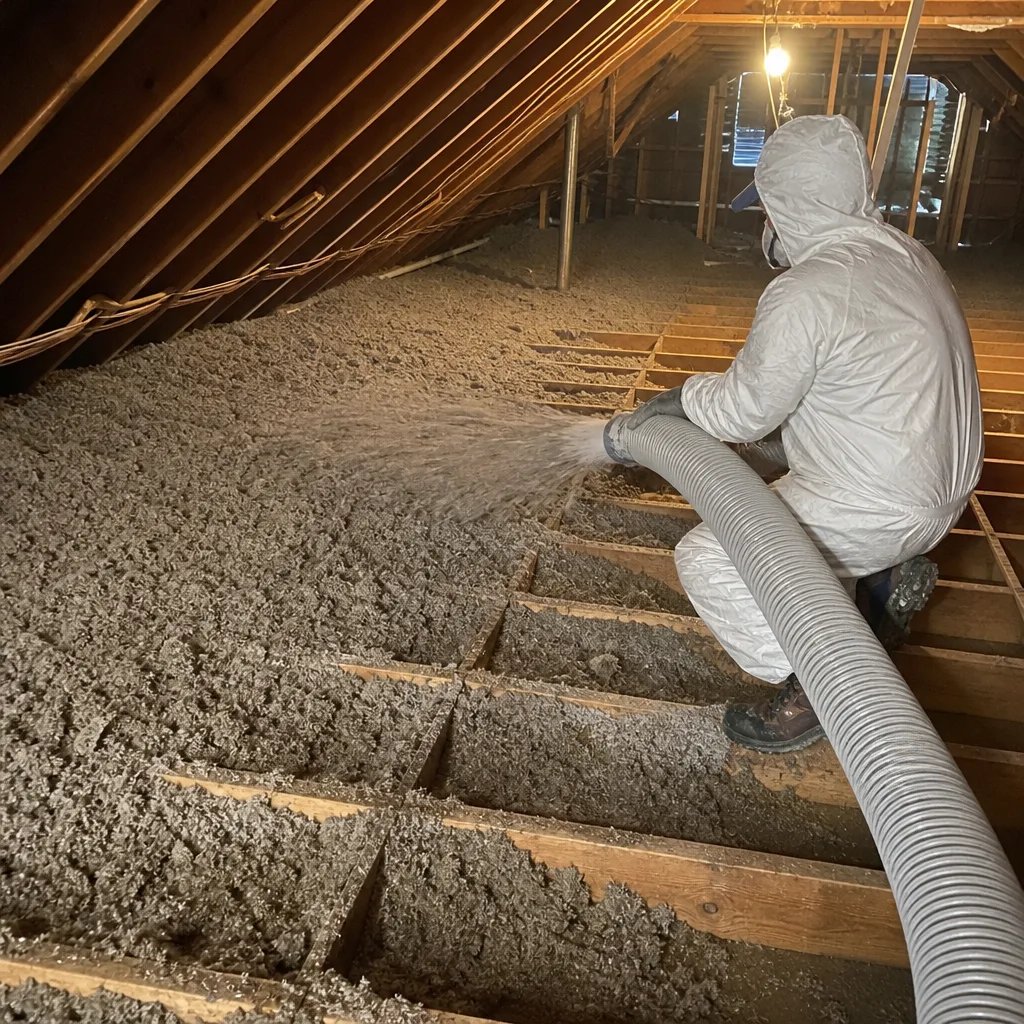
- 1
Call and scope. A live person answers, schedules a site visit, and sends a text with your technician’s name and ETA under Haven Standard: Arrive on schedule.
- 2
Blower-door test and infrared survey. We pressurize the house to 50 pascals and record CFM50 baseline, then run infrared to map thermal bypasses. You get the number before we touch anything.
- 3
Written price and scope. Flat price, written warranty, documented photo record included. No work starts without your signature. Free second opinion on any competing written estimate.
- 4
Air sealing first. Top plates, can lights, penetrations, rim joists - sealed with compatible materials before foam touches the cavity. Seal the leaks first. Then insulate. The numbers will tell you if it worked.
- 5
Spray foam application. Open-cell for roof decks and walls where vapor permeability matters; closed-cell for rim joists, garage ceilings, and anywhere we need vapor control and structural rigidity. We source from Knauf, Owens Corning, Johns Manville, and other manufacturers - no proprietary lock-in.
- 6
Post-test and documentation. Second blower-door test, printed report with before-and-after CFM50, photo record uploaded to your file. 365-Day Done Right Promise attached.
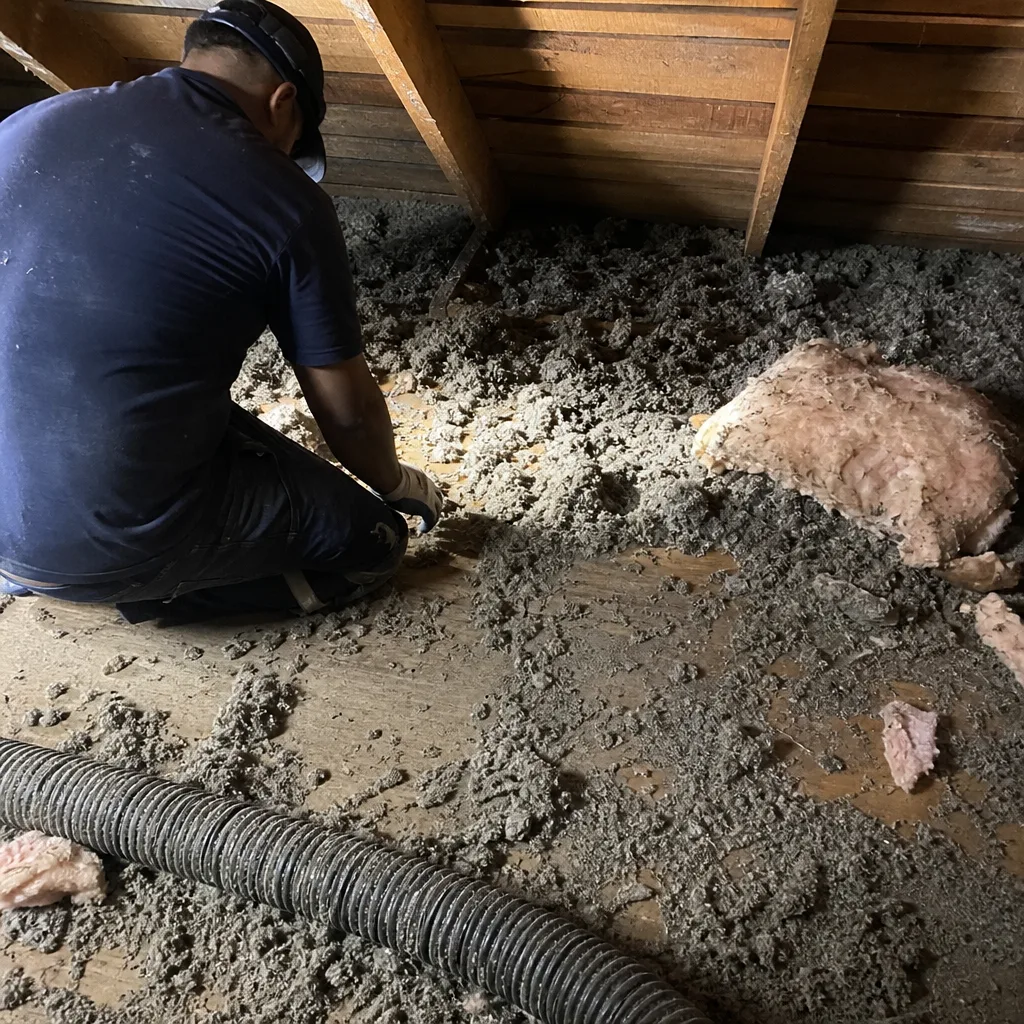 Before
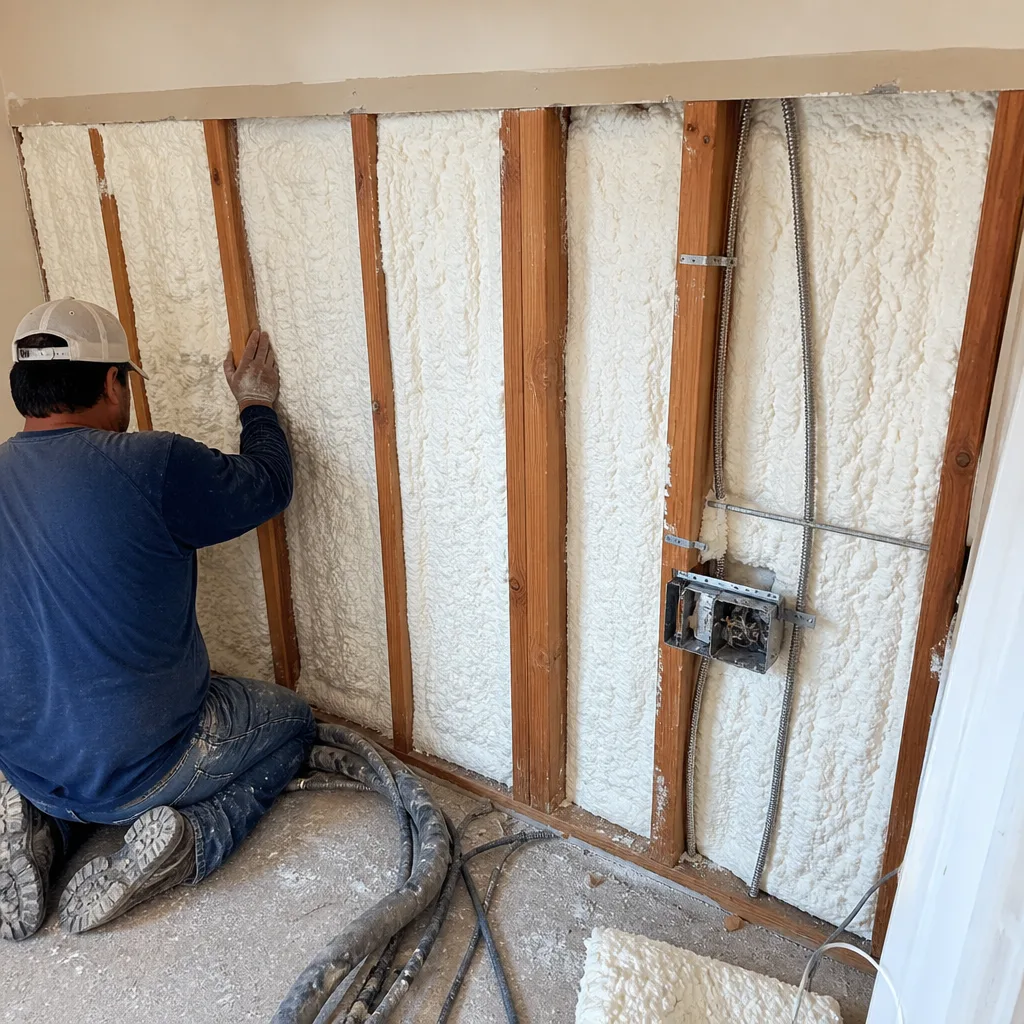 After
AfterWhat Knauf Spray Foam Insulation Costs in Converse
| Job Type | Typical Range | What Moves the Price |
|---|---|---|
| Rim joist, closed-cell (typical 1,800 sq ft home) | $2,800 - $4,200 | Crawl height, existing Knauf batt removal, pest damage |
| Garage ceiling, closed-cell | $3,400 - $5,100 | Single vs. double bay, vapor barrier condition, ductwork relocation |
| Roof deck, open-cell (vented to unvented conversion) | $4,800 - $8,600 | Roof pitch, square footage, need for baffle installation |
| Wall cavity retrofit (selective access) | $2,200 - $4,800 | Interior vs. exterior access, plaster vs. drywall, knob-and-tube presence |
| Full attic, open-cell with air sealing | $5,200 - $9,400 | Attic floor area, existing Knauf product removal, platform/build-out work |
These are real numbers for Converse homes we’ve worked on - not teaser rates. Price moves with foam thickness, cavity condition, and whether we’re removing degraded Knauf product first. Every estimate is free, written, and binding before work starts. Call (830) 420-0953 to schedule.
Why Converse Homeowners Call Topside Attic Insulation Converse for Knauf Work
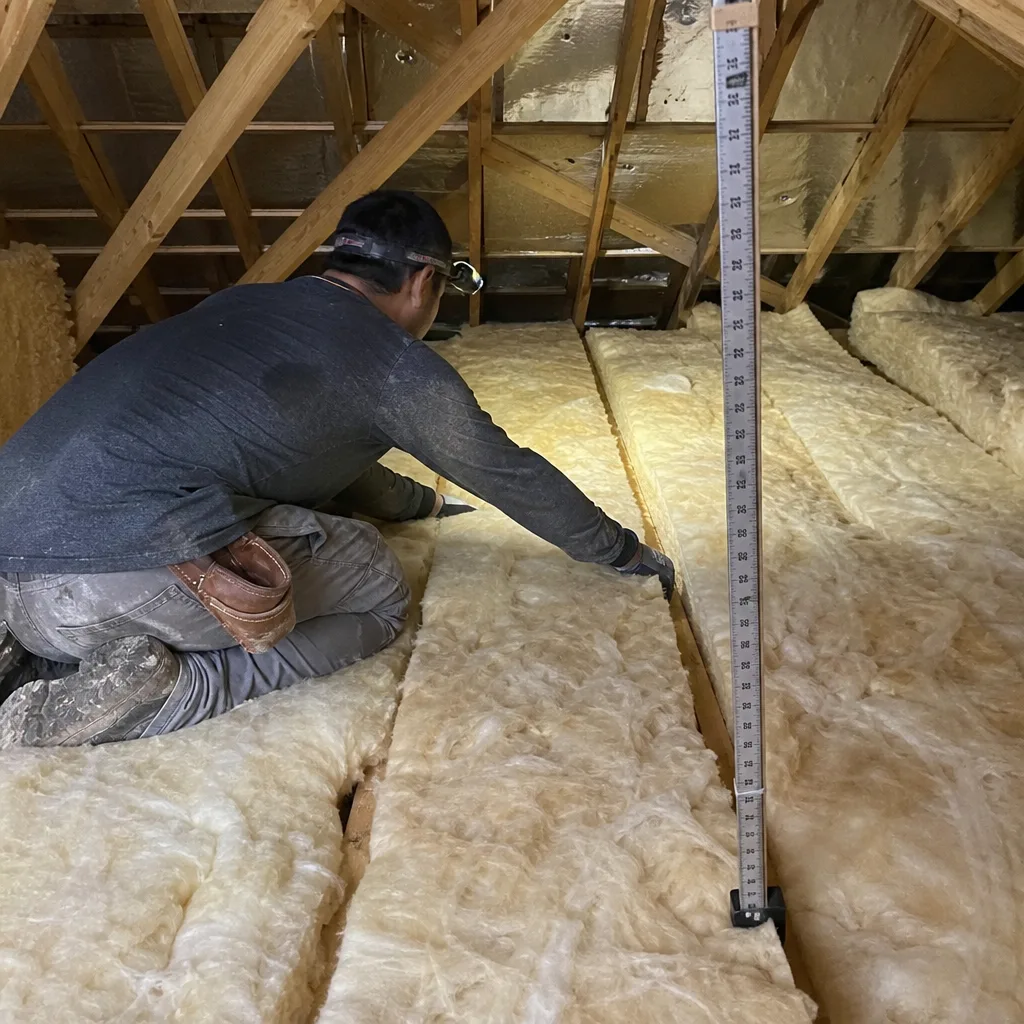
We’re independently owned and operated, not a franchise, and we don’t carry every brand on the truck because it looks good - we carry what works for the specific failure we’re looking at. Wes Okafor and our crew have diagnosed Knauf-specific degradation patterns across hundreds of Converse attics, from EcoSeal shrinkage to Jet Stream bridging in ranch-style eaves. When Knauf isn’t the right solution for the repair, we pivot to Owens Corning, Johns Manville, or Reflectix with full transparency - no brand loyalty that costs you performance.
Every job closes with a printed blower-door report and photo record, not a handshake and a promise. The 365-Day Done Right Promise is in writing before anyone lifts a tool. Calls are answered by a live person 24/7, and your technician is background-checked, uniformed, and named in the text you receive when they’re en route.
FAQs
No - Knauf’s product warranties cover material defects, not who installs or services them, provided the work meets applicable building codes and manufacturer specifications. We document our installation conditions with photos and written scope so any future warranty claim has a clear paper trail. If you’re concerned about a specific Knauf product warranty, bring your paperwork to the estimate and we’ll review it with you line by line. Call (830) 420-0953 to schedule.
Spray foam R-values per inch differ from Knauf fiberglass products - open-cell delivers about R-3.6 per inch, closed-cell about R-6.5 per inch - but R-value alone doesn’t tell the story. Air sealing, which spray foam provides in the same application, typically reduces CFM50 by 20-40% in Converse homes we’ve tested. The combined performance of reduced air leakage plus thermal resistance usually outperforms a higher R-value batt in a leaky cavity. We model this with your blower-door numbers during the estimate.
Repair is cheaper only if the existing product is dry, fully adhered, and the cavity isn’t compromised. In Converse’s climate, Knauf batts or blown-in that has seen two or more summers in an unsealed attic usually have enough moisture cycling or settling degradation that repair is temporary. We give you both numbers in writing - repair scope and replacement scope - and we don’t recommend repair if we wouldn’t warranty it. Free estimates include both options where applicable.
Most residential jobs are completed in one to two days after you approve the written scope. Same-day estimates are available, and we keep common open-cell and closed-cell formulations in stock. Weather matters less for interior spray foam than for exterior applications, but we don’t apply when attic surfaces are below 40°F or above 110°F substrate temperature - a non-issue in Converse most of the year, but something we check. Call (830) 420-0953 for current scheduling.
Knauf manufactures primarily fiberglass and mineral wool products; their spray foam offerings in the U.S. market are limited compared to dedicated foam manufacturers like Icynene or Demilec. We source spray foam from multiple manufacturers including Knauf where their product fits the application, and we select based on density, vapor permeability, and compatibility with your existing envelope - not brand preference. We’ll name the specific foam we’re proposing in your written scope and explain why.
Written by Wes Okafor, Owner & Lead Insulation Technician, Topside Attic Insulation Converse at Topside Attic Insulation Converse, serving Converse and nearby areas.