
Rockwool Radiant Barrier Installation: The Converse Owner’s Guide
Rockwool radiant barrier installation in Converse typically runs $2,800-$4,600 for a complete attic system in a 1,800-2,400 square foot home, and we stock the full Rockwool Comfortbatt and Comfortboard line on our trucks for same-day starts. Most Converse homeowners discover their radiant barrier is failing when the upstairs bedrooms won’t cool below 78°F even with the AC running flat out, or when their summer electric bills jump 30-40% year-over-year. The Rockwool mineral wool batts paired with a proper radiant barrier reflector are built for our heat, but only when the assembly is intact and the air sealing is done first.
Which Rockwool Models This Applies To
We install Rockwool radiant barrier systems using Comfortbatt R-15 through R-23 for stud cavities and Comfortboard 80 or 110 for continuous exterior or attic applications. The critical match is the facing: Rockwool’s foil-faced batts are factory-laminated with a perforated aluminum radiant barrier, while unfaced batts require a separate reflective membrane installed with a ¾-inch minimum air gap per IRC R806.5. Check the printed label on the batt edge - “FB” denotes foil-backed, “UF” means you’ll need a separate radiant barrier sheet.
Here’s where Converse homeowners get tripped up: Comfortbatt is sized for 16-inch or 24-inch on-center framing, but the 15.25-inch width for 16-inch centers is not interchangeable with the 23-inch width for 24-inch centers. We’ve found compressed batts in attics near Rolling Oaks where a previous installer forced 23-inch material into 16-inch bays, killing the R-value and creating thermal bridges. OEM Rockwool foil facing holds up better in our attic temperatures than generic reflective sheeting, which can delaminate above 180°F. We stock both, but we specify OEM for attic applications and quality aftermarket Reflectix for crawl spaces where temperature swings are milder.
Signs Your Rockwool Radiant Barrier Installation Is Failing
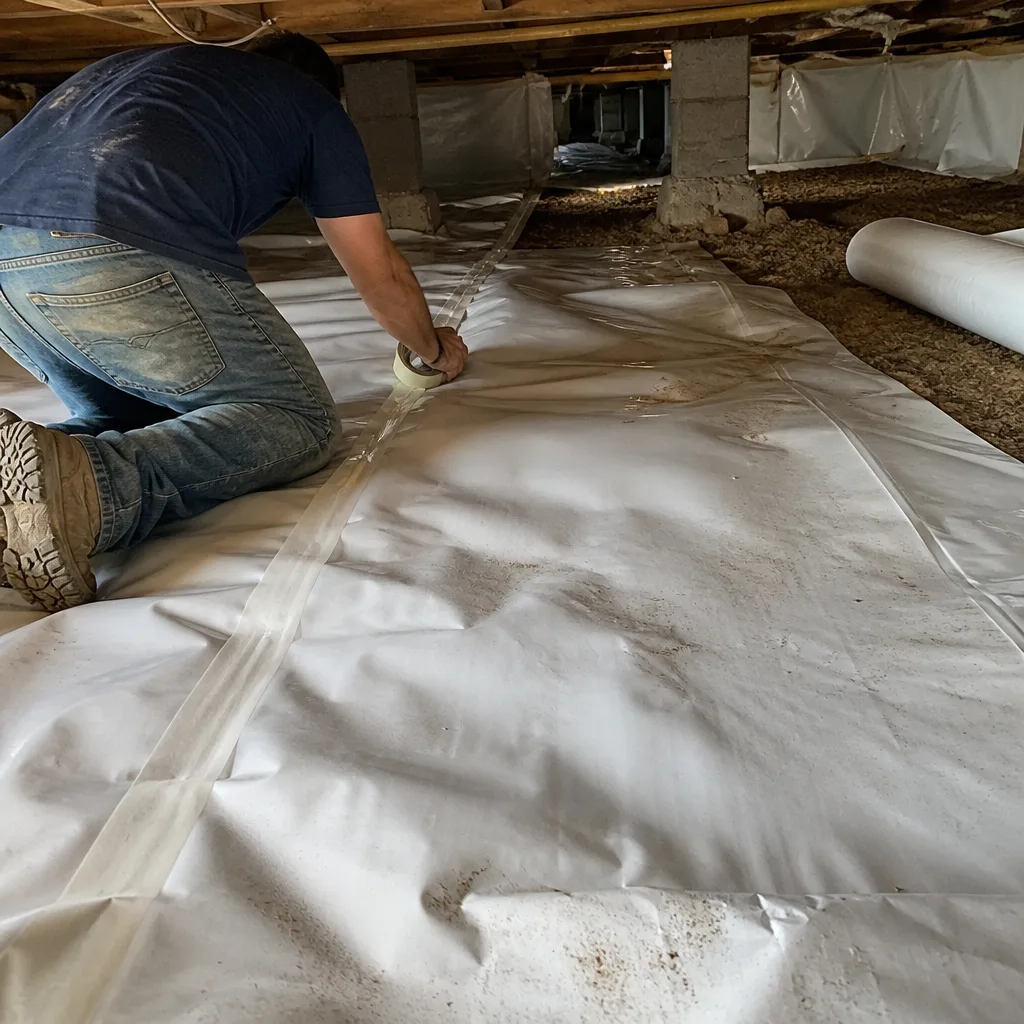
- Foil facing is dusty, torn, or hanging loose. The radiant barrier only works when the reflective surface faces an air space. Once the foil separates from the batt or gets coated with attic dust, emissivity jumps from 0.05 to 0.80 or higher. In Converse, our caliche dust is especially fine and abrasive, so a failed seal at the eave or a missing baffle accelerates this.
- Hot spots on the ceiling with an infrared camera. These show up first along the top plates of exterior walls, where compressed or displaced Rockwool lets radiant heat punch through. We scan for these during every assessment; the pattern tells us whether the barrier failed or was never properly seated to begin with.
- AC runs continuously from 2 PM to 8 PM in July. A healthy radiant barrier assembly should drop attic heat gain by 20-35%. When the system fails, the ductwork in your attic absorbs radiant heat and re-warms the conditioned air before it reaches the register. Your thermostat never satisfies, and the compressor never cycles.
- Moisture staining on the rafters or batt surfaces. Rockwool is hydrophobic and won’t mold, but a compromised vapor barrier or missing air gap can trap humidity against the roof deck. In Converse’s spring storm season, we’ve opened attics near Live Oak where the radiant barrier was installed tight to the roof sheathing with no ventilation channel, condensing moisture against the decking.
- Insulation has shifted or fallen from the sloped ceiling. Rockwool batts are denser than fiberglass and usually stay put, but improper fastening or missing support wires in cathedral ceilings lets them slide. Once the batt drops, the radiant barrier air gap is lost and the R-value disappears from that bay entirely.
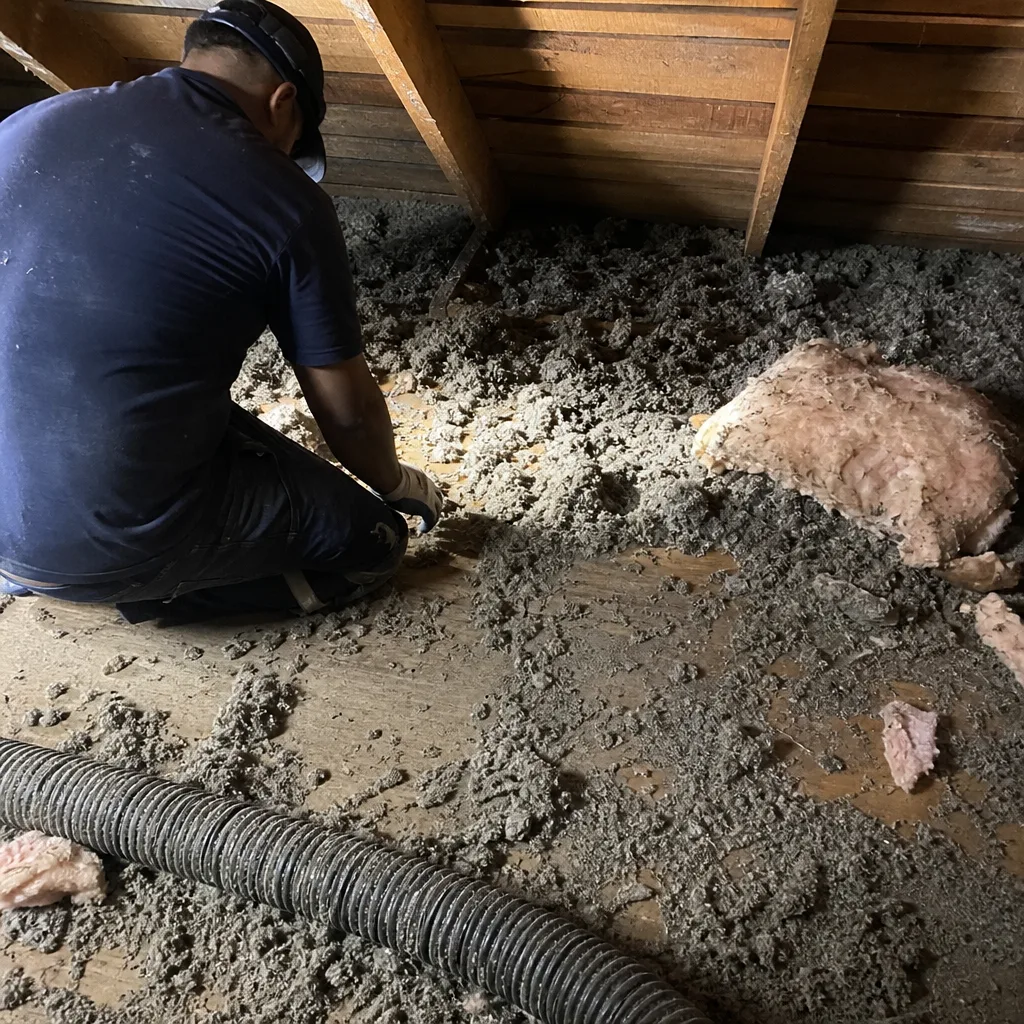 Before
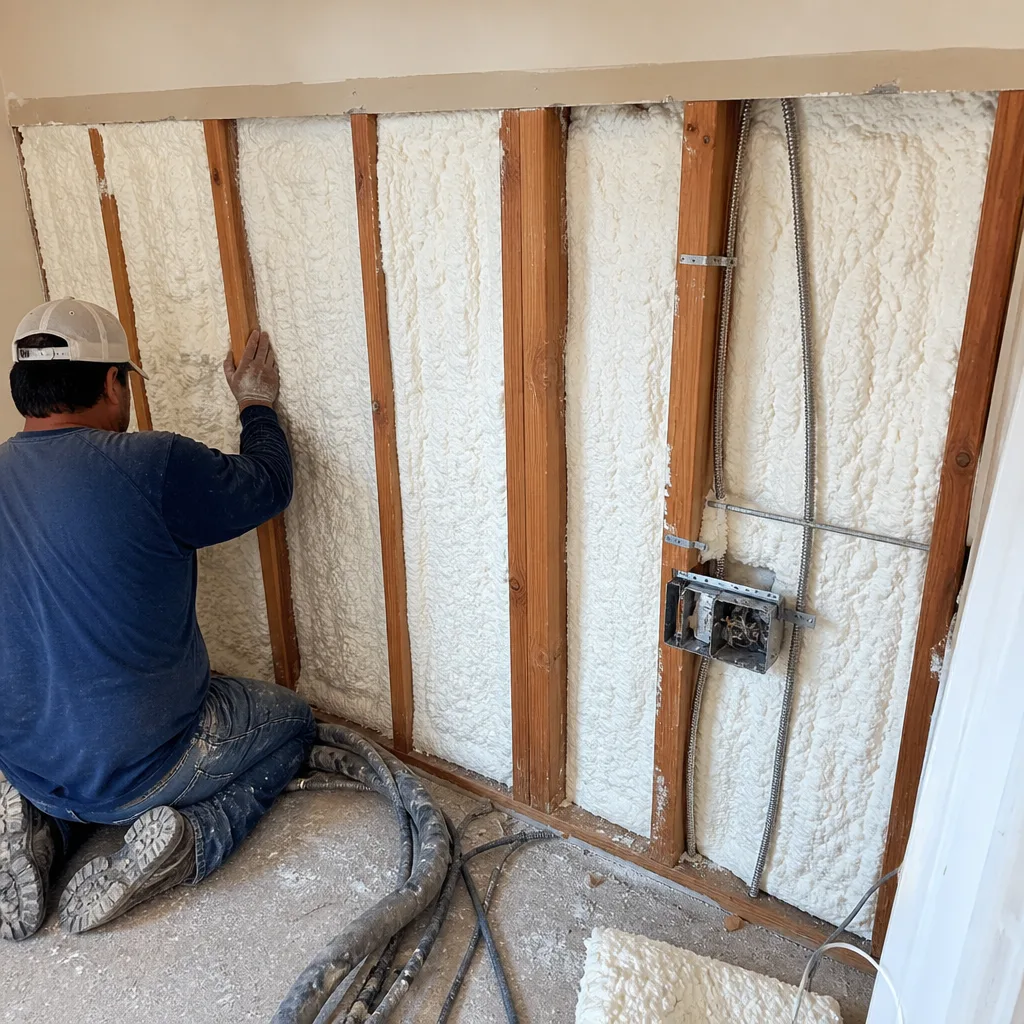 After
AfterReplacement Cost & What’s Included
| Component | Price Range (Converse) |
|---|---|
| Rockwool Comfortbatt R-23, foil-faced (per sq ft installed) | $3.20-$4.50 |
| Rockwool Comfortboard 110 + separate radiant barrier membrane | $4.00-$5.80 |
| Attic air sealing (top plates, can lights, penetrations) | $650-$1,200 |
| Baffle installation for proper air gap | $8-$14 per linear foot |
| Complete system, typical 2,000 sq ft home | $2,800-$4,600 |
The spread depends on three things: how much failed material we need to remove, whether the attic floor needs sealing first (it always does, or we don’t start), and whether your rafters are 16-inch or 24-inch centers, which affects material waste and labor hours. Our price includes the Rockwool product, all fasteners and baffles, the air sealing work, and disposal of the old material. Every job gets a written scope and written warranty before anyone lifts a tool - Haven Standard Clause 1. The 365-Day Done Right Promise covers the installation; manufacturer defects on the Rockwool itself run through their standard warranty.
DIY or Call Us?
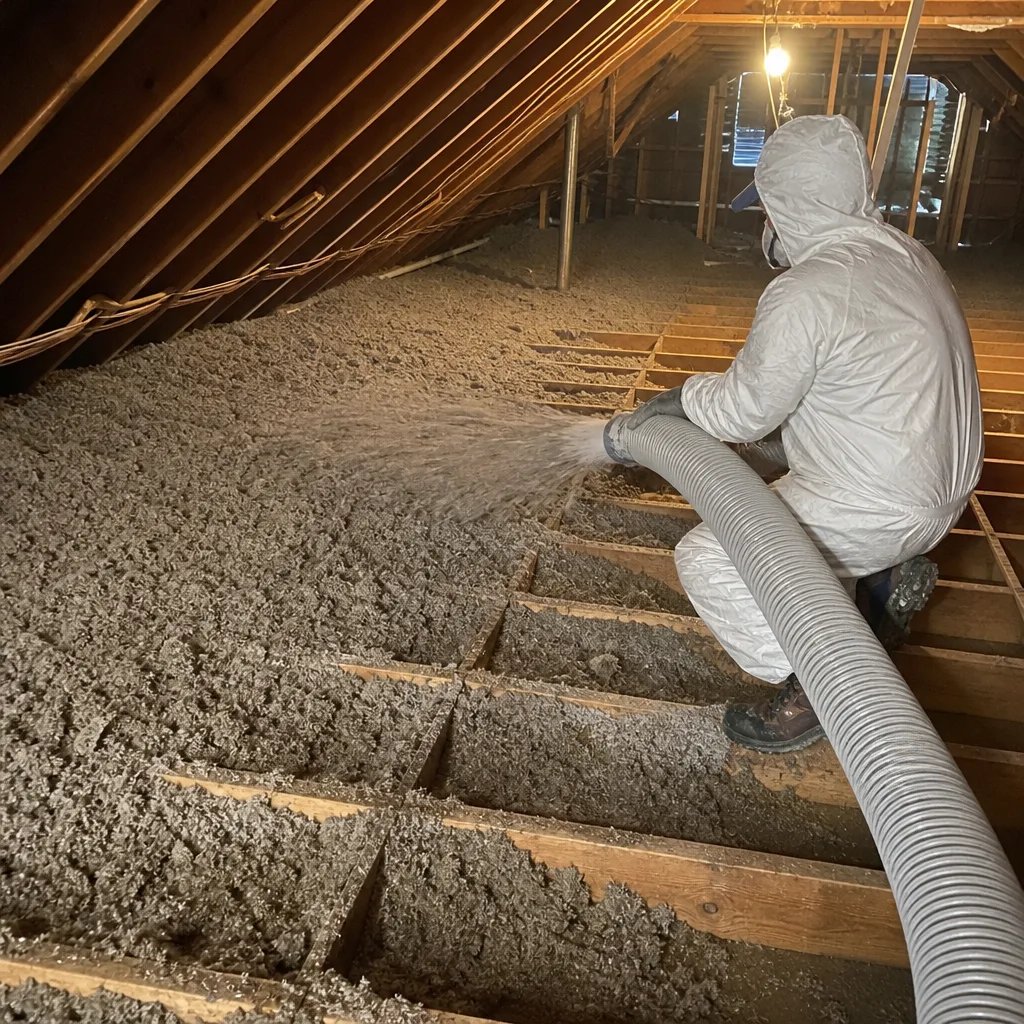
You can safely check three things from the attic hatch with a flashlight: whether the foil facing is intact, whether any batts have shifted, and whether your soffit baffles are still in place. Don’t move the batts around much - disturbing the air gap geometry makes the radiant barrier less effective until it’s re-set properly.
Where DIY goes wrong: Rockwool is heavy, about 1.6 pounds per square foot for R-23, and working on ceiling joists in a Converse attic in August is not a casual Saturday project. More importantly, if you’re adding or replacing a radiant barrier, the air gap has to be precise - too tight and you lose reflectivity, too loose and convection undermines it. And if you’re not running a blower-door test before and after, you’re insulating over leaks you can’t see. We seal the leaks first. Then insulate. The numbers will tell you if it worked. Call (830) 420-0953 for a written price before any work starts.
FAQs
Properly installed, the Rockwool mineral wool itself lasts the life of the building; the foil radiant barrier facing typically performs for 15-25 years before oxidation or dust accumulation degrades reflectivity. Attic temperatures in Converse peak around 140-160°F, which is well within Rockwool’s 2,150°F melting point but does accelerate foil degradation compared to cooler climates. We inspect the facing condition during any subsequent service call and can spot-replace sections without tearing out the full assembly. Call (830) 420-0953 if you’re unsure what shape yours is in - estimates are free.
Localized damage - torn facing in one bay, a slipped batt, a missing baffle - can be repaired without touching the rest of the system. We do this often in Converse ranch homes where a single section took rodent damage or wind infiltration from a gable vent. Widespread dust contamination, foil delamination across more than 30% of the surface, or batt compression from foot traffic usually means replacement is more cost-effective than patchwork. We price both options in writing so you can compare. Call (830) 420-0953 for an exact quote - estimates are free.
Most residential jobs in Converse are completed in one to two days: half a day for air sealing and prep, half a day for installation, plus blower-door testing before and after. Larger homes over 3,000 square feet or jobs requiring old insulation removal add a day. We don’t schedule more than one job start per crew per day, so your timeline doesn’t slip because another house ran long. Under Haven Standard: Arrive on schedule, you get a named technician and a text when they are on the way.
We stock Comfortbatt R-15, R-21, and R-23 in both foil-faced and unfaced, plus Comfortboard 80 and 110, on every truck serving Converse. Reflective membrane and baffles are also carried standard. Specialty thicknesses or high-density Comfortboard 300 for commercial applications typically arrive within two business days from the San Antonio distributor. We don’t start a job until all materials are on-site - no partial installs, no return trips on your clock. Topside Attic Insulation Converse is an independent service provider, not affiliated with Rockwool.
Topside Attic Insulation Converse has served Converse homeowners since 2016, including older ranch-style homes near Foster Road where unsealed top-plate penetrations were bleeding conditioned air long before anyone touched the blown-in cellulose. Wes Okafor, who leads the crew, grew up on Chicago’s South Side and picked up his insulation fundamentals at Kennedy-King College’s building trades program before spending two decades putting that classroom work to use in Texas attics. He still runs a blower-door test before and after every job so customers leave with a printed report showing exactly how much the envelope tightened.
Ready to get your Rockwool radiant barrier installed right? Call (830) 420-0953 for a free estimate with a written price before any work starts.
Written by Wes Okafor, Owner & Lead Insulation Technician, Topside Attic Insulation Converse at Topside Attic Insulation Converse, serving Converse and nearby areas.