
Rockwool Attic Air Sealing: The Converse Owner’s Guide
Rockwool-compatible attic air sealing in Converse typically runs $1,800-$3,400 for a complete top-plate and penetration seal on a 1,800-2,400 sq ft home, and we stock the acrylic latex sealants, fire-rated caulk, and rigid blocking materials needed for same-day start. Most Converse homeowners discover the problem when their summer electric bill jumps $80-$140 despite the Rockwool batts looking intact, or when an HVAC tech points out the unit’s running 22+ hours daily because conditioned air is escaping through gaps the insulation never touched.
Which Rockwool Models This Applies To
Rockwool doesn’t sell a branded “air sealing kit,” so this page covers the building envelope details that make or break Rockwool Comfortbatt, Comfortboard, or AFB (Acoustic Fire Batt) performance in Converse attics. The critical match is between your batt thickness and the cavity depth you’re sealing against. Comfortbatt R-23 (5.5″) and R-30 (7.25″) are what we see in most Converse homes built 1985-2015; newer builds with raised-heel trusses sometimes run Comfortbatt R-38 (10.25″).
To identify what you’re working with, check the paper facing if present (some Rockwool is unfaced), or measure uncompressed thickness with a tape measure at a plumbing chase where you can see the edge. The OEM approach is Rockwool’s own AFB paired with their specified sealants, but we regularly install quality aftermarket equivalents: Tremco acoustical sealant for perimeter gaps, 3M Fire Block Foam for large penetrations, and OSB or thermoply rigid blocking for dropped soffits. The aftermarket route saves 15-25% on materials without affecting the blower-door result, provided the sealant meets ASTM E-814 for fire blocking. One Converse-specific gotcha: homes near Randolph Air Force Base with original 1960s construction often have 2×4 top plates with no double plate, meaning your effective sealing surface is 3.5″ instead of the modern 5.5″. We carry 1/2″ plywood ripping to build out those plates before the Rockwool goes back in.
Topside Attic Insulation Converse is an independent service provider with no affiliation to Rockwool.
Signs Your Rockwool Attic Air Sealing Is Failing
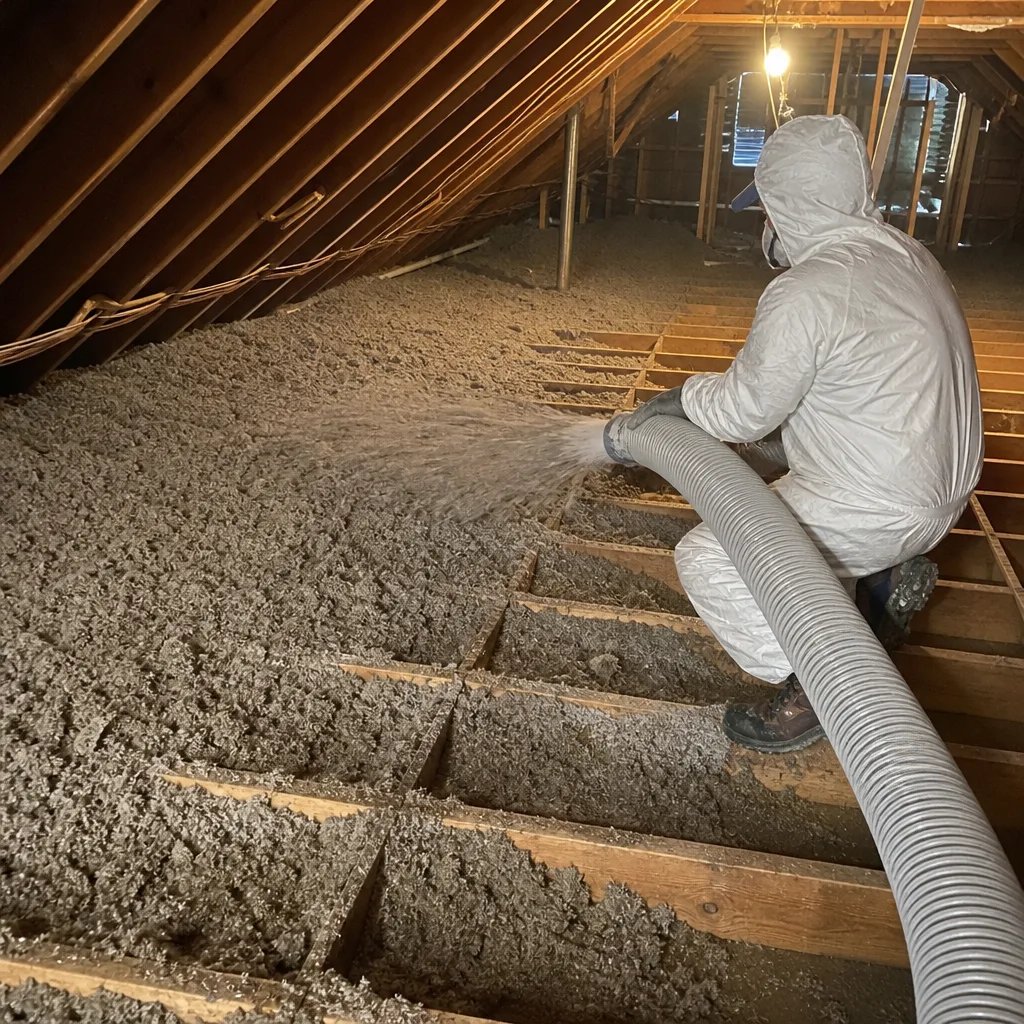
- Hot ceiling patches in summer afternoons. The Rockwool itself is fine, but convection currents are moving attic air through gaps around electrical boxes and drywall seams. Infrared cameras pick this up as 8-12°F surface temperature differences on the ceiling below.
- Dust streaking around ceiling registers. This means your HVAC is pulling attic air through leaks in the duct boots or ceiling plane. The Rockwool filter isn’t designed to stop particulates at that velocity, and you’re breathing what the attic’s been collecting.
- Ice damming or uniform roof melt patterns in rare Converse freezes. Warm air leaking through bypasses melts snow from underneath, then it refreezes at the eaves. Even our mild winters expose this; we see it most in the older ranch homes off Gibbs Sprawl Road.
- Blown-in settling that exposes top plates. If someone added loose-fill over your Rockwool without sealing first, the air movement vibrates and migrates the fill. The plates are naked, and the stack effect is pulling your conditioned air straight up.
- Blower-door numbers above 3,500 CFM50 on a home under 2,500 sq ft. That’s the measurable threshold. We’ve tested homes in Converse reading 5,200+ before sealing and 2,400 after. The Rockwool was doing its job; the air sealing wasn’t.
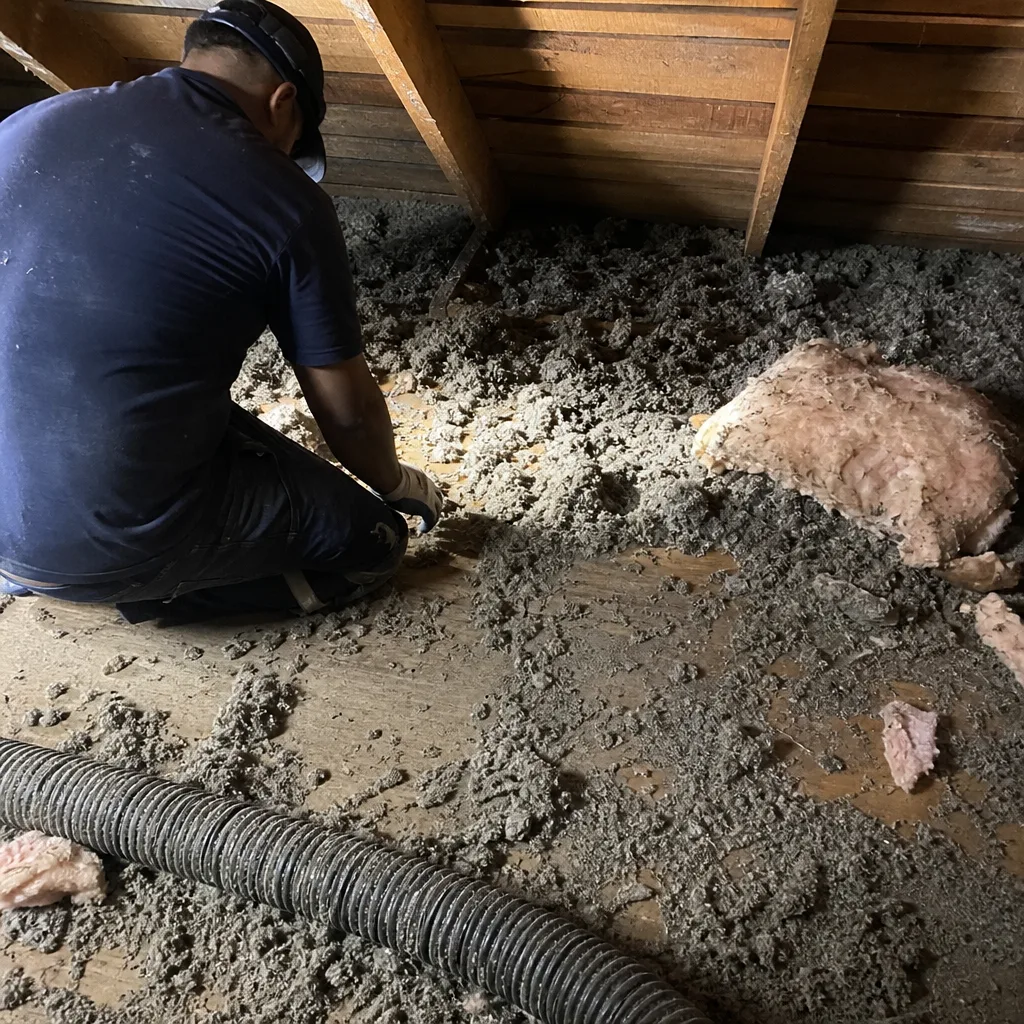 Before
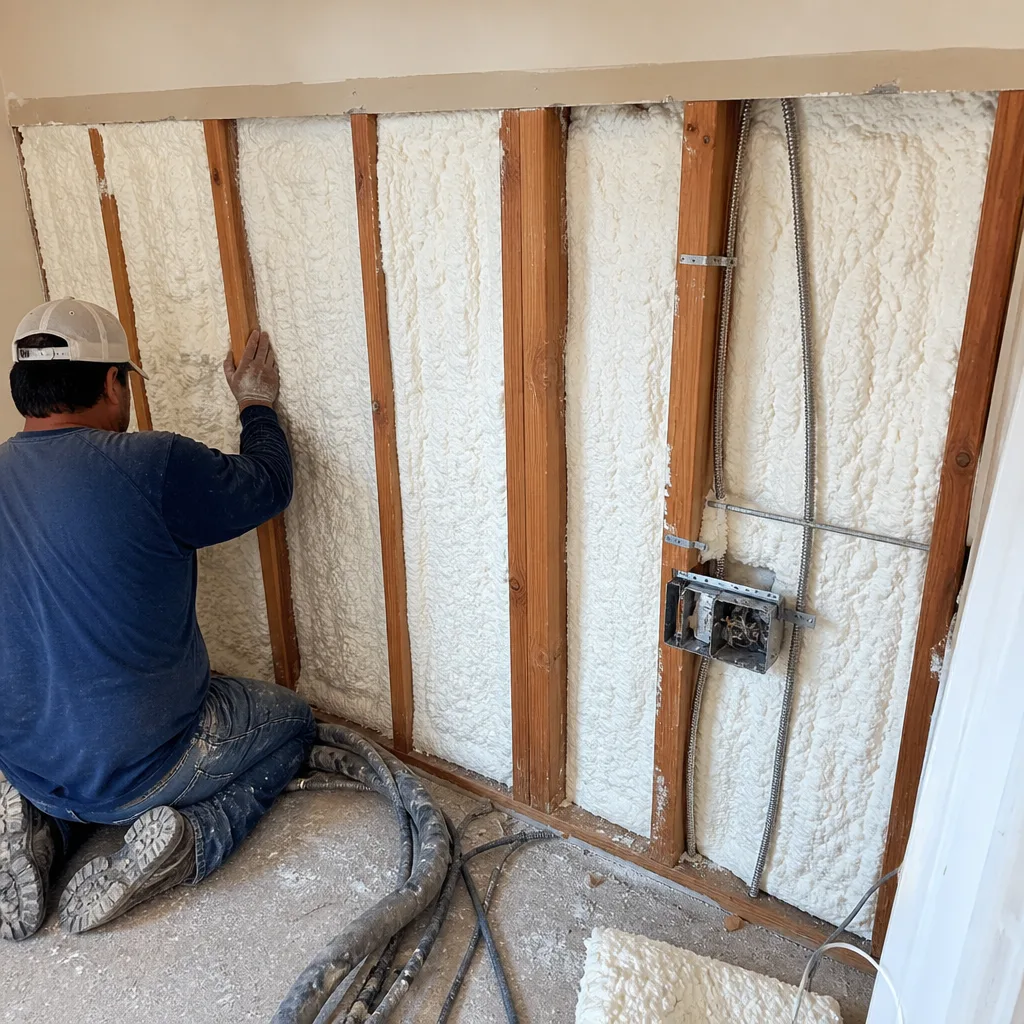 After
AfterReplacement Cost & What’s Included
| Scope | Price Range in Converse | Typical Home Size |
|---|---|---|
| Top-plate seal, electrical penetrations, standard can lights | $1,800 - $2,600 | 1,400 - 2,000 sq ft |
| Above plus chimney chase, duct boots, dropped soffits | $2,400 - $3,400 | 1,800 - 2,800 sq ft |
| Full envelope with blower-door verification | $3,000 - $4,200 | 2,500+ sq ft or complex roofline |
What moves you within the range: accessibility (truss height, decking coverage), quantity of recessed can lights (each needs a tenmat cover or similar fire-rated enclosure), and whether we’re working around existing Rockwool or removing and replacing it. Every quote under Haven Standard Clause 1 is a flat price with written scope and written warranty before anyone lifts a tool. The 365-Day Done Right Promise covers labor and materials; manufacturer warranty on sealants runs 10 years. We publish before-and-after blower-door numbers on every job so you see the CFM50 drop in writing.
DIY or Call Us?
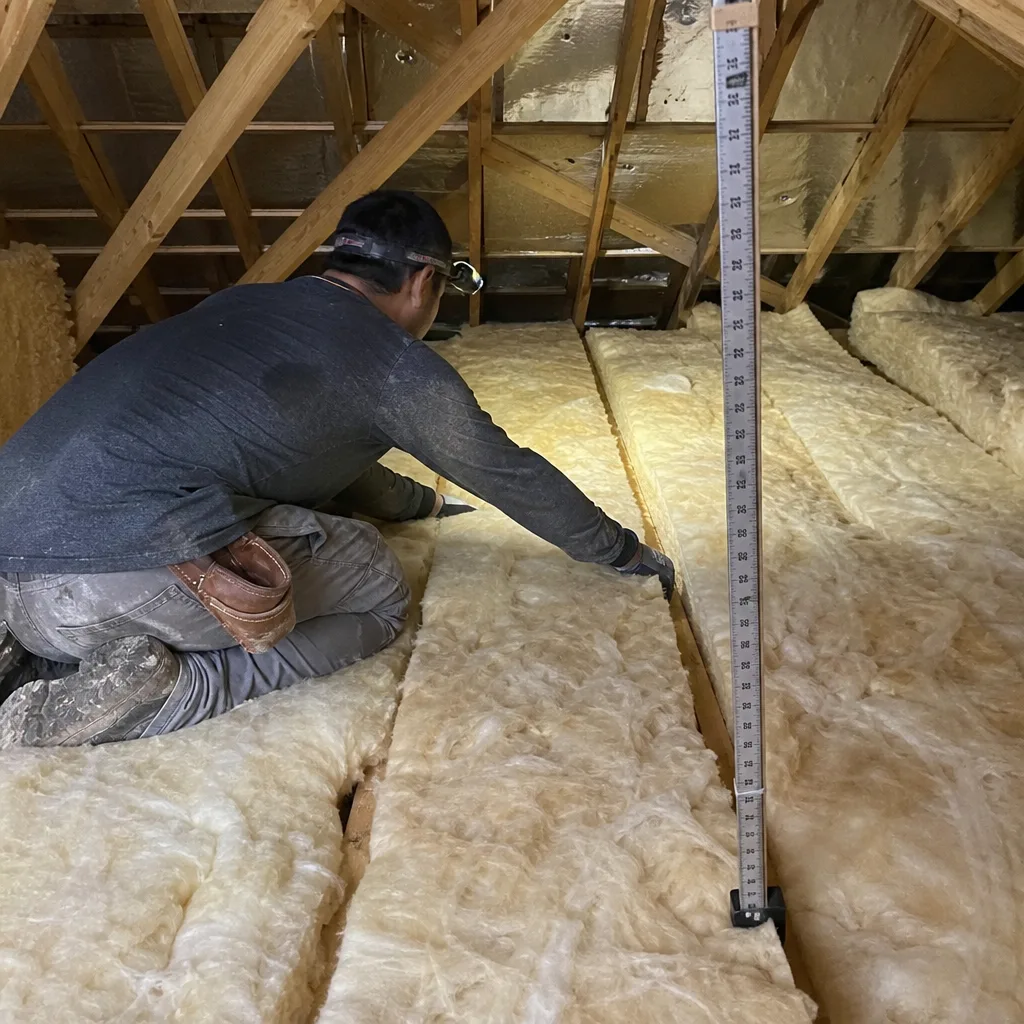
What you can safely check yourself: shine a flashlight across the attic floor at dusk. If you see light from the rooms below, those are leaks. Mark them with tape and note locations. You can also verify your can lights are IC-rated (insulation contact) by checking the housing label; non-IC fixtures need fire-rated covers before any insulation touches them.
Where DIY goes wrong: Converse attic temperatures hit 140°F+ in July. Working in that heat leads to rushed, incomplete sealing. More critically, fire-blocking requirements around chimneys, flues, and garage ceiling penetrations are code-specific; get them wrong and you’ve created a liability, not a fix. The acrylic latex sealants need surface temps below 120°F to cure properly, which means early morning starts or waiting for October. We run infrared scans to find leaks the flashlight won’t catch, and we pressure-test after. Seal the leaks first. Then insulate. The numbers will tell you if it worked. Call (830) 420-0953 when you’re ready for the blower-door proof.
FAQs
Quality acrylic latex sealant and rigid blocking should last 20-25 years in Converse’s climate, though extreme attic heat cycling can degrade flexible caulks faster. We inspect sealant integrity during any subsequent insulation service and touch gaps as needed under our 365-Day Done Right Promise. Call (830) 420-0953 to schedule a look.
No. Adding insulation over unsealed leaks is like putting a thicker blanket over an open window. The R-value of the Rockwool doesn’t stop air movement; it just filters the dust. We’ve removed perfectly good batts in Converse homes where the underlying leaks had been ignored for 15 years. The fix is seal first, then replace or supplement insulation.
Most Converse homes are a one-day job: 6-8 hours for access, sealing, cleanup, and blower-door verification. Complex rooflines with multiple dropped soffits or a finished attic conversion may run into a second day. We give you a written schedule with your written price before work starts.
Yes. Our trucks carry Tremco acoustical sealant, 3M Fire Block Foam, tenmat covers for can lights, and rigid blocking materials sized for standard and raised-heel trusses. For Rockwool-specific jobs, we also stock Rockwool Comfortboard 80 for blocking applications where fire rating and compressive strength both matter. Same-day start is standard when you call (830) 420-0953.
Get Your Written Price Before Any Work Starts
We’ve sealed and insulated 9,000+ homes since 2016, every one with a written price first and a documented record at the end. In Converse, that includes the ranch homes near Foster Road where unsealed top-plate penetrations were bleeding conditioned air long before anyone touched the blown-in cellulose. Wes Okafor grew up on Chicago’s South Side, picked up his insulation fundamentals at Kennedy-King College’s building trades program, and has spent two decades putting that classroom work to use in Texas attics. He and the crew run blower-door tests before and after every job so you leave with a printed report showing exactly how much the envelope tightened. No voicemail loops, no callback windows measured in business days. A live person answers (830) 420-0953, 24/7. Free estimates, free second opinions on any written estimate you bring us.
Written by Wes Okafor, Owner & Lead Insulation Technician, Topside Attic Insulation Converse at Topside Attic Insulation Converse, serving Converse and nearby areas.