
Icynene Attic Air Sealing: The Converse Owner’s Guide
Most Icynene attic air sealing jobs in Converse run between $1,800 and $3,400 installed, depending on attic square footage and how many top-plate penetrations need sealing. We stock Icynene-compatible open-cell foam, gasketed sealant, and rigid blocking materials on our trucks, and we can usually start same-day or next-day. Homeowners typically figure out something’s wrong when their summer AC runs nonstop but the upstairs bedrooms never cool below 78, or when they spot dusty insulation trails near can lights - signs that conditioned air is escaping through gaps the original Icynene application missed or that have opened up over time.
Which Icynene Models This Applies To
Icynene produces several product lines used in Texas attics, and the air-sealing approach varies by what was originally installed. Icynene Classic Max, Icynene ProSeal, and Icynene LD-C-50 are the three systems we encounter most often in Converse homes built between 2005 and 2020. Classic Max is open-cell, half-pound density - it expands to fill cavities but doesn’t create its own airtight seal at the attic floor plane. ProSeal is closed-cell, two-pound density, and acts as both insulation and air barrier when applied to roof decks. LD-C-50 is a lower-density open-cell used in hybrid systems with separate air-sealing layers.
To identify what you have, check the spray-foam surface texture and any remaining job tags. Classic Max feels spongy and yields to thumb pressure; ProSeal is rigid like styrofoam. Original installation paperwork sometimes lists the Icynene lot number, but we verify with a visual inspection and, when needed, a core sample density test. We are an independent service provider - not affiliated with Icynene - so we source compatible sealants from Icynene, Demilec, and GreenFiber depending on what bonds correctly to your existing foam chemistry. The compatibility gotcha: ProSeal’s closed-cell surface won’t accept new open-cell foam without a primer barrier, and skipping that step creates a delamination risk within two years.
Signs Your Icynene Attic Air Sealing Is Failing
- Hot second-floor rooms despite new HVAC. Your unit is sized correctly, but conditioned air is leaking into the attic through unsealed top plates - the horizontal framing member where interior walls meet the ceiling. Icynene on the roof deck doesn’t stop this floor-plane leakage.
- Dusty or dark streaks on insulation near can lights or duct boots. These are thermal bypass markers - air moving through gaps carries attic dust and deposits it where the leak path enters your living space. The Icynene barrier was either never extended to these penetrations or has pulled away.
- Ice damming or heavy frost on roof sheathing in winter. Warm, moist interior air hits cold OSB and condenses. In Converse, this happens less often than up north, but January cold snaps below 25 degrees will expose any attic air leaks the Icynene system should have sealed.
- Spikes in summer humidity upstairs. Unsealed plumbing and electrical chases act as conduits for humid Gulf air. Icynene’s R-value doesn’t matter if the air barrier has gaps at these vertical penetrations.
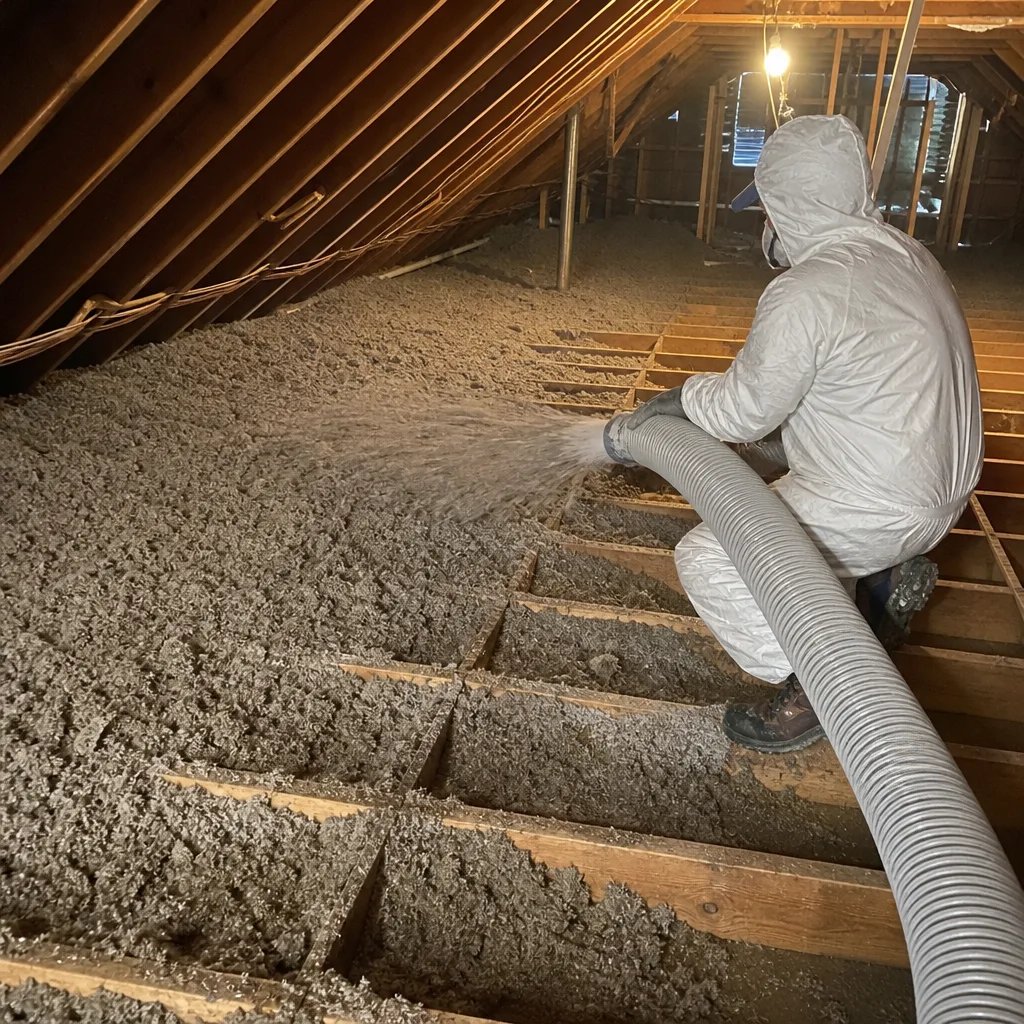
- Blower-door test shows minimal improvement after “insulation upgrade.” We see this in Converse ranch homes near Foster Road - a contractor blew cellulose over unsealed top plates and called it done. The Icynene on the roof deck is intact; the floor plane was never addressed.
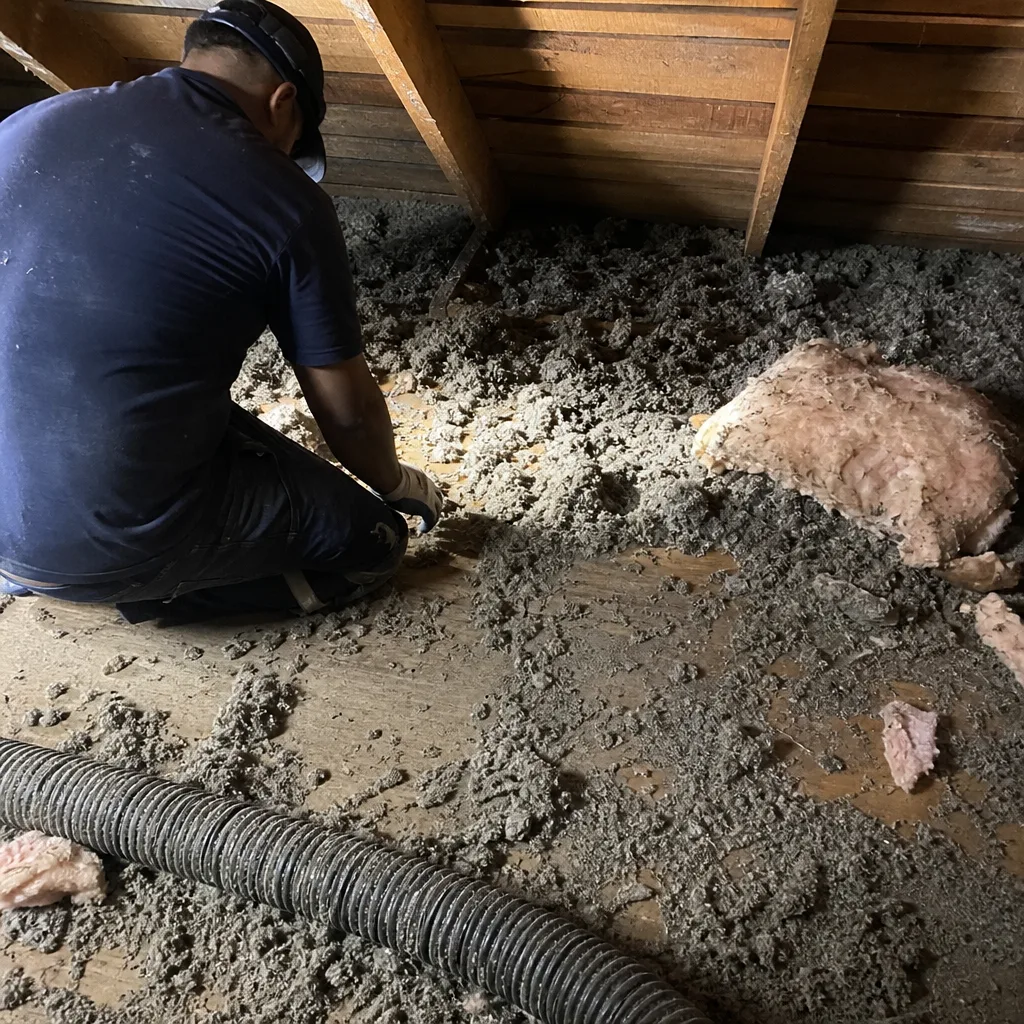 Before
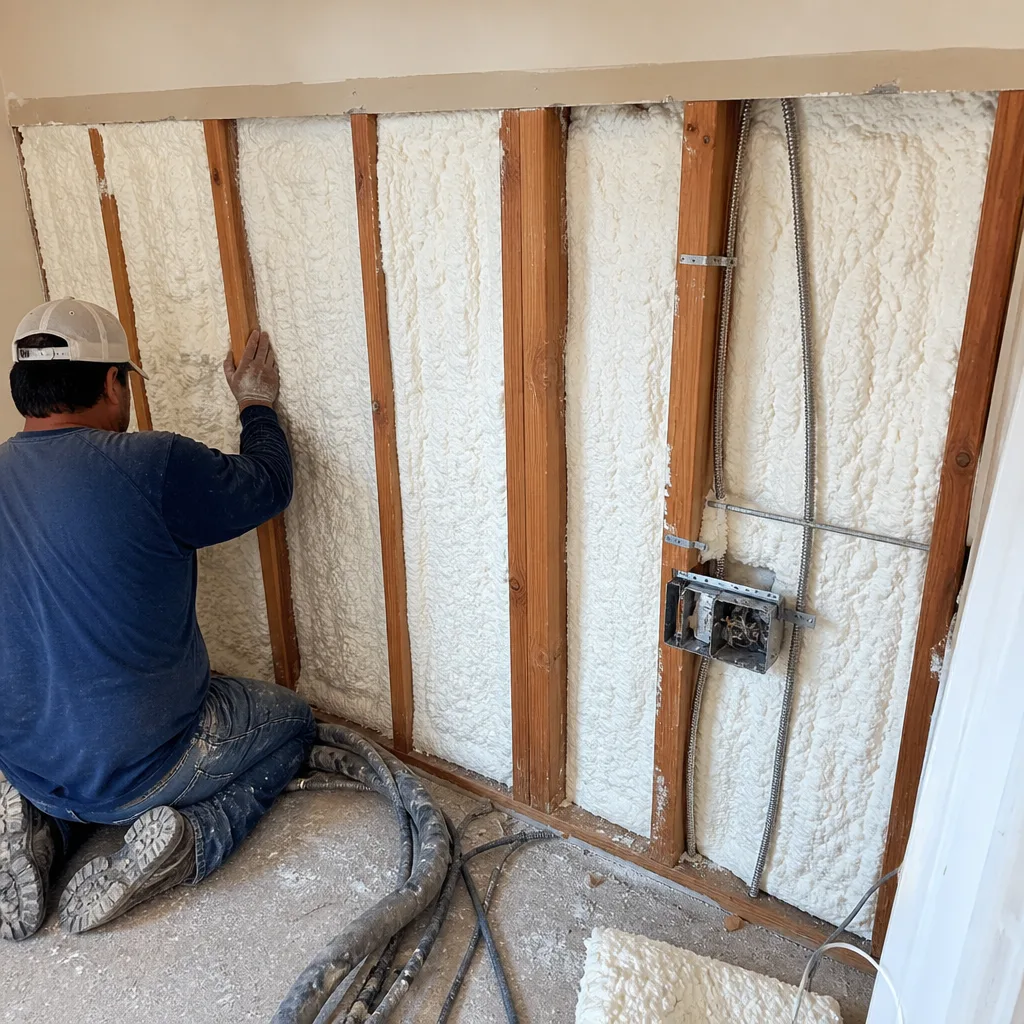 After
AfterReplacement Cost & What’s Included
| Component | Typical Range (Converse) |
|---|---|
| Attic floor air sealing, top plates & penetrations, under 1,200 sq ft | $1,800 - $2,400 |
| Attic floor air sealing, 1,200 - 2,200 sq ft | $2,400 - $3,000 |
| Attic floor + roof deck touch-up, full Icynene compatibility check | $2,800 - $3,400 |
| Before-and-after blower-door test with printed report | Included |
| Documented Photo Record of all sealed points | Included |
The range depends on three things: attic accessibility (some Converse homes have scuttle holes too small for a technician with tools), the number of can lights and duct boots requiring gasketed covers, and whether existing Icynene needs selective removal to access leak paths. We don’t estimate over the phone for this work - we need to see the attic. But we will give you a written price before any work starts, always, under Haven Standard Clause 1. The 365-Day Done Right Promise covers all completed sealing work. Materials are sourced from Icynene, Demilec, and GreenFiber - no proprietary lock-in, and we select based on what bonds to your existing substrate.
DIY or Call Us?
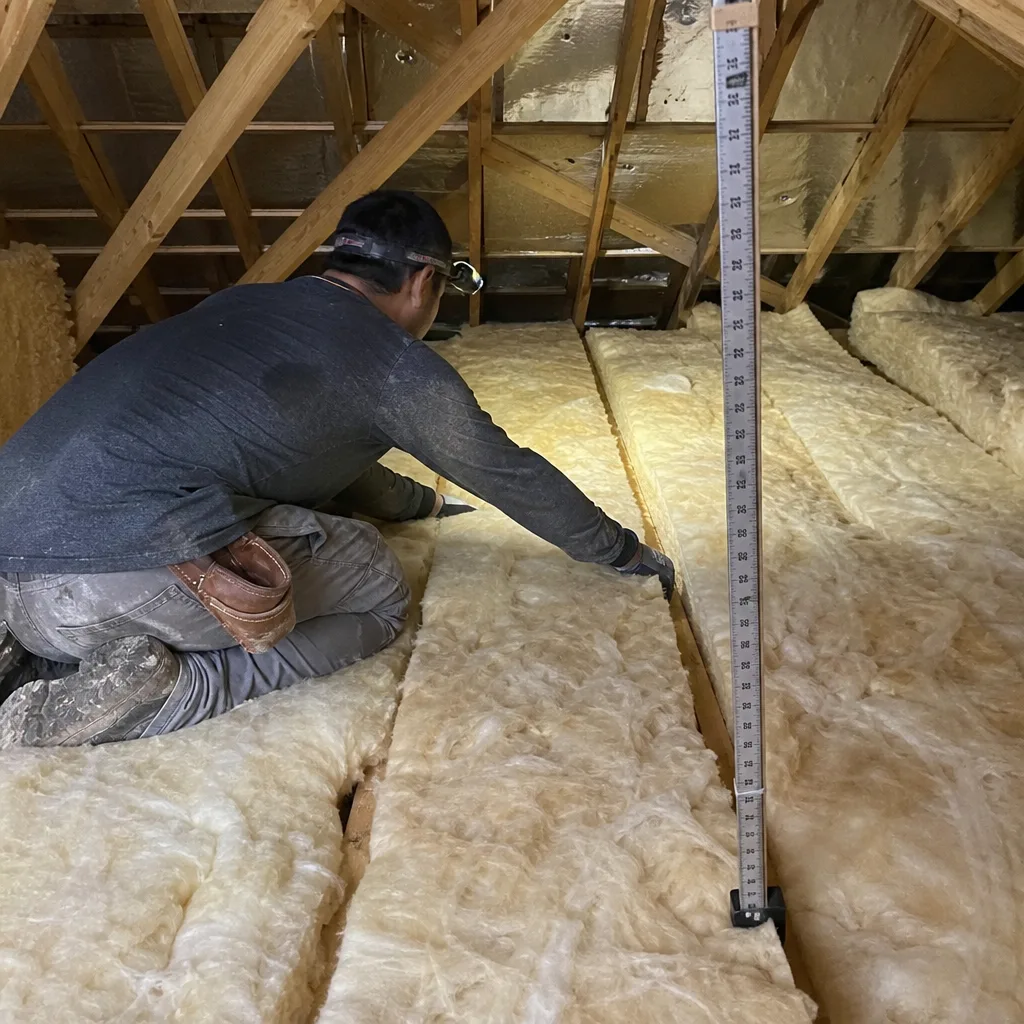
There’s safe checking, and then there’s work that belongs to someone with a respirator and a blower-door rig.
What you can do: walk your attic with a flashlight on a windy day and feel for drafts around electrical boxes, chimney chases, and where walls meet the ceiling. Note any gaps wider than a quarter-inch. Take photos of your Icynene surface - texture, color, any cracked or yellowed areas. That documentation helps us prep the right materials.
Where DIY goes wrong: open-cell Icynene and compatible sealants require controlled temperature and humidity during application - attic conditions in Converse from May through September rarely cooperate. More critically, you can’t verify your own air-sealing work without a blower-door test, which pressurizes the house to measure air leakage in CFM50. We’ve found homeowners who caulked visible gaps but missed the top-plate line hidden under blown-in insulation. The result: partial credit, full electricity bill. Call (830) 420-0953 and we’ll run the test, show you the number, and give you a written price for what it takes to move it.
FAQs
Open-cell Icynene itself is rated for the life of the building, but the air-sealing detail work - gaskets, caulked penetrations, rigid blocking - typically needs inspection at 10 to 15 years in Texas heat and humidity cycles. In Converse, we see faster degradation where attic temperatures exceed 140 degrees in July and August, which hardens acrylic caulks and can loosen foam-to-wood bonds. Call (830) 420-0953 for a free inspection if your home’s past the decade mark.
Partial repair is often possible if the original Icynene application is intact and only specific penetrations have failed. We test with a smoke pencil during blower-door depressurization to locate active leaks, then seal only those points. Full replacement of the air barrier is rare - usually needed only when the original work used incompatible materials or when remodeling disturbs large sections. We’ll tell you which category you’re in after inspection; estimates are free.
Most attic floor air-sealing jobs in Converse finish in one day, occasionally stretching to two for homes over 2,500 square feet with complex rooflines. The blower-door test adds about 45 minutes at setup and another 30 at closeout. Your crew leaves with a printed report, a photo record, and the before-and-after CFM50 numbers. Same-day starts are usually available if you call before noon.
Yes - we carry Icynene-compatible open-cell foam, closed-cell touch-up kits, fire-rated sealants for penetration sealing, and gasketed covers for standard can light and duct boot sizes. For less common Icynene formulations or large-area touch-ups, we pull from our San Antonio warehouse and typically have materials on-site within 24 hours. We don’t start work until we’ve verified compatibility with your existing foam.
Seal the leaks first. Then insulate. The numbers will tell you if it worked. Wes Okafor and our crew have been running that sequence in Converse attics since 2016, including the older ranch homes near Foster Road where unsealed top-plate penetrations were bleeding conditioned air long before anyone touched the blown-in cellulose. Every job starts with a written price and ends with a blower-door number you can hold in your hand.
Call (830) 420-0953 for a free estimate. A live person answers, 24/7.
Written by Wes Okafor, Owner & Lead Insulation Technician, Topside Attic Insulation Converse at Topside Attic Insulation Converse, serving Converse and nearby areas.