
Icynene Vapor Barrier Installation: The Converse Owner’s Guide
We stock and install Icynene-compatible vapor barrier systems for Converse homes, with most attic and crawl space jobs running between $1,800 and $3,400 installed. Same-day service is available when you call before noon. Homeowners usually discover the problem when they pull back insulation and find condensation-stained sheathing, or when a musty smell in the hallway traces back to the crawl space - the vapor barrier failed silently months ago.
Which Icynene Models This Applies To
Icynene’s open-cell and closed-cell spray foam lines - including Classic Plus, Classic Max, and MD-R-200 - don’t ship with a separate vapor barrier in most climate zones, but in Converse’s mixed-humid zone (IECC Zone 2A), the assembly often requires a supplemental Class I or Class II vapor retarder depending on the foam thickness and substrate. We match the barrier to the specific Icynene product already in your attic or walls.
To identify what you’re working with, check the job card or the spray-foam label left on the attic access hatch. Closed-cell Icynene at 2 inches or more acts as its own vapor retarder; open-cell Classic Plus, common in Converse ranch builds from 2012 to 2019, needs a poly sheeting or kraft-faced auxiliary barrier on the warm-in-winter side. The gotcha: some crews in the area skipped this step during the housing boom, leaving foam that looks fine but passes moisture. We stock 6-mil polyethylene, reinforced poly scrim, and smart vapor retarders like CertainTeed MemBrain on every truck.
OEM-spec Icynene barriers aren’t a standalone product you order from the manufacturer. We source compatible materials from Icynene, Johns Manville, and CertainTeed - same perm ratings, no proprietary lock-in. Aftermarket equivalents work when the perm rating matches: 1.0 perm or less for Class II, 0.1 perm or less for Class I. We document the spec on your written scope before anyone climbs the ladder.
Signs Your Icynene Vapor Barrier Installation Is Failing
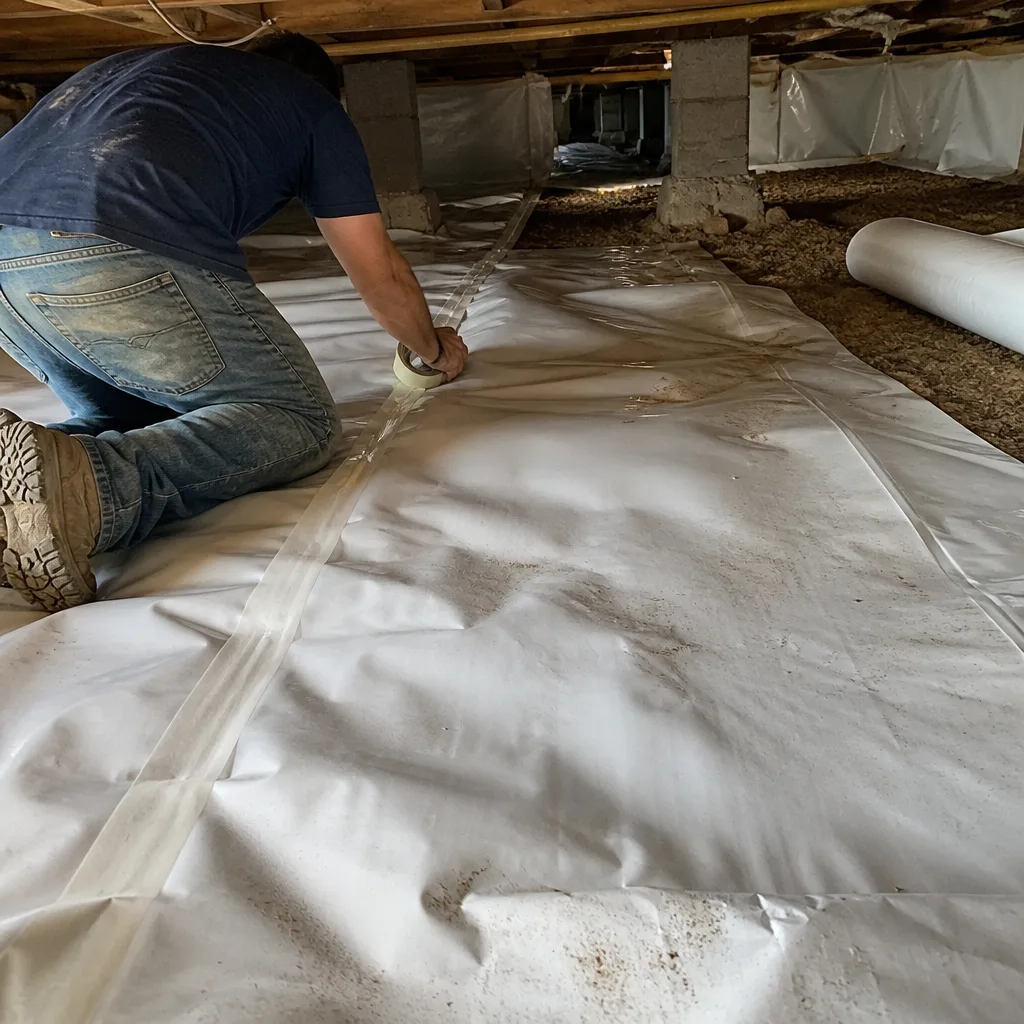
- Dark streaks on roof sheathing. In Converse, where summer attic temperatures hit 140°F, a missing or torn vapor barrier lets interior moisture condense on the underside of the OSB. The staining follows the rafter bays exactly - a telltale pattern we see in homes near FM 78 with original 2016-era open-cell jobs.
- Musty odor that worsens after rain. The smell isn’t mold yet; it’s humid air hitting cool surfaces. A compromised barrier in the crawl space pulls groundwater vapor straight through, especially in the clay-heavy soils around Converse where perimeter drainage was never great to begin with.
- Insulation that feels damp or packs down. Icynene open-cell is hydrophobic - it won’t absorb water - but the framing and drywall around it will. When the barrier fails, the adjacent fiberglass or cellulose (often left in place during a partial foam job) turns into a sponge.
- Peeling paint or bubbling drywall on ceiling corners. This tracks to the top-plate junction, the horizontal framing member where walls meet the attic floor. Unsealed gaps here bypass whatever vapor protection exists in the field of the attic, and Converse’s wind-driven rains push moisture through the stack effect.
- HVAC running longer to hold setpoint. Not a vapor barrier symptom by itself, but the combination of air leakage and moisture gain overloads the coil. We check this with a blower-door test - a pressurization reading in CFM50 that shows, in one number, how much conditioned air the envelope is losing.
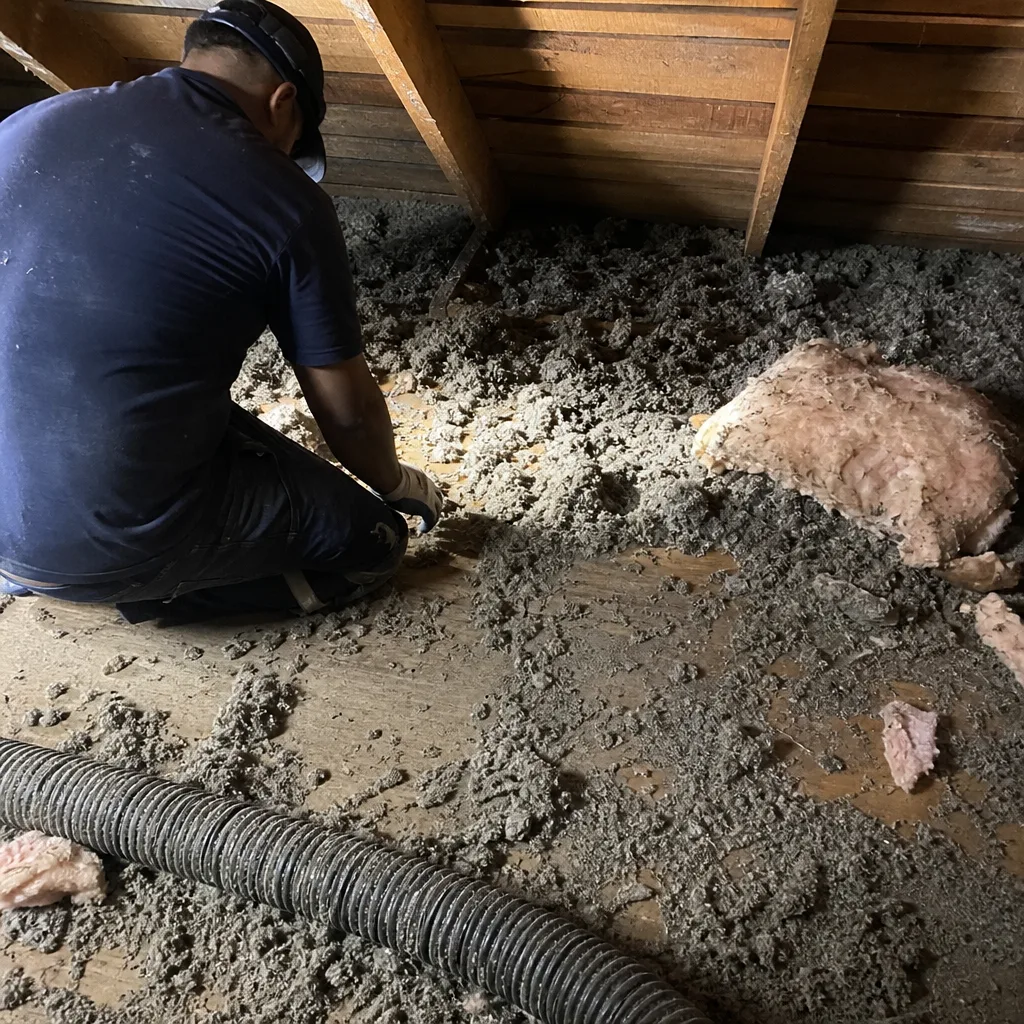 Before
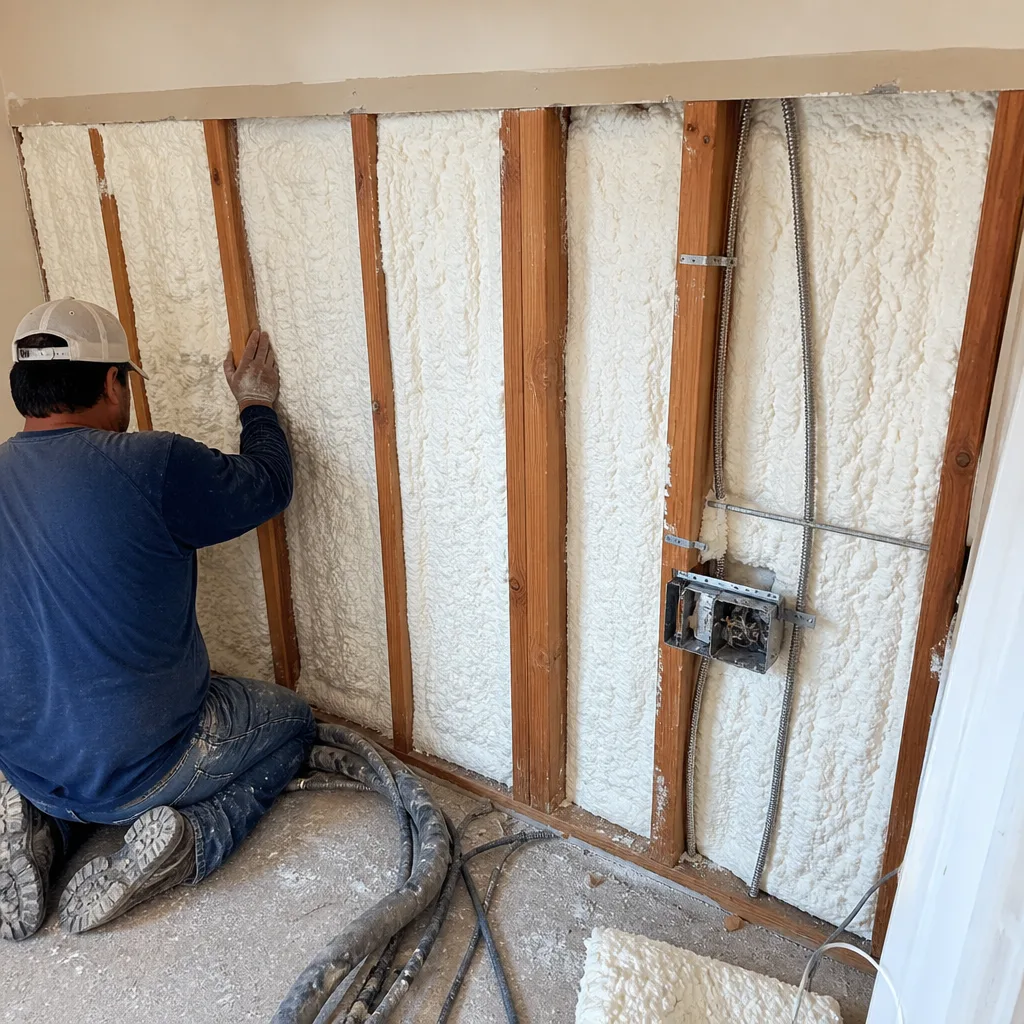 After
AfterReplacement Cost & What’s Included
Most Icynene vapor barrier installations in Converse run $1,800 to $3,400 for a typical 1,600 to 2,400 square foot footprint. The range depends on three things: whether we’re working in attic or crawl space (crawl spaces take longer), how much existing material needs removal, and whether the job includes air sealing of top plates and penetrations - which we do first, always.
Here’s how the pricing breaks:
- Vapor barrier material (poly, smart retarder, or reinforced scrim): $0.45-$0.85 per square foot
- Removal of failed existing barrier: $300-$600
- Air sealing of top plates, can lights, and penetrations: $400-$900
- Labor for installation and taping of seams: $800-$1,400
- Before-and-after blower-door test with printed report: included
We don’t start without a written price. Under Haven Standard Clause 1, you get a flat price, written scope, and written warranty before anyone lifts a tool. The 365-Day Done Right Promise covers the work. Documented Photo Record included - you’ll see the thermal bridge on infrared, the sealed penetration, the taped seam.
DIY or Call Us?
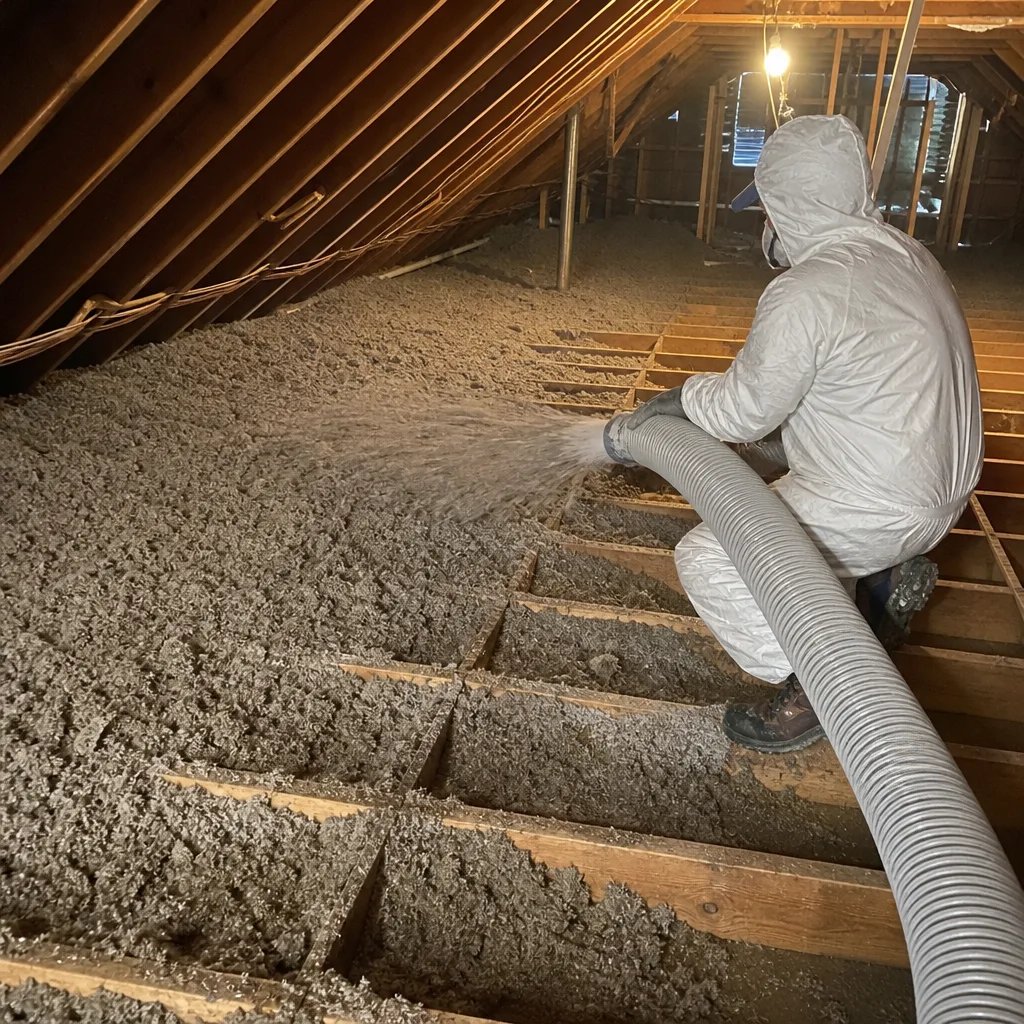
What you can safely check: look at your attic access hatch for the Icynene job card, note the foam type and thickness, and inspect visible poly sheeting for tears or displacement at penetrations. A flashlight and a camera phone are enough to document what you see.
Where DIY goes wrong: installing a vapor barrier on the wrong side of the assembly traps moisture instead of blocking it. In Converse’s climate, a misplaced Class I barrier in summer can turn your attic into a condensation chamber. Cutting and taping around irregular framing, maintaining continuity at electrical and plumbing penetrations, and verifying with a blower-door test - that’s where the trained work shows. We also find that homeowners underestimate how much existing air sealing is missing; the barrier is only as good as the envelope around it.
We’re not affiliated with Icynene - we’re an independent service provider - and we install what the building science calls for, not what a brand manual suggests. If you’re unsure what you’re looking at, text us a photo or call (830) 420-0953. We’ll read it with you.
FAQs
In Converse’s climate, a properly installed 6-mil polyethylene barrier lasts 15 to 25 years; smart vapor retarders like MemBrain can exceed 30. The failure point is almost never the material itself - it’s tape separation at seams, rodent damage in crawl spaces, or disturbance during later electrical or HVAC work. We inspect seam integrity as part of every job. Call (830) 420-0953 if you’re unsure of your install date - estimates are free.
Small punctures or localized tape failures can be patched with compatible tape and additional poly. We do this when the existing barrier is less than 10 years old and the damage is isolated. If the original install skipped air sealing, or if moisture has degraded adjacent materials, partial repair is false economy - you’re sealing a leaky bucket. We give you both options in writing. Call (830) 420-0953 for an exact quote.
Most Converse attic vapor barrier installations take one day; crawl spaces with limited access or significant existing damage may run into a second day. We arrive with the barrier material, tape, and air-sealing supplies on the truck - no supply runs mid-job. You’ll get a text when the crew is on the way, and a Documented Photo Record before we leave. Call (830) 420-0953 to check same-day availability.
Yes - 6-mil polyethylene, reinforced poly scrim, and smart vapor retarders are on every truck, along with the tapes and acoustic sealants that make the assembly work. We also stock Reflectix radiant barrier for jobs where the homeowner wants to address both vapor drive and radiant heat gain. No waiting on material delivery. Call (830) 420-0953 and we’ll confirm what’s right for your specific Icynene install.
Seal the leaks first. Then insulate. The numbers will tell you if it worked. Wes Okafor and our crew have served Converse for years, including the older ranch-style homes near Foster Road where unsealed top-plate penetrations were bleeding conditioned air long before anyone touched the blown-in cellulose. We run a blower-door test before and after every applicable job so you leave with a printed report, not a promise.
Call (830) 420-0953 for a free estimate. Written price before any work starts. Documented Photo Record when the crew leaves. That’s Haven Standard.
Written by Wes Okafor, Owner & Lead Insulation Technician, Topside Attic Insulation Converse at Topside Attic Insulation Converse, serving Converse and nearby areas.