
GreenFiber Attic Insulation: The Converse Owner’s Guide
GreenFiber attic insulation installation in Converse typically runs $1.80 to $2.40 per square foot for blown-in cellulose, with most single-story homes in the 1,200-2,000 square foot range falling between $2,200 and $4,800 installed. We stock GreenFiber Low Dust and Sanctuary product lines on our trucks, and most Converse jobs can be started same-day or next-day once the attic has been assessed and air-sealed. Most homeowners realize their GreenFiber insulation is underperforming when summer electric bills spike past $280 on a 1,500-square-foot ranch, or when they notice the second floor never drops below 78 degrees even with the AC running flat out.
Which GreenFiber Models This Applies To
GreenFiber produces loose-fill cellulose, not rigid board or batt systems, so “model” here refers to product line and application type. We work with Low Dust, Sanctuary, and legacy Natural Fiber lines. Low Dust is the standard retrofit product for Converse attics; Sanctuary is the higher-density, pest-resistant formulation with added borate treatment. Check your existing insulation for a faded green stripe in the cellulose, or a small fiber tag near the attic hatch that reads “GF” followed by a lot code. If the tag is missing, we can identify the product by fiber length and density under light; GreenFiber cellulose has a shorter, more uniform fiber than Owens Corning AttiCat loose fill.
We are an independent service provider, not affiliated with GreenFiber. For replacements, we match density and R-value, not brand loyalty. If your attic was originally insulated to R-30 with GreenFiber Low Dust, we’ll quote the same R-value in whatever cellulose line best fits your current need, Sanctuary included if you’ve had rodent activity. The critical spec is settled depth, not brand name. GreenFiber Low Dust settles to roughly 10 inches for R-38; Sanctuary, being denser, needs closer to 9.5 inches for the same rating. Getting this wrong means you’re paying for R-38 and receiving R-32.
Signs Your GreenFiber Attic Insulation Is Failing
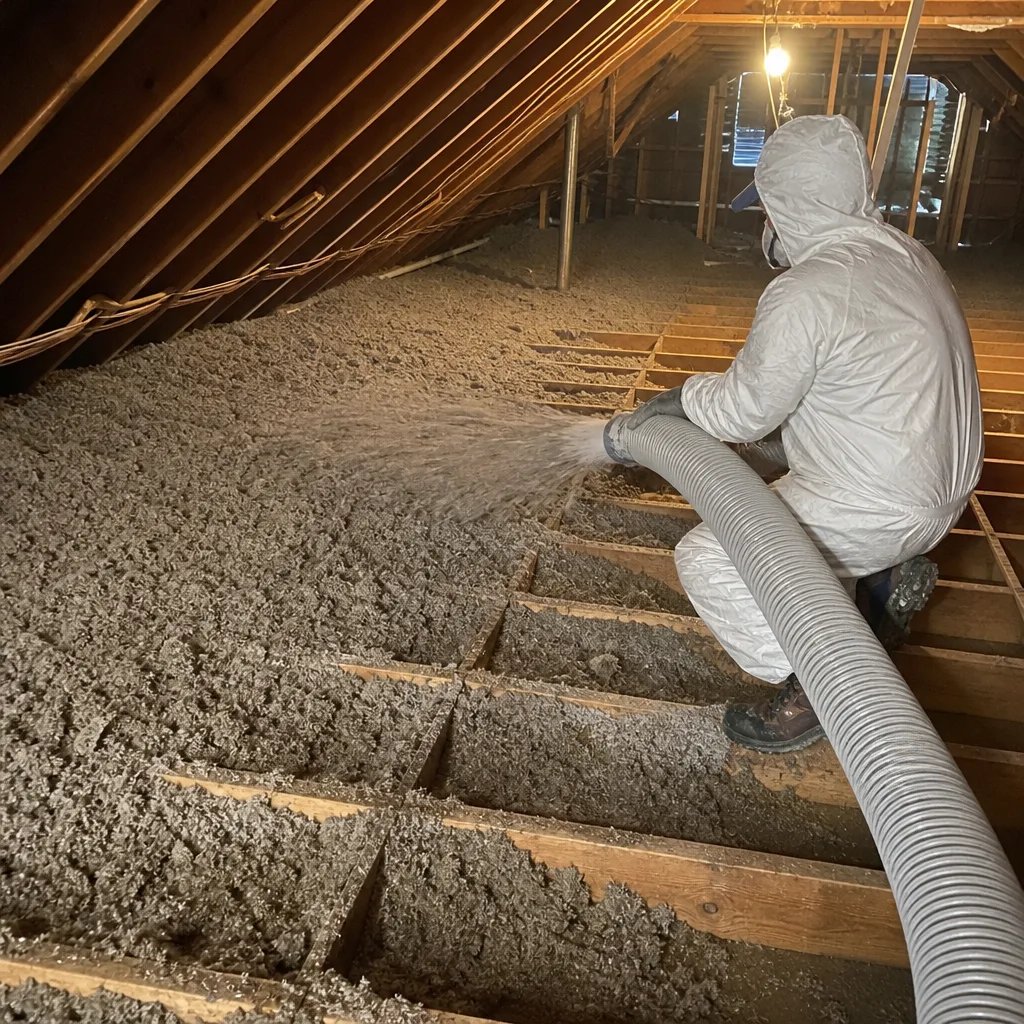
- Uneven temperature between rooms. In Converse, we see this most in 1970s-1990s ranch homes near Foster Road where the original GreenFiber was blown in without sealing top-plate penetrations first. The insulation itself is intact, but conditioned air is escaping through wall gaps, making the master bedroom feel like a different climate zone than the hallway.
- Insulation that has compressed or shifted. GreenFiber cellulose can settle 15-20 percent over its first two years if installed at marginal density. In attics with active ductwork or storage traffic, we’ve measured areas where 12 inches of original material has compressed to 7 inches, dropping effective R-value from R-38 to roughly R-22.
- Moisture staining or mold odor. Cellulose is treated with borate for fire and pest resistance, but it is not waterproof. In Converse’s spring storm season, roof leaks or bathroom fan duct failures can saturate GreenFiber before the homeowner notices. Wet cellulose loses R-value, gains weight, and can compress ceiling drywall.
- Rodent nesting or droppings throughout the material. GreenFiber Sanctuary resists pests due to its borate load, but standard Low Dust does not. Once mice or roof rats have tunneled through cellulose, the insulation becomes a vector for odor and allergen distribution through your HVAC returns.
- Energy bills climbing year over year with no rate change. We pulled a job file from a 2018 build near Converse’s Woodlake neighborhood where the homeowner’s July bill went from $198 to $347 in four years. The GreenFiber was still there, still fluffy, but the attic had never been air-sealed. The blower-door test read 3,800 CFM50; after sealing and topping off the insulation, it dropped to 1,900.
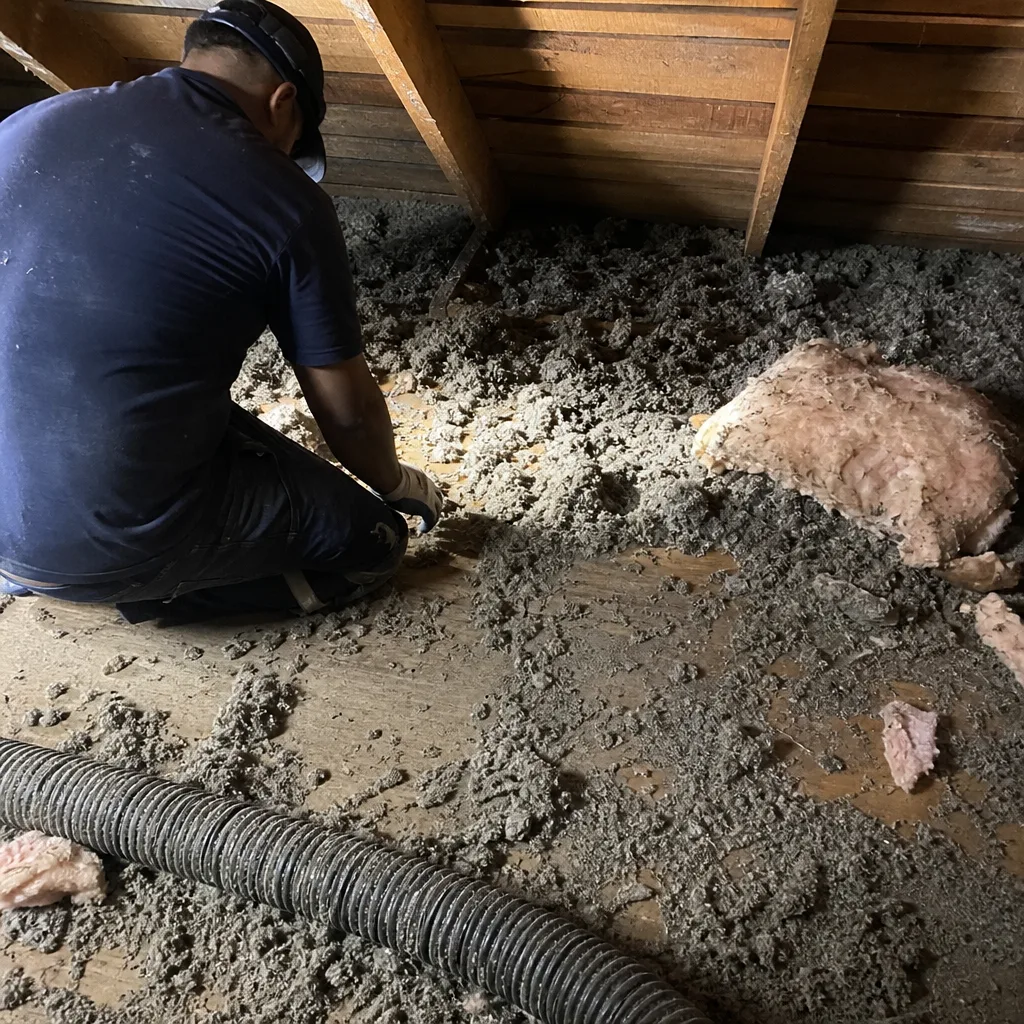 Before
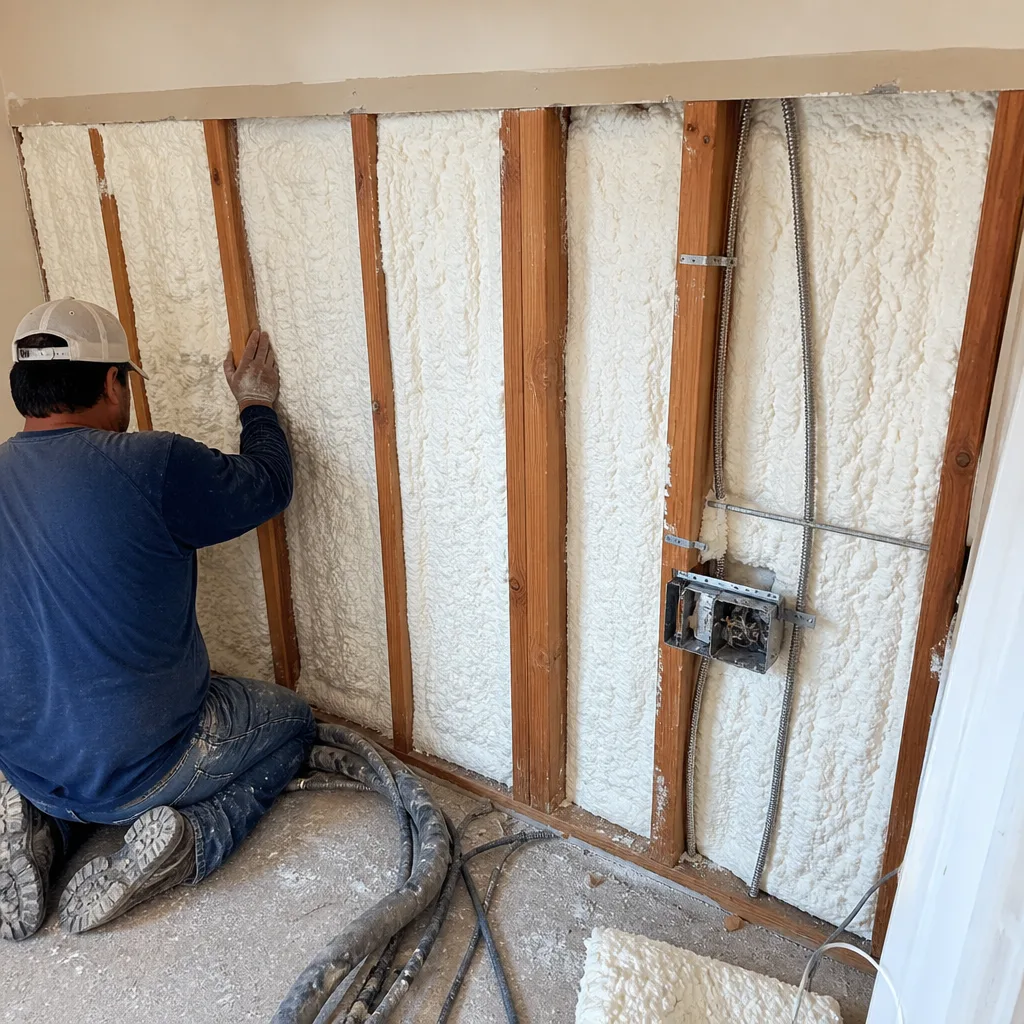 After
AfterReplacement Cost & What’s Included
Most GreenFiber attic insulation replacements in Converse fall between $2,200 and $4,800 for a complete removal and reinstall, or $1,400 to $2,800 for a top-off over existing material that is clean and dry. The lower end covers a 1,200-square-foot attic with good access and no removal; the upper end includes full extraction, disposal, air sealing of top plates and penetrations, and new GreenFiber Sanctuary to R-38.
What drives the range: attic square footage, whether we can walk the joists or need plywood staging, the condition of existing material, and how much air sealing is required. Every quote is flat and written before work starts, per Haven Standard Clause 1. The price includes material, labor, disposal, and a Documented Photo Record. On jobs where air sealing is performed, you’ll receive before-and-after blower-door readings in CFM50 so you can verify the envelope tightened. We don’t estimate; we measure, then we write the number down.
DIY or Call Us?
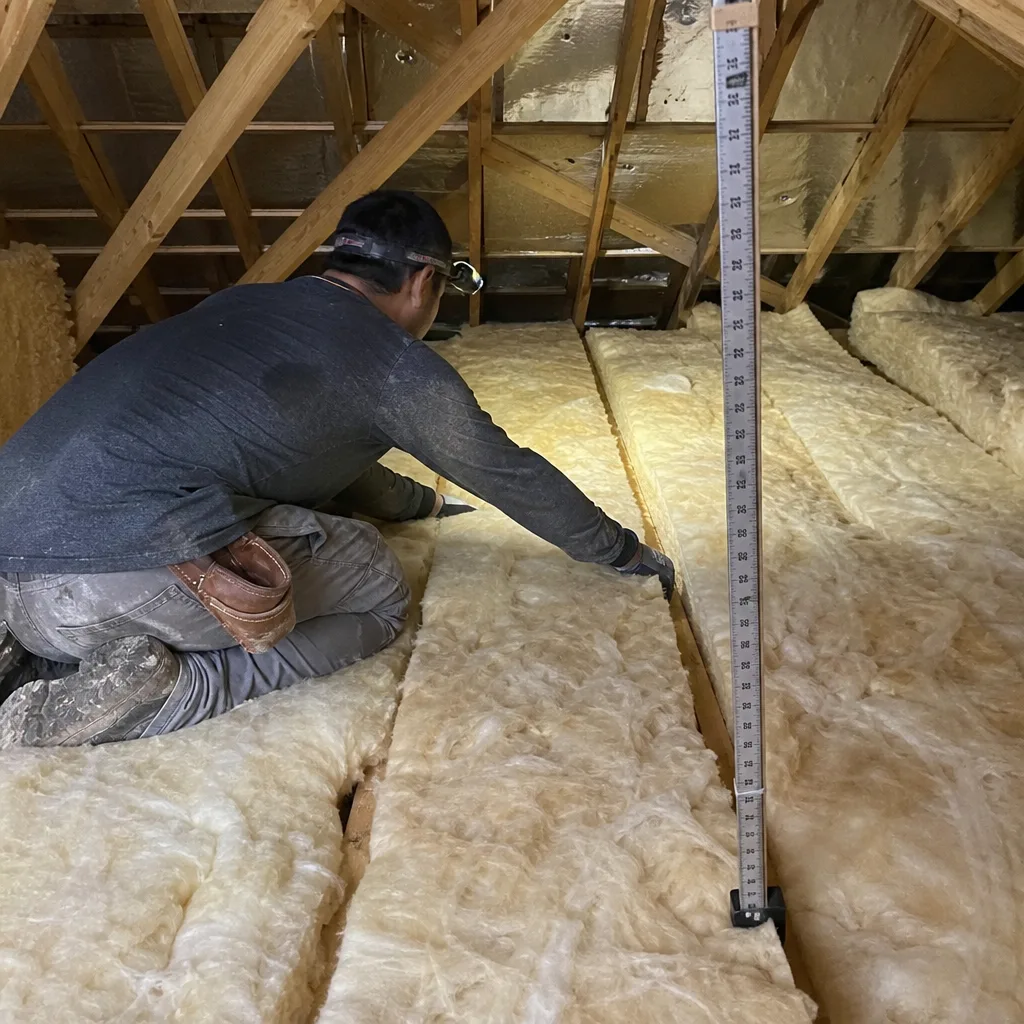
Homeowners can safely check three things: verify the attic hatch closes tight, look for obvious roof leaks or duct disconnections, and measure settled insulation depth with a yardstick at three points. Do not disturb the material if you suspect asbestos in pre-1990 homes, and do not attempt removal without a P100 respirator and sealed eye protection. Cellulose dust is non-toxic but extremely irritating.
Where DIY fails for GreenFiber work: calculating settled depth versus installed depth, identifying thermal bypasses at top plates and electrical penetrations, and operating a blower door to verify results. We’ve been called to Converse attics where a homeowner added six inches of new cellulose over compressed old material, creating a layered cake with an air gap that performed worse than before. Seal the leaks first. Then insulate. The numbers will tell you if it worked. For a written price and a free second opinion on any estimate you’ve already received, call (830) 420-0953.
FAQs
GreenFiber cellulose lasts 20 to 30 years when kept dry and undisturbed, but in Converse’s climate we see effective performance drop after 10 to 15 years if the attic was never air-sealed. Heat, humidity, and roof leaks accelerate degradation. If your insulation is past 12 years and your bills are climbing, call (830) 420-0953 for an assessment; estimates are free.
Spot repair is possible if the failure is localized, a wet patch near a bathroom vent, or a thin area over a dropped ceiling. If the material is widely settled, contaminated, or installed without air sealing, partial top-off usually wastes money because the underlying thermal bypasses remain. We evaluate this on every job and will tell you if repair is viable; we don’t sell replacement when topping off will work.
Most complete removals and reinstalls in Converse take one full day; top-offs with air sealing typically finish in four to six hours. We arrive with the material on the truck, so there’s no delivery delay. You’ll get a text when the crew is en route, and a Documented Photo Record before we leave.
We stock GreenFiber Low Dust and Sanctuary cellulose on every truck, along with Owens Corning, Johns Manville, and Knauf products for homeowners who want to compare. No proprietary lock-in, no special-order delays. If you have a written estimate specifying GreenFiber, bring it in; we’ll read it with you and offer a free second opinion.
Written by Wes Okafor, Owner & Lead Insulation Technician, Topside Attic Insulation Converse at Topside Attic Insulation Converse, serving Converse and nearby areas.