
GreenFiber Spray Foam Insulation in Converse: What to Know First
We provide independent GreenFiber spray foam insulation in Converse, TX, with most jobs scheduled within 48 hours and completed same-day. A typical open-cell attic application in a 2,000-square-foot Converse home runs between $2,800 and $4,200, and we put that price in writing before anyone loads a rig. This page is for homeowners who’ve found GreenFiber in their attic or walls, aren’t sure what condition it’s in, and want a technician who can name the product line and tell you what comes next. Call (830) 420-0953 for a free estimate.
How GreenFiber Products Fail - and How We Fix Them
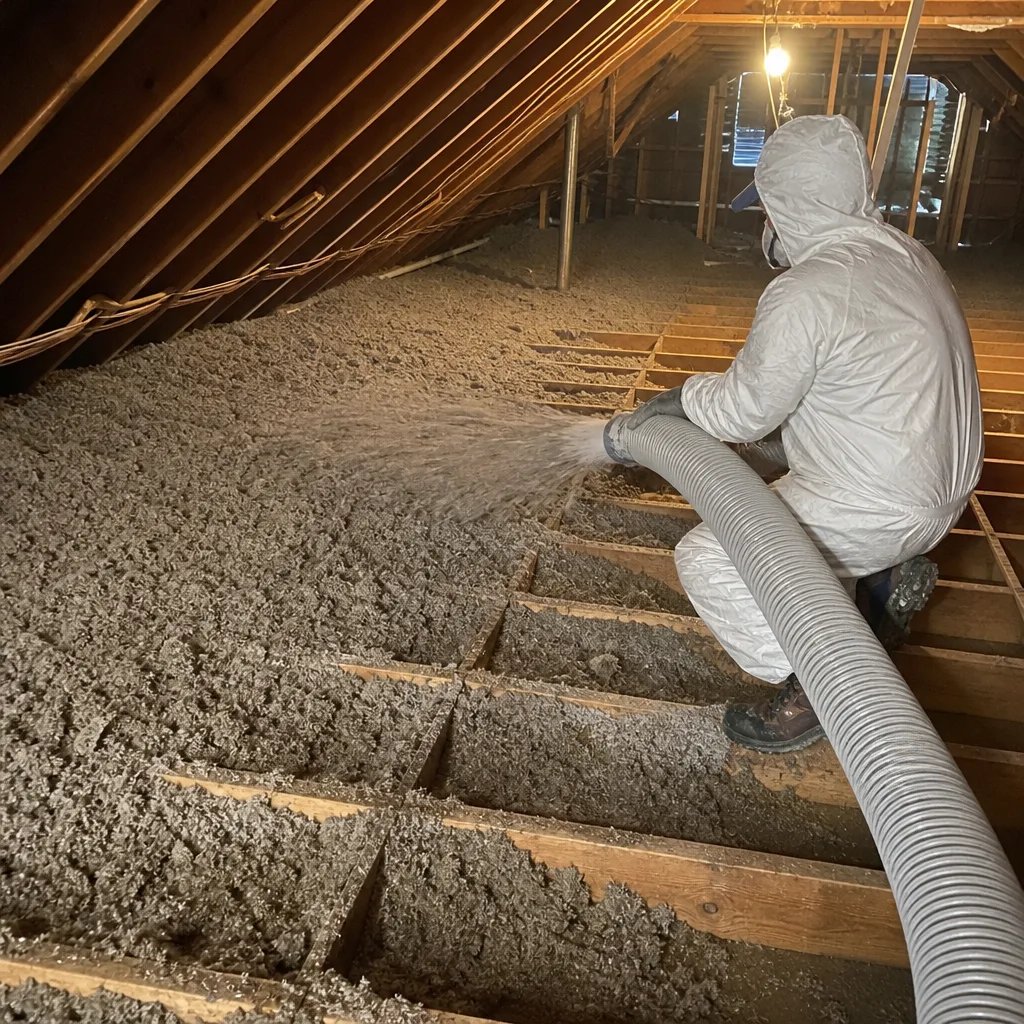
- GreenFiber All Borate Cellulose settling in Converse’s high-humidity shoulder seasons. The loose-fill product drops 20-30% of its labeled R-value within five to seven years in attics where summer attic temps hit 140°F and winter moisture swings are sharp. We find the settled layer, remove it if it’s compressed below current R-38 code for Converse’s climate zone, and install open-cell spray foam directly to the roof deck so the envelope performs regardless of what happens below.
- GreenFiber Sanctuary batt gaps at top plates in ranch-style homes near Foster Road. These batts are cut to fit stud bays, but the top plate - where the wall meets the attic floor - is rarely sealed before installation. Conditioned air bleeds through for years. We pull the batt, seal the top plate with closed-cell foam, then reinstall or upgrade to spray foam depending on the wall cavity depth.
- GreenFiber stabilized cellulose with added acrylic binder breaking down after rodent activity. The acrylic is supposed to resist settling, but urine salts break the bond. We see this in older Converse homes with gable vent entry points. We remove the contaminated material, sanitize the deck, rodent-proof the vents with hardware cloth, and apply closed-cell spray foam to the rim joist - the perimeter band where the house meets the foundation - which rodents won’t nest in.
- GreenFiber loose-fill over unsealed can lights and chimney chases. The cellulose does its job, but air moves around it through thermal bypasses. Blower-door tests in Converse homes often show 3,500+ CFM50 with this exact configuration. We pull back the fill, seal every penetration with fire-rated foam and metal flashing where required, then blow new cellulose or transition to spray foam if the homeowner wants the attic converted to conditioned space.
- GreenFiber products installed before 2018 with insufficient attic ventilation. Older installs sometimes blocked soffit vents with baffles that collapsed or were never installed. Moisture accumulates, the borates don’t save it, and we find stained decking. We fix the ventilation path, replace the decking if it’s above 19% moisture content on our pin meter, and spec open-cell spray foam on the roof deck with proper mechanical ventilation - solving the moisture problem at the source rather than managing it.
Our GreenFiber Spray Foam Insulation Process
- 1
Call and scheduling. A live person answers, or you text. We book a 90-minute arrival window. Under Haven Standard: Arrive on schedule, you get a named technician and a text when they are on the way.
- 2
Site inspection and blower-door baseline. We pressurize the house to 50 pascals and record the CFM50 - the single number that tells us how much air the envelope is losing. We photograph every GreenFiber product line we find, note the installation date if it’s marked, and check for settled depth, moisture staining, and top-plate gaps.
- 3
Written price and scope. We specify OEM GreenFiber replacement, quality aftermarket equivalent, or spray foam upgrade, with the performance difference explained in one clause. No work starts until you have the written price, the scope, and the warranty - Haven Standard Clause 1.
- 4
Prep and air sealing. Seal the leaks first. Then insulate. The numbers will tell you if it worked. We seal top plates, can lights, penetrations, and rim joists before foam goes in. This is never an upsell; it’s the prerequisite.
- 5
Spray foam application and documented photo record. Our crew applies open-cell or closed-cell foam per the spec, with real-time thickness checks. You get photos of the work area before, during, and after - included, not available on request.
- 6
Blower-door verification and closeout. We run the test again and hand you the before-and-after numbers on paper. Most Converse homes drop 30-50% in CFM50. The 365-Day Done Right Promise begins when we leave.
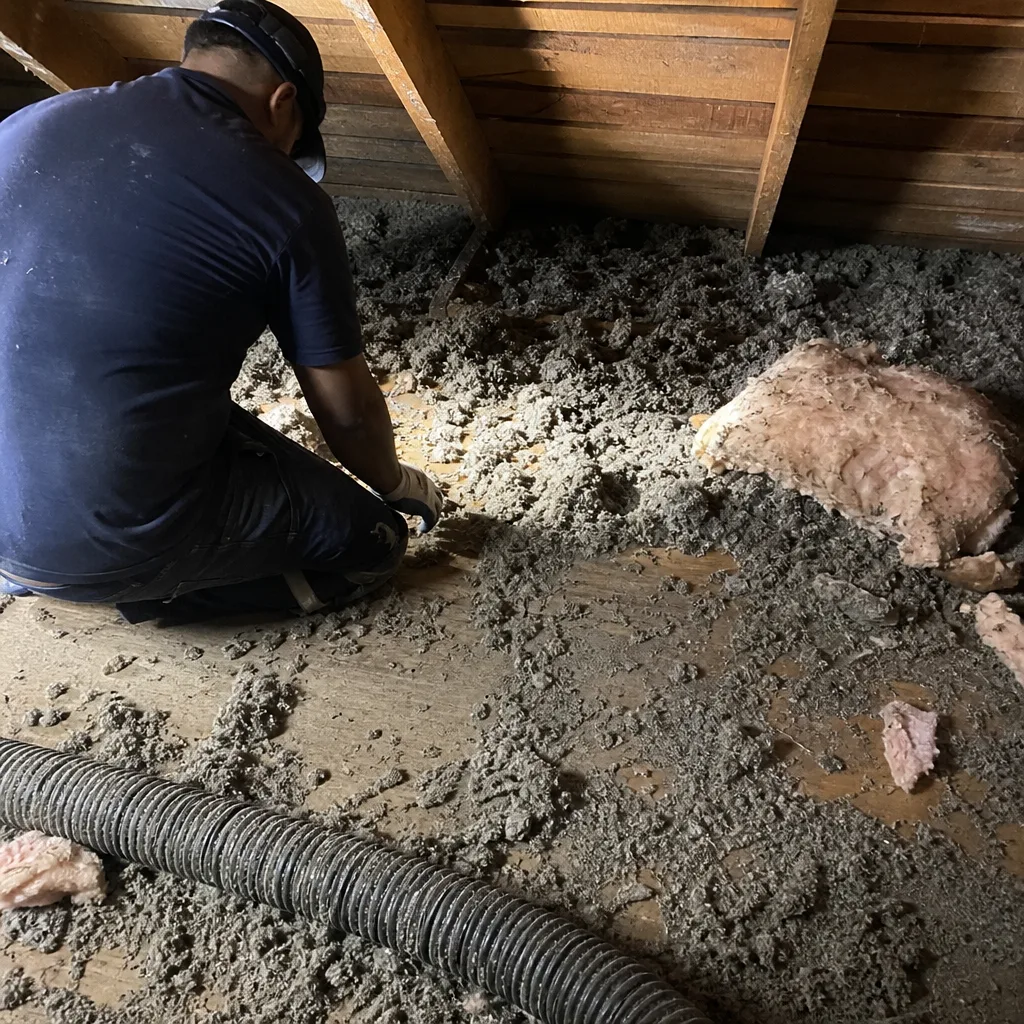 Before
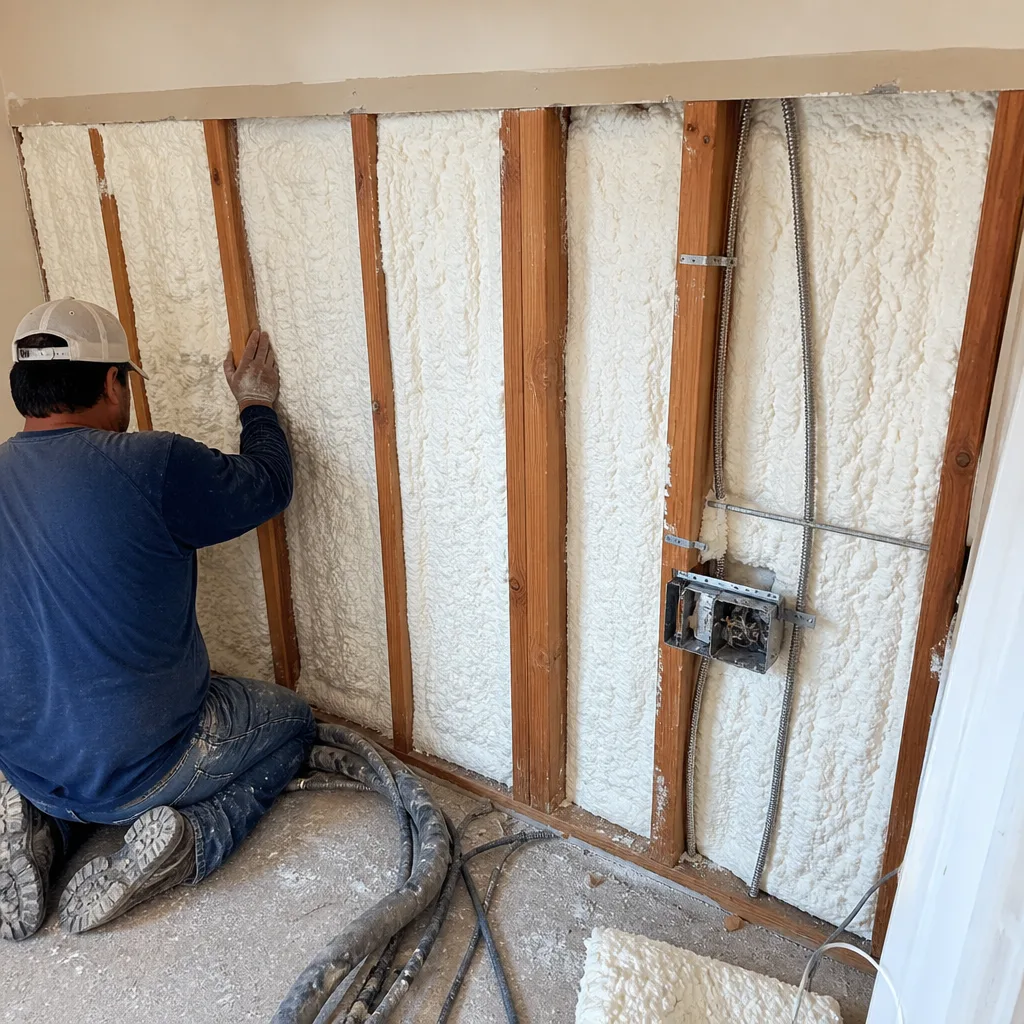 After
AfterWhat GreenFiber Spray Foam Insulation Costs in Converse
Most GreenFiber-to-spray-foam conversions in Converse fall in these ranges:
- Open-cell spray foam, attic roof deck: $2.80-$4.20 per board foot; typical 2,000 sq ft home at 5.5 inches runs $2,800-$4,200
- Closed-cell spray foam, rim joist or crawl space: $4.50-$6.80 per board foot; partial basement or crawl perimeter typically $1,800-$3,400
- Closed-cell garage ceiling (fire separation + thermal): $3,200-$5,100 for a two-car bay
- GreenFiber removal + disposal + spray foam replacement: add $1.10-$1.60 per square foot of attic floor for removal, bagging, and haul-away
What moves the price: current GreenFiber depth and condition, accessibility (steep roof pitch, tight scuttle), whether the attic has active leaks or rodent damage requiring remediation, and whether you want the attic converted to conditioned storage space versus simply re-insulated. We also service Reflectix radiant barrier systems if your home has a hybrid configuration. Call (830) 420-0953 for an exact quote - estimates are free, and we offer a Free Second Opinion on any written estimate you’ve already received.
Why Converse Homeowners Call Topside Attic Insulation Converse for GreenFiber Work
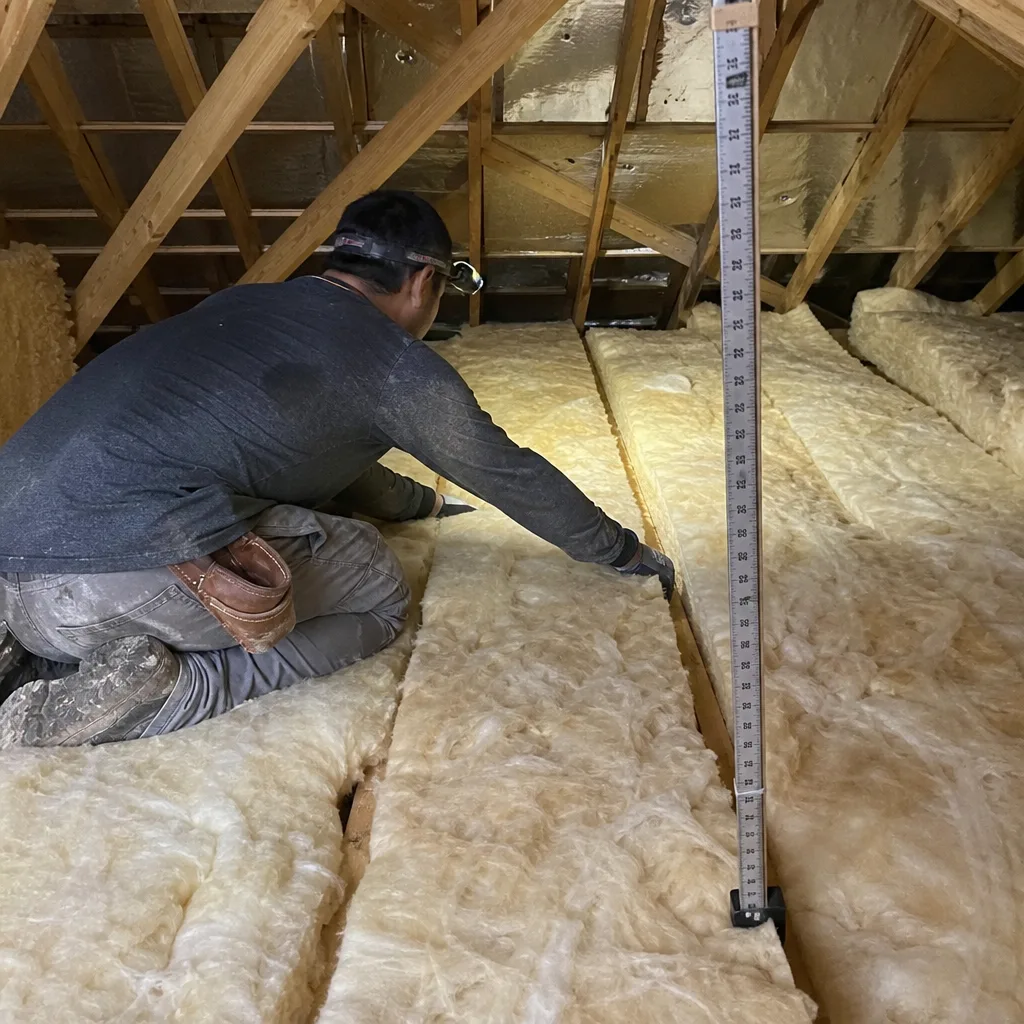
We’ve sealed and insulated over 9,000 homes since 2016, and the ones in Converse have taught us something specific: the 1970s-1990s ranch and split-level stock near Foster Road and FM 78 was built with optimism about R-19 batts and no concept of top-plate sealing. Wes Okafor and our crew have walked hundreds of those attics. We know what GreenFiber looks like after a decade of Texas heat, and we know the difference between a product that failed and a product that was set up to fail by installation shortcuts. Every job gets a written price first, a Documented Photo Record during, and blower-door proof after. If it’s not right, we make it right - 365-Day Done Right Promise, in writing before we start.
FAQs
GreenFiber’s product warranty covers manufacturing defects in the original material, not the installation or any subsequent modification. As an independent GreenFiber service provider with no manufacturer affiliation, we document the existing product condition before removal so you have a record if a claim applies. Most homeowners find the performance gain from spray foam outweighs any remaining cellulose warranty value. Call (830) 420-0953 and we’ll review your specific situation.
Closed-cell spray foam with an intumescent coating meets the same fire-spread ratings as borate-treated cellulose for exposed applications; open-cell in an attic cavity behind drywall does not require additional treatment in Converse’s jurisdiction. We spec the right assembly for your code requirements and show you the product data sheet before ordering.
Repairing settled GreenFiber loose-fill - adding new material to restore depth - typically runs $1.20-$1.80 per square foot in Converse, while removal plus open-cell spray foam starts around $3.90 per square foot all-in. The repair is cheaper today but doesn’t fix air leakage; the spray foam upgrade usually pays back in 4-7 years through reduced HVAC run time in our climate. We run the numbers both ways in your written estimate.
Most Converse homeowners get an appointment within 48 hours, and emergency situations - active roof leaks saturating insulation, for example - same day. Calls are answered by a live person 24/7. Text or call (830) 420-0953.
We source materials from Owens Corning, Johns Manville, Knauf, Rockwool, CertainTeed, Icynene, Demilec, and GreenFiber - no proprietary lock-in. If your job calls for matching existing GreenFiber for a partial repair, we can spec it. Most Converse homeowners we see choose to upgrade to spray foam once they understand the air-sealing difference, but we quote both paths.
Written by Wes Okafor, Owner & Lead Insulation Technician, Topside Attic Insulation Converse at Topside Attic Insulation Converse, serving Converse and nearby areas.