
GreenFiber Wall Insulation in Converse: What to Know First
We provide independent GreenFiber wall insulation service in Converse, TX, with most jobs scheduled within 48 hours and completed in a single day. A typical drill-and-fill wall insulation project in a 1,800-square-foot Converse ranch runs between $2,400 and $4,200, and we put that price in writing before any work starts. This page is for homeowners who already have GreenFiber insulation in their walls and need it repaired, replaced, or supplemented, or for those considering GreenFiber for a retrofit in an older Converse home with empty stud bays. Call (830) 420-0953 for a free estimate with written pricing.
How GreenFiber Products Fail - and How We Fix Them
- GreenFiber All Borate Cellulose settling in vertical wall cavities. The loose-fill product we see most often in Converse homes built between 2008 and 2016 compacts over 8-12 years, dropping from R-13 to effective R-7 or lower as gravity pulls it toward the bottom plate. We diagnose this with a borescope inspection through a small wall port, then redensify the material with mechanical agitation or remove and replace with stabilized wall-fill cellulose that won’t settle again.
- GreenFiber Sanctuary wet-spray cellulose moisture retention in exterior walls. This product line relies on precise water-to-fiber ratio during application; Converse’s spring humidity spikes and occasional improper cure times have left us with walls reading 18-22% moisture content months after installation. We pull affected batts, run a thermal scan to trace the wet pattern, and reinstall only after the stud cavity reads below 14% on a pinless moisture meter.
- GreenFiber stabilized wall-fill bridging around electrical boxes and plumbing chases. The adhesive-dry mix is designed to cling to vertical surfaces, but in Converse’s older ranch homes near Foster Road with non-standard 24-inch stud spacing, we’ve found voids behind every third or fourth box where the material couldn’t bridge the gap. We seal the penetration first with acoustic sealant, then use a two-stage fill with targeted nozzle work to pack the void completely.
- GreenFiber low-dust formula breaking down in hot-wall conditions. South- and west-facing walls in Converse see surface temperatures exceeding 140°F in July; the boric acid treatment in some production batches migrates under sustained heat, reducing both fire resistance and pest deterrent properties. We test a core sample for borate retention, and if it’s depleted, we remove and replace with fresh material treated to current ASTM C739 standards.
- GreenFiber insulation compromised by rodent nesting in wall cavities. The borate-treated cellulose is pest-resistant but not pest-proof; we’ve opened walls in the Woodlake and Live Oak Junction areas where roof rats compressed channels through the material, destroying the thermal barrier and introducing moisture through urine saturation. We remove contaminated insulation, seal entry points with steel mesh and foam, then refill with fresh GreenFiber or an alternative if the homeowner prefers.
Our GreenFiber Wall Insulation Process
- 1
Call and schedule. A live person answers, notes your GreenFiber product line if you know it, and books a diagnostic visit. You’ll get a text when Wes is en route.
- 2
On-site inspection and blower-door test. We pressurize the house to 50 pascals and record the CFM50 reading, then use a borescope and thermal camera to map wall cavity conditions. Seal the leaks first. Then insulate. The numbers will tell you if it worked.
- 3
Written scope and price. Under Haven Standard Clause 1, you get a flat price, written scope, and written warranty before anyone lifts a tool. No exceptions.
- 4
Air sealing and preparation. Top plates, electrical penetrations, and plumbing chases get sealed with acoustic sealant or fire-rated foam. We never blow insulation over an unsealed cavity.
- 5
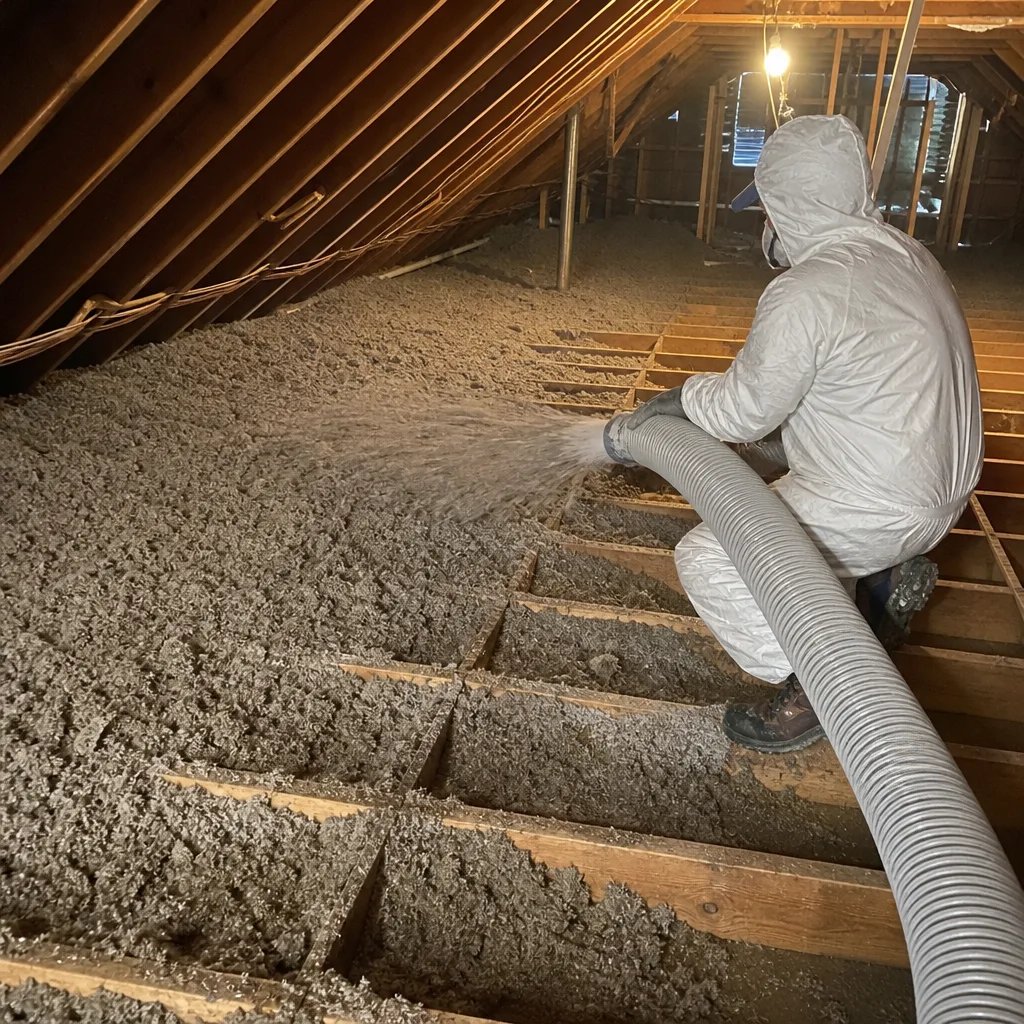
Insulation installation. We select OEM GreenFiber or quality aftermarket equivalent based on availability and your preference, install to specified density, and verify fill completeness with thermal imaging.
- 6
Final blower-door test and documentation. We run the pressurization test again, print the before-and-after comparison, and add photos to your Documented Photo Record. You keep all of it.
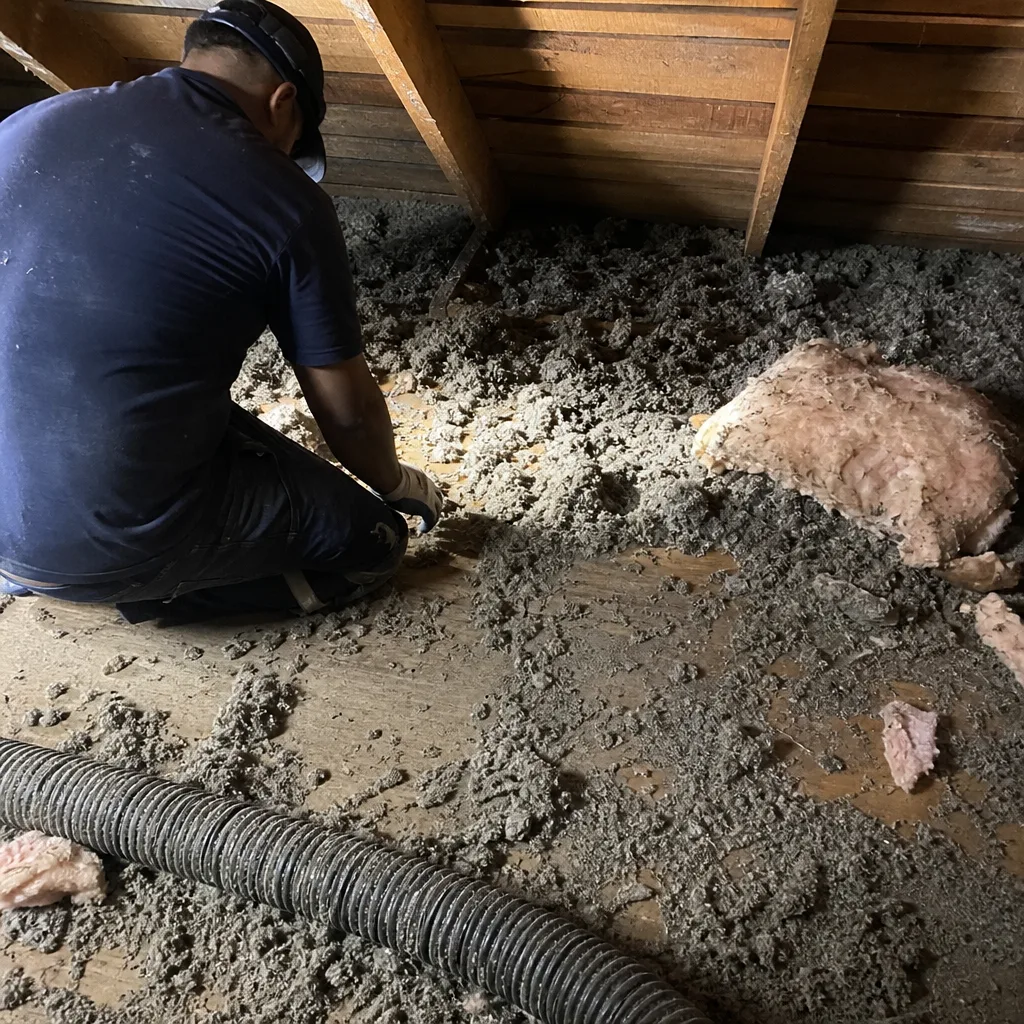 Before
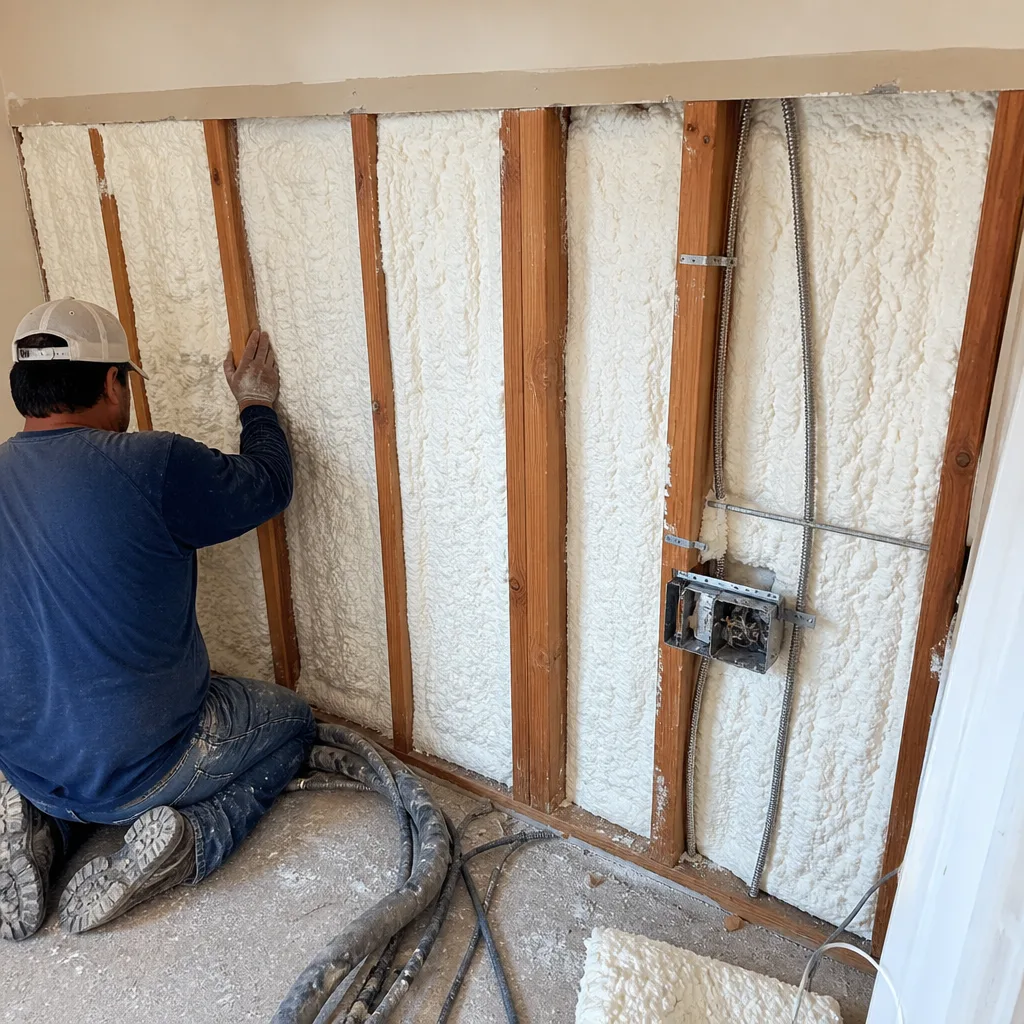 After
AfterWhat GreenFiber Wall Insulation Costs in Converse
| Job Type | Typical Range | What Moves the Price |
|---|---|---|
| Drill-and-fill exterior walls, 1,500 sq ft home | $2,400 - $3,800 | Wall height, stucco vs. siding, cavity obstructions |
| Drill-and-fill exterior walls, 2,500 sq ft home | $3,600 - $5,400 | Second story, balloon framing, access difficulty |
| GreenFiber removal and replacement (moisture/rodent) | $4,200 - $6,800 | Extent of contamination, drywall repair scope, odor sealing |
| Interior soundproofing, single room | $1,800 - $2,800 | Shared walls, ceiling/floor inclusion, electrical relocation |
| Top-off partial fill, settled existing GreenFiber | $1,200 - $2,200 | Accessibility of wall cavities, density of original install |
Stucco exteriors add 15-25% because we drill through the scratch coat and patch with color-matched cement; vinyl or fiber-cement siding is simpler. Second-story walls in Converse’s split-levels near Judson High require scaffolding or ladder work, which we price upfront. Every estimate is free, and we offer a Free Second Opinion on any written estimate you’ve already received. Call (830) 420-0953 for exact pricing on your home.
Why Converse Homeowners Call Topside Attic Insulation Converse for GreenFiber Work
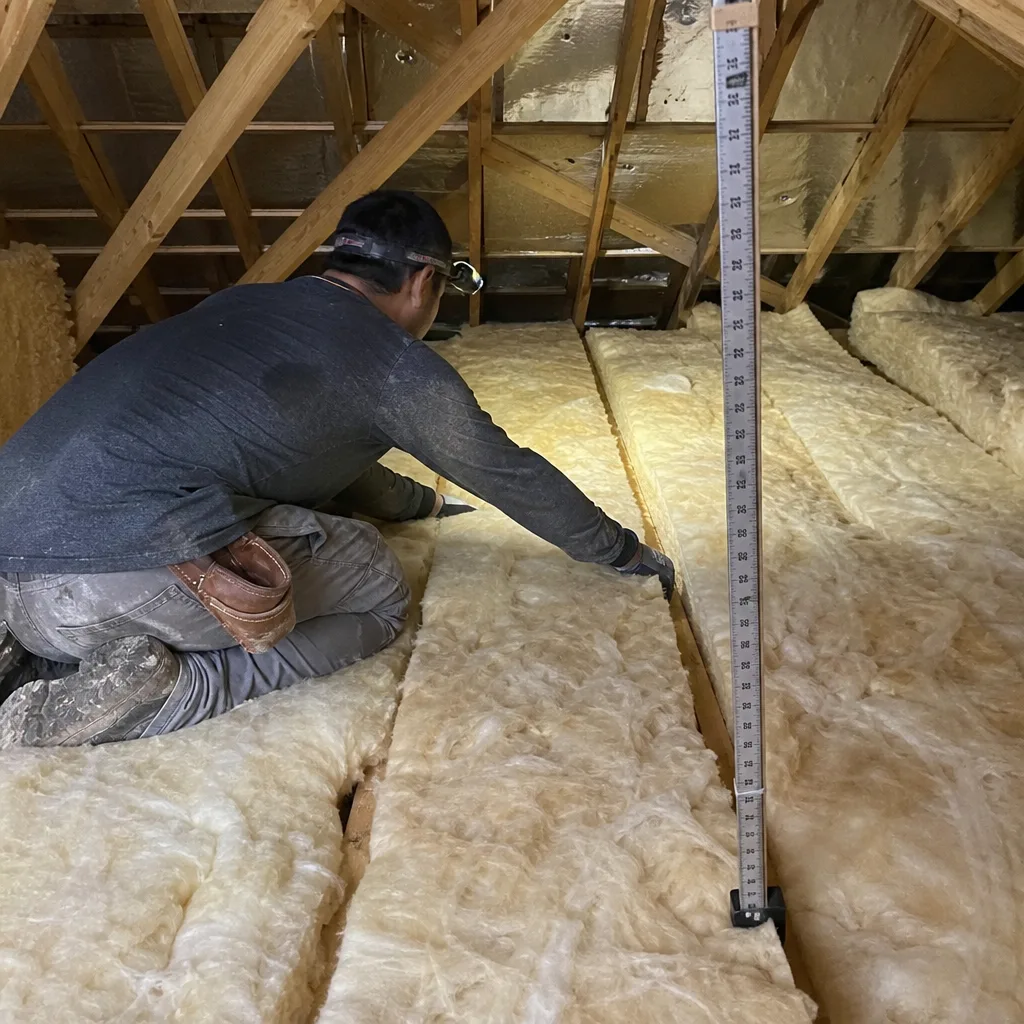
We’ve sealed and insulated over 9,000 homes since 2016, and the ones in Converse have taught us specific lessons: the clay soils shift and crack stucco, the spring storms drive water into wall cavities, and the 1980s ranches near Foster Road were built with top plates that were never sealed at all. Wes Okafor runs a blower-door test before and after every job so you leave with a printed report showing exactly how much the envelope tightened. Our 365-Day Done Right Promise means if the wall settles, if a void opens, if the numbers don’t hold, we return and make it right. We also work with Reflectix and every major insulation brand, so if GreenFiber isn’t the right material for your specific wall condition, we’ll say so and show you the alternative. Calls are answered by a live person 24/7, and our technicians are background-checked, uniformed, and named before they arrive.
FAQs
GreenFiber’s product warranty covers manufacturing defects regardless of who installs it, but installation-related issues like settling or moisture damage fall to the contractor’s workmanship guarantee. As an independent GreenFiber service provider, we provide our own 365-Day Done Right Promise in writing on every job. Call (830) 420-0953 and we’ll explain exactly what’s covered by which party.
We source GreenFiber All Borate and Sanctuary lines through the same regional distributors that supply San Antonio-area builders, and we also stock quality aftermarket cellulose that meets the same ASTM C739 density and fire-resistance specs. If you want the OEM bag, we’ll use it; if supply is tight, we’ll show you the equivalent and let you decide. No proprietary lock-in.
Redensification of settled loose-fill runs 40-60% less than full removal and replacement, but it only works if the material is dry and uncontaminated. In Converse’s spring humidity cycle, we’ve found that settled material below the 4-foot line is often too compacted to re-fluff effectively. We test a core sample and give you both prices, then you choose. Estimates are free.
Most GreenFiber wall jobs are scheduled within 48 hours of your call and completed in one day. Two-story homes or jobs requiring drywall repair may run into a second day. We don’t quote turnaround times we can’t meet. Call (830) 420-0953 for the next available opening.
Yes, but only if the air sealing is done first. An unsealed wall with R-13 insulation performs like a sealed wall with R-7 because convection loops around the insulation. Our blower-door test quantifies that leakage so you know what you’re paying for. Most Converse homes we test before wall work leak 3,500-5,500 CFM50; after sealing and insulating, we typically see 40-55% reduction. The numbers are in your report when we leave.
Written by Wes Okafor, Owner & Lead Insulation Technician, Topside Attic Insulation Converse at Topside Attic Insulation Converse, serving Converse and nearby areas.