
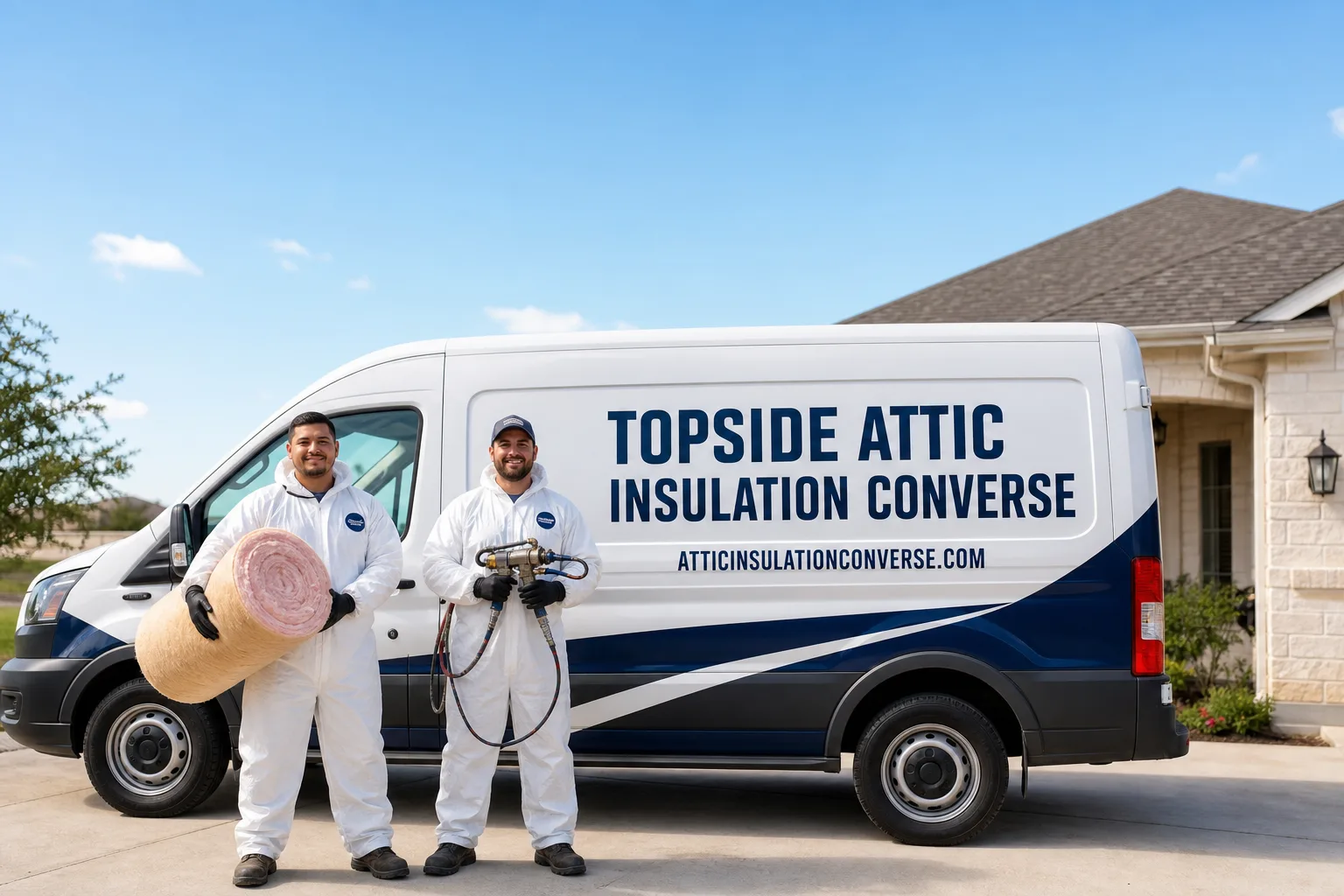
Trusted Blown-In Insulation for Converse Homeowners
Most attics in Converse homes built between 1985 and 2010 were originally insulated to R-19 or lower, well below the R-38 to R-60 the Department of Energy now recommends for our South Texas climate. Blown-in insulation fills irregular joist cavities, covers top plates, and creates a continuous thermal blanket without the seams and gaps that batt insulation leaves behind. At Topside Attic Insulation Converse, we’ve completed Blown-In Insulation - Converse in over 9,000 homes since 2016, and we start every job with a blower-door test to measure exactly how much conditioned air your envelope is losing before we add a single bag of material.
We’re independently owned and operated under The Haven Standard, which means you get a written price before any work starts, a documented photo record when we leave, and before-and-after blower-door numbers on every applicable job. Our technicians are background-checked and uniformed, and a live person answers our phones 24/7 at (830) 420-0953. Same-day estimates are available throughout Converse, from the older ranch homes near Randolph Air Force Base to the newer builds in Woodlake and Foster Ridge.
What Our Blown-In Insulation Service Includes
Blown-In Cellulose
Blown-in cellulose is ground paper fiber treated with borate fire retardant, and it packs tightly around wires, pipes, and irregular framing to eliminate convection currents. In Converse, where summer attic temperatures regularly exceed 140°F, cellulose performs well because it resists settling better than fiberglass in our high-heat, high-humidity cycles. We source cellulose from GreenFiber and install it to manufacturer-specified density, never fluffing to stretch bags. Our crews seal all top plates, can lights, and plumbing penetrations with fire-rated caulk and foam before blowing, because insulation without air sealing is just a filter for your conditioned air.
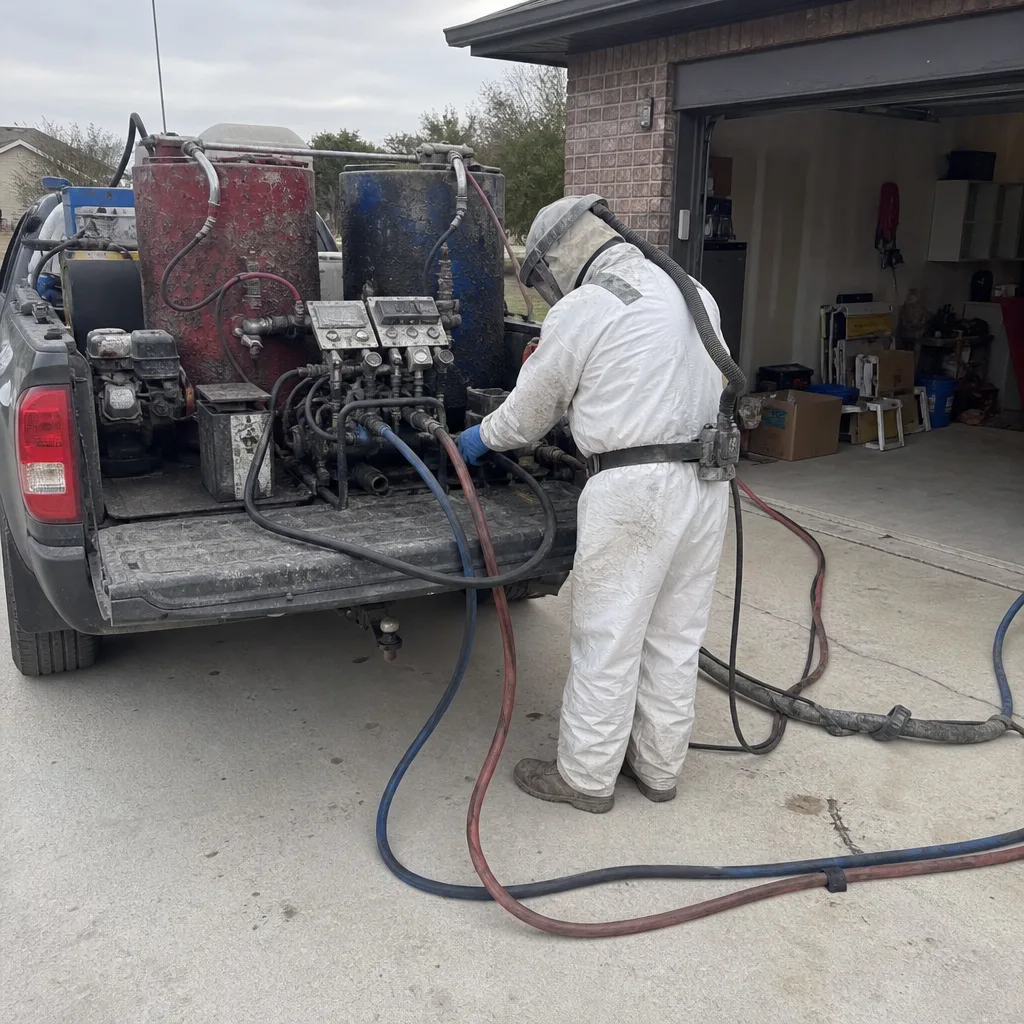
Blown-In Fiberglass
Blown-in fiberglass consists of spun glass fibers that create millions of trapped air pockets, and it offers higher R-value per inch than cellulose when space is limited. We see this material specified most often in Converse homes with shallow rafter bays or where homeowners need to maintain storage clearance above the joists. We stock Owens Corning and Johns Manville fiberglass systems, and we install with proper depth markers so you can verify the coverage yourself. Every fiberglass job includes the same mandatory air-sealing prep: if we find unsealed can lights or open soffit chutes, we fix those first under Haven Standard Clause 1.
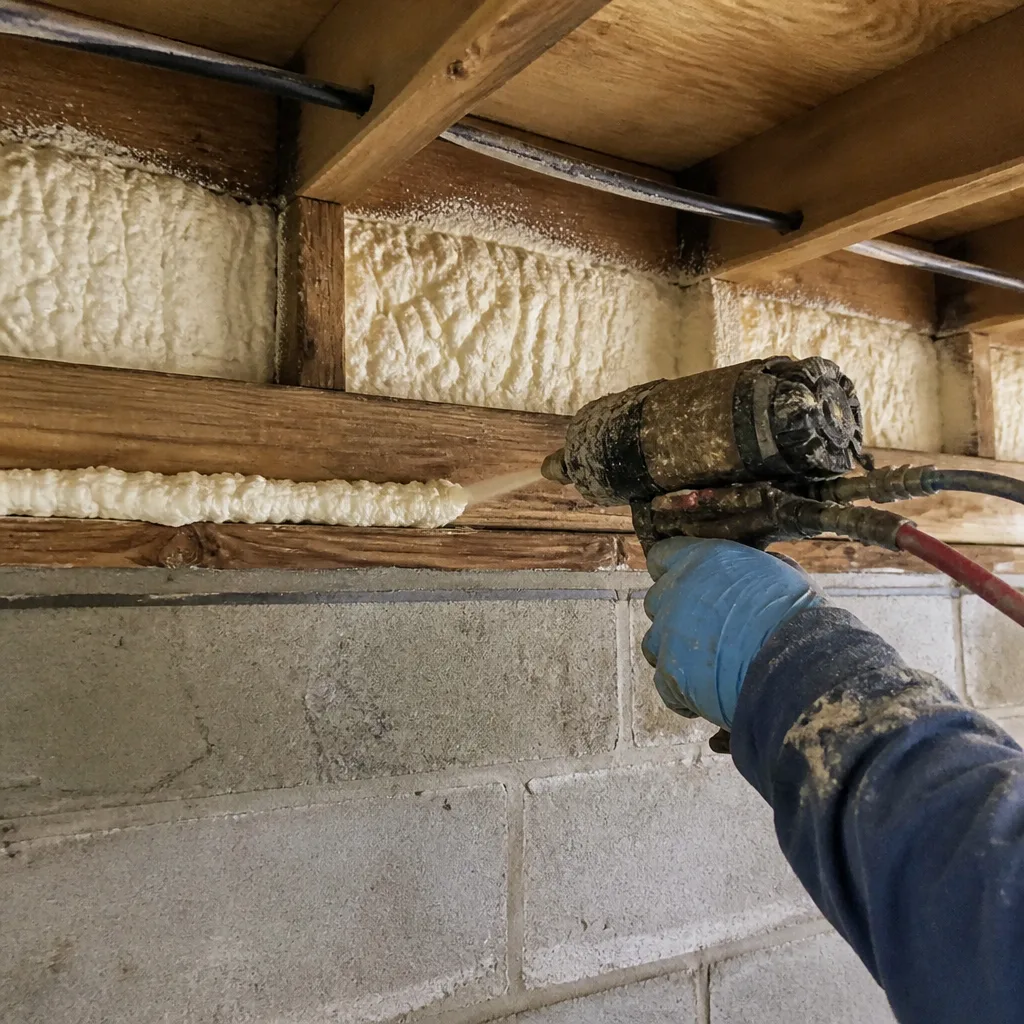
Dense-Pack Wall Insulation
Dense-pack wall insulation fills enclosed wall cavities with cellulose or fiberglass at 3.5 to 4.0 pounds per cubic foot, a density high enough to prevent settling but low enough to avoid bowing studs. This is the retrofit solution for Converse homes built before wall insulation was code-required, particularly the ranch and split-level neighborhoods near Converse City Park and the original town center. We drill minimal access holes, either from the exterior through siding or from the interior through drywall, and we patch with matching texture. The blower-door test after dense-packing typically shows a 15 to 25 percent reduction in air leakage, and we hand you that number in writing.
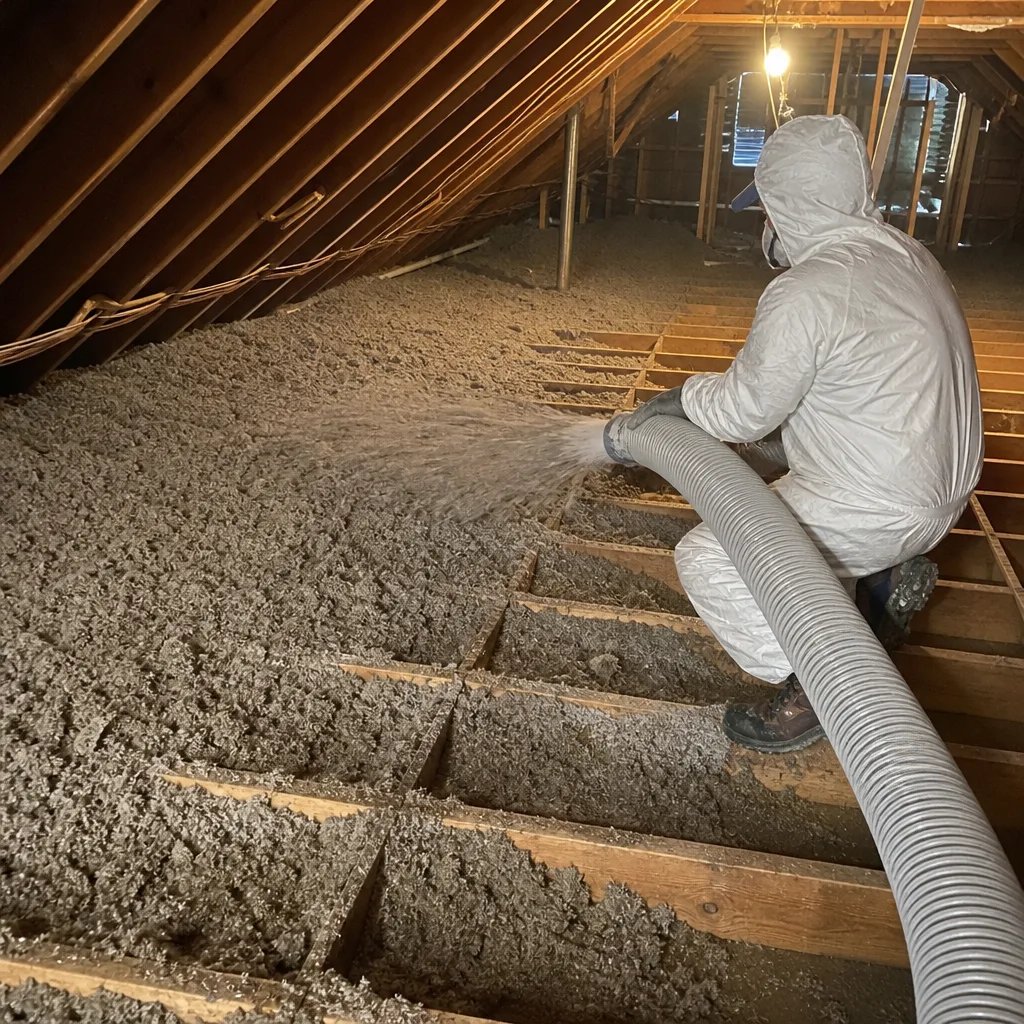
Blown-In Top-Up
A blown-in top-up adds material over existing insulation that has compressed, settled, or was simply undersized from the original build, and you can learn more about Blown-In Insulation pricing for this service. In Converse, we find this most often in homes where the original R-19 fiberglass batts have compressed to R-13 or lower after 15 to 20 years of foot traffic, storage, and rodent activity. We inspect the existing layer for moisture damage or fecal contamination first; if removal is needed, we quote that separately before any new material goes in. When conditions allow, a top-up is the most cost-effective way to bring your attic to current code, and we document the before-and-after depth with photos you keep.
What happens when you call
- 1
A real person answersNo phone trees - you reach a local pro.
- 2
You get an upfront price rangeHonest numbers before anyone is dispatched.
- 3
A background-checked tech heads outLicensed & insured, dispatched right away.
- 4
You approve before work beginsNothing starts until you say go.
Brands We Service for Blown-In Insulation
We’ve installed GreenFiber cellulose in hundreds of Converse homes, particularly in the energy-efficiency retrofits where homeowners want a recycled-content material with proven fire resistance. Their stabilized product resists wind drift during application, which matters in our open-attic jobs where gable vents create cross-breezes. We also stock and install Owens Corning fiberglass systems, including their ProCat and AttiCat lines, and we’ve found their loose-fill products perform consistently in our blower-door verification across the humid subtropical conditions that Converse experiences from May through October.
Johns Manville and Knauf round out our primary material sources, and we select between them based on your specific cavity depth, moisture history, and budget. We do not push proprietary products or exclusive brand relationships. Whether you have a preference for one manufacturer or no preference at all, we specify the material in your written scope before work begins, and we do not substitute without your approval. Every bag is documented in your photo record.
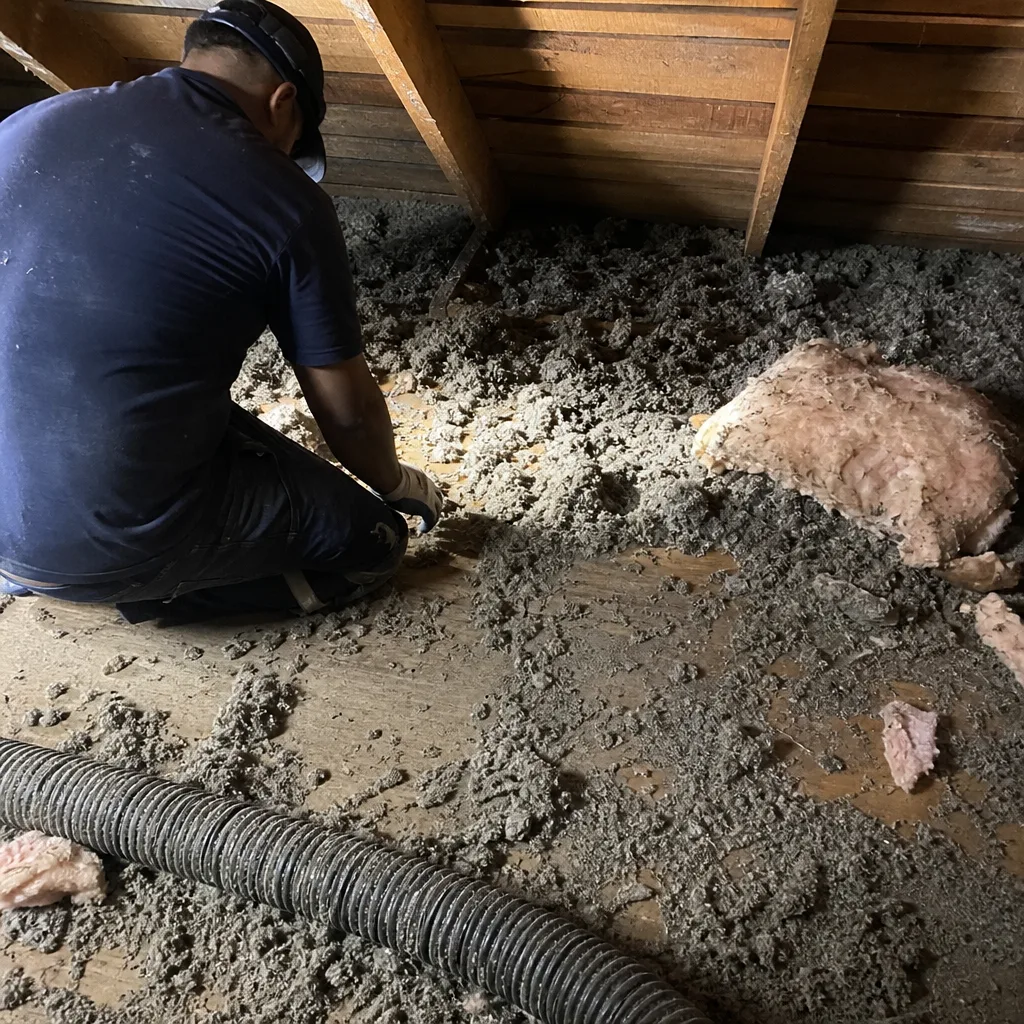 Before
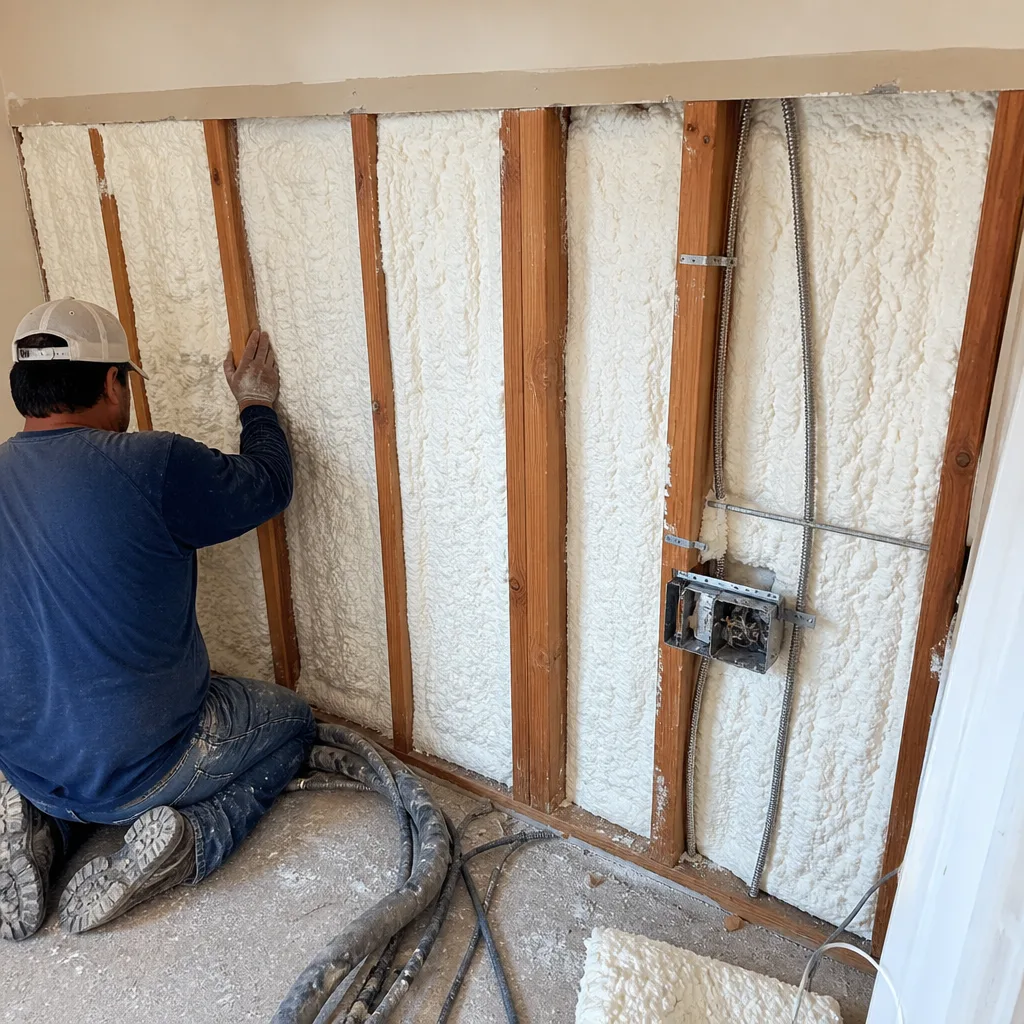 After
AfterSigns You Need Blown-In Insulation Right Now
- Your upstairs rooms run 8 to 12 degrees warmer than downstairs in July. This temperature stratification means your attic is functioning as a solar collector, radiating heat through the ceiling plane because the insulation layer is too thin or too disrupted. In Converse, where cooling degree days exceed 3,000 annually, this is not a comfort issue alone; it’s a measurable energy penalty that shows on your CPS Energy bill.
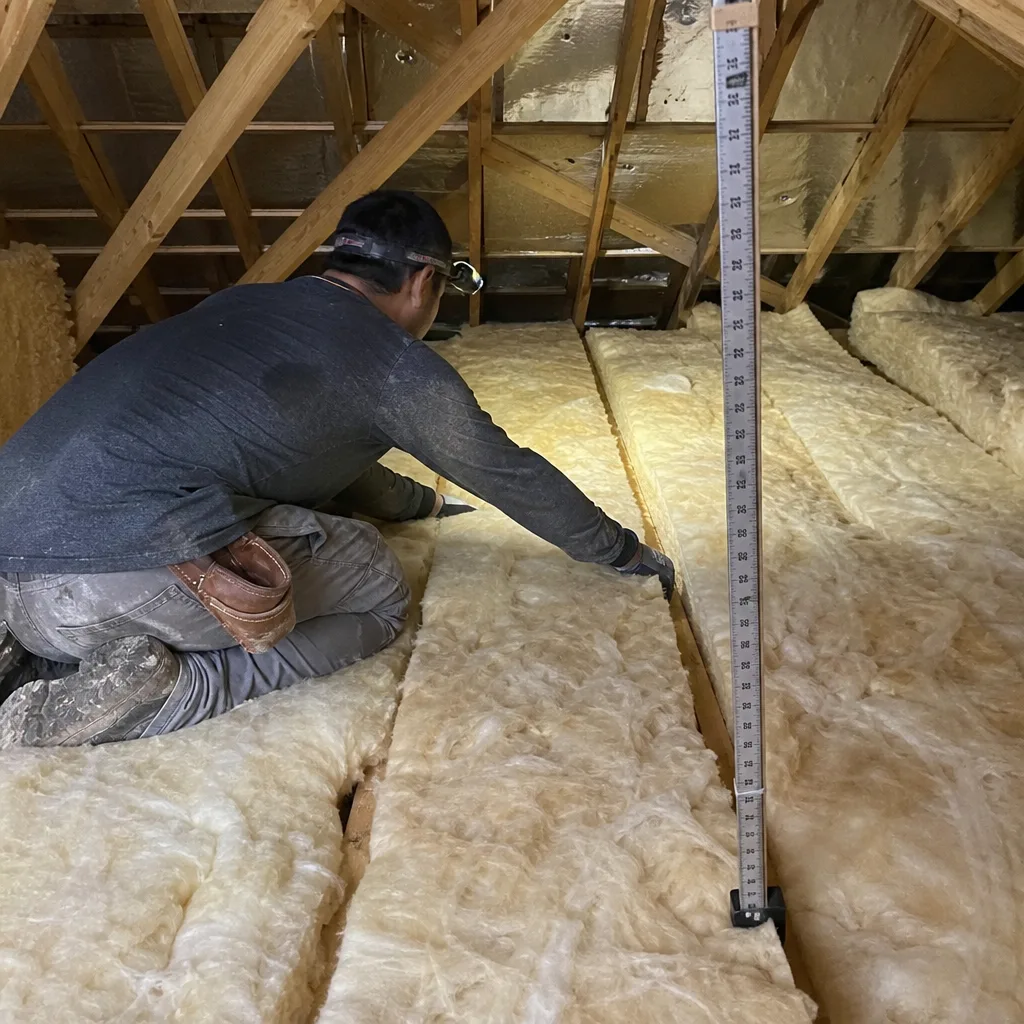
- You can see the ceiling joists through your attic insulation. Proper coverage should bury joists completely in a uniform plane. Exposed wood means the original material has settled, been disturbed by contractors, or was never adequate. We measure actual depth against labeled R-value during our free estimate and show you the gap with photos.
- Your energy bills spike every June and stay high through October. South Texas cooling loads are relentless, and an underinsulated attic forces your HVAC system to run longer cycles to maintain setpoint. If your kilowatt-hour usage tracks with outdoor temperature more tightly than it should, the thermal boundary is the first place to look.
- You feel drafts near outlets, baseboards, or can lights on upper floors. These are thermal bypasses, air pathways between conditioned space and attic that bypass the insulation entirely. Blown-in material alone won’t stop them; our process includes sealing these leaks with fire-rated foam and caulk before insulation covers them.
- Your home was built before 2012 and has never had an insulation upgrade. Texas energy code increased attic insulation requirements significantly in the 2009 and 2012 IECC cycles. If your home predates these updates, the original insulation was sized to a lower standard, and Converse’s rapid growth means many subdivisions were built right at code minimum.
Our Blown-In Insulation Process - Step by Step
- 1
Blower-door test and attic inspection. We pressurize your home to 50 Pascals and measure CFM50, the cubic feet per minute of air leakage at that pressure. This single number quantifies how much conditioned air escapes through your envelope. We also photograph existing insulation depth, identify thermal bypasses, and check for moisture stains, rodent activity, or electrical hazards.
- 2
Written scope and price delivered before work starts. Under Haven Standard Clause 1, you receive a flat price, a written description of every task, and a written warranty before anyone lifts a tool. No verbal estimates, no day-of surprises. If you have a competing quote, we provide a free second opinion and read it with you line by line.
- 3
Air sealing of top plates, penetrations, and bypasses. We seal all accessible top plates with fire-rated caulk, box out can lights with fire-safe covers, foam around plumbing and electrical penetrations, and install baffles at soffit vents to maintain ventilation pathways. This step is mandatory, not optional, and it typically reduces CFM50 by 20 to 40 percent before insulation is added.
- 4
Blown-in insulation installation to specified depth and density. We set depth markers every 300 square feet, verify coverage with a probing ruler, and record bag count against manufacturer coverage charts. For cellulose, we confirm density with a core sample; for fiberglass, we verify loft recovery after installation.
- 5
Final blower-door test, photo documentation, and walkthrough. We repeat the pressurization test and hand you a report showing before-and-after CFM50, insulation depth photos, material specifications, and your warranty under the 365-Day Done Right Promise. You know exactly what changed and by how much.
How Much Does Blown-In Insulation Cost in Converse?
A typical blown-in fiberglass top-up in a 1,800 to 2,400 square foot Converse home runs $1,800 to $2,800, including mandatory air sealing of accessible top plates and penetrations. Full attic replacement with cellulose removal and new material installation ranges from $3,200 to $5,500 for the same footprint. Dense-pack wall insulation for a 2,000 square foot home with four exterior walls typically falls between $4,500 and $7,000, depending on siding type and interior access requirements.
Several factors move these numbers. Attic accessibility matters: a steep 12/12 pitch with limited hatch access adds labor hours compared to a walk-up scuttle over a garage. Existing material condition drives removal cost; moisture-compacted or rodent-contaminated insulation requires HEPA vacuum extraction and disposal that clean material does not. The extent of air sealing needed varies significantly by construction era, pre-1990 homes in Converse typically require more top-plate and penetration work than 2005-and-newer builds.
To avoid overpaying, get competing quotes in writing and compare line items, not just totals. Some contractors quote insulation-only prices and treat air sealing as an upsell, which means you’ll pay twice or live with a leaky thermal boundary. Others quote by the square foot without specifying R-value or material type, leaving room for substitution. Our written scope names the manufacturer, the installed R-value, the air-sealing tasks included, and the bag count or cubic feet. If a quote doesn’t include these specifics, it’s not comparable.
Every estimate we provide in Converse is free, includes the blower-door test, and comes with no obligation. Call (830) 420-0953 to schedule.
Blown-In Insulation Near Converse - Our Service Area
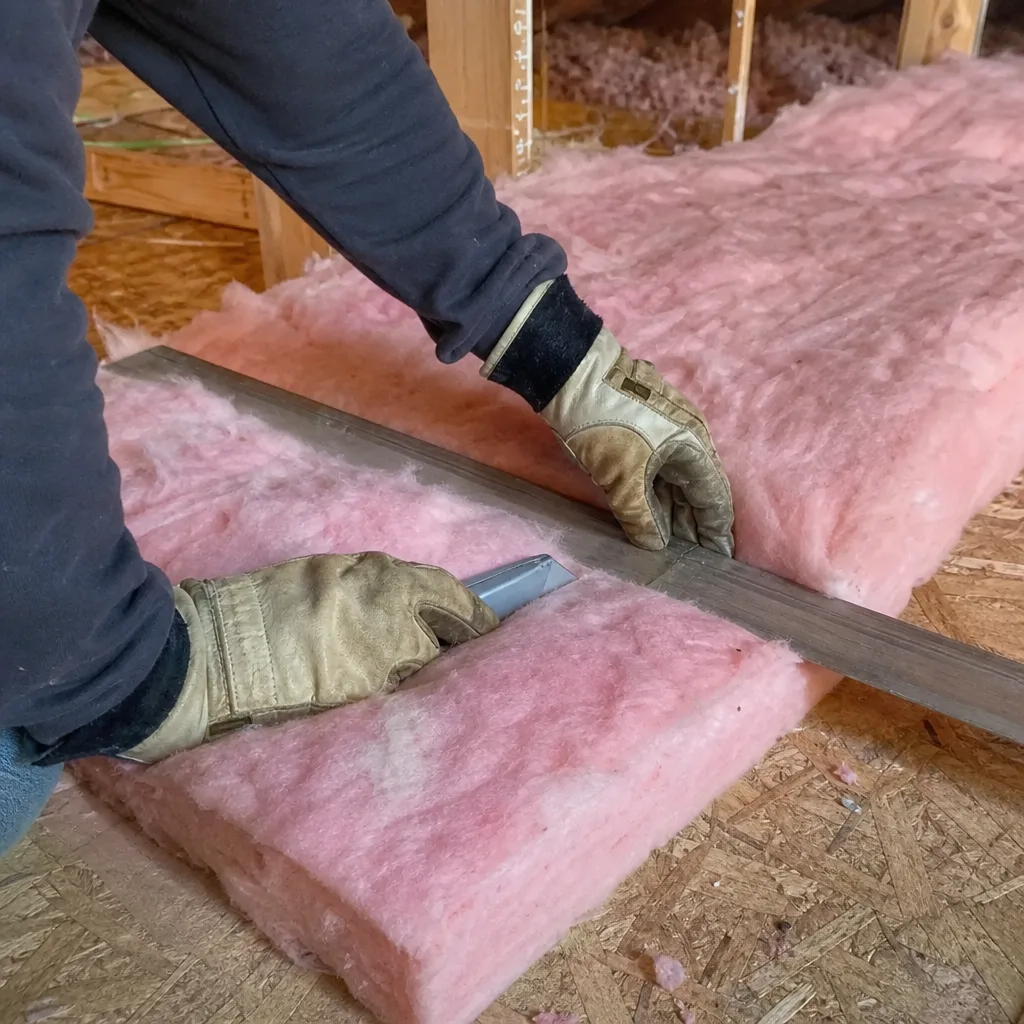
We work throughout the I-35 Northeast corridor and surrounding communities, with typical response times of 30 to 45 minutes to Blown-In Insulation in Universal City, 20 to 30 minutes to Blown-In Insulation in Live Oak, and under 15 minutes to most Converse addresses. Our regular service radius includes Windcrest, Schertz, Selma, Cibolo, Kirby, Terrell Hills, Alamo Heights, Castle Hills, and all San Antonio metro neighborhoods. Crews are dispatched from our Northeast Side facility, and we do not charge travel fees within this core service area.
Serving Converse, TX - Our Local Coverage Area
We’re based in the Converse area and know this community well. Use the map below to see our service coverage - if you’re nearby, we can almost certainly help.
Frequently Asked Questions - Blown-In Insulation in Converse
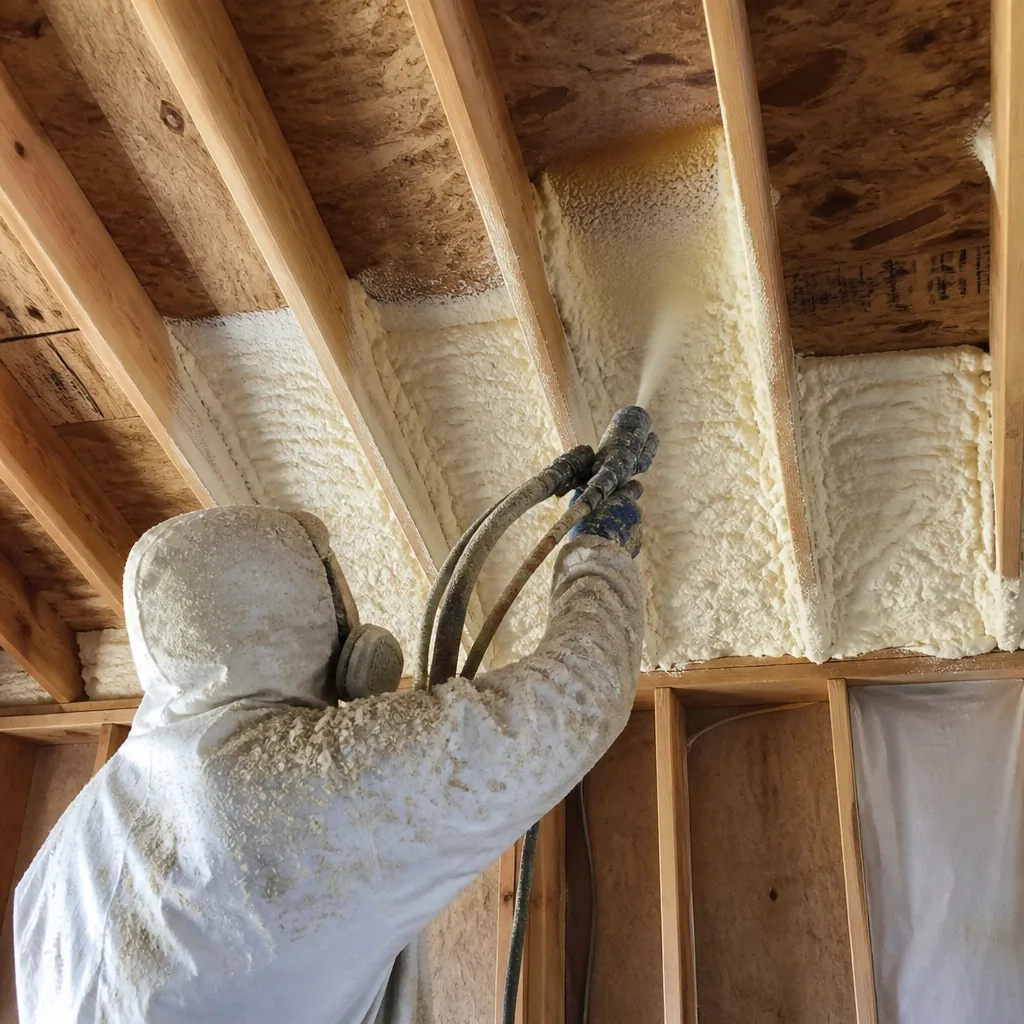
Blown-in insulation is loose fiber material, cellulose or fiberglass, that a blower hose distributes across attic floors or into wall cavities to create a continuous thermal layer without seams or gaps. Unlike batt insulation, which comes in pre-cut rectangles that leave voids around irregular framing, blown-in material conforms to every obstruction and provides consistent coverage. In Converse’s hot-humid climate, this continuity matters because even small gaps create thermal bypasses that undermine the entire R-value.
Most attic top-ups in Converse finish in one day, typically four to six hours for a crew of two. Full removal and replacement jobs, or dense-pack wall insulation, usually require two days: one for preparation, air sealing, and material installation, and a partial second day for final testing and documentation. We schedule a specific arrival window, text you when the technician is en route, and complete the final walkthrough before collecting payment.
Blown-in fiberglass attic top-ups for typical Converse homes run $1,800 to $2,800; full cellulose replacement ranges $3,200 to $5,500; and dense-pack wall insulation runs $4,500 to $7,000 depending on home size and access. These prices include mandatory air sealing, material, labor, and documentation. For an exact quote on your specific home, call (830) 420-0953 - estimates are free and come with a written scope before any work starts.
Yes, we install both Owens Corning and Johns Manville blown-in fiberglass products regularly, and we stock GreenFiber cellulose as well. We do not claim exclusive or preferred status with any manufacturer; we select materials based on your home’s specific conditions and specify the brand and product line in your written scope. If you have a material preference, we accommodate it when performance requirements allow.
We do not treat insulation as an emergency trade because improper installation under time pressure creates more problems than it solves. However, we answer calls 24/7 and can typically schedule an estimate within 24 to 48 hours for urgent comfort or energy-cost concerns. If your situation involves an active roof leak or moisture intrusion, we prioritize inspection to prevent insulation damage that would require later removal.
All completed work is covered by our 365-Day Done Right Promise: if it’s not done right, we make it right, with no deductible or service fee. This is backed by a written warranty delivered before work begins under Haven Standard Clause 1. Material warranties vary by manufacturer, Owens Corning and Johns Manville both offer limited lifetime product warranties, and we register these on your behalf when required.
Clear a path to the attic access and remove stored items from the attic floor; our crew can assist with heavy items if arranged in advance. Ensure pets are secured away from the work area, and provide access to electrical outlets for our blower equipment. We bring drop cloths, corner guards, and HEPA filtration, and we protect your floors and furnishings as part of standard preparation. You’ll receive a pre-arrival checklist by text the day before your scheduled installation.
Schedule Your Blown-In Insulation Service in Converse Today
Call (830) 420-0953 to speak with a live person, 24/7, and schedule your free estimate. We’ll perform a blower-door test, photograph your current conditions, and deliver a written price before any work starts. Every job includes air sealing, documented photos, and before-and-after performance numbers you can verify yourself. No voicemail loops, no callback windows measured in business days.
Written by Wes Okafor, Owner at Topside Attic Insulation Converse, serving Converse, Blown-In Insulation in Universal City, Live Oak, and surrounding communities since 2016.