
How Much Does Attic Air Sealing Cost in Converse?
Attic Air Sealing services in Converse, TX typically run between $800 and $2,400 for a standard single-story home, with most jobs landing around $1,200 to $1,600 depending on attic size and the number of penetrations that need to be addressed. That range covers the sealing work itself – top plates, recessed light fixtures, plumbing and electrical chases, and the attic hatch – before any insulation goes in. If your home is between 1,500 and 2,500 square feet, which describes most of the housing stock in Converse’s newer subdivisions like Foster Creek and Summers Cove, budget for the middle of that range.
Attic Air Sealing Cost Breakdown (2026)
Air sealing isn’t a single line item – it’s a collection of specific tasks, each priced by scope and difficulty. The table below reflects what Envelope Insulation Co. (operating as Topside Attic Insulation Converse) sees in the Converse market as of 2026. Every price listed here is the kind of number that appears on a written scope before any work starts, per Haven Standard Clause 1.
| Scope Item | Typical Cost Range (Converse, TX) | Notes |
|---|---|---|
| Top plate sealing (full perimeter) | $300 – $600 | The wall-to-attic connection; major bypass in most TX tract homes |
| Recessed light fixture air sealing (per fixture) | $15 – $35 each | Homes with 12-20 can lights add up fast here |
| Plumbing and electrical chase sealing | $150 – $350 | Runs from bottom to top of home; a direct stack-effect bypass |
| Attic hatch / access door weatherstripping and insulation box | $120 – $250 | Often the single biggest hole in an otherwise sealed attic |
| HVAC boot sealing (supply and return) | $200 – $400 | Where duct boots penetrate the drywall ceiling |
| Whole-attic air sealing (complete package, typical 1,800 sq ft home) | $900 – $1,600 | Covers all of the above as a single written scope |
| Larger home or vaulted / complex framing (2,500 – 3,500 sq ft) | $1,600 – $2,400 | Multiple ridgelines, bonus rooms, or sunken attic sections add labor |
| Blower-door test (before and after, documented) | Included on applicable jobs | Measures CFM50 – the actual before/after air-loss number |
A few things drive those numbers up or down in the Converse area specifically. Homes built in the mid-2000s through around 2015, which make up a big share of neighborhoods like Heritage at Converse and Stone Creek Ranch, tend to have open-web floor trusses and dense recessed lighting – both of which add penetration count and labor time. Homes built after 2015 in newer sections of Converse may already have some air-sealing measures from the original construction, though code compliance and actual performance are two different things, and a blower-door test is the only way to know which one you have.
One number that genuinely surprises homeowners: we’ve measured attics in Converse running blower-door readings north of 5,000 CFM50 – that’s roughly 5,000 cubic feet of conditioned air escaping through envelope gaps every minute under standard test pressure. After a full sealing, the same homes routinely come down to 2,200-2,800 CFM50. That’s the kind of documented result that appears on the report we leave with you when the job is done, not a figure we estimate or approximate.
What Affects Attic Air Sealing Pricing in Converse
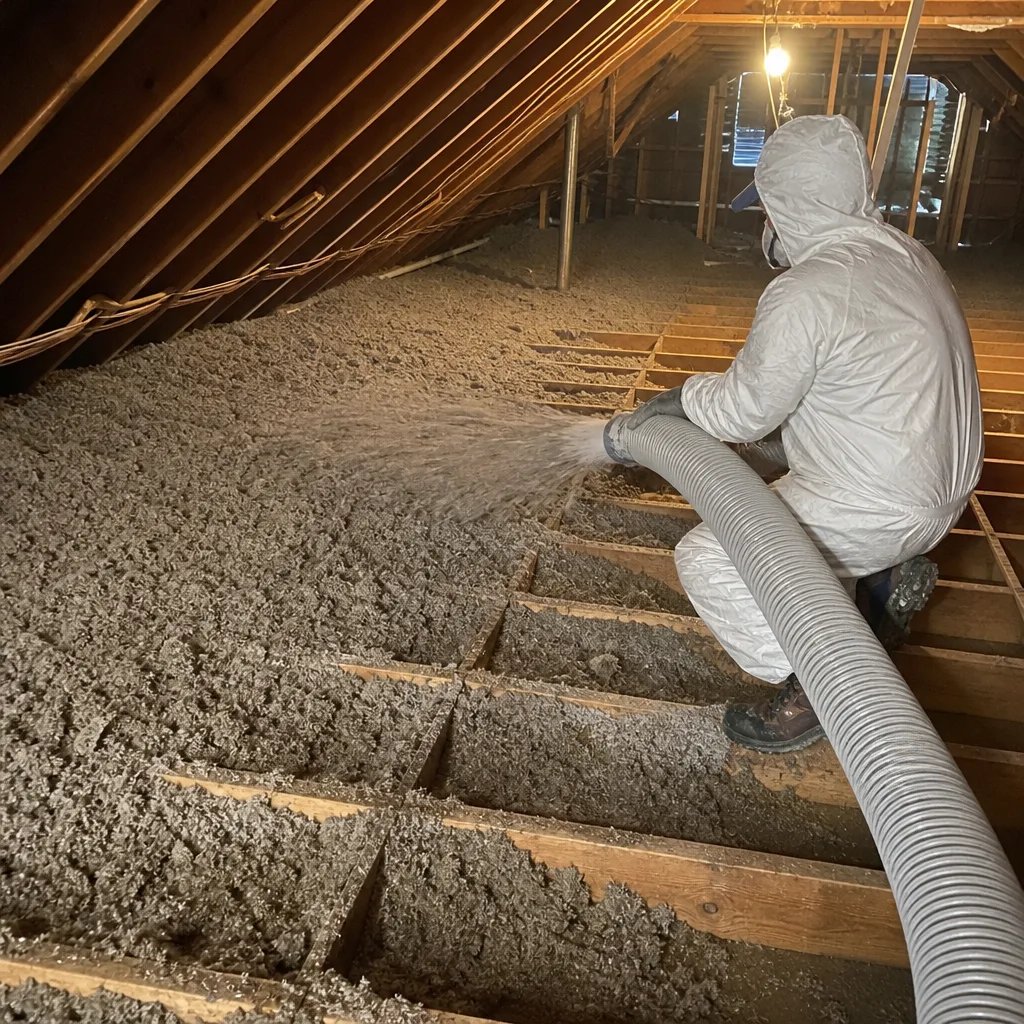
Six factors move the price more than anything else when we’re quoting a job in Converse:
- Attic square footage and roof geometry. A simple ranch-style footprint – common in the older sections of Converse near FM 78 – is faster to work than a two-story home with a hip roof, bonus room, and multiple attic sections. Every section the technician has to crawl through to reach bypasses adds time.
- Number and type of penetrations. Every recessed light, every plumbing vent stack, every electrical chase is a separate sealing task. A home with 24 can lights in the ceiling costs more to seal than one with 8. We count them before we write the price – not after.
- Current insulation depth and type. If there’s already 10+ inches of blown fiberglass over everything, that insulation has to be moved aside before sealing can happen, then redistributed. That’s extra labor. Homes in Converse with older cellulose that’s settled or shifted are common, and they often hide more bypasses than newer installs.
- Attic accessibility and working conditions. Summer attic temperatures in Converse routinely hit 150-160°F by midday. We schedule accordingly, but low-pitched roofs that limit clearance over the top plates slow the work regardless of scheduling. A tight crawl adds time; a tight crawl at 140°F adds more.
- Duct system routing. Homes where HVAC ducts run through the attic – which is most of Converse, given how the area was developed – have more boot penetrations at the ceiling plane. If ducts are also disconnected or poorly sealed, we’ll note that in the inspection report, though duct sealing is a separate scope.
- Whether insulation is being added immediately after. When air sealing and insulation installation are done together under one written scope, there’s typically a combined-job efficiency compared to booking them separately. We don’t inflate the air-sealing price to manufacture that comparison – the written price is the written price – but it’s worth knowing before you schedule the two as separate calls.
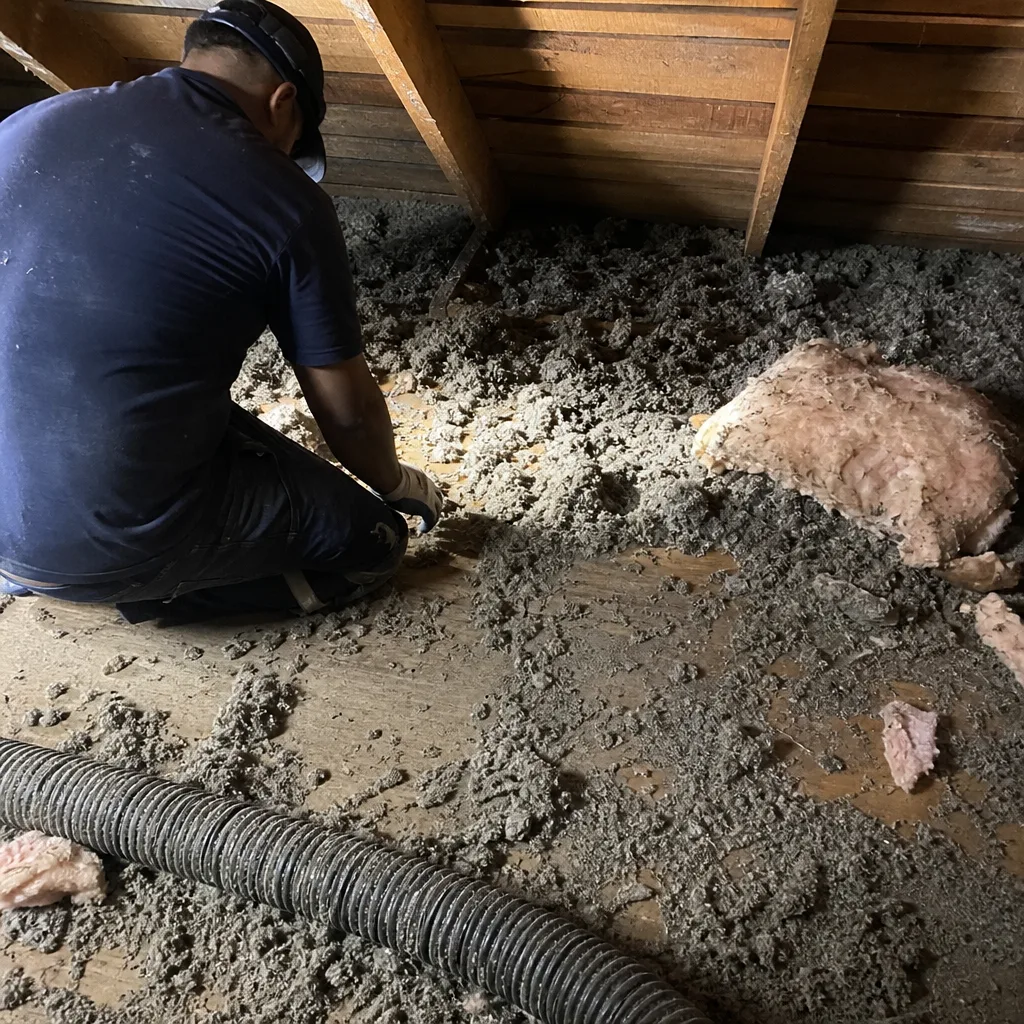 Before
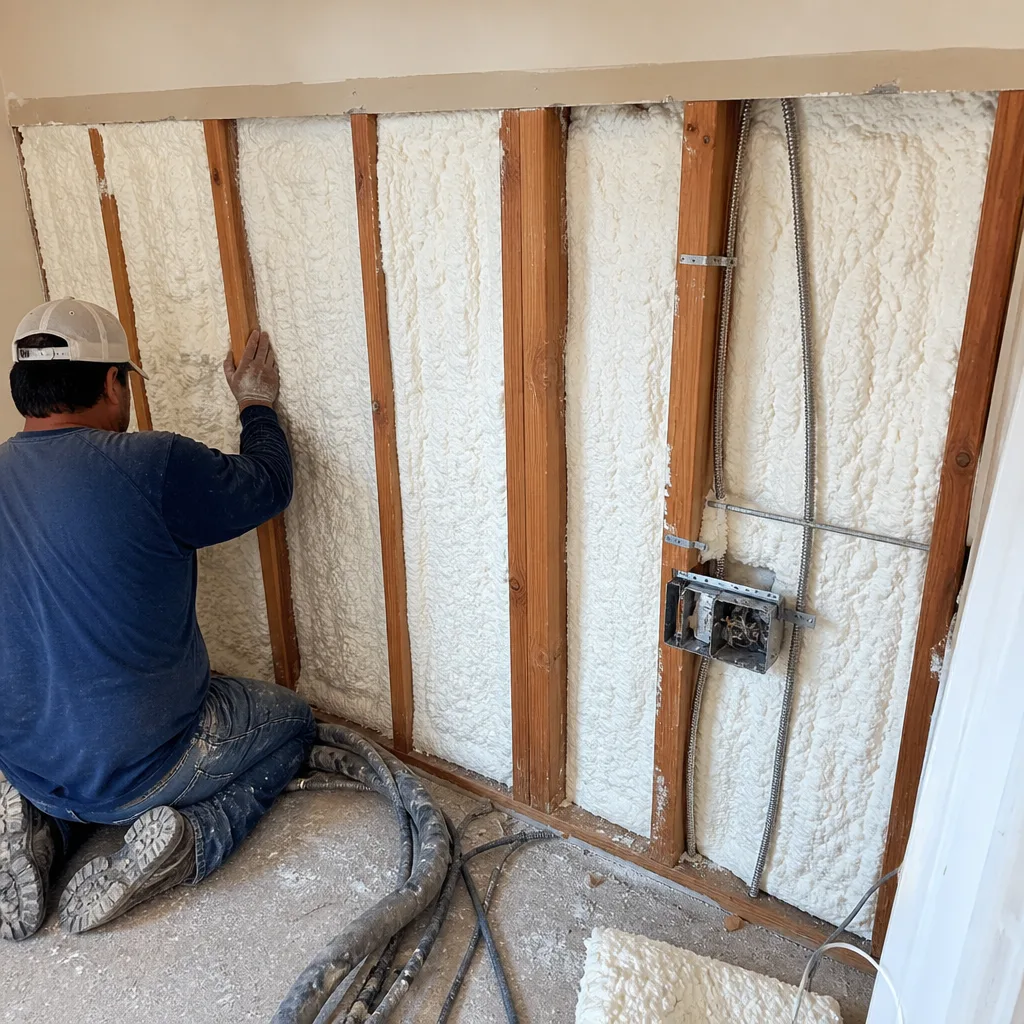 After
AfterHow to Save on Attic Air Sealing in Converse
The honest answer is that the biggest savings come from doing the job once, in the right order. Attic insulation blown in before the top plates and penetrations are sealed is money you’ll spend again when you eventually address the air leaks that the insulation is sitting on top of. Envelope Insulation Co. won’t install insulation over an unsealed attic floor – it’s a hard line in our process, not a sales pitch – so when you’re comparing quotes, ask every contractor explicitly whether air sealing is included before insulation goes in, or whether it’s an add-on at the end.
Beyond sequencing, a few practical moves reduce cost:
- Combine air sealing with insulation installation. Scheduling both in a single visit reduces mobilization time and gets you a complete building-envelope scope in one written price. If you need a blower-door test after, that’s included on applicable jobs – it’s not a separate charge.
- Check for CPS Energy rebates. CPS Energy – the utility serving most of the greater San Antonio and Converse area – has historically offered residential energy efficiency rebates for air sealing and insulation work that meets performance criteria. Rebate programs change, so confirm current availability directly with CPS, but in past years qualifying homeowners have recovered $200-$500 of their project cost. We can document the pre- and post-blower-door numbers you’d need to file.
- Get a second opinion on a high quote. Under Haven Standard, we offer a free second opinion on any written estimate. Bring us a competitor’s quote and we’ll read it with you – line by line – and tell you whether the scope is complete, whether the price is reasonable for the Converse market, and what, if anything, is missing. There’s no pressure and no fee for that.
- Schedule in the off-peak window. Late fall through early spring is cooler and typically less backlogged than summer, when every HVAC technician and insulation contractor in Bexar and Guadalupe counties is running at full capacity. Scheduling flexibility translates to scheduling availability.
- Don’t skip the attic hatch. This sounds like a small thing to add rather than a way to save, but an unsealed attic hatch can erase 10-15% of an otherwise excellent sealing job. Fixing it costs $120-$250. Skipping it because it looks like a small cost and then wondering why your utility bills didn’t drop is the more expensive outcome.
To get a written price before any work starts, call us at (830) 420-0953. A live person picks up – no voicemail, no callback window measured in business days.
Why the Order Matters: Sealed First, Then Insulated
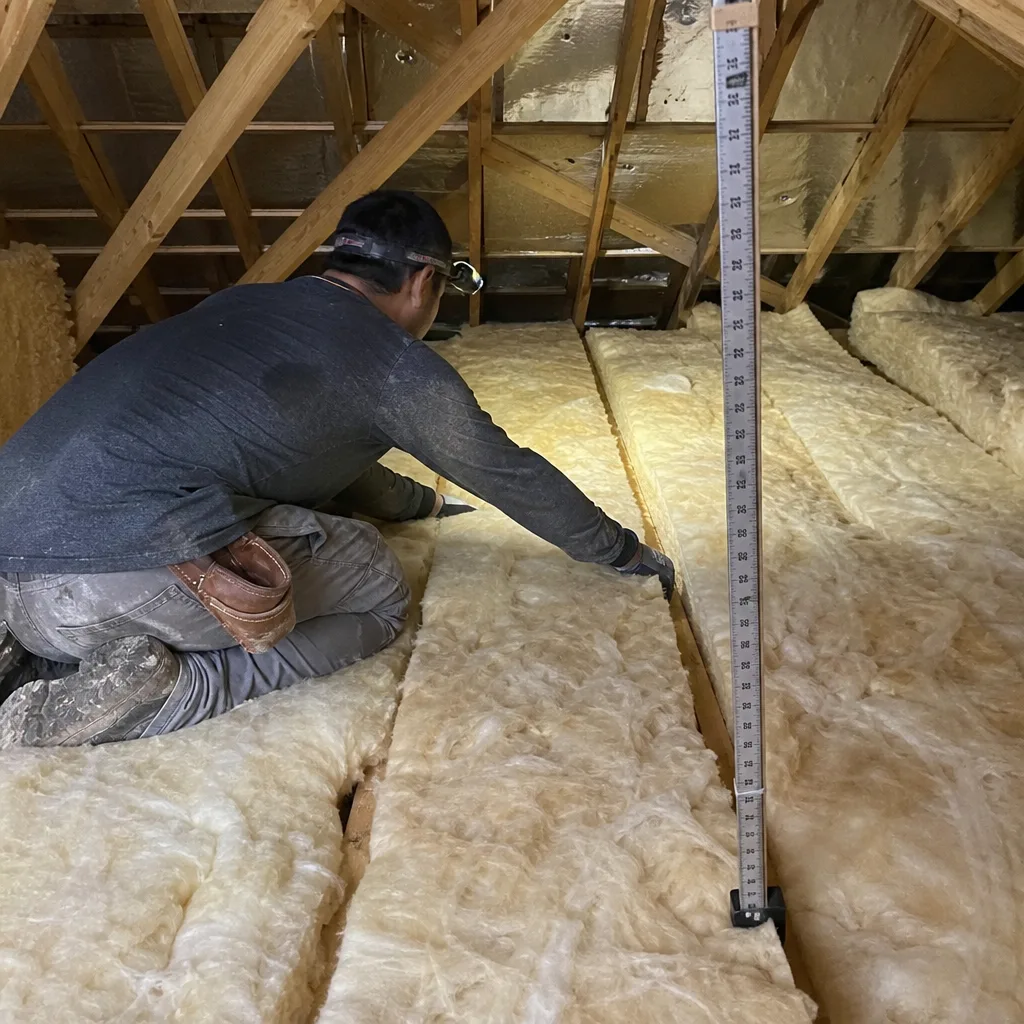
This point gets its own section because it’s the single most common sequencing error we see in Converse attics, and it costs homeowners money twice.
Attic insulation – whether blown fiberglass, cellulose, or spray foam – reduces conductive heat transfer through the attic floor. What it doesn’t do is stop air movement. A gap around a can light or an open top plate is a direct conduit for conditioned air to escape into the attic regardless of how many inches of insulation sit next to it. Blowing R-38 over an unsealed ceiling plane is like packing insulation around an open window: the thermal resistance is there, but the air path isn’t closed.
The blower-door test – a pressurization test that measures, in a single figure called CFM50, how much air your home’s building envelope is losing – is the tool that shows this clearly. We run it before we seal, and then again after. The before number tells us the actual scope of the problem. The after number tells you whether the work was done. Both numbers go in the documentation you receive when the crew leaves Converse.
In Foster Creek and Redland Ranch, we regularly see homes where insulation was added in the last five years but air sealing was never completed. The blower-door numbers on those homes often look nearly identical to homes that have never been touched. The insulation improved comfort on the hottest days by a few degrees, but the air losses – and the utility bills that go with them – didn’t move much. That’s the cost of getting the order wrong.
For more on what the full service includes, our Attic Air Sealing in Converse page walks through the complete process from inspection through blower-door documentation.
Is Attic Air Sealing Worth the Cost in Converse’s Climate?
Converse sits in a hot-humid climate zone – IECC Climate Zone 2A – which means the building science runs in a direction most people don’t expect. The primary pressure isn’t keeping heat out in summer (though that matters). It’s managing moisture-laden outdoor air that wants to migrate into the conditioned space through any gap in the building envelope. When hot, humid air from outside enters through attic bypasses and hits a cooled ceiling plane, it can condense. Over years, that contributes to moisture accumulation in attic framing, insulation degradation, and in some cases mold growth in the ceiling cavity.
This is not a theoretical concern in Converse. We’ve documented attics in neighborhoods off Kitty Hawk Road and near Judson ISD campuses where the combination of inadequate air sealing, under-conditioned attic spaces, and Converse’s summer humidity had created visible moisture staining on roof decking. Air sealing doesn’t replace mechanical ventilation or vapor management, but it removes the largest single source of uncontrolled moisture entry: the gap.
From a pure payback standpoint, the rule of thumb that gets cited in energy audits – and that we see borne out in the blower-door numbers on Converse jobs – is that a reduction from 5,000 CFM50 to 2,500 CFM50 typically correlates with 10-20% annual HVAC energy reduction for homes in this climate. On a $2,400 annual cooling and heating bill (a realistic number for a 2,000-square-foot Converse home with an older system), that’s $240-$480 per year. At a $1,200-$1,600 job cost, the payback is two to five years. The blower-door documentation lets you track whether you got there.
Converse-Specific Details Worth Knowing
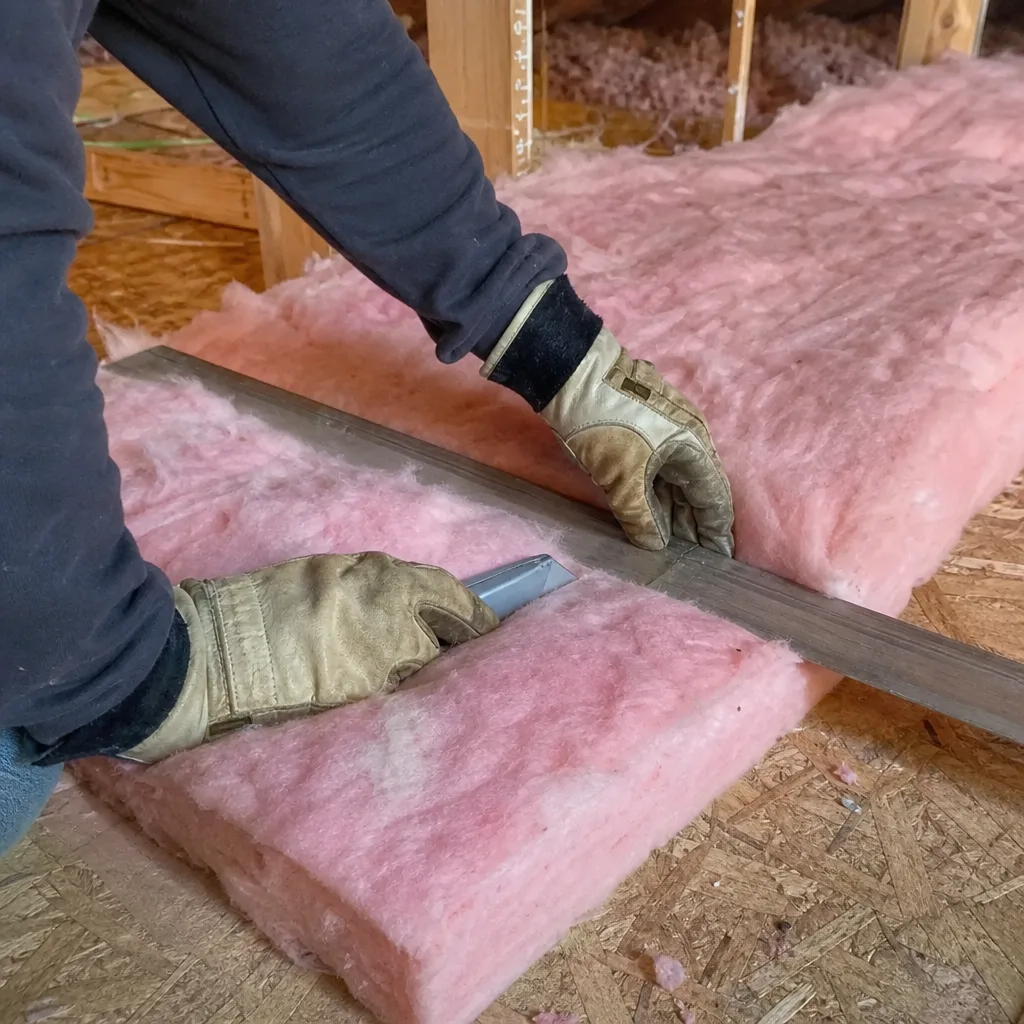
Bexar County doesn’t require a standalone permit for attic air sealing when it’s performed as part of insulation work and no structural changes are made, but if your project involves spray foam applied to the underside of the roof deck (converting to an unvented attic assembly), the scoping and ventilation requirements change and a mechanical permit may be needed. We’ll tell you which category your job falls into before the written price is issued – that’s part of the inspection, not a surprise at the end.
Converse proper is served by CPS Energy for electricity. If your home uses natural gas for heating, CPS and the gas utility may have overlapping rebate eligibility for energy efficiency work. Worth checking both before you schedule, since the documentation window – most programs require the work to be completed and then submitted within a specific period – means timing matters.
One more local detail: a significant portion of the homes in Converse were built by large production builders between 2000 and 2016, using standard framing practices that left top plates and interior partition walls open to the attic. This is not a defect in those homes – it was standard practice – but it means the air sealing scope for a 2,200-square-foot home in Heritage at Converse is typically more extensive than an equivalently sized home built under more recent energy codes. We factor that into the inspection, not into a blanket upcharge.
What You Receive When the Job Is Done
This section matters because “documented” means something specific at Envelope Insulation Co., and it’s worth knowing before you compare us to another quote.
When a Topside Attic Insulation Converse technician completes an air sealing job, you receive:
- A before-and-after blower-door reading on applicable jobs – the CFM50 number before sealing and after, so you can see the actual air-loss reduction, not an estimated one.
- A Documented Photo Record of the attic, the penetration locations, the sealant application, and any conditions observed during the inspection. This is included on every job, not available on request.
- The written scope and written warranty that were issued before work started – so the job-close documentation matches the pre-work agreement. No one changes the terms after the crew has already been in your attic.
The 365-Day Done Right Promise applies to all completed work: if something isn’t right, we make it right within that window. That commitment is in writing before we start – it’s not a verbal assurance.
We’ve been delivering that documentation on jobs in Converse and across the broader San Antonio metro since 2016. In that time, Wes Okafor and the Envelope Insulation Co. team have completed work on more than 9,000 homes, every one with a written price before work started and a documented record when the crew left. The home page has more on the full service line if you’re evaluating whether air sealing, insulation, or both belong in your project scope.
FAQs – Attic Air Sealing Cost in Converse, TX
How much does attic air sealing cost for a typical Converse home?
Most attic air sealing jobs in Converse run between $900 and $1,600 for a home in the 1,500-2,200 square foot range, which covers the majority of the housing stock in neighborhoods like Foster Creek, Stone Creek Ranch, and Heritage at Converse. Larger homes with complex framing or high penetration counts (lots of recessed lights, HVAC boots, and chase walls) push into the $1,600-$2,400 range. A written price specific to your home’s attic is available before any work starts – call (830) 420-0953 and a live person will set up the inspection.
Is air sealing cheaper to do before or after insulation is added?
Before – by a meaningful margin, and it’s also the order that actually works. Sealing after insulation has been blown in means moving the insulation to access the penetrations, then redistributing it. That adds labor cost. More to the point, insulation placed over unsealed bypasses doesn’t close the air path – it just sits next to the gap. We won’t install insulation over an unsealed attic floor. If you have quotes from contractors who propose insulation without mentioning air sealing, ask them specifically what sealing scope is included before you sign anything. Call (830) 420-0953 and we’ll read a competing quote with you at no charge.
Does attic air sealing qualify for any rebates or tax credits in Converse?
Two potential sources apply to Converse homeowners as of 2026. CPS Energy has historically offered weatherization rebates for air sealing and insulation work meeting performance criteria – check current availability directly with CPS since program terms change annually. At the federal level, the 25C energy efficiency tax credit has allowed homeowners to claim a percentage of qualifying weatherization costs; confirm current-year eligibility with a tax advisor since the credit terms are legislatively set. We can provide the before-and-after blower-door documentation most rebate programs require. Call (830) 420-0953 if you want the inspection timed to a rebate filing window.
How long does attic air sealing take in a standard Converse home?
A complete air sealing scope on a 1,800-2,000 square foot single-story Converse home typically takes 4-6 hours, including the pre-work blower-door test and the post-seal verification reading. Two-story homes or those with multiple attic sections run 6-8 hours. We schedule morning starts in summer – Converse attic temperatures reach unsafe working conditions by early afternoon in July and August – and we don’t cut the post-seal blower-door test to make an afternoon schedule work. The after reading is part of what you’re paying for.
Can I just add more insulation instead of air sealing?
Adding insulation without sealing first reduces conductive heat transfer, but it doesn’t address air movement through the gaps. The blower-door numbers make this concrete: we’ve measured homes in Converse with R-38 blown insulation sitting over unsealed top plates reading 4,800 CFM50 – nearly the same as an unsealed, uninsulated attic of similar size. The insulation added some comfort on the hottest days but didn’t move the utility bills the way the homeowner expected. Air sealing typically has a better dollar-for-dollar payback in Climate Zone 2A than additional insulation on an already-insulated attic. If you’re not sure which your attic needs, the inspection will tell you – blower-door test included. Call (830) 420-0953 to schedule.
What’s the difference between air sealing and duct sealing?
Air sealing addresses gaps in the building envelope itself – the ceiling plane, top plates, penetrations, and the attic hatch – where conditioned air escapes from the living space into the unconditioned attic. Duct sealing addresses leaks within the HVAC duct system, where supply or return air escapes into the attic before it reaches the rooms it was meant to condition. Both matter, and both show up in diagnostic testing. A blower-door test measures building envelope leakage; a duct blaster or duct pressurization test measures duct leakage. They’re separate scopes priced separately, but we’ll note during the inspection if your duct system shows obvious signs of leakage that are worth addressing alongside the envelope work.
Get a Written Price Before Any Work Starts
If you want to know what attic air sealing will actually cost for your specific home in Converse, the inspection is where that answer comes from – not from a range on a web page. Wes Okafor and the Topside Attic Insulation Converse team will inspect the attic, run the blower-door test, count the penetrations, and issue a flat written price before anyone lifts a tool. That’s Haven Standard Clause 1, and it applies to every job.
Call (830) 420-0953 – a live person answers, 24/7. No voicemail, no callback window. If you have a written estimate from another contractor, bring it. We’ll read it with you at no charge and tell you exactly what it does and doesn’t include.
Pricing reflects the Converse market as of 2026. Topside Attic Insulation Converse offers free estimates – call (830) 420-0953.
Written by Wes Okafor, Owner at Envelope Insulation Co. (operating as Topside Attic Insulation Converse), serving Converse, TX since 2016.
What Our Customers Say
"Two other companies quoted to blow more insulation on top of what was there. These were the only ones who said the existing material had to come out first, and explained why."
- Clifford E."The winter gas bill dropped by about a third. They had estimated a quarter, so they under-promised."
- Genevieve R."They photographed rodent damage in the old insulation that we had no idea about, and priced the exclusion work separately so we could decide."
- Harriet N.