
CertainTeed Attic Insulation: The Converse Owner’s Guide
We stock and install CertainTeed-compatible blown-in fiberglass and batt insulation for Converse homes, with most attic insulation jobs running between $1,800 and $4,200 depending on square footage and whether the attic floor needs air sealing first. Same-day service is available when you call before noon, and we carry CertainTeed SpeedyR, InsulSafe, and OPTIMA product lines on our trucks. Most Converse homeowners discover their insulation is failing when the upstairs bedrooms won’t cool below 78 degrees in July or when their summer electric bills jump $80-$140 compared to the previous year.
Which CertainTeed Models This Applies To
CertainTeed’s attic insulation breaks into three families you’ll see in Converse homes built from the mid-1990s forward. InsulSafe SP and InsulSafe SP Premium are the blown-in fiberglass products, recognizable by the white and green bag labeling and the “SP” denoting spray-applied. SpeedyR is the higher-density blown-in system, usually found in custom builds around Converse’s newer subdivisions off FM 78, where builders spec’d it for its faster install time. OPTIMA is the dense-pack blown-in system, more common in walls but occasionally retrofitted into attic floors with netting.
To identify what you have, check for leftover bags in the garage or look for a specification sheet stapled to the attic access hatch. The product code matters: InsulSafe SP Premium carries an R-value of 2.8 per inch, while standard SP runs 2.7. SpeedyR claims 2.9 per inch but achieves it only at the manufacturer’s specified density of 0.6 pounds per cubic foot, a number we verify with a depth gauge during assessment. We are an independent service provider with no affiliation to CertainTeed, so we source both OEM CertainTeed product and equivalent-spec alternatives from Owens Corning, Johns Manville, and Knauf when the job calls for it. The decision usually comes down to matching existing density; mixing a 0.6 pcf SpeedyR install with a 0.4 pcf generic fill creates thermal irregularities that show up on infrared.
Signs Your CertainTeed Attic Insulation Is Failing
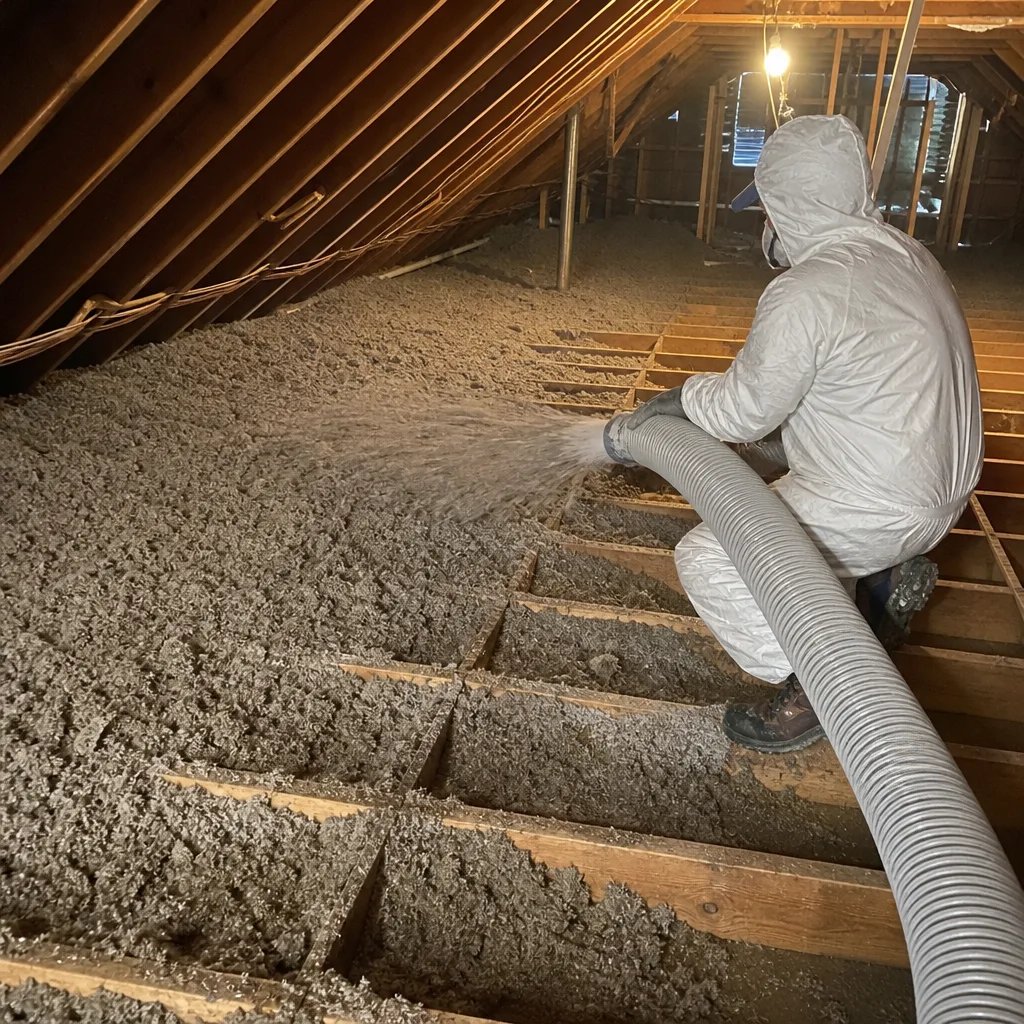
- Uneven temperature between rooms. The hallway thermostat reads 72 but the back bedroom hits 78. This points to settled or wind-washed insulation, common in Converse where gable vents pull loose-fill fiberglass into corners, leaving the center of the attic floor thin.
- Spikes in summer electric bills. A $90 jump from June to July without rate changes usually means your insulation has compressed below its labeled R-value. CertainTeed blown-in fiberglass can lose 10-15% of its loft from foot traffic, storage, or rodent nesting.
- Ice dams or heavy frost on roof decking in winter. Warm attic air meeting cold decking means your thermal boundary has gaps. In Converse’s occasional hard freeze, we see this where top-plate penetrations were never sealed before the insulation went in.
- Dusty or dirty insulation surface. Dark gray streaking on top of the insulation indicates air is moving through it, carrying particulate from the living space below. This is filtration soiling, and it means your insulation is acting as a filter rather than a barrier.
- Moisture stains on ceiling drywall below. When insulation compresses or gets displaced, the attic floor temperature drops below the dew point. We’ve found this in Converse ranch homes near Foster Road where bathroom exhaust fans were vented into the attic, saturating the fiberglass from above.
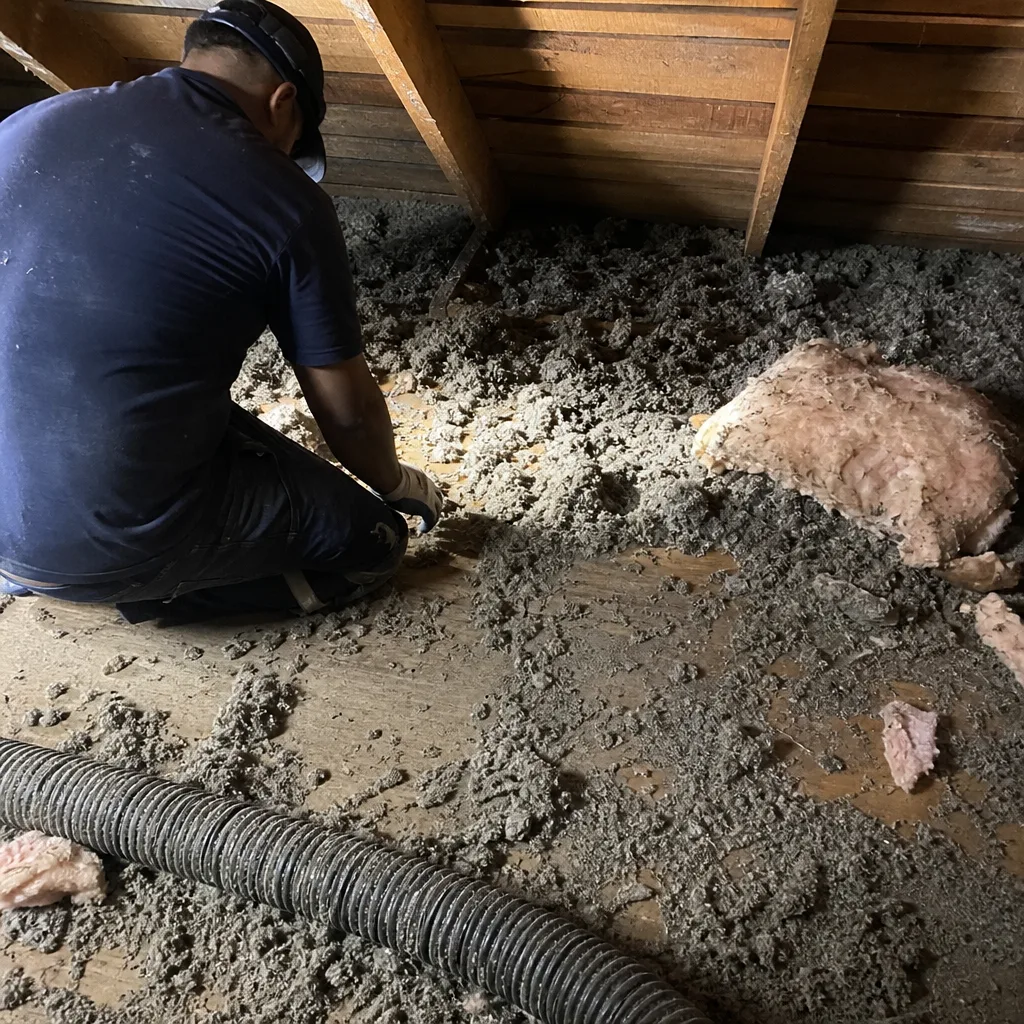 Before
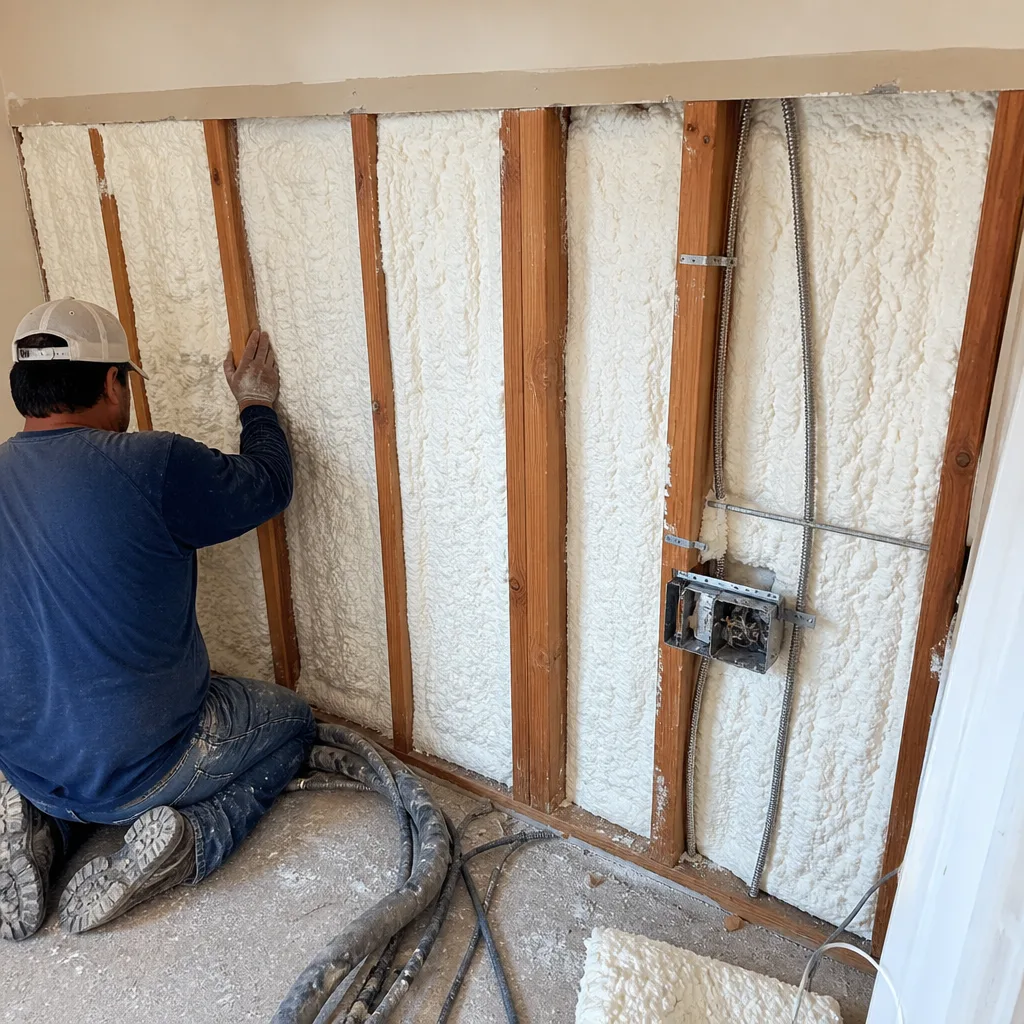 After
AfterReplacement Cost & What’s Included
Most full attic insulation replacements in Converse run $1,800-$4,200 for a 1,500-2,500 square foot home. The low end assumes existing insulation removal, minor air sealing of top plates and electrical penetrations, and new blown-in fiberglass to R-38. The high end includes extensive air sealing, baffle installation for soffit ventilation, and dense-pack or higher-R product.
We break every quote into line items: removal and disposal per bag, air sealing labor by linear foot of top plate, insulation material by square foot at specified depth, and blower-door verification. Under Haven Standard Clause 1, you get that written price before anyone touches the attic ladder. Every job closes with a Documented Photo Record and, on applicable jobs, before-and-after blower-door readings in CFM50 so you see the envelope tighten in one number. Our 365-Day Done Right Promise covers the workmanship.
DIY or Call Us?
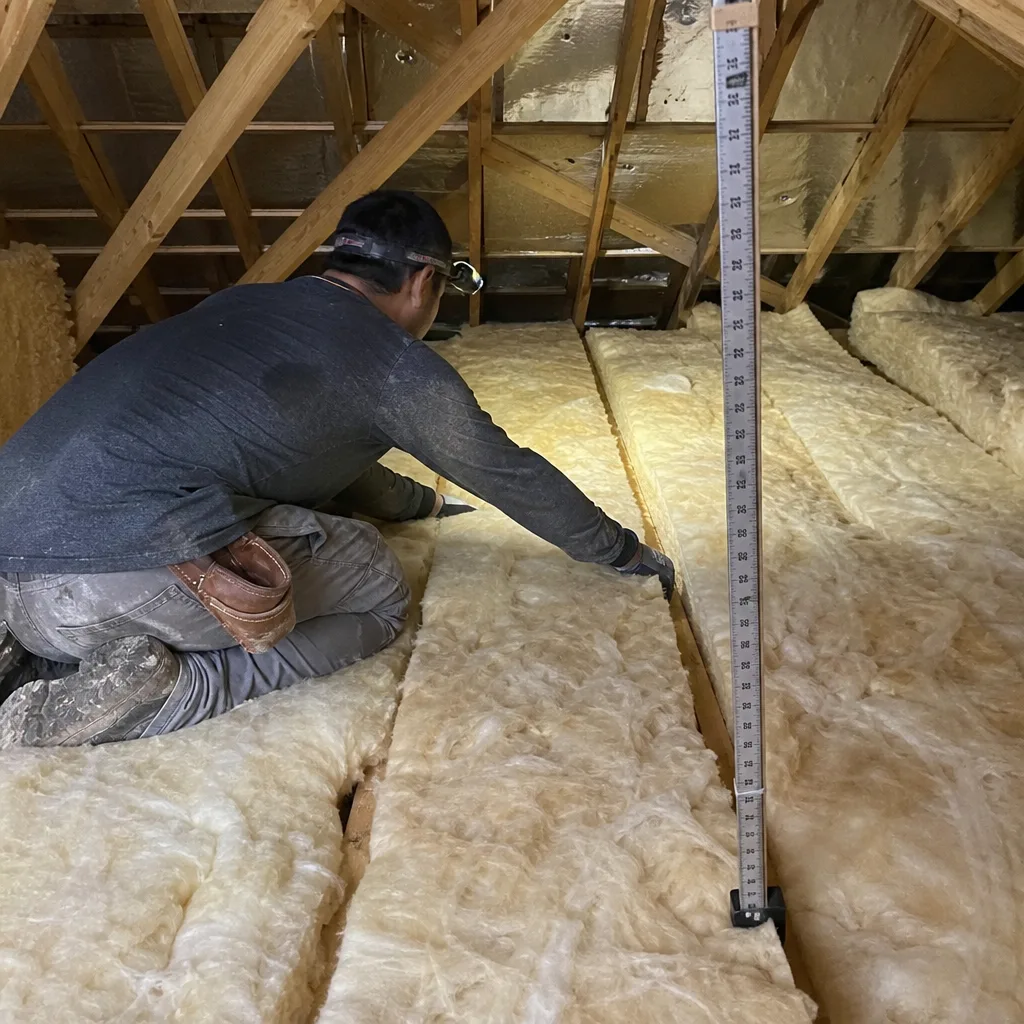
There’s safe checking and then there’s work that belongs to someone with a respirator and a harness.
What you can do: pop the attic hatch on a cool morning and look across the floor with a flashlight. You should see even, fluffy material at a consistent depth, with no bare drywall showing near the eaves or around fixtures. Measure depth with a ruler in three spots; R-38 in fiberglass needs roughly 14 inches of InsulSafe SP. If you see gray streaking, thin spots, or compressed paths where someone walked, you’ve got useful information for us.
What you shouldn’t do: add new insulation over old without air sealing first, remove old material without testing for asbestos in pre-1980 homes, or work near knob-and-tube wiring without de-energizing. Attic work in a Converse summer means 140-degree ambient temperatures and the risk of stepping through a ceiling. We carry the insurance, the fall protection, and the negative-air equipment for safe removal. Call (830) 420-0953 and we’ll read your situation with you, no charge.
FAQs
Blown-in fiberglass insulation lasts 20-30 years when installed correctly and left undisturbed, but in Converse’s climate it often degrades faster from roof leaks, rodent activity, or unsealed air leaks that compress the material. We’ve pulled 12-year-old CertainTeed that looked 25 because attic air movement had filtered it gray and thin. Call (830) 420-0953 for an assessment - estimates are free.
Spot repair works only if the existing insulation is clean, dry, and at full loft; we can add matching product to thin areas after air sealing. If the material is moldy, urine-contaminated, or compressed below 50% of original depth, removal and replacement is the only sound approach. We stock both CertainTeed and equivalent-spec products for seamless patching. Call (830) 420-0953 and we’ll tell you which category you’re in.
Most Converse homes are a one-day job: 2-3 hours for removal, 3-4 hours for air sealing and new install, plus blower-door testing if we’re verifying the envelope. Two-story homes with complex rooflines or attics used for storage may run into a second day. We give you a written schedule with the price, not a guess.
We carry CertainTeed SpeedyR, InsulSafe SP and Premium, and OPTIMA-equivalent dense-pack material on our Converse-based trucks, plus Owens Corning, Johns Manville, and Knauf alternatives. If your job requires a specific CertainTeed product for warranty continuity or HOA compliance, we can source it with 24-48 hours’ lead time. Call (830) 420-0953 to confirm availability for your model.
Written by Wes Okafor, Owner & Lead Insulation Technician, Topside Attic Insulation Converse at Topside Attic Insulation Converse, serving Converse and nearby areas.