
Icynene Attic Insulation: The Converse Owner’s Guide
Most Icynene open-cell spray foam attic jobs in Converse run between $1.80 and $2.40 per board foot installed, with a typical 1,600-square-foot attic at R-38 landing between $4,800 and $7,200. We stock Icynene MD-R-200, LD-C-50, and ProSeal Eco-compatible formulations on our truck, and we can usually start the same day you call. Homeowners in Converse usually discover a problem when their summer electric bill jumps $80-$150 from one month to the next, or when they pull down the attic ladder and find foam that’s pulled away from the roof deck, turned yellow and brittle, or been torn up by rodents that got in through an unsealed penetration.
Which Icynene Models This Applies To
Icynene has shifted its product naming twice in the last decade, so the label on your attic is what matters. Look for MD-R-200 (medium-density, 2.0 lbs/ft³, used in roof decks and rim joists), LD-C-50 (light-density, 0.5 lbs/ft³, the classic open-cell wall and attic floor foam), or ProSeal Eco (the newer water-blown formulation with a tighter environmental profile). The batch sticker, usually found on a tag near the attic access or on the original invoice, will show the product code, install date, and the applicator’s certification number.
Here’s the compatibility gotcha we see in Converse: LD-C-50 installed before 2018 was often blown at a lower lift thickness, 3.5 inches per pass instead of the current 5-inch spec, which means it can shrink more in our heat. If you’re topping off or patching, the new foam needs to match the old density class, not just the brand. We don’t push OEM-only; we source Icynene, Demilec, and equivalent formulations from our supplier network, and we’ll tell you when the aftermarket equivalent meets the same ASTM E84 and ICC-ESR reports. Topside Attic Insulation Converse is an independent service provider, not affiliated with Icynene.
Signs Your Icynene Attic Insulation Is Failing
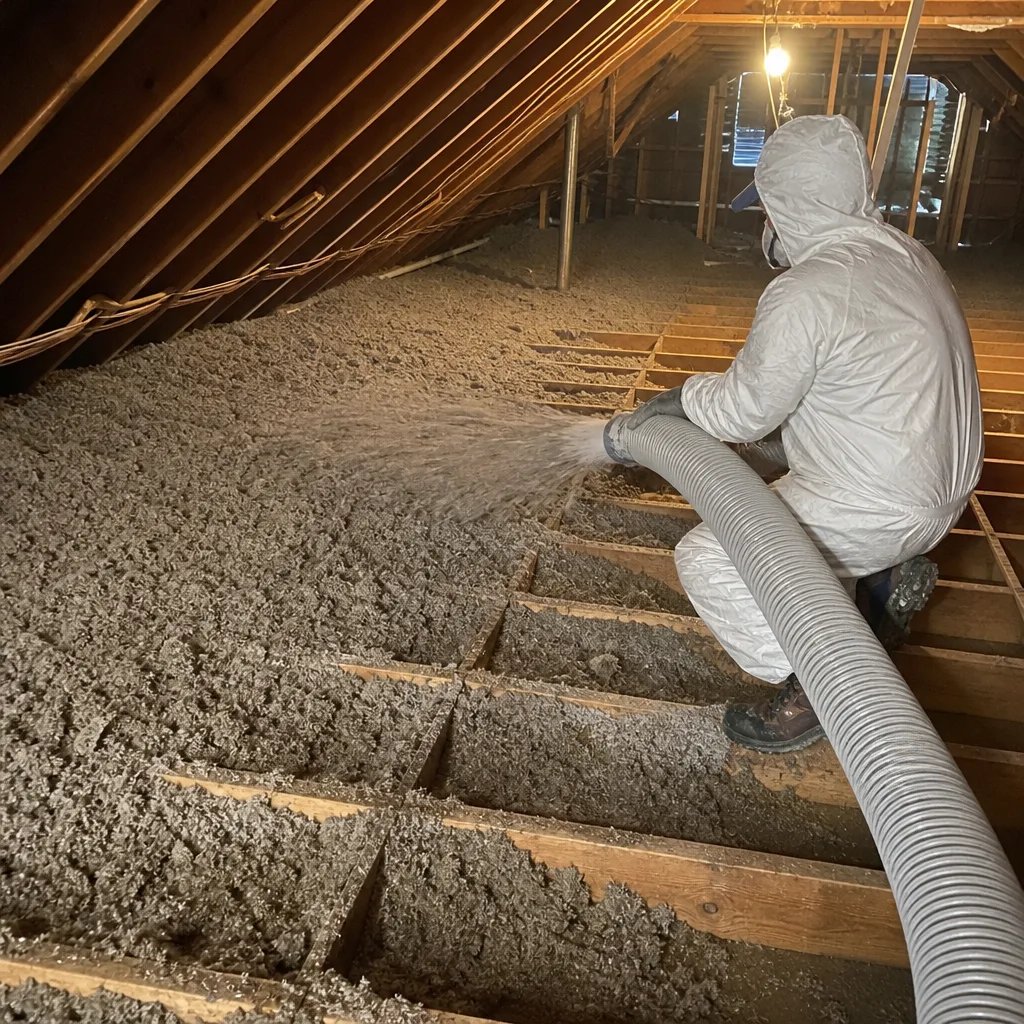
- Yellowing or surface cracking on the foam face. UV exposure through a missing hatch gasket or a gable vent that was never sealed will degrade the top 1/4 inch of open-cell foam. The R-value doesn’t drop immediately, but the surface becomes a dust collector and the degraded layer can flake into your HVAC return if it’s nearby.
- Detached beads along the rafter or roof deck joints. In Converse, we see this most on south-facing pitches where roof sheathing hits 140°F in August. The foam separates from the substrate, creating a convection channel that moves hot attic air straight past your insulation layer. Your infrared camera, or ours, will show a stripe of heat right at the gap.
- Soft, spongy areas that compress under light pressure. This is water intrusion, almost always from a flashing leak or a bath vent dumping moist air into the attic. Icynene open-cell is vapor-permeable by design, which means it lets moisture through rather than trapping it, but sustained wetting will break down the polymer structure. The foam isn’t the problem; the leak is.
- Uneven coverage with thin spots showing the substrate. Original installers sometimes missed corners or reduced pass thickness to finish faster. In older Converse ranch homes near Foster Road, we’ve found 2-inch coverage in valleys where 5 inches was specified. The thermal camera makes these gaps obvious in summer.
- Rodent tunnels and nesting material packed into the foam. Mice don’t eat spray foam, but they’ll burrow through it if they find an entry point. The damage is usually localized near unsealed top plates or where electrical runs penetrate the attic floor. We remove the contaminated section, seal the entry path with copper mesh and foam, then patch with new material.
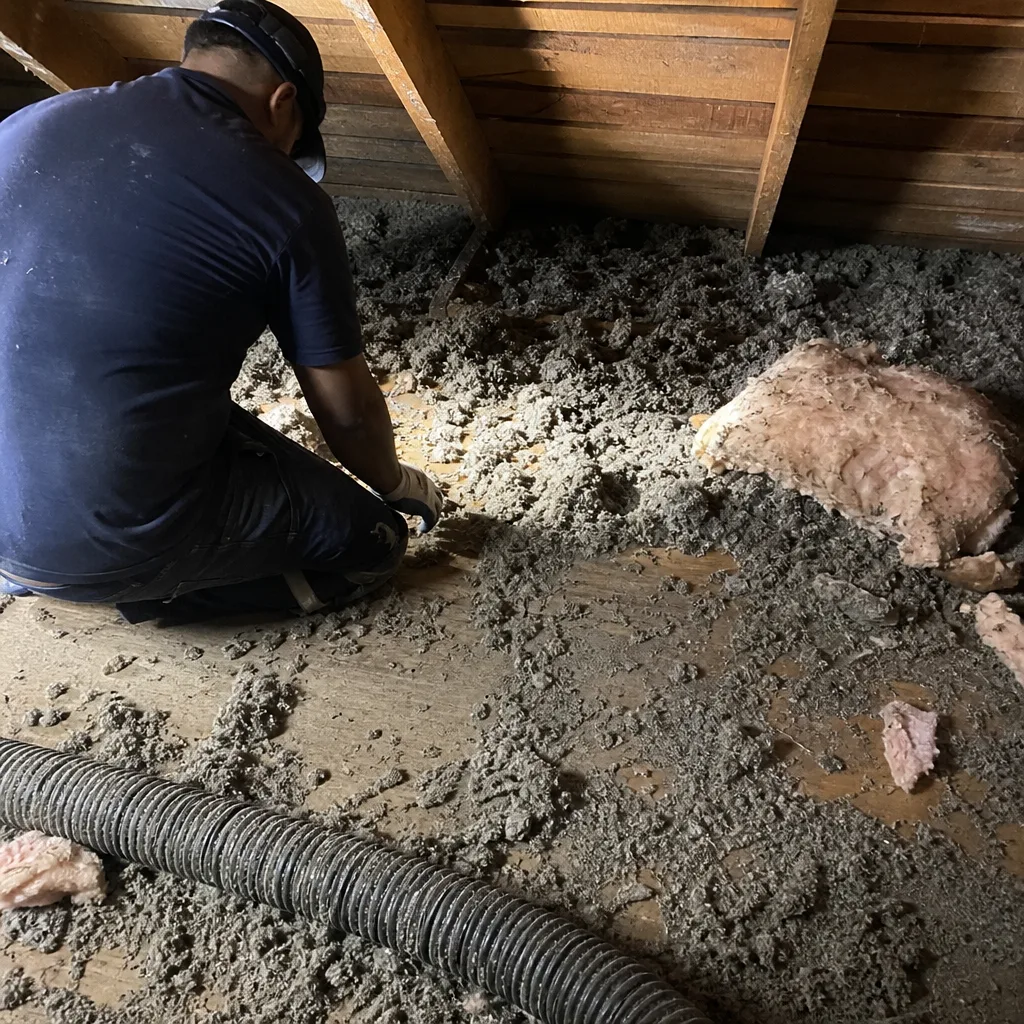 Before
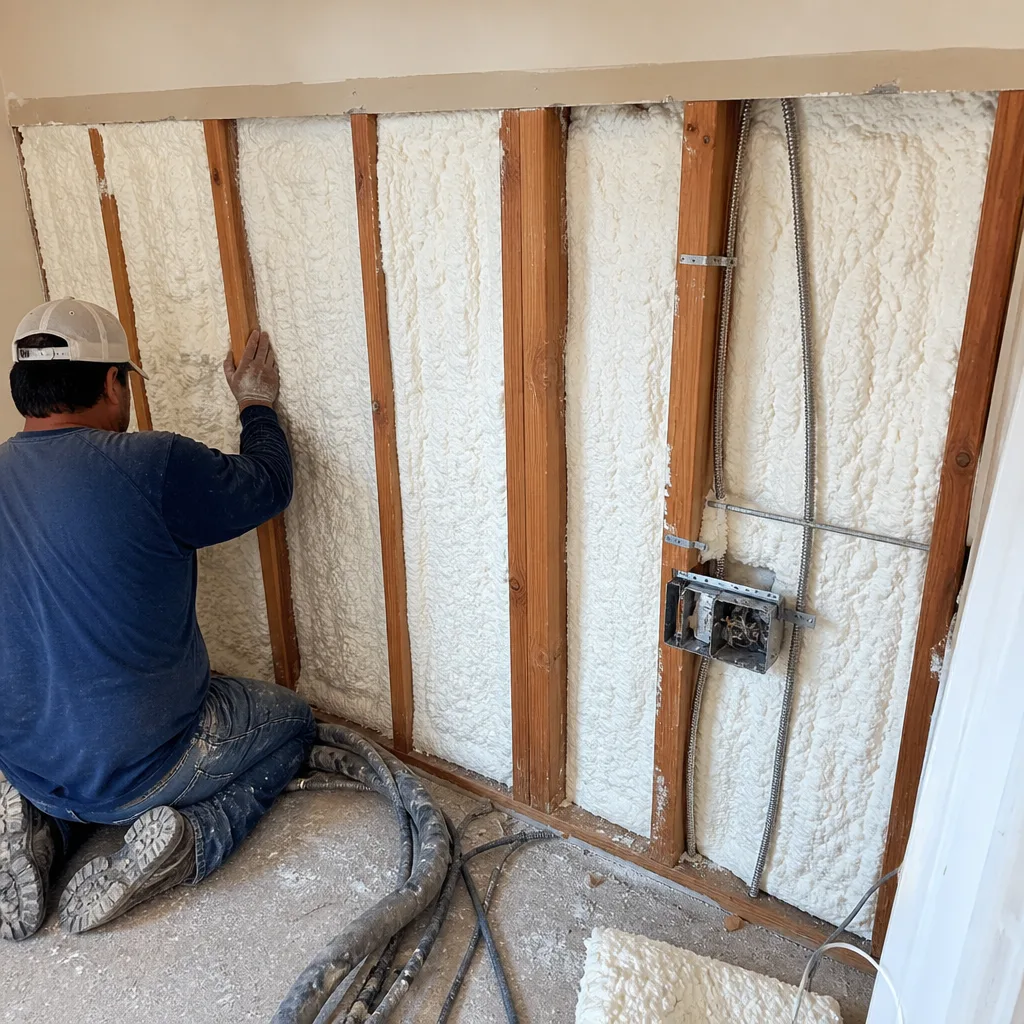 After
AfterReplacement Cost & What’s Included
| Scope | Price Range in Converse |
|---|---|
| Spot repair, up to 50 sq ft (rodent damage, detached bead) | $650 - $1,100 |
| Partial re-spray, 200-400 sq ft (one roof plane, failed original) | $2,400 - $4,200 |
| Full attic re-spray, 1,200-1,800 sq ft (R-38, open-cell) | $4,800 - $7,200 |
| Air sealing package (top plates, can lights, penetrations) + foam | Add $800 - $1,400 to any scope above |
The range depends on three things: access difficulty (steep pitches and tight scuttles add labor), how much failed material needs removal before we can spray, and whether we’re matching an existing foam or starting fresh. Every job gets a written price before work starts, Haven Standard Clause 1, with the scope itemized by square footage, foam density, and whether air sealing is included. We warranty the installation for 365 days under our Done Right Promise; the foam itself carries the manufacturer’s limited warranty, which we register for you. Before-and-after blower-door numbers are included on every full-attic job, and on partial jobs where the envelope work is substantial enough to move the needle.
DIY or Call Us?
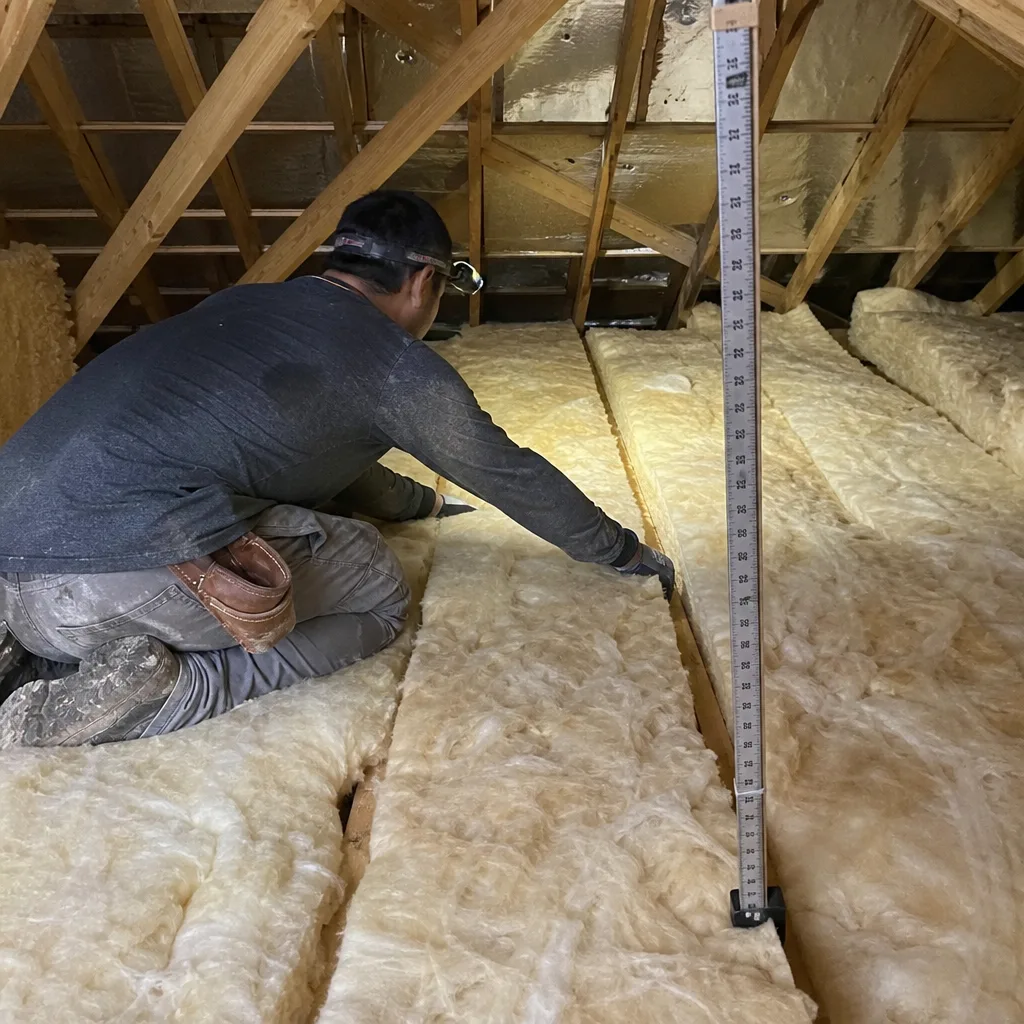
There’s no safe DIY path for spray foam installation. The two-part chemicals require heated proportioning equipment, full-face respirators with organic vapor cartridges, and ventilation planning that most homeowners don’t have. The off-gassing during cure is hazardous, and a bad ratio (too much A-side, too little B-side) produces foam that never sets properly and smells like fish for months.
What you can safely check: look at the foam surface with a flashlight for the symptoms above, note any areas where daylight shows through the roof, and check your electric bill trend against the same month last year. If you find problems, call us at (830) 420-0953. We’ll bring a thermal camera and a moisture meter, show you what we see, and give you a written price before we talk about scheduling. Seal the leaks first. Then insulate. The numbers will tell you if it worked.
FAQs
Properly installed open-cell spray foam should perform for the life of the building, 25 years or more, but Texas heat cycling accelerates shrinkage in poorly mixed batches. We inspect foam installed in 2016 that’s still tight against the substrate, and foam from 2019 that’s pulling away because the original crew skipped the primer on the roof deck. Call (830) 420-0953 and we’ll assess your specific installation.
Localized damage can be cut out and patched with new foam if the surrounding material is sound and the substrate is dry. We don’t patch over wet or degraded foam; it delaminates within a season. For widespread shrinkage or chemical failure, partial or full removal and re-spray is the only fix that lasts. We’ll tell you which category you’re in after we inspect.
Spot repairs are usually done in a half day. A full attic re-spray takes one to two days: Day 1 for prep, masking, and air sealing; Day 2 for foam application and cure monitoring. We don’t rush the cure. You’ll get a documented photo record and, on full jobs, printed blower-door results before we leave.
We stock Icynene-compatible formulations and the full air-sealing inventory on our truck: copper mesh, fire-rated caulk, LED-rated covers for can lights, and rigid foam board for thermal bridges. For Icynene-specific jobs, we order batch-matched material with a 24-hour lead time so the chemistry is fresh. Same-day starts are available for inspections and most spot repairs.
Written by Wes Okafor, Owner & Lead Insulation Technician, Topside Attic Insulation Converse at Topside Attic Insulation Converse, serving Converse and nearby areas.