
Johns Manville Attic Insulation: The Converse Owner’s Guide
Most Johns Manville attic insulation replacements in Converse run $2.80 to $4.50 per square foot installed, with a typical 1,200-square-foot attic landing between $3,400 and $5,400. We stock Johns Manville Climate Pro, Spider, and Formaldehyde-free batts on our trucks, and we can usually inspect and quote same-day. Homeowners usually notice the problem when their summer electric bill jumps $80 to $150 over the previous year, or when they find rooms near Foster Road and Woodlake staying five to ten degrees hotter than the thermostat setting despite the AC running nonstop.
Which Johns Manville Products This Applies To
Johns Manville makes three attic lines you’ll find in Converse homes built from the mid-2000s forward. Climate Pro is the blown-in fiberglass, usually gray-pink, labeled with a black-and-white JM logo on the bag if any remnant packaging is left in the attic. Spider is the blown-in system engineered to fill wall cavities and irregular joist bays, recognizable by its web-like binder that holds it in place without netting. The third is the formaldehyde-free batts, white with a light blue tint, common in newer builds near Olympia Parkway where builders spec’d low-VOC materials.
Here’s the compatibility gotcha: Spider and Climate Pro use different blowing machines and settling rates. If your original install was Spider at R-38 depth, topping it with Climate Pro throws off your thermal map. The fibers compress differently, and you’ll end up with cold spots where the two meet. We check this on every inspection. Topside Attic Insulation Converse is an independent service provider, not affiliated with Johns Manville. We source JM materials through standard distribution, same as Owens Corning, Knauf, and Rockwool, so we match what’s actually up there rather than pushing whatever’s on promotion.
To identify what you’ve got, look for the bag remnants in corners, or check your home’s original build sheet if you have it. The product code format matters: CP-BF for Climate Pro, SP-WF for Spider. Batts carry a stamp on the paper facing. If the attic floor is already covered, we pull a core sample and read the fiber diameter under magnification. Takes two minutes, tells us exactly what we’re matching.
Signs Your Johns Manville Attic Insulation Is Failing
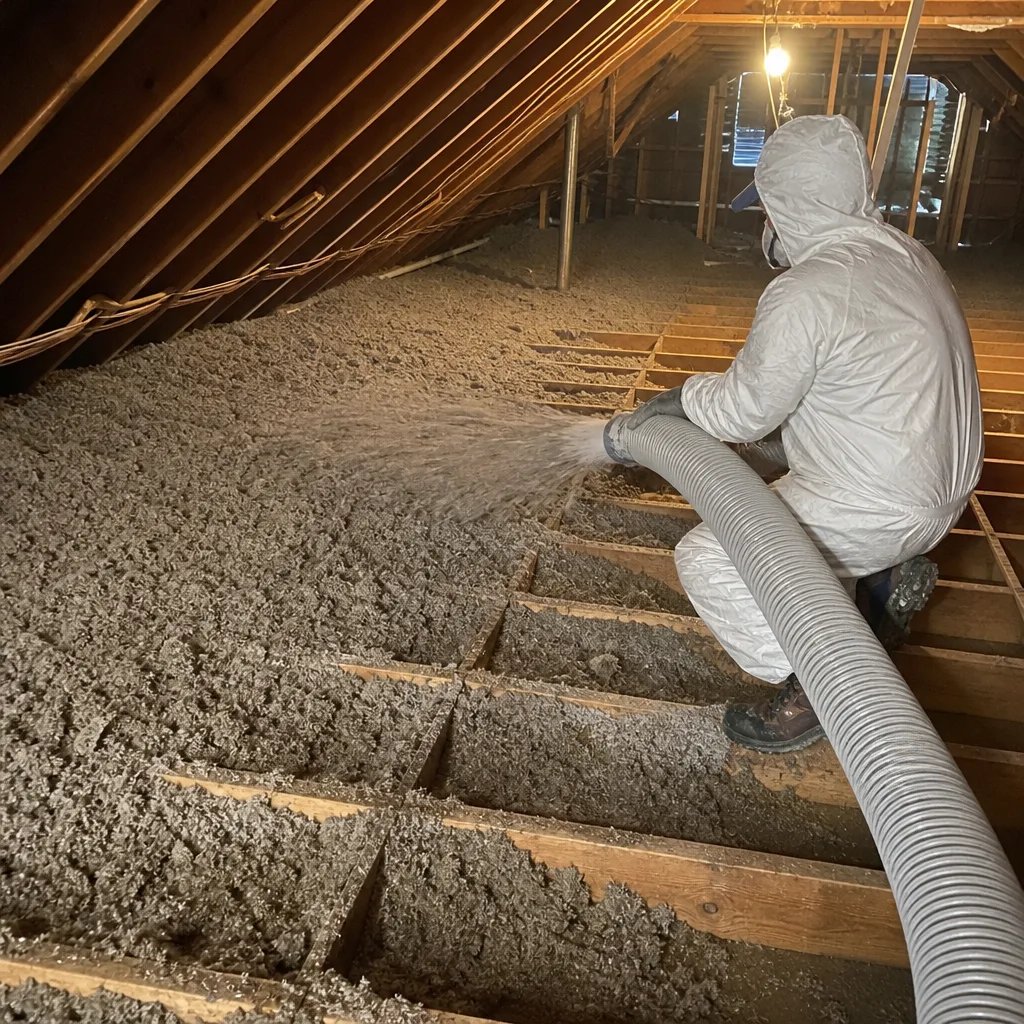
- Uneven temperature rooms. In Converse, where summer attic temps hit 140°F, degraded fiberglass loses its loft and settles into the joist bays. The R-value drops from 38 to 19 or lower, and the master bedroom over the garage becomes the hottest room in the house because that’s where the insulation compressed first under foot traffic during HVAC maintenance.
- Spiking summer electric bills. When your insulation thins out, your AC runs longer to hold setpoint. We see this most in ranch-style homes near Foster Road with original 2008-2012 installs. The blower works harder, the ducts in the attic superheat, and your July bill tells the story before you ever climb the ladder.
- Moisture stains on ceiling drywall. Johns Manville fiberglass doesn’t rot, but when it settles below the joist tops, humid attic air contacts the drywall in winter. The condensation pattern follows the joist lines, creating stripes on the ceiling that homeowners mistake for roof leaks. It’s an insulation level problem, not a shingle problem.
- Dust accumulation around ceiling registers. Blown-in fiberglass that has broken down into fine particulate gets pulled into return air paths. If you’re changing your HVAC filter monthly and still seeing gray dust on the vent louvers, the insulation is past its mechanical life and fragmenting.
- Ice damming at the eaves in rare freeze events. Even in Converse, we get a hard freeze every few years. When attic floor insulation settles, heat escapes through the ceiling, melts rooftop snow at the ridge, and the water refreezes at the cold eaves. The resulting ice backs up under shingles. It’s a thermal envelope failure, not a roofing defect.
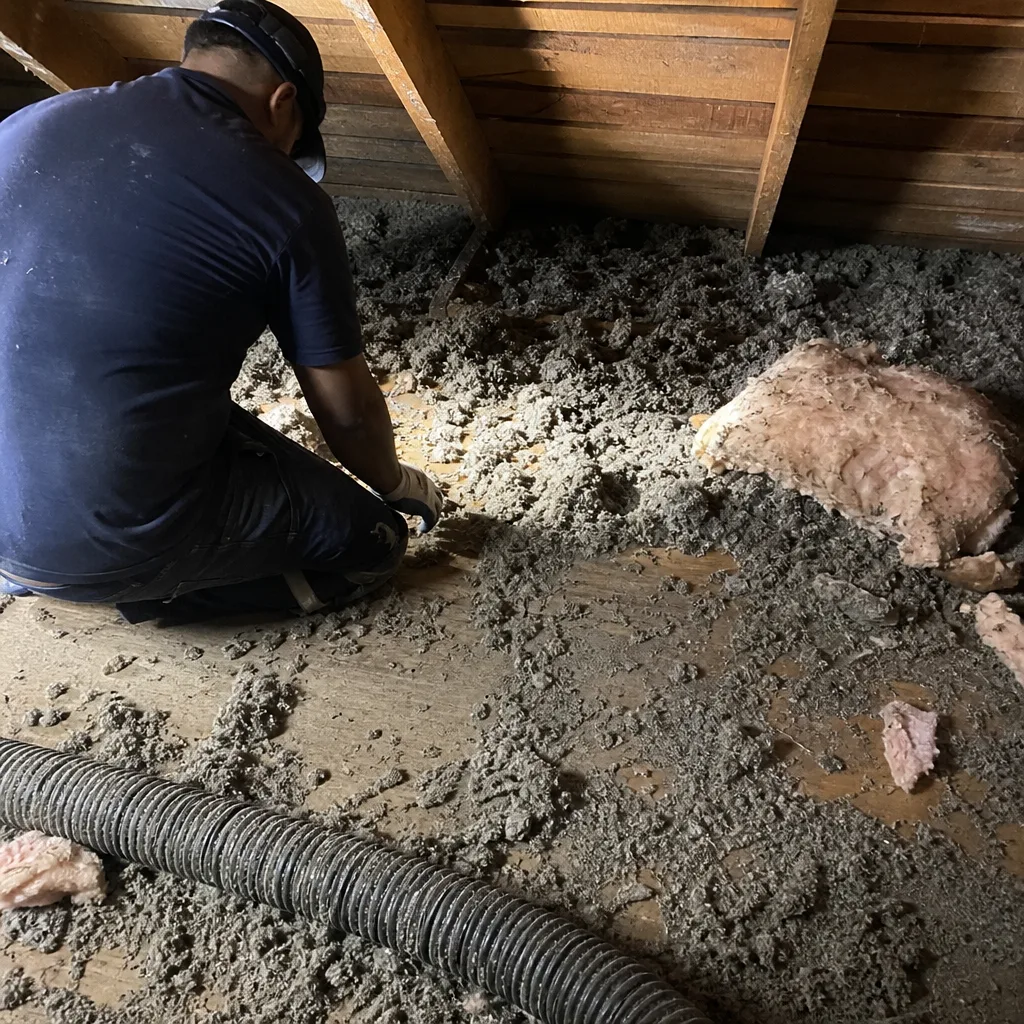 Before
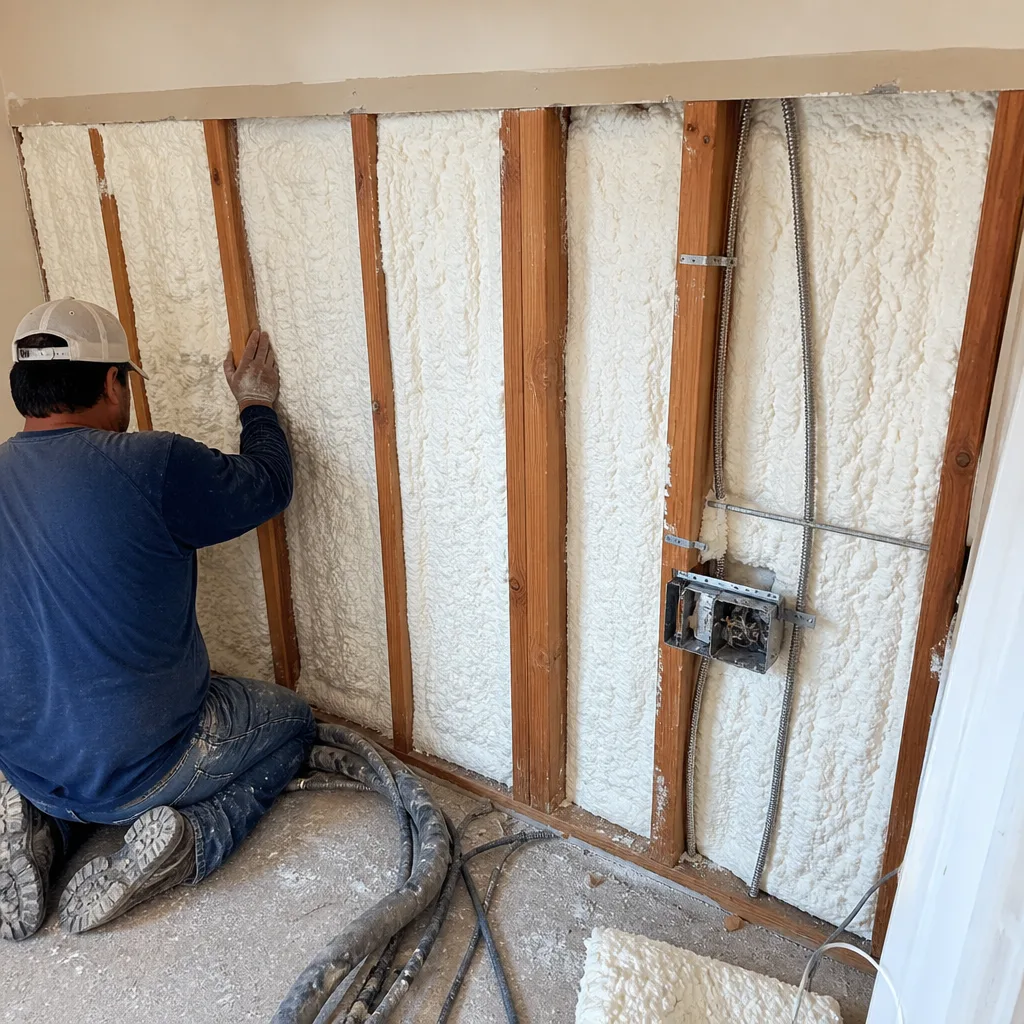 After
AfterReplacement Cost & What’s Included
| Scope | Price Range (Converse) |
|---|---|
| Partial replacement (settled areas only, up to 400 sq ft) | $1,100 - $1,800 |
| Full attic replacement, Climate Pro blown-in, R-38 | $3,400 - $5,400 |
| Full attic replacement, Spider system, R-38 | $3,800 - $5,900 |
| Removal of existing + new install (contaminated or rodent-damaged) | $4,200 - $6,800 |
| Air sealing package (top plates, penetrations, can lights) + insulation | Add $800 - $1,400 |
What drives the range: attic square footage, current insulation depth, whether we need to remove before adding, and how much air sealing the top plates and penetrations require. We never quote without measuring. Under Haven Standard Clause 1, you get a written price before anyone lifts a tool. That price includes the Johns Manville material, labor, and our 365-Day Done Right Promise. On applicable jobs, we run a blower-door test before and after, pressurizing the house to 50 pascals to measure air leakage in CFM50. You leave with a printed report showing the before and after numbers. We’ve sealed and insulated over 9,000 homes since 2016, every one with that same documentation.
DIY or Call Us?
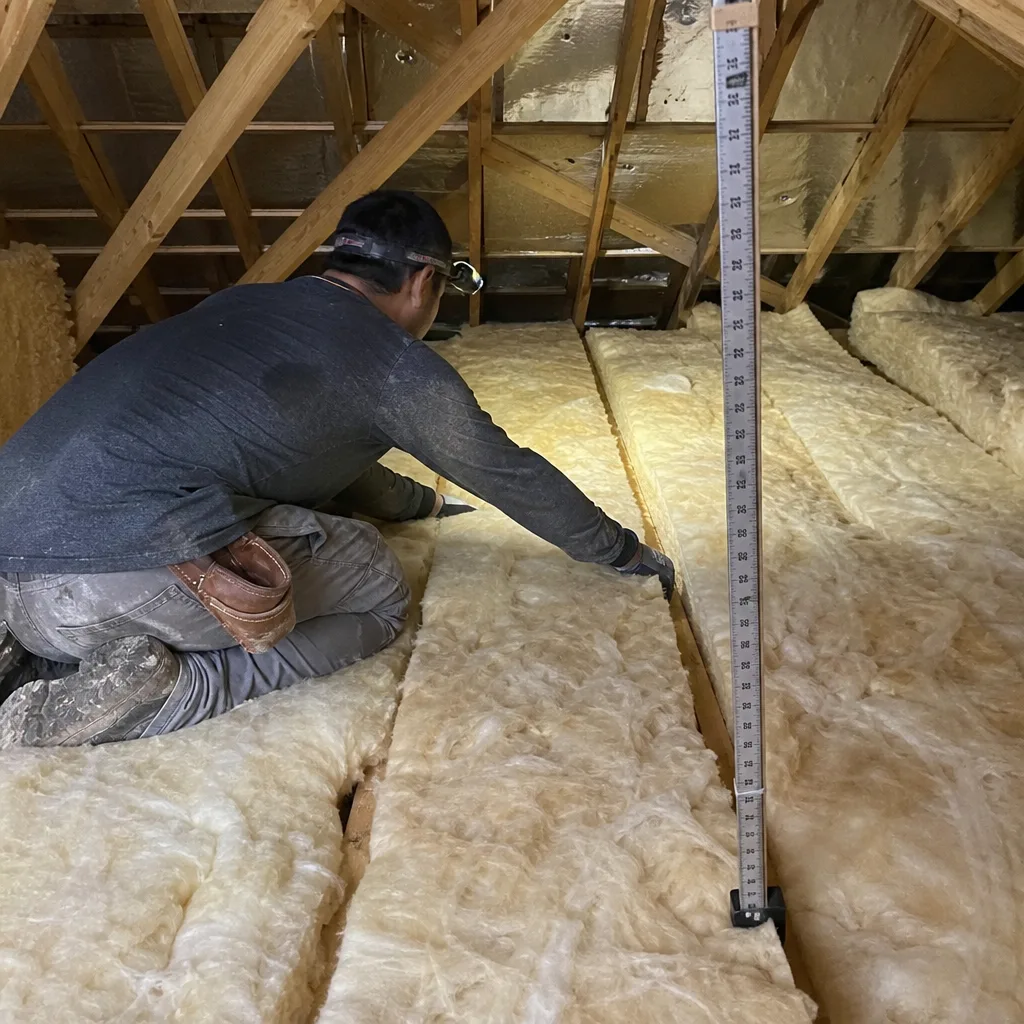
Here’s what you can safely check yourself: measure current insulation depth with a ruler at three attic locations, photograph any product labels you find, and note which rooms stay uncomfortable. That’s it. The rest gets technical fast.
What goes wrong with DIY: attic floor penetrations, the holes for wiring, plumbing stacks, and recessed can lights, leak more air than the insulation itself stops. Blowing new Johns Manville over unsealed top plates is optimism, not performance. In Converse’s clay soil expansion zone, we also see framing shift crack the original sealant. Without a blower-door test, you’re guessing where the air is moving. And without proper PPE, disturbed fiberglass particulate is a lung and skin irritant. We carry HEPA vacuums, sealed lighting, and the right respirators. Most homeowners don’t. Seal the leaks first. Then insulate. The numbers will tell you if it worked. Call (830) 420-0953 and we’ll inspect, measure, and give you a written price. Estimates are free.
FAQs
Climate Pro and Spider fiberglass last 20 to 30 years in theory, but in Converse’s heat and humidity, we see meaningful settling and R-value loss starting at year 12 to 15. The thermal bridge effect from compressed insulation shows up sooner if the attic gets regular foot traffic for HVAC service. Call (830) 420-0953 for a free depth check and written estimate.
Sometimes, but only if the existing material is dry, uncontaminated, and the same product line. Mixing Spider with Climate Pro creates density mismatches that telegraph through as cold spots. We always inspect first. If the old insulation is rodent-soiled or mold-affected, removal is non-negotiable. We bring a competing quote; we’ll read it with you under our Free Second Opinion.
Most Converse attics, 1,000 to 1,500 square feet, take one day for removal and replacement, or a half-day if we’re adding over sound existing material. Air sealing adds three to four hours. You get a Documented Photo Record on every visit, including before-and-after blower-door readings when applicable.
We carry Climate Pro, Spider, and formaldehyde-free batts on our Converse trucks, plus Reflectix and other brands. Same-day install is available for most standard R-values. We also stock Knauf, Owens Corning, and Rockwool, so if a hybrid solution works better for your attic geometry, we match the material to the condition, not the other way around.
Ready to get your attic measured and priced? Call (830) 420-0953. A live person answers 24/7. We’ll schedule a free inspection, deliver a written price before any work starts, and leave you with the documentation that proves what changed.
Written by Wes Okafor, Owner & Lead Insulation Technician, Topside Attic Insulation Converse at Topside Attic Insulation Converse, serving Converse and nearby areas.