
Johns Manville Crawl Space Encapsulation & Vapor Barrier in Converse: What to Know First
We provide independent Johns Manville crawl space encapsulation and vapor barrier service in Converse, with most jobs scheduled within 48 hours and completed in a single day. A typical crawl space encapsulation in a Converse ranch runs between $4,200 and $7,800 depending on square footage, existing moisture damage, and whether the foundation needs mechanical dehumidification tied into the HVAC return. We do not quote over a vague description - we inspect first, then deliver a written price before any work starts, per Haven Standard Clause 1.
This page is for homeowners in Converse, Live Oak, and the I-35 corridor who have Johns Manville insulation products in their crawl space and need moisture control, vapor barrier replacement, or full encapsulation. Whether you have JM Spider custom-blown fiberglass, formaldehyde-free mineral wool batts, or an older JM poly vapor barrier that’s separating at the seams, we can diagnose it and fix it. Call (830) 420-0953 to schedule a free inspection.
How Johns Manville Products Fail - and How We Fix Them
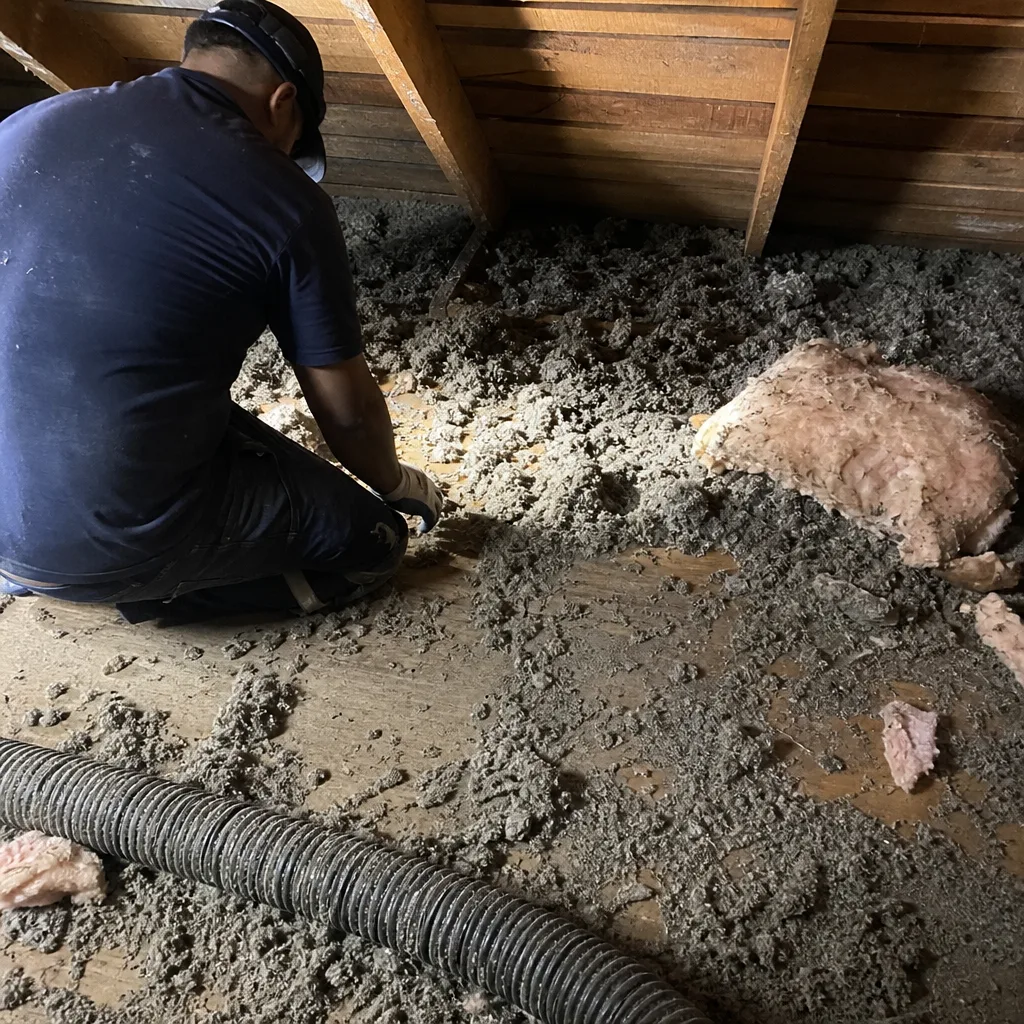
- JM Spider fiberglass settling in damp crawl spaces. Spider is engineered to cling in open cavities, but in Converse’s clay-heavy soils where groundwater wicks through foundation walls, prolonged humidity above 70% causes the adhesive binders to degrade. The fiberglass sags into a thin, ineffective layer. We remove the compromised material, install a sealed 20-mil reinforced polyethylene vapor barrier at the ground plane, then replace with JM mineral wool or conditioned-space spray foam depending on the encapsulation design.
- JM poly vapor barrier delamination at seam tape. The 6-mil and 10-mil polyethylene barriers Johns Manville supplied through the early 2010s used acrylic-based seam tape that turns gummy in Texas heat. In crawl spaces near Converse’s Retama Park area, we’ve pulled up sheets where the tape failed completely but the poly itself was intact. We salvage usable JM poly where possible, but re-seam with butyl-rubber tape rated for 30-year adhesion, or upgrade to a woven-reinforced barrier with mechanical fastening.
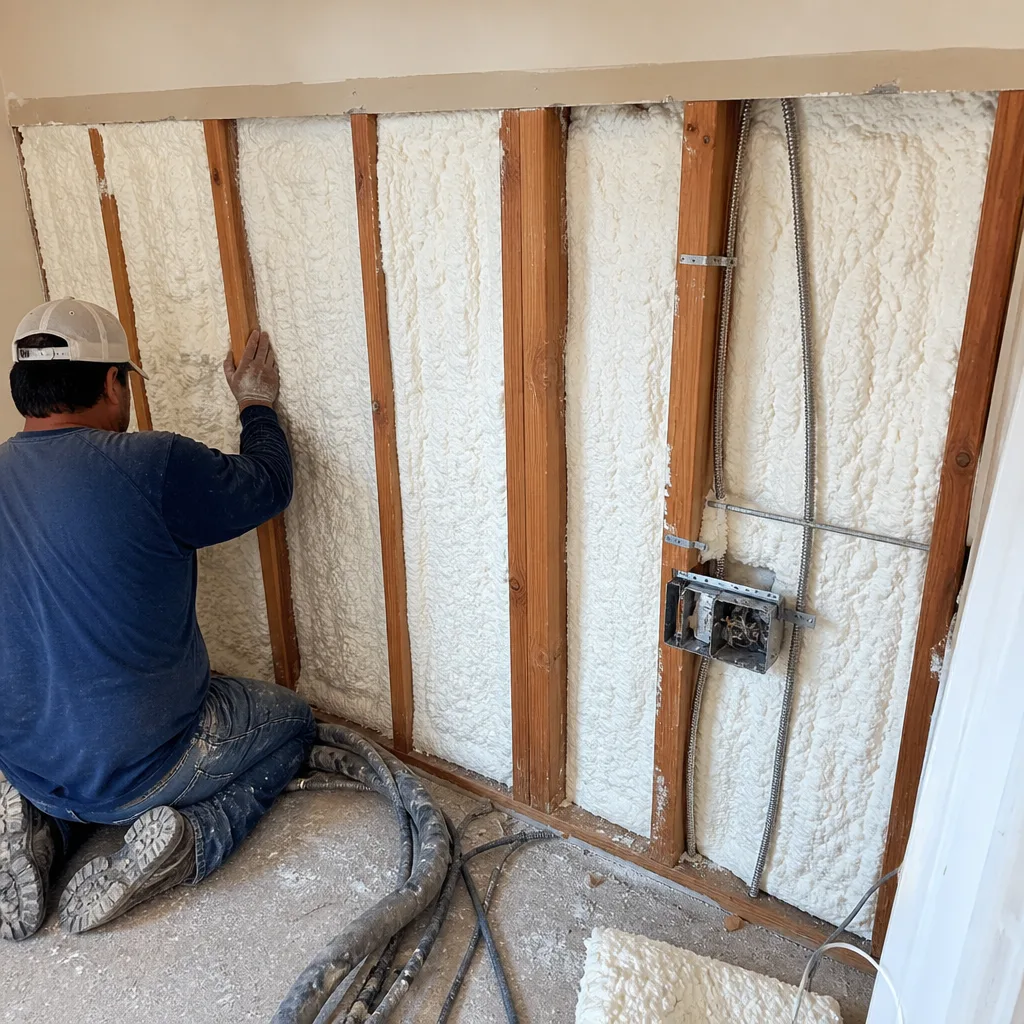
- JM mineral wool batts absorbing crawl space moisture. Johns Manville’s formaldehyde-free mineral wool is hydrophobic - it does not absorb liquid water - but the kraft paper facing on batts installed in vented crawl spaces acts as a wick. In older Converse homes with foundation vents left open during humid months, we’ve found paper-faced batts moldy at the bottom third while the mineral wool above remained dry. We strip the facing, air-seal the rim joist with closed-cell foam, then reinstall unfaced mineral wool inside a conditioned encapsulation.
- JM ComfortTherm encapsulated crawl spaces with inadequate dehumidification. ComfortTherm batts, wrapped in plastic to reduce itch, perform well in sealed crawl spaces - but only if relative humidity stays below 60%. We’ve entered Converse encapsulations where the original contractor sealed everything tight but sized the dehumidifier by guesswork. The plastic wrap traps condensation against the batt. We calculate actual moisture load based on crawl space volume, ground evaporation rate, and Converse’s 32-inch average annual rainfall, then specify a properly sized Santa Fe or AprilAire unit with a dedicated drain.
- JM AP Foil-faced polyiso board gap shrinkage. Johns Manville’s AP Foil polyisocyanurate boards, used for crawl space wall insulation in full encapsulations, expand and contract with temperature swings. In Converse, where winter overnight lows can hit 28°F and summer crawl space temperatures exceed 95°F, we’ve measured 1/8-inch gaps opening at board edges after three thermal cycles. We seal these with JM-compatible low-expansion foam and cover with a thermal barrier coating where code requires it, maintaining the continuous thermal envelope the encapsulation depends on.
Our Johns Manville Crawl Space Encapsulation & Vapor Barrier Process
- 1
Inspection and moisture mapping. We enter with a calibrated moisture meter, infrared camera, and humidity data logger. We document existing Johns Manville products by series, condition, and location. You get photos before we touch anything.
- 2
Blower-door test of the floor assembly. We pressurize the house to measure how much air moves through the crawl space interface - rim joists, plumbing penetrations, duct boots. The reading establishes your baseline CFM50.
- 3
Written scope and price. We specify which JM materials stay, which go, and what replaces them. OEM Johns Manville products where they make sense; aftermarket upgrades where they outperform. The price is flat. No work starts until you have both in hand.
- 4
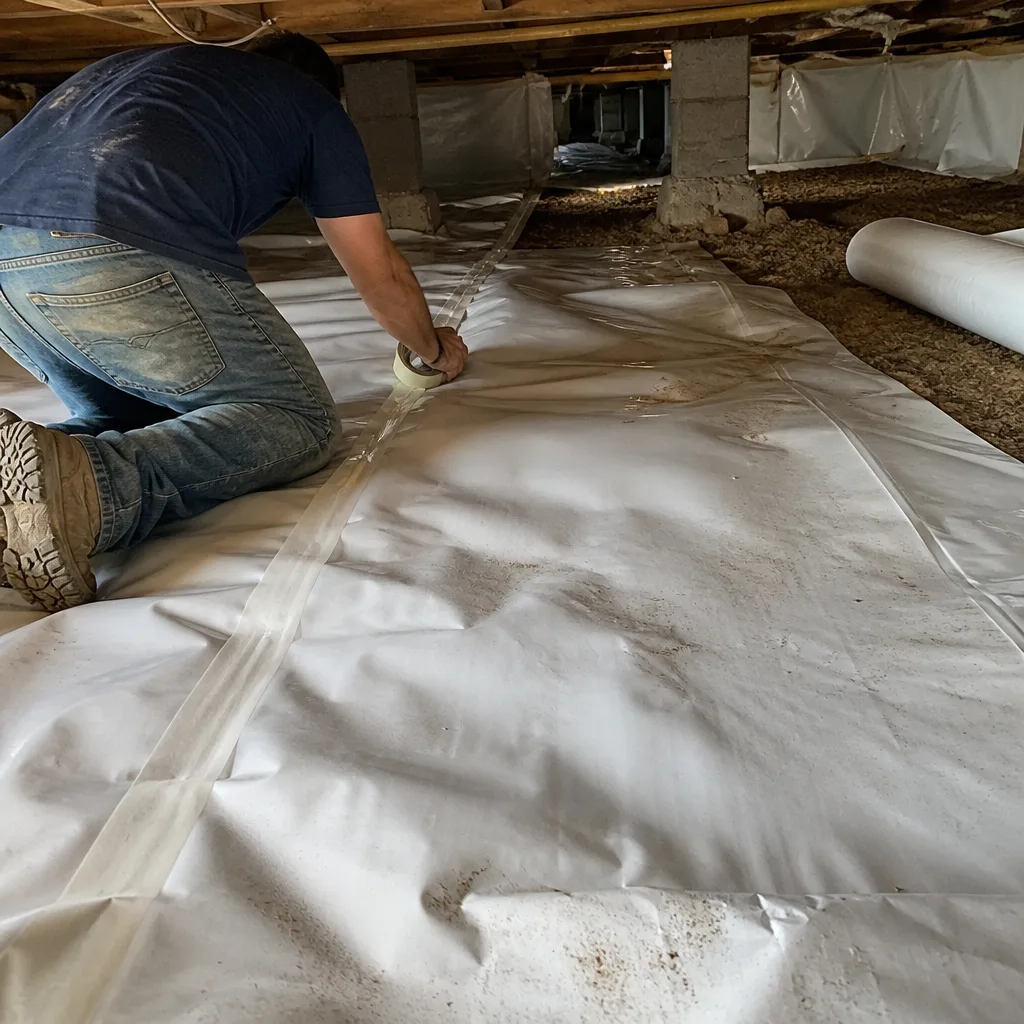
Air sealing first, then barrier installation. We seal all penetrations with closed-cell foam or acoustic sealant depending on the substrate. Then we lay the ground vapor barrier - 20-mil woven reinforced, mechanically fastened and chemically welded at seams - and extend it 6 inches up foundation walls per best practice.
- 5
Insulation replacement and dehumidifier integration. We reinstall or upgrade Johns Manville insulation products inside the now-conditioned space, add mechanical dehumidification with a dedicated drain, and seal the crawl space access with a weatherstripped door.
- 6
Post-work blower-door test and documentation. We run the pressurization test again, print the before-and-after CFM50 comparison, and deliver your Documented Photo Record. Under Haven Standard, you also receive the written warranty before we leave.
 Before
 After
AfterWhat Johns Manville Crawl Space Encapsulation & Vapor Barrier Costs in Converse
These ranges reflect what we see in Converse homes from the 1970s ranches near Gibbs Sprawl Road to newer builds in Woodlake:
| Job Type | Typical Range | What Moves Price |
|---|---|---|
| Vapor barrier replacement (JM poly, ground only) | $1,800 - $3,400 | Square footage, debris removal, seam accessibility |
| Partial encapsulation (barrier + rim joist sealing) | $3,600 - $5,500 | Foundation wall height, existing insulation condition |
| Full encapsulation with dehumidification | $6,200 - $9,800 | Crawl space volume, HVAC tie-in complexity, electrical for dedicated circuit |
| JM insulation removal and replacement inside encapsulation | $2,400 - $4,100 additional | Material type, access difficulty, hazardous material (mold remediation) |
Every estimate is free, every price is written, and every job carries our 365-Day Done Right Promise. Call (830) 420-0953 for an exact quote on your Johns Manville crawl space.
Why Converse Homeowners Call Topside Attic Insulation Converse for Johns Manville Work
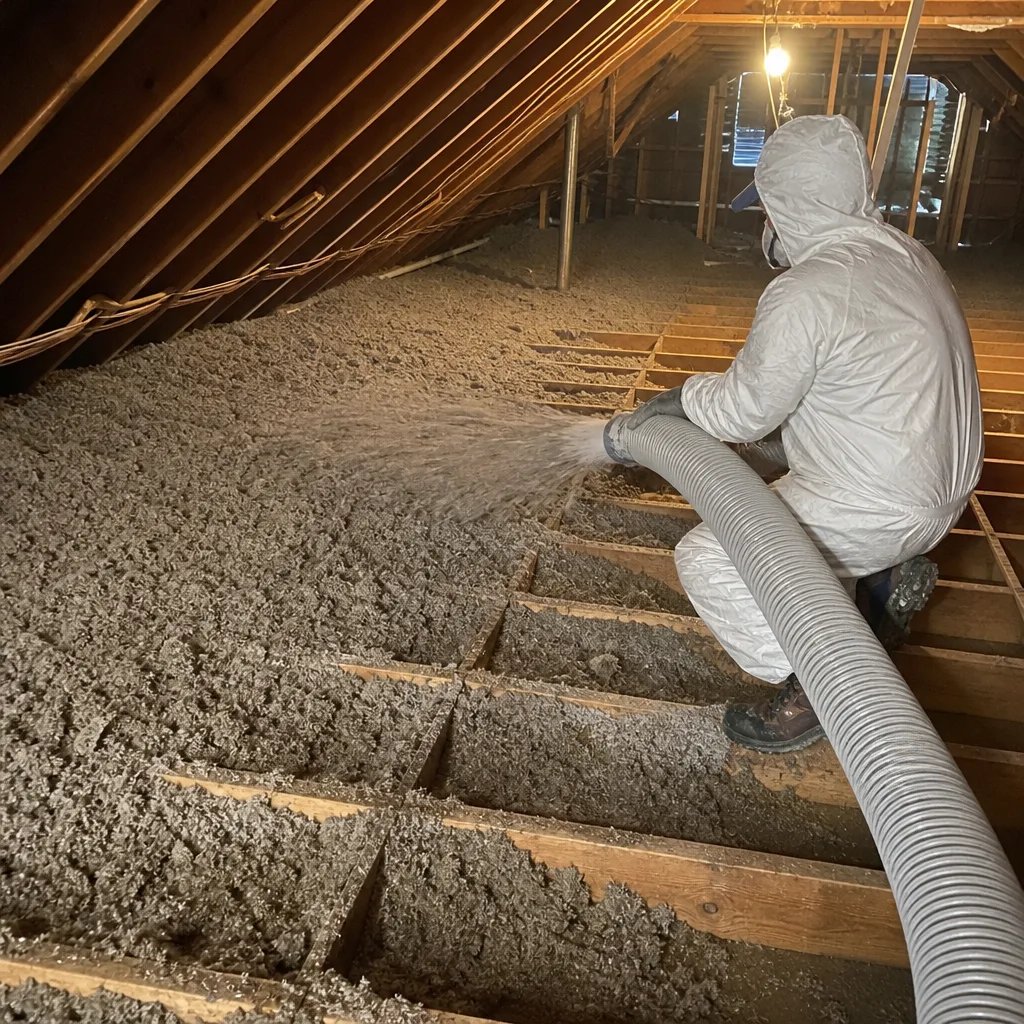
We’ve sealed and insulated over 9,000 homes since 2016, and a growing share are in the Converse area where clay soil and seasonal humidity punish crawl spaces. Wes Okafor, our owner and lead technician, started in building trades at Kennedy-King College on Chicago’s South Side before two decades of Texas attic and crawl space work taught him what classroom theory misses: a vapor barrier that looks sealed in March can be trapping condensation by August if the dehumidification load was never calculated.
We are an independent Johns Manville service provider - not authorized by, affiliated with, or exclusive to JM. We also work with Reflectix and other brands, which matters when a Converse crawl space needs a hybrid solution no single manufacturer offers. Every job gets a written scope, a written price, and a Documented Photo Record. Calls are answered by a live person 24/7.
Seal the leaks first. Then insulate. The numbers will tell you if it worked.
FAQs
No. Johns Manville’s product warranties cover manufacturing defects, not installation. If your JM vapor barrier or insulation fails due to a material defect, the warranty claim goes through your original supplier or JM directly. Our work is covered by our own 365-Day Done Right Promise and written warranty. For warranty questions specific to your JM product lot, call us at (830) 420-0953 and we’ll walk you through the documentation JM will need.
Most full encapsulations are completed in one to two days. A straightforward vapor barrier replacement on a clean crawl space under 1,200 square feet can finish in a single day. Jobs requiring extensive JM insulation removal, mold remediation, or dedicated electrical circuits for dehumidification may extend to three days. We give you a day-by-day schedule in the written scope before work begins.
Repair makes sense if the JM poly is less than five years old, the seams are the only failure point, and your crawl space maintains relative humidity below 65% with passive ventilation. Full encapsulation is the better investment when you have multiple failure modes - settling insulation, rim joist air leaks, recurring moisture above 70% RH - or when the existing barrier is delaminating across more than 30% of its surface. We inspect first, then recommend based on what we find, not what we prefer to sell.
We source JM OEM products when they are the right fit for the repair - same-series vapor barriers, compatible mineral wool, matching polyiso board. We also use aftermarket materials that outperform OEM in specific Converse conditions: woven-reinforced barriers with higher puncture resistance than JM’s standard 6-mil poly, or butyl seam tape with better heat tolerance than JM’s original acrylic. We specify which we’re using in the written scope and why.
We typically schedule within 48 hours, and emergency moisture issues - standing water, active mold bloom, compromised structural supports - get same-day priority. A live person answers calls 24/7, so you’re not waiting through a voicemail loop while humidity damages your floor system. Call (830) 420-0953 to book; estimates are free and include the full written scope and price.
Ready to fix your Johns Manville crawl space? Call (830) 420-0953 for a free inspection and written estimate. We’ll show you the photos, run the blower-door numbers, and give you a flat price before any work starts.
Written by Wes Okafor, Owner & Lead Insulation Technician, Topside Attic Insulation Converse at Topside Attic Insulation Converse, serving Converse and nearby areas.