
Knauf Attic Air Sealing: The Converse Owner’s Guide
Knauf attic air sealing components in Converse typically run $340-$680 installed for a standard single-story ranch, and we stock Knauf-compatible sealants, rigid foam board, and specialized tape on every truck for same-day replacement. Most Converse homeowners discover the failure when their summer electric bill jumps $80-$150 or they notice hot attic air pushing through can-light gaps and top-plate seams. The Knauf system relies on a specific combination of low-expansion foam, gasketed covers, and foil-faced rigid board that degrades differently in our South Texas heat than in cooler climates.
Which Knauf Models This Applies To
Knauf’s attic air sealing lineup breaks into three product families you’ll find in Converse homes built from 2005 onward: the EcoSeal series (latex-based flexible sealant, identifiable by the blue label and “ES-L” prefix on the tube), the Insulation Board system (pink EPS rigid board with pre-scored channels, marked “IB-R” on the foil facing), and the Jet-Stream tape and gasket line for retrofit work. The critical compatibility gotcha: EcoSeal latex and standard polyurethane foam don’t bond. We’ve pulled jobs in the Rolling Oaks area where a handyman layered Great Stuff over old EcoSeal, and the seam failed within 18 months. For OEM replacement, match the original chemistry. For aftermarket, we use Dow Froth-Pak or Touch ‘n Seal only where the substrate allows, and we test-bond a sample first.
Identification is straightforward if you know where to look. EcoSeal tubes carry a date stamp and lot number near the crimp; board systems have a density rating stamped every 24 inches on the foil facing (typically 1.5 lb/ft³ for attic applications). If you’re staring at unmarked pink board with degraded edges, measure the thickness: Knauf ships 1-inch, 1.5-inch, and 2-inch for attic use, and mixing thicknesses across a continuous air barrier creates thermal bypasses that show up on infrared as bright stripes.
Signs Your Knauf Attic Air Sealing Is Failing
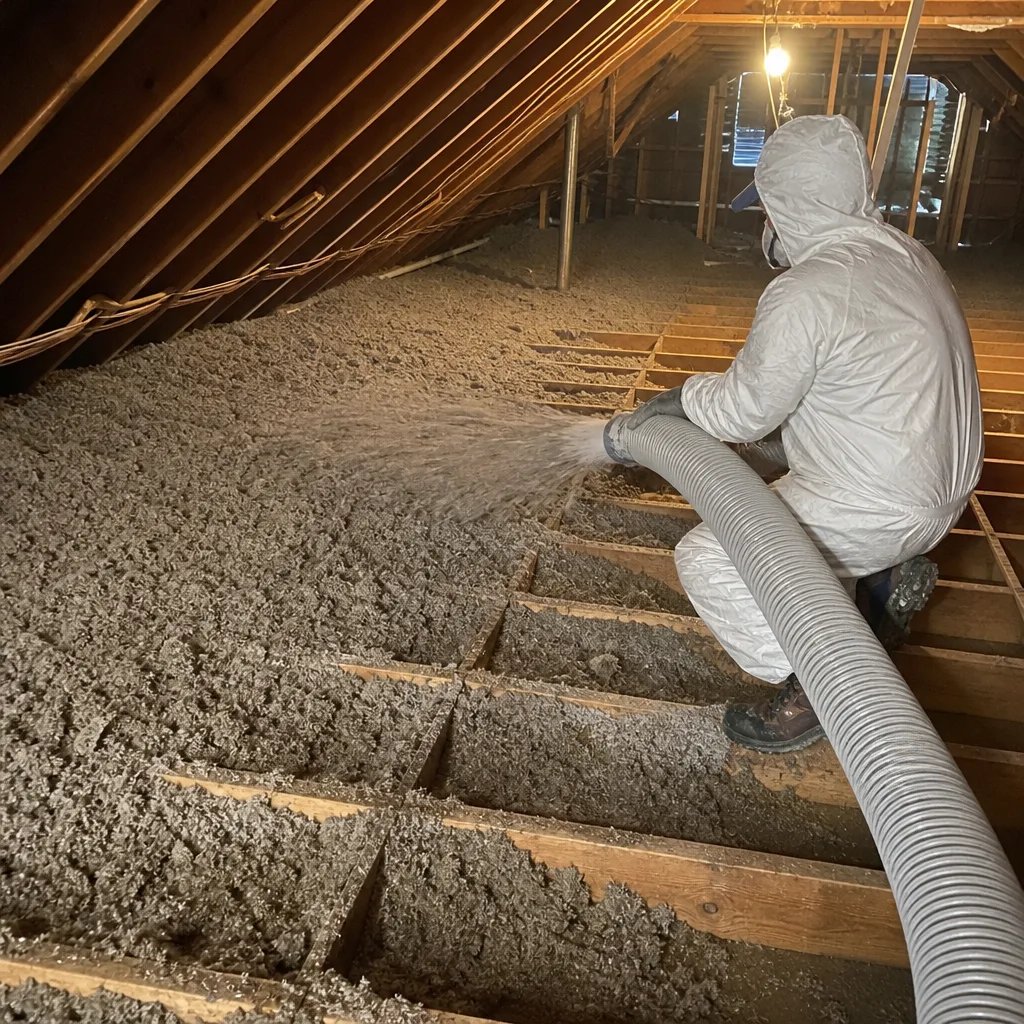
- Hot spots on your ceiling in mid-afternoon. In Converse, attic temperatures hit 140°F routinely from June through September. When Knauf’s rigid board separates from top plates or its tape adhesive cooks off, conditioned air escapes upward and hot attic air drops through the gap. You’ll feel it as a warm stripe where wall meets ceiling, worst on west-facing rooms.
- Dust streaking around can lights and bathroom fans. This is the “filtration” signature: your HVAC is pulling make-up air through every unsealed penetration, and the Knauf gasket covers or foam seals around those fixtures have shrunk, cracked, or pulled away. The dust pattern traces the exact leak path.
- Blown-in insulation that looks disturbed or settled unevenly. Air moving through failed seals carries fiberglass or cellulose with it. In homes near Converse’s older Foster Road corridor, we’ve found insulation mounded against the attic hatch and bare patches over top plates where years of leakage relocated the material.
- Ice damming or moisture staining in winter. Even Converse gets enough cold snaps for this. Warm, humid interior air leaking through failed Knauf seals hits cold roof sheathing, condenses, and freezes at the eaves. The staining pattern follows the framing, not random roof leaks.
- Blower-door test numbers that drift upward year over year. If you had air sealing done in 2018 and your CFM50 has crept back toward the original reading, the Knauf foam or tape has likely reached end of life. In our climate, latex-based sealants typically hold 8-12 years; tape adhesives on foil-facing average 6-10 before thermal cycling degrades the bond.
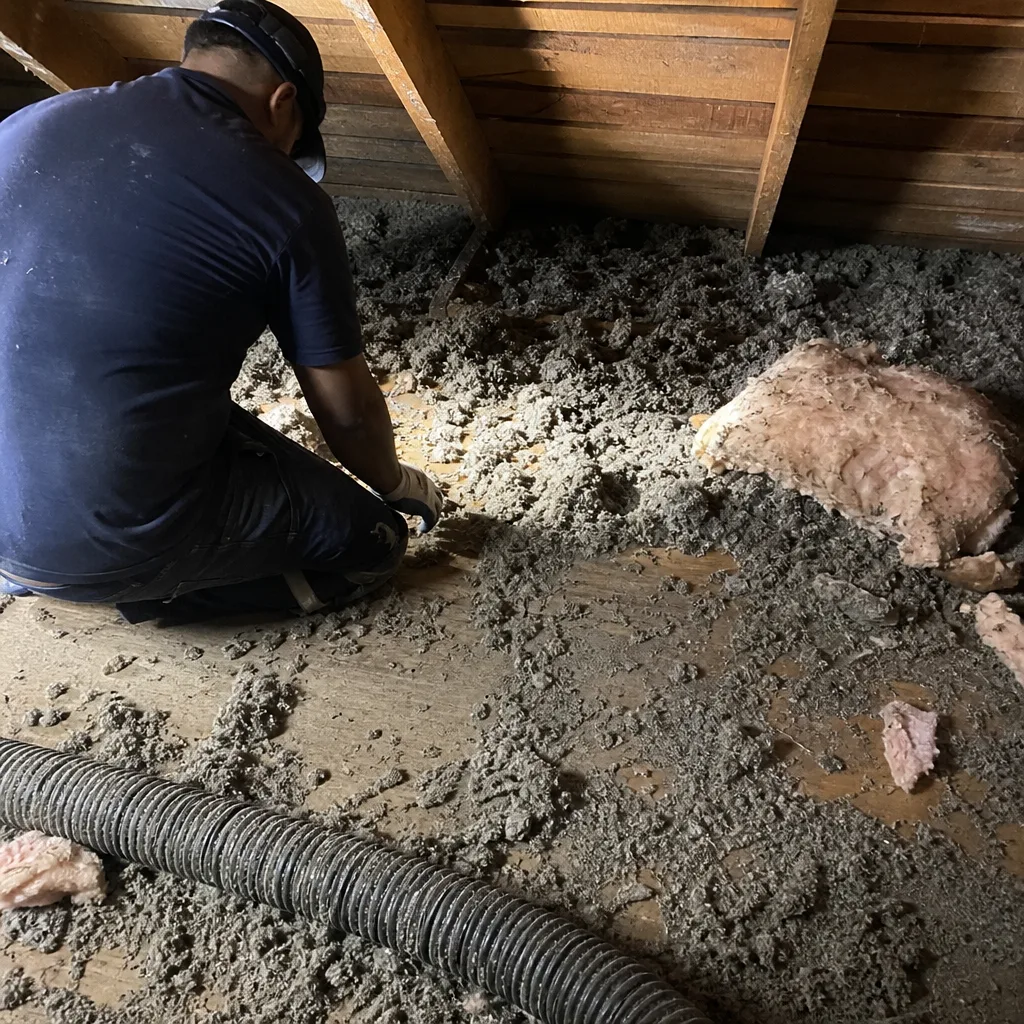 Before
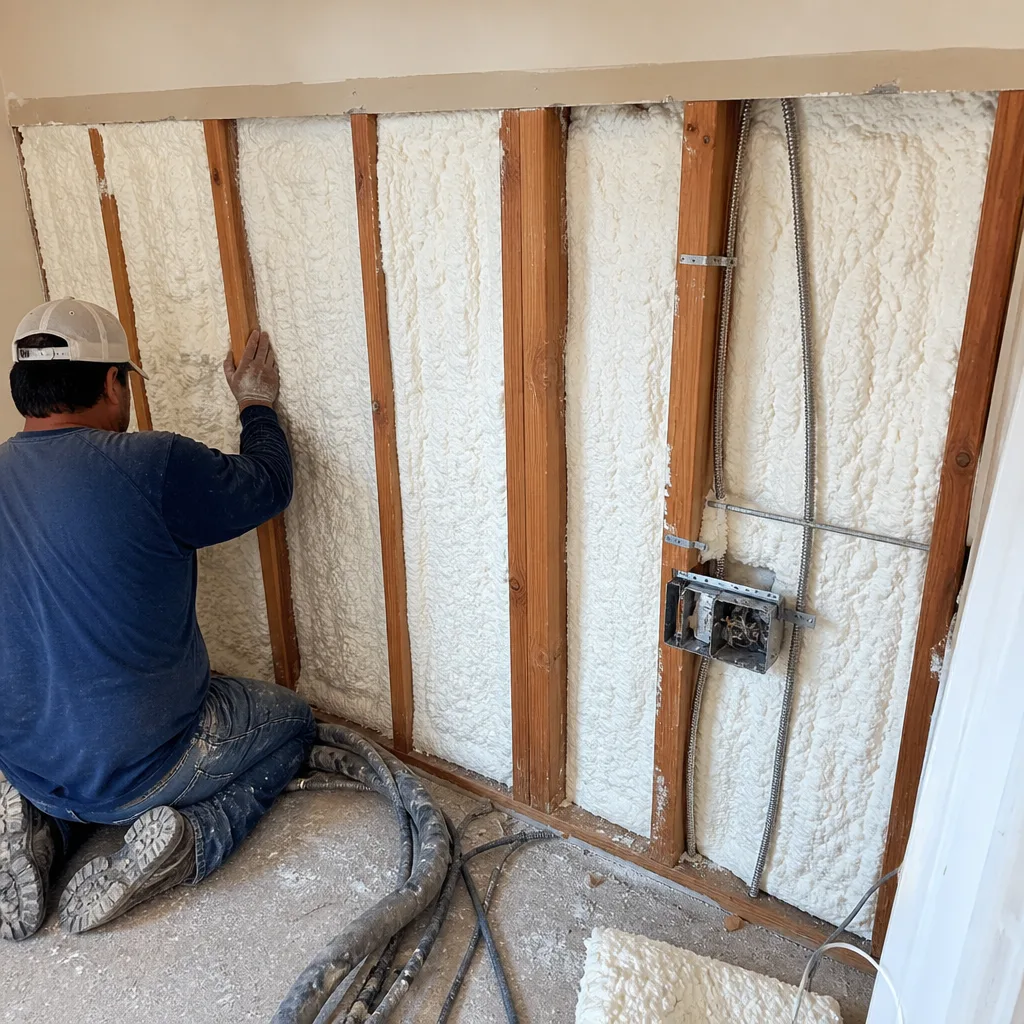 After
AfterReplacement Cost & What’s Included
Most Knauf attic air sealing replacements in Converse run $340-$680 for a single-story home under 2,200 square feet, and $580-$1,100 for two-story or larger footprints where we chase leaks through multiple attic zones. That range covers removal of degraded material, surface prep, new Knauf-compatible sealant or board, and labor. What drives the spread: accessibility (some Converse attics built in the 1980s have 4-foot clearances that slow work), extent of failure (partial reseal versus full attic floor), and whether we’re also addressing insulation that was blown over unsealed gaps years ago.
Every job closes with a Written Price Before Any Work Starts under Haven Standard Clause 1, a Documented Photo Record of every sealed penetration, and on applicable jobs, before-and-after blower-door readings in CFM50 so you see the envelope tighten in one number. The 365-Day Done Right Promise covers our workmanship. We source Knauf materials alongside Owens Corning, Johns Manville, and Rockwool options, no proprietary lock-in.
| Scope | Typical Range |
|---|---|
| Partial reseal (can lights, top plates, penetrations) | $340-$520 |
| Full attic floor air barrier replacement | $580-$880 |
| Two-story or complex attic geometry | $780-$1,100 |
| Blower-door test with printed report | Included on applicable jobs |
DIY or Call Us?
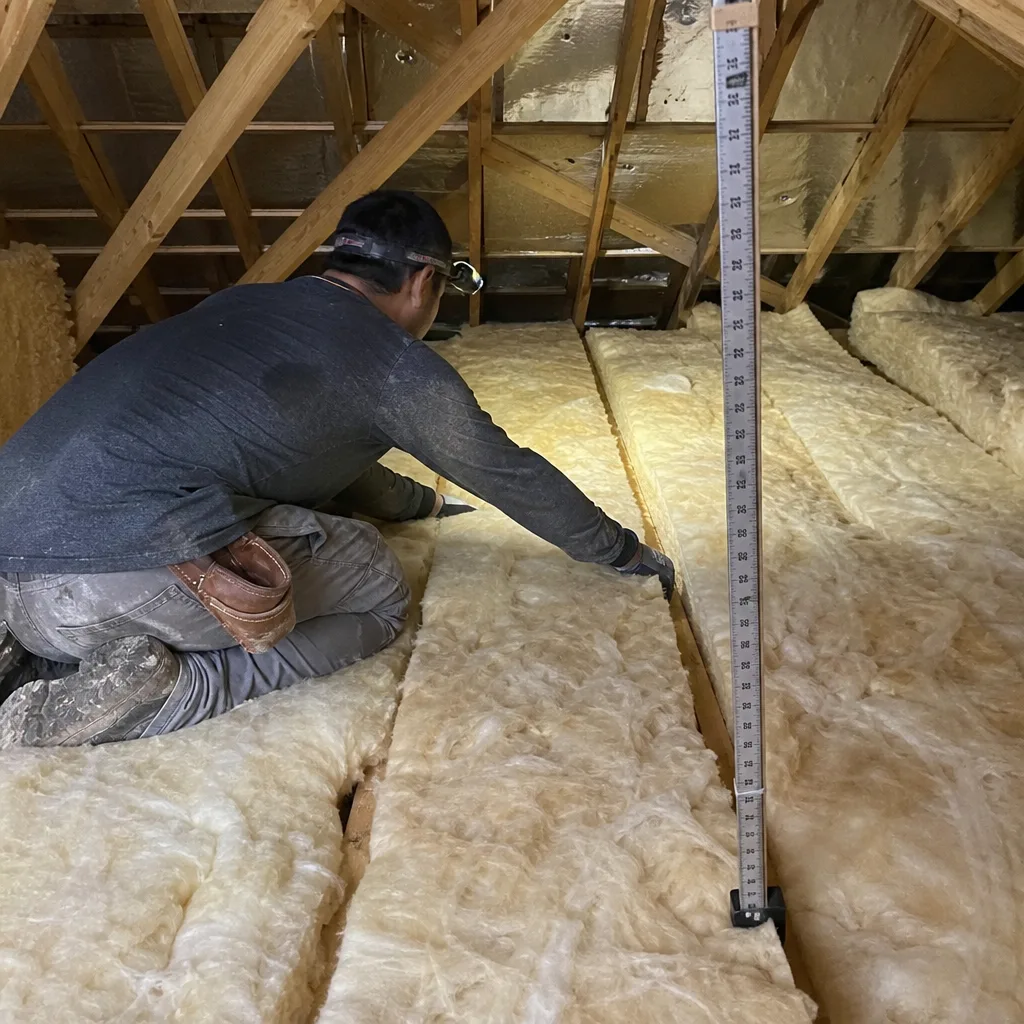
Here’s where honesty matters. A homeowner can safely inspect: pull the attic hatch during cool morning hours, photograph any cracked foam or lifted tape, and use a smoke pencil or incense stick to trace air movement near can lights while the HVAC runs. What you find tells you whether the failure is localized or systemic.
Where DIY goes wrong: Knauf’s EcoSeal requires a specific substrate moisture content and temperature window for cure, and Converse’s summer attic conditions violate both. We’ve been called to redo jobs where homeowners applied sealant at 2 p.m. in July; it skinned over and trapped moisture, failing within months. Rigid board replacement demands continuous beads and mechanical fastening at code-specified intervals; gaps of even 1/8-inch nullify the air barrier. And any work near active electrical penetrations or recessed lighting housings carries fire-safety implications we don’t shortcut.
Seal the leaks first. Then insulate. The numbers will tell you if it worked. If your inspection shows more than two or three failed points, the system is likely compromised throughout. Call (830) 420-0953 and we’ll run a blower-door test to show you exactly where you stand.
FAQs
In South Texas heat, Knauf’s latex-based EcoSeal typically holds 8-12 years, while tape adhesives on foil-faced board average 6-10 years before thermal cycling degrades the bond. Attics with poor ventilation or dark shingles that run hotter will see shorter lifespans. We document the install date and material lot on every job so you have a reference point. Call (830) 420-0953 if you’re approaching that window and want a free assessment.
Spot repairs work only when the original Knauf material is still sound and the failure is mechanical, like a lifted tape edge or a single shrunken bead. If the underlying sealant has oxidized or the board has delaminated, patching over it traps the failure and guarantees recurrence. We test-bond samples before recommending either path. Bring us photos or a competing estimate; we’ll read it with you under our Free Second Opinion policy.
Most single-story Converse homes take one crew day; two-story or complex attics run into a second day. We don’t start until you have a written price and scope in hand, and we leave only after the Documented Photo Record is complete. Same-day starts are available when we have your material profile confirmed by morning.
Yes. We carry Knauf-compatible low-expansion foam, rigid board in 1-inch and 1.5-inch thicknesses, gasketed can-light covers, and specialized foil tape on every vehicle. For less common Knauf configurations or discontinued lines, we source through our regular suppliers with next-day availability. We’re an independent service provider, not affiliated with Knauf, and we also stock Reflectix and other major brands so we match the right material to your specific assembly.
Ready to stop losing conditioned air through your attic? Call (830) 420-0953 for a free estimate. A live person answers 24/7, and you’ll get a written price before any work starts, every time.
Written by Wes Okafor, Owner & Lead Insulation Technician, Topside Attic Insulation Converse at Topside Attic Insulation Converse, serving Converse and nearby areas.