
Knauf Attic Insulation: The Converse Owner’s Guide
Knauf attic insulation installed in Converse homes typically runs $1.80 to $3.20 per square foot depending on R-value and whether we need to remove existing material first. Most Converse ranch and two-story jobs we price out fall between $2,400 and $5,800 for a complete attic install with air sealing. We stock Knauf EcoSeal, Jet Stream, and Insulation Board products on our trucks, and we can usually inspect and start work same-day if you call before noon.
Homeowners usually figure out something’s wrong when their summer electric bill jumps $80-$150 from one year to the next, or when the upstairs bedrooms in their Converse home won’t cool below 78 degrees even with the AC running nonstop. Sometimes it’s rodent damage, sometimes it’s compression from someone walking through the attic to service HVAC, and sometimes it’s just that the original builder put R-19 in a roof that sees 160-degree attic temperatures in July. R-19 in a Converse summer is optimism, not insulation.
Which Knauf Models This Applies To
We work with three main Knauf product families in Converse attics: EcoSeal (the hybrid system combining air-sealing latex with blown fiberglass), Jet Stream (the blown-in fiberglass line in pink, yellow, and white densities), and Insulation Board (rigid foam and semi-rigid for knee walls and cathedral ceilings). If you’re trying to match what’s already up there, look for the Knauf stamp on the batts or the bag remnants near the attic hatch. Jet Stream bags show a density code, 0.5, 0.6, or 1.0 pounds per cubic foot, that needs to match if you’re patching rather than replacing.
The compatibility gotcha we see most often: a homeowner buys Jet Stream Ultra at a big-box store thinking it’ll layer cleanly over older EcoSeal-treated fiberglass. It won’t. The EcoSeal latex coating changes the surface texture, and the new blown-in doesn’t adhere or settle correctly. We end up removing both and starting fresh. For OEM versus aftermarket, Knauf doesn’t sell direct to homeowners in Texas, so any “Knauf” product you see online is either contractor-sourced or relabeled. We buy through Knauf’s regional distributor in San Antonio, which means verifiable batch numbers and the full 10-year product warranty.
Signs Your Knauf Attic Insulation Is Failing
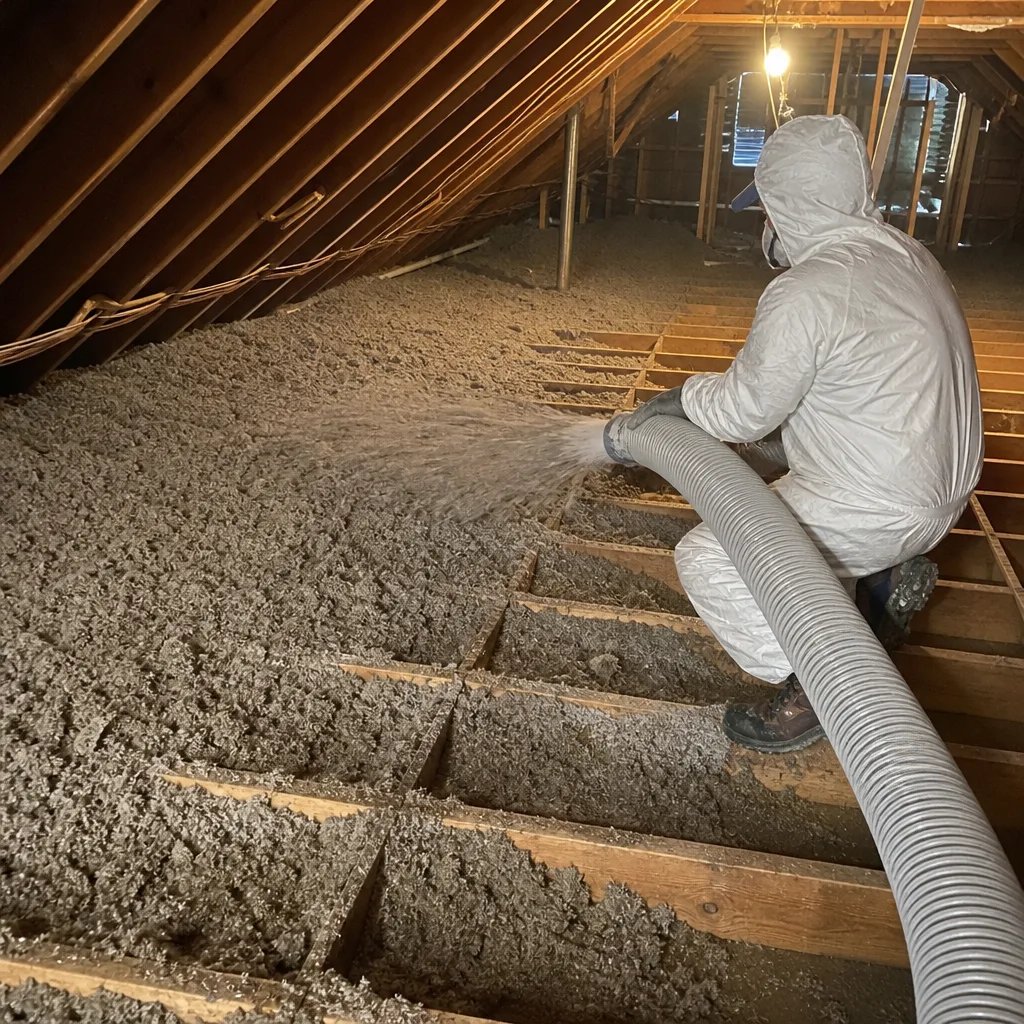
- Uneven temperature between rooms. If your hallway is 74 and the back bedroom is 82, the insulation over that room has shifted, compressed, or was never installed to full depth. We see this constantly in Converse homes built 2005-2015 where crews blew fiberglass fast and didn’t verify coverage depth.
- Ice dams or heavy frost on roof decking in winter. Warm, moist air hits the cold underside of your roof sheathing and freezes. This means your insulation is letting conditioned air through, or your ventilation is choked, or both. In Converse, we don’t get many hard freezes, but when we do, the houses with failed attic insulation show it first.
- Dust or fiberglass particles settling on ceiling fixtures. Air moving through gaps in the attic floor carries loose insulation with it. If you’re vacuuming glittery dust off your ceiling fan blades, air is leaking past your top plates and pulling fibers through the fixture gaps.
- Visible compression or trails in blown-in material. Every footstep, every HVAC service call, every Christmas decoration retrieval compresses fiberglass and kills its R-value. Knauf Jet Stream recovers somewhat if fluffed, but once it’s been walked on repeatedly, the fiber structure breaks down and it won’t perform to spec.
- Moisture stains on ceiling drywall near bathroom or kitchen fixtures. Warm, humid air from your living space hits cold attic air at the penetration point. The insulation around that wet spot is compromised, and if it’s been wet more than once, it’s likely growing mold you can’t see from below.
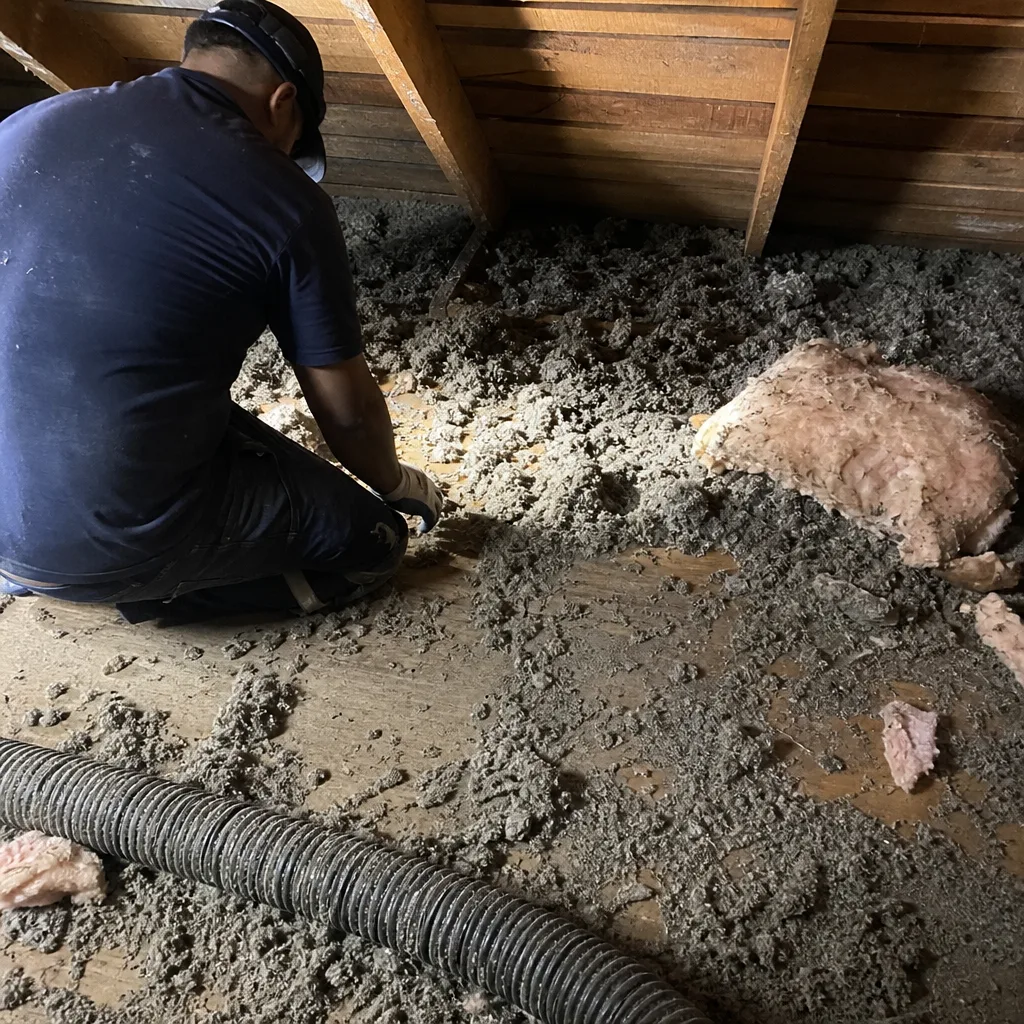 Before
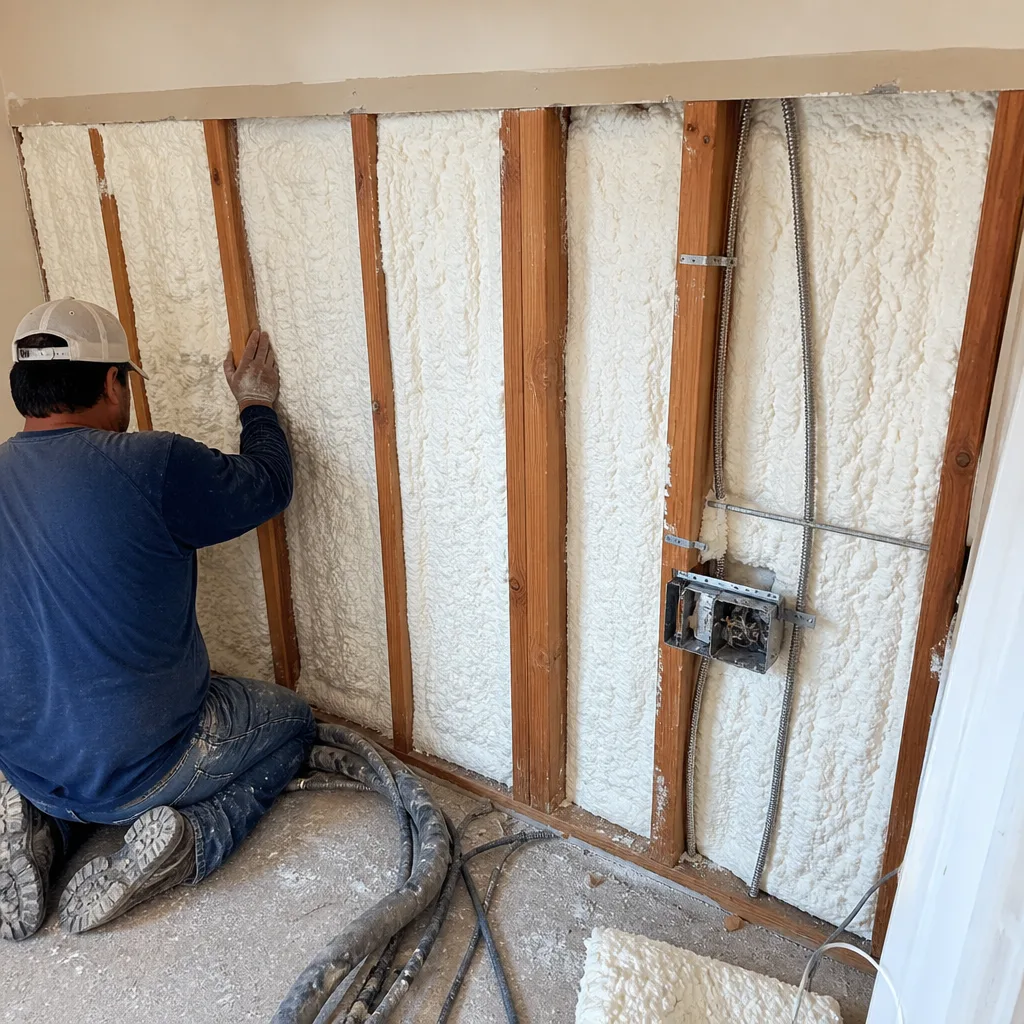 After
AfterReplacement Cost & What’s Included
| Scope | Typical Range in Converse |
|---|---|
| Remove old insulation + install Knauf Jet Stream to R-38 | $2,400 - $4,200 |
| Remove old + full air sealing + Knauf EcoSeal system to R-49 | $3,800 - $5,800 |
| Patch/repair section (up to 300 sq ft) with matching Knauf | $680 - $1,400 |
| Attic cleaning + rodent proofing + new Knauf install | $4,200 - $7,500 |
What moves you up or down in that range: attic square footage is obvious, but the bigger drivers are access difficulty (steep roof pitch, tight scuttle hole), whether we need to build a storage platform before insulating, and how much air sealing the top plates and penetrations need. We don’t price by the bag. We price by the written scope, and that scope includes every square foot, every can-light cover, every baffle. Under Haven Standard Clause 1, you get that written price before anyone touches your attic. The 365-Day Done Right Promise covers both materials and labor.
DIY or Call Us?
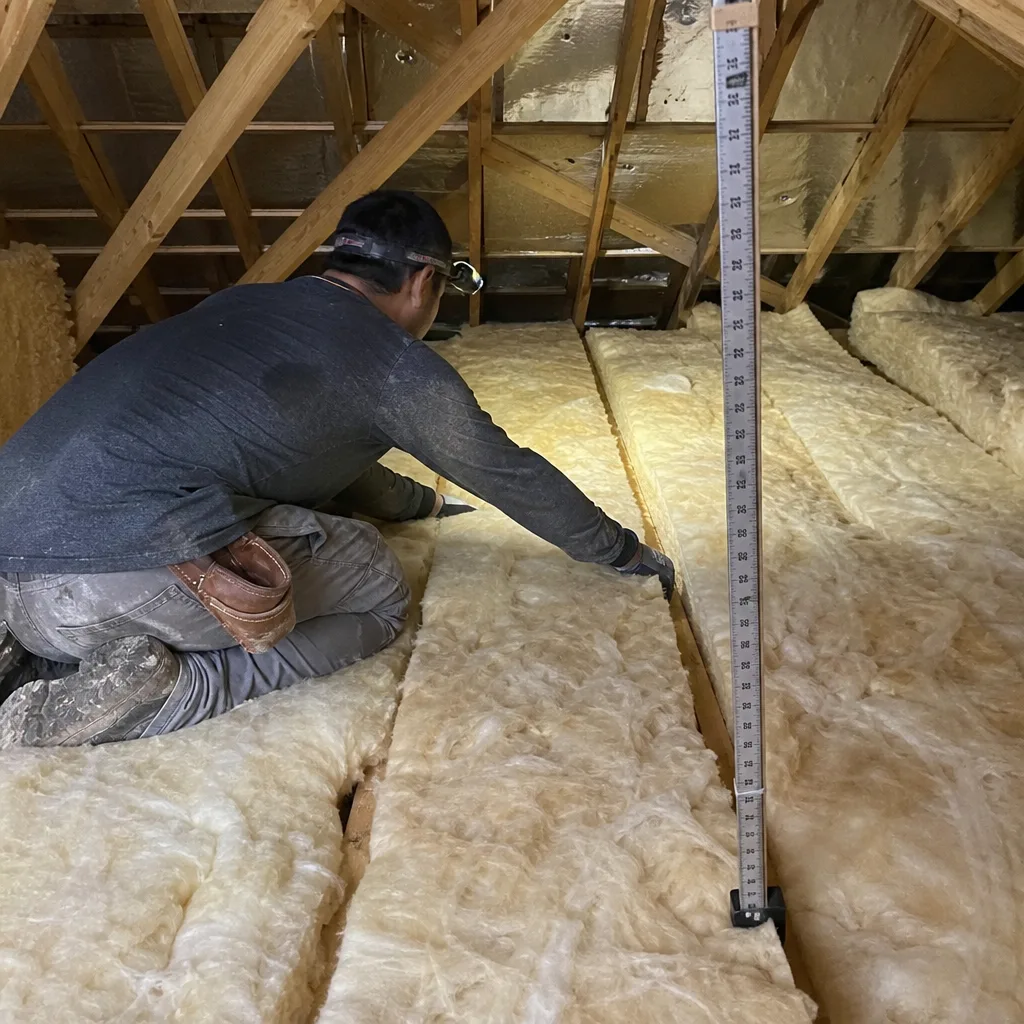
There’s safe checking and there’s unsafe doing. You can safely pull your attic hatch, take photos of any labels or bag remnants, and measure the existing depth with a yardstick. Don’t go walking around up there. Attic flooring is rarely designed for foot traffic, and a misstep through drywall is a broken leg and a ceiling repair.
Where DIY goes wrong with Knauf specifically: blowing fiberglass to the right density requires a machine calibrated to the product, and verifying coverage means grid-pattern depth checks across the entire attic. We’ve been called to fix homeowner jobs where the material looked fine but averaged R-22 instead of the R-38 they paid for at the rental counter. Also, if your attic has knob-and-tube wiring, active rodent issues, or vermiculite that might contain asbestos, you need a professional assessment before disturbing anything. Seal the leaks first. Then insulate. The numbers will tell you if it worked.
Call (830) 420-0953 and we’ll schedule a free inspection. Wes Okafor or one of our technicians will bring a written scope and price before any work starts.
FAQs
Knauf fiberglass insulation itself doesn’t degrade chemically, but its installed performance lasts 15-25 years in Converse before compression, moisture cycling, or rodent damage reduce it below useful R-value. The real killer is what happens around it: unsealed top plates, recessed can lights, and duct boots that leak conditioned air into the attic year after year. We’ve pulled 12-year-old Knauf that looked fine but was performing like R-15 because the house was leaking past it the whole time. Call (830) 420-0953 for a free inspection and we’ll measure what you’ve actually got.
Patching works if the damage is localized, less than about 15% of attic area, and the existing material is dry and uncontaminated. We can blow matching Knauf Jet Stream into thin spots or pull and replace batts in a water-damaged section. What doesn’t work: trying to “fluff” compressed blown-in back to original depth, or layering new over old without checking what’s underneath. We document the condition with photos before we recommend either path. Call (830) 420-0953 for a free second opinion on any written estimate you’ve already received.
Most Converse homes run one to two days: half a day for removal and air sealing, half a day for install and verification. Larger homes or jobs requiring extensive rodent proofing and deck repair might stretch to three. We don’t leave until the blower-door test is run, the photo record is complete, and you’ve got your printed report in hand. Call (830) 420-0953 to check same-day availability.
We stock Knauf Jet Stream blowing wool, EcoSeal latex sealant, and rigid board in common thicknesses on every truck that serves Converse. For less common R-values or large whole-home jobs, we pull from the San Antonio distributor and typically have material next morning. We also stock parts for Reflectix radiant barrier if your job needs that layer too. Call (830) 420-0953 and we’ll confirm what’s on the truck for your specific job.
Written by Wes Okafor, Owner & Lead Insulation Technician, Topside Attic Insulation Converse at Topside Attic Insulation Converse, serving Converse and nearby areas.