
Knauf Crawl Space Encapsulation & Vapor Barrier in Converse: What to Know First
We provide independent Knauf crawl space encapsulation and vapor barrier service in Converse, typically completing most jobs in one to two days with a written price locked in before any work starts. Most Converse crawl spaces we see run between $3,200 and $7,800 for full encapsulation with vapor barrier, depending on whether we’re sealing a compact 800-square-foot crawl under a 1960s ranch near Foster Road or a full 2,000-square-foot footprint with active moisture intrusion. This page is for homeowners who already have Knauf insulation products in their crawl space or are considering Knauf materials for encapsulation and need to know how that brand performs in Bexar County’s clay-soil, high-humidity environment. Call (830) 420-0953 for a free estimate with a written scope and written warranty delivered before anyone lifts a tool.
How Knauf Products Fail - and How We Fix Them
- Knauf EcoSeal cavity sealant separates from rim joists in Converse’s expansive clay soil. The soil shifts seasonally, flexing the foundation and breaking the adhesive bond on rim-joist applications. We remove the failed EcoSeal, mechanically fasten a butyl-backed vapor barrier to the rim joist, then reapply sealant as a secondary layer - not the primary attachment.
- Knauf Insulation Ecose glass mineral wool sags when crawl space relative humidity stays above 70 percent. Converse summer humidity routinely pushes 80 percent in vented crawls, and Ecose’s plant-based binder softens faster than synthetic alternatives. We don’t reinstall sagging batts; we remove them, encapsulate with a 12-mil reinforced polyethylene vapor barrier, and condition the space so humidity stays below 60 percent.
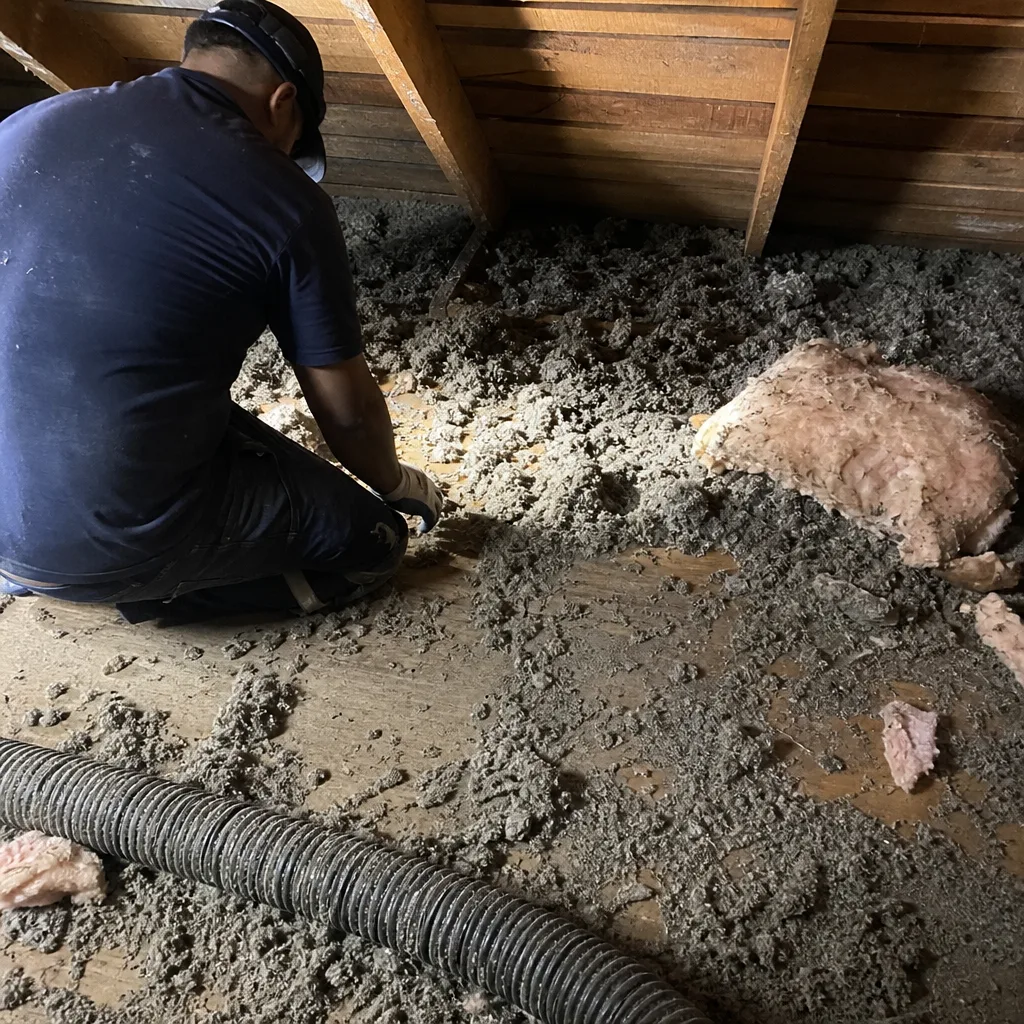
- Knauf Jet Stream Ultra blown-in fiberglass settles in damp crawl spaces, creating thermal voids. The product is designed for dry attics, not floor systems where moisture wicks through block walls. We extract settled Ultra, inspect the floor joists for fungal growth, and replace with closed-cell spray foam or a rigid foam board system that doesn’t absorb ambient moisture.
- Knauf Mold Resistant Plus batts lose their fungistatic treatment when saturated by groundwater intrusion. The EPA-registered additive leaches out in standing water conditions common in Converse’s low-lying neighborhoods near Gibbs-Sprawl. We treat the source - grading, drainage, or sump - then install a sealed encapsulation system that keeps future products dry, including non-Knauf materials if the homeowner prefers.
- Knauf Tuff-R rigid foam board delaminates at the foil facing when installed against damp masonry. The foil-to-foam bond fails where capillary moisture moves through block walls, especially in pre-1980 Converse homes with no dampproofing. We install a dimpled drainage mat against the wall first, then mechanical-fasten Tuff-R only after the wall is isolated from bulk water - or spec a different rigid foam if the wall can’t be dried.
Our Knauf Crawl Space Encapsulation & Vapor Barrier Process
- 1
Inspection and moisture mapping. We measure relative humidity at three points, check wood moisture content with a pin meter, and photograph every Knauf product currently installed - its condition, its location, and any deformation pattern.
- 2
Blower-door test of the living space. Even in a crawl job, we pressurize the house to measure how much conditioned air is being pulled through floor penetrations - a baseline CFM50 reading that tells us whether the crawl is communicating with the living space through leaky ducts, plumbing chases, or unsealed top plates.
- 3
Written scope and written price. Under Haven Standard Clause 1, you get both before anyone starts. We specify which Knauf products stay, which come out, and what replaces them - OEM Knauf, another brand like Reflectix, or a hybrid system.
- 4
Removal, cleaning, and air sealing. We pull failed Knauf materials, HEPA-vacuum the entire crawl, and seal all penetrations with polyurethane foam or acoustical sealant - depending on what the substrate will accept.
- 5
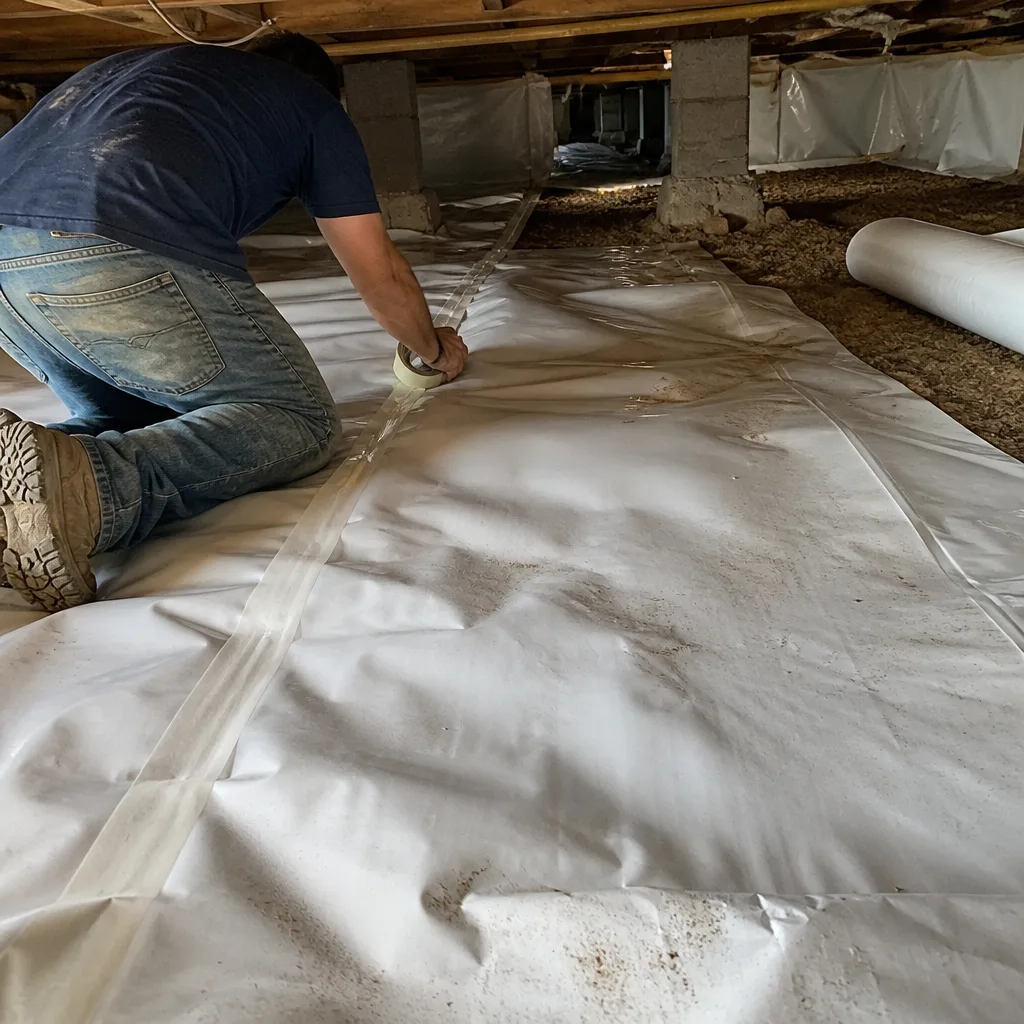
Vapor barrier installation and conditioning. We lay 12-mil reinforced polyethylene with sealed seams, mechanically fasten to walls, and install a dehumidifier or supply-air tap to maintain 50-55 percent relative humidity year-round.
- 6
Final blower-door test and documented photo record. We rerun the pressurization test, deliver the before-and-after CFM50 comparison, and leave you with photos of every critical detail - including what we found and what we changed.
 Before
 After
AfterWhat Knauf Crawl Space Encapsulation & Vapor Barrier Costs in Converse
| Scenario | Typical Range | What Moves the Price |
|---|---|---|
| Vapor barrier only (no insulation work) | $3,200 - $4,800 | Square footage, pier-and-beam vs. perimeter wall, existing debris removal |
| Full encapsulation with dehumidification | $5,500 - $7,800 | Wall height, sump pump need, conditioned-air supply vs. standalone dehumidifier |
| Failed Knauf removal + encapsulation | $6,800 - $9,400 | Extent of fungal remediation needed, disposal of saturated materials, joist sistering |
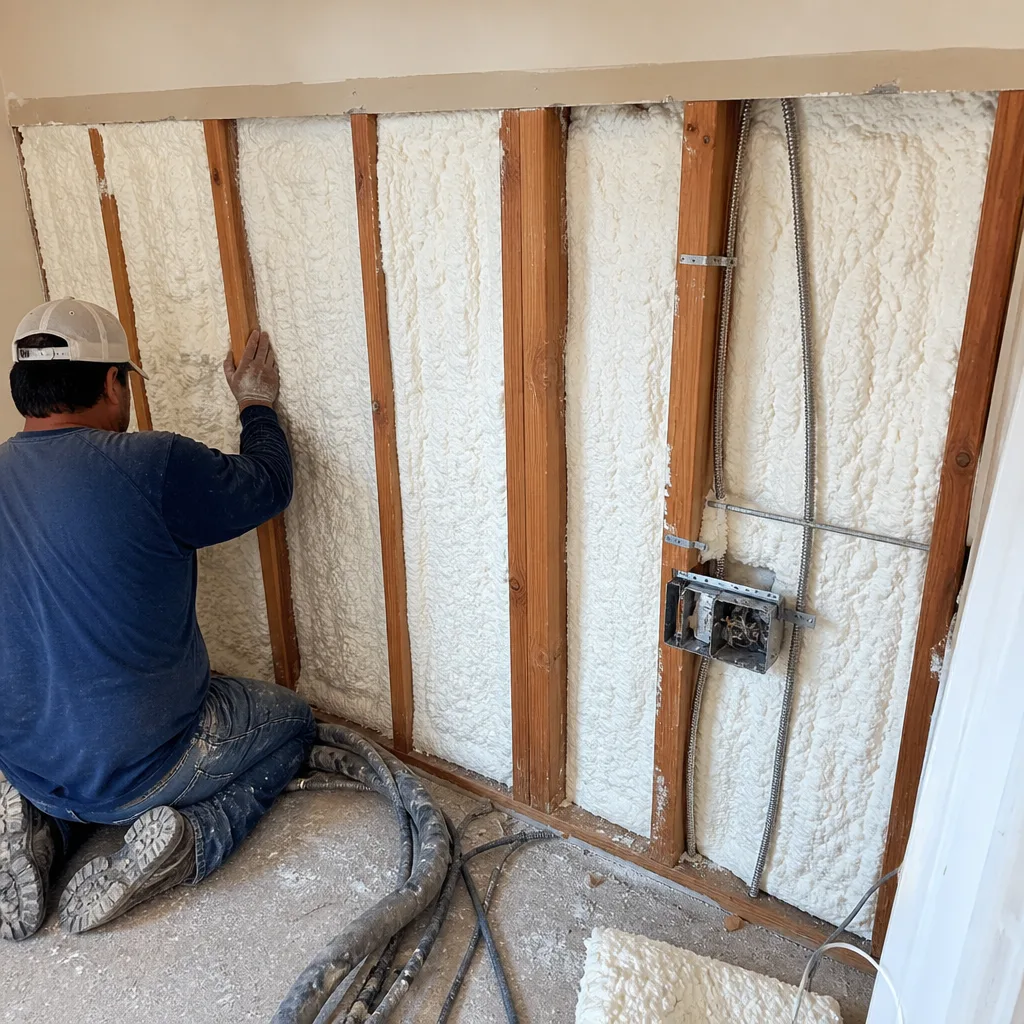
| Knauf-to-spray-foam conversion | $8,500 - $12,000 | Closed-cell thickness (2″ vs. 3″), ignition barrier requirements, access limitations |
These are real numbers for Converse homes we’ve worked on - not national averages. A written price before any work starts is Haven Standard Clause 1, no exceptions. Call (830) 420-0953 for your exact scope and price.
Why Converse Homeowners Call Topside Attic Insulation Converse for Knauf Work
We’ve been independently owned and operated under The Haven Standard since 2016, and we’ve learned that Knauf products perform fine when the building envelope is managed correctly - and fail predictably when it isn’t. Wes Okafor runs a blower-door test before and after every job so you leave with a printed report, not a handshake and a promise. Our 365-Day Done Right Promise means if the crawl space humidity creeps back up or a seam lifts, we make it right. We’re not locked into any single brand - we also work with Reflectix and others - so our recommendation follows your home’s condition, not a supplier contract. Calls are answered by a live person 24/7. Seal the leaks first. Then insulate. The numbers will tell you if it worked.
FAQs
No - Knauf’s limited warranty covers product defects, not installation environment changes, so proper encapsulation does not void it. However, removing Knauf labels or installing non-Knauf products in the same assembly can complicate claims if a product defect later appears. We document every original label photographically before removal and note serial numbers in your written scope so warranty rights stay intact. Call (830) 420-0953 if you need help navigating a specific Knauf warranty question.
We can source Knauf products through our distributor network, but we don’t automatically default to them. In Converse’s climate, we’ve seen better long-term performance from hybrid systems - for example, keeping Knauf rigid board where moisture is controlled while substituting a reinforced polyethylene vapor barrier for failed batt applications. We explain the trade-off in your written scope, including price difference and expected lifespan, before you decide.
Repair is cheaper today; encapsulation is cheaper over ten years. Spot-replacing sagging Ecose batts in a damp crawl space runs $1,200-$2,400, but the new batts will sag again unless humidity is controlled. Full encapsulation at $5,500-$7,800 breaks even around year four when you factor in energy savings and avoided re-repair. We give you both numbers in writing and let the math decide.
Most Knauf encapsulation jobs in Converse are scheduled within five to seven business days of estimate approval, with emergency water intrusion situations prioritized same-day or next-day. We don’t manufacture urgency - we keep a crew dedicated to crawl work because Converse’s clay soil and humidity create steady demand. Call (830) 420-0953 for current availability.
Yes - we regularly start from third-party inspection reports and provide a free second opinion on any written estimate, including inspector-recommended scopes. We verify the findings with our own moisture mapping and blower-door test, then deliver a written scope that either confirms the inspector’s direction or identifies a more precise fix. The Haven Standard requires documentation, not assumptions.
Written by Wes Okafor, Owner & Lead Insulation Technician, Topside Attic Insulation Converse at Topside Attic Insulation Converse, serving Converse and nearby areas.