
Knauf Radiant Barrier Installation: The Converse Owner’s Guide
Knauf radiant barrier installation in Converse typically runs $1.80 to $3.20 per square foot of attic deck, with most single-story homes landing between $1,400 and $2,600 total for full coverage. We stock Knauf EcoSeal-compatible radiant barrier foil and the Knauf Insulation radiant barrier batt systems on our trucks, and we can usually schedule installation within 48 hours. Most Converse homeowners discover their existing radiant barrier is failing when their summer electric bills spike $80 to $150 above the previous year despite the AC running constantly, or when they climb into the attic and find the foil has torn away from rafters or turned dull and oxidized.
Which Knauf Models This Applies To
Knauf produces two distinct radiant barrier product lines we install in Converse homes. The first is Knauf radiant barrier foil, a perforated aluminum sheet sold in 500-square-foot rolls, typically stapled to the underside of roof rafters. The second is Knauf Insulation radiant barrier batts, fiberglass batts with a factory-laminated kraft-and-foil facing that installs between joists or against rafters depending on the attic configuration.
To identify what you have, check the printed label on any remaining material. Knauf foil rolls carry a lot number and “ASTM C1313” marking; the batts show “R-Value” plus “Radiant Barrier Certified” in the product stamp. If your existing barrier was installed before 2015, it may be an earlier Knauf formulation with a heavier kraft backing that delaminates faster in Texas humidity. We do not use proprietary part numbers for matching; we measure your rafter spacing, check for existing insulation depth, and specify the correct Knauf product by roll width and permeability rating.
Topside Attic Insulation Converse is an independent service provider, not affiliated with Knauf. We also stock Reflectix radiant barrier products for homeowners who prefer a double-bubble foil construction over Knauf’s perforated sheet design.
Signs Your Knauf Radiant Barrier Installation Is Failing
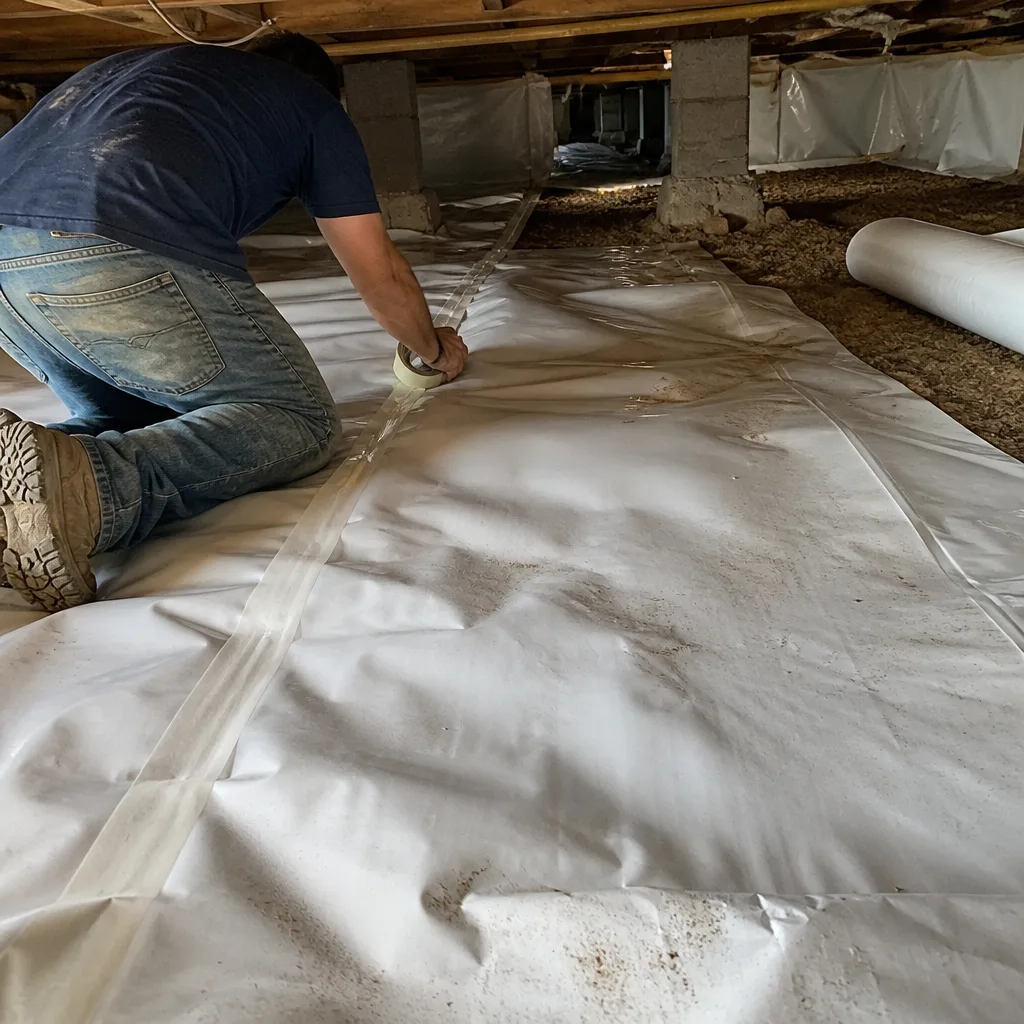
- Foil has torn or sagged from rafters. Converse attics regularly hit 140°F in July, and the thermal cycling weakens the staples or adhesive strips used in original installation. Once the foil droops, it loses contact with the air gap that makes radiant barrier work, and it becomes a collector for dust that further degrades reflectivity.
- Surface has turned dull, chalky, or dark. Knauf’s aluminum facing oxidizes over time, especially in attics with poor ventilation. A mirror-finish surface reflects up to 97% of radiant heat; a dull gray one might reflect 60% or less. We check this with a simple flashlight test during our attic inspection.
- Hot second-floor rooms despite running AC continuously. In Converse’s older ranch homes near Foster Road, we regularly see this pattern: the radiant barrier failed years ago, but the homeowner only notices when the compressor starts running 18 hours a day in August. The barrier isn’t blocking roof-deck heat, so ceiling temperatures climb 10 to 15 degrees above conditioned space.
- Moisture staining on rafters or decking above the barrier. Knauf’s perforated foil is designed to let moisture escape, but if the wrong product was used, or if the facing was installed with the wrong side up, condensation traps against the roof deck. We see this most often in homes where a previous owner installed non-perforated “vapor barrier” foil meant for walls, not attics.
- Insulation below the barrier is compressed or displaced. Failed radiant barrier often falls onto blown-in insulation below, compressing it and reducing its effective R-value. In Converse, where many attics have GreenFiber or Owens Corning loose-fill, a 2-inch compression can drop performance from R-30 to R-19 territory.
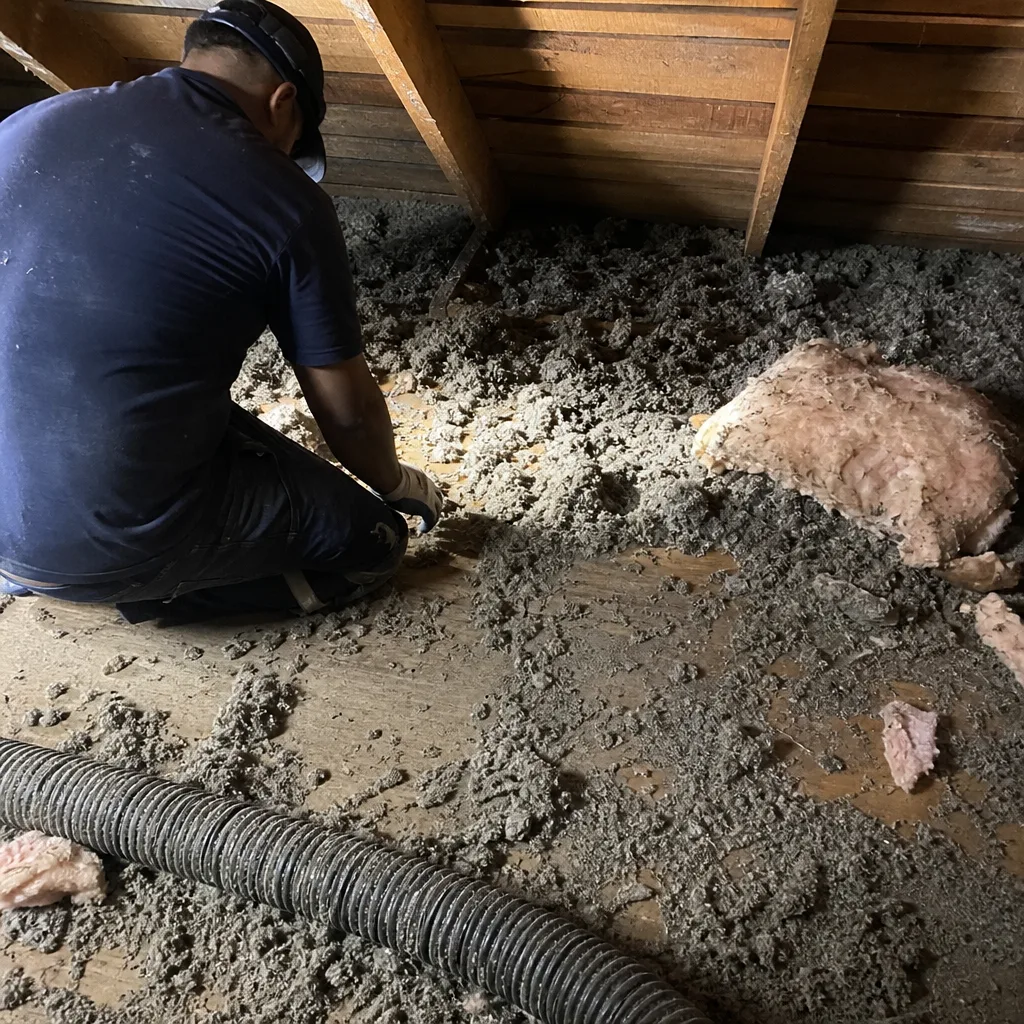 Before
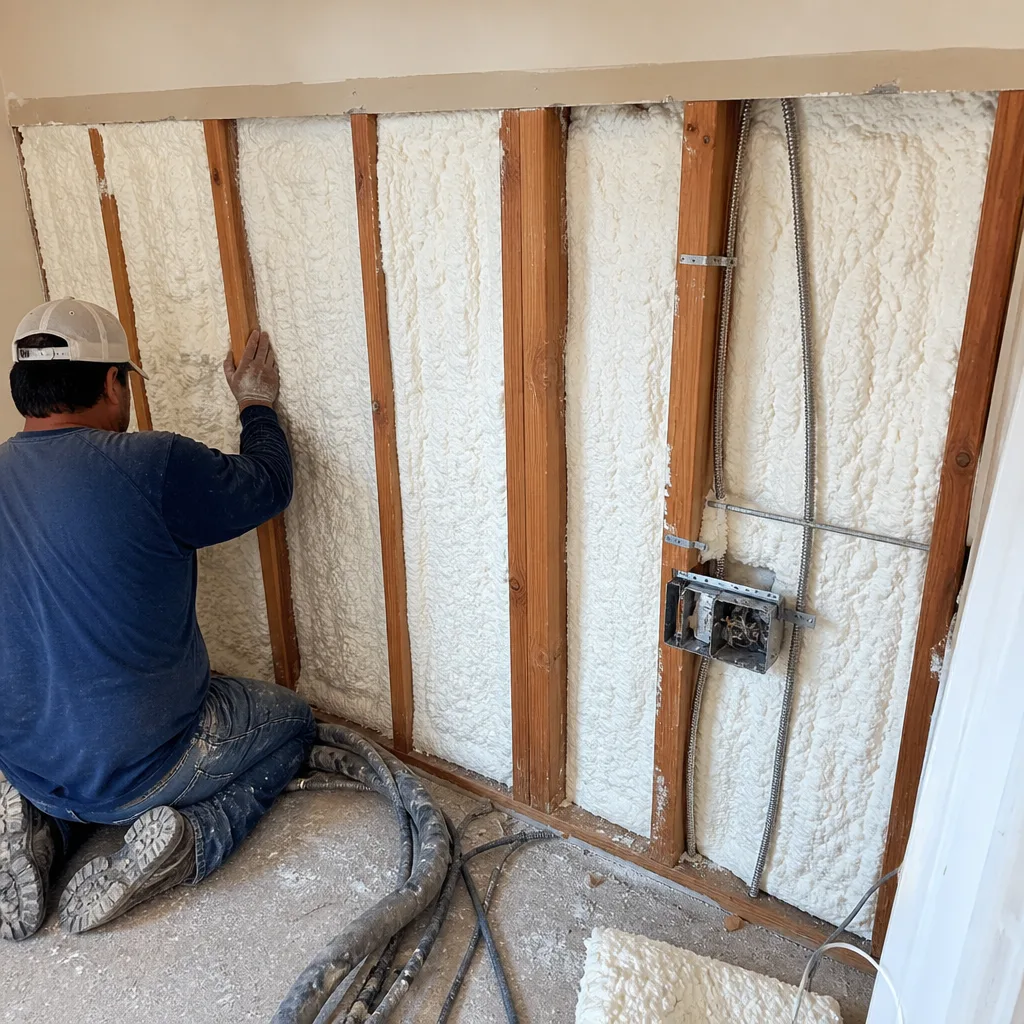 After
AfterReplacement Cost & What’s Included
| Scope | Price Range (Converse) |
|---|---|
| Partial repair (torn sections, up to 300 sq ft) | $340 - $620 |
| Full rafter-deck install, single-story (1,200-1,800 sq ft home) | $1,400 - $2,200 |
| Full install, two-story or complex roof (2,000+ sq ft) | $2,200 - $3,200 |
| Remove failed barrier + dispose + install new | Add $280 - $450 |
| Air sealing package (top plates, can lights, penetrations) + radiant barrier | $1,800 - $3,000 |
What drives the range: roof pitch (steeper means more labor), whether we need to remove existing material first, and whether your attic floor needs air sealing before the barrier goes in. We don’t blow insulation over an unsealed attic floor; that’s Haven Standard Clause 1, and it’s non-negotiable. Every job gets a Written Price Before Any Work Starts, a Documented Photo Record, and on applicable jobs, before-and-after blower-door numbers so you see the envelope tighten. The 365-Day Done Right Promise covers all completed work.
DIY or Call Us?
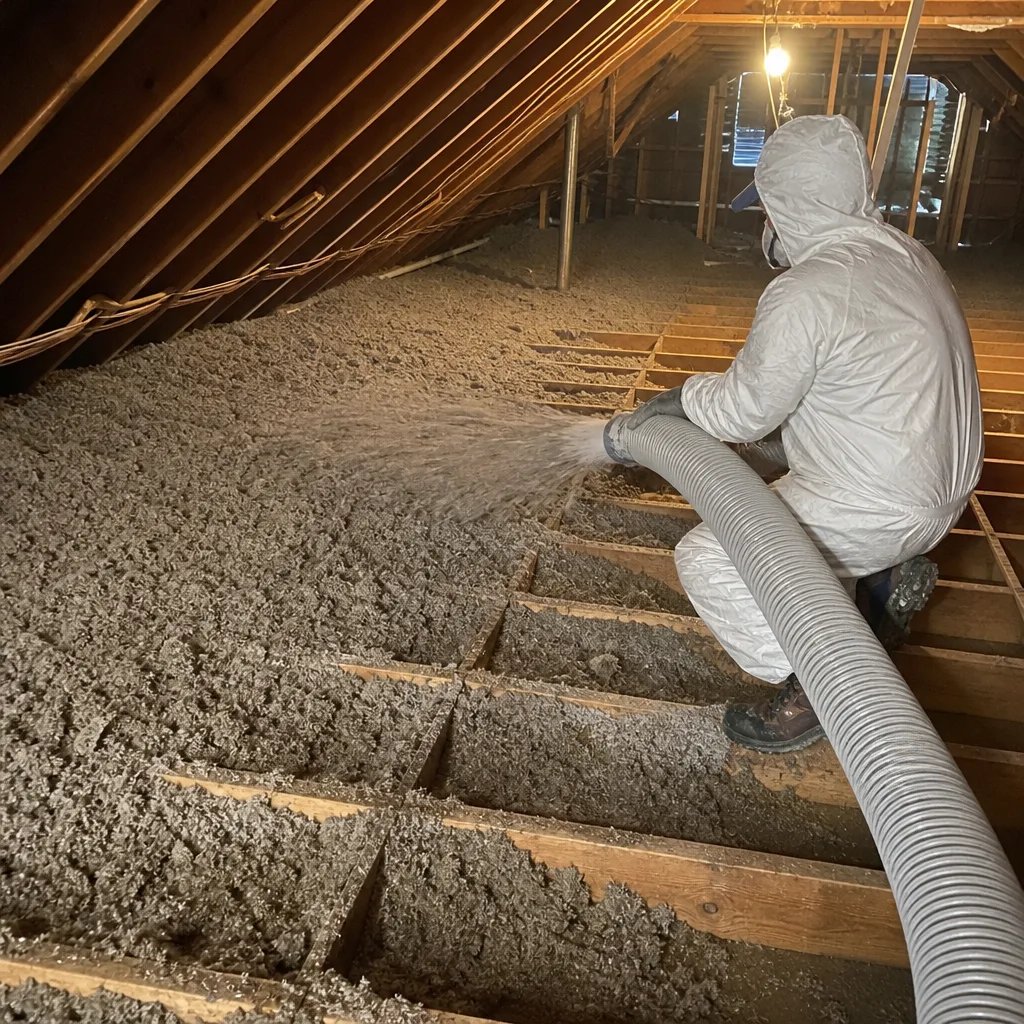
Here’s what you can safely check yourself: turn off the AC, climb into the attic during peak afternoon heat, and hold the back of your hand near the ceiling drywall. If it feels like a oven, your radiant barrier has likely failed. You can also photograph any product labels you find and text them to us at (830) 420-0953.
Where DIY goes wrong: working on rafters in a 130°F attic is genuinely dangerous; heat exhaustion sets in fast, and a misstep through drywall is a real risk. More importantly, installing radiant barrier without first air-sealing the attic floor is like putting a lid on a leaky pot. The conditioned air escapes, the barrier can’t compensate, and you’ve spent money for marginal gain. Seal the leaks first. Then insulate. The numbers will tell you if it worked. We run a blower-door test before and after every job so you leave with a printed report, not a guess.
FAQs
In Converse’s climate, properly installed Knauf perforated foil maintains 85% or better reflectivity for 15 to 25 years. The batt products with factory-laminated facing typically see facing degradation after 10 to 15 years if attic ventilation is poor. We inspect ventilation as part of every quote because a 140°F attic with no airflow will age any barrier faster than the product rating assumes. Call (830) 420-0953 for an exact assessment of your attic conditions.
Small tears in foil can be patched with matching radiant barrier tape, but this is usually a short-term fix. Once the material has begun to oxidize or multiple sections have failed, replacement is more cost-effective than chasing individual tears. We provide a free second opinion on any written estimate you’ve received, and we’ll show you photos of what we find so you can make an informed call.
Most Converse homes take one full day for removal and replacement, or a half-day for new installation in an attic with no existing barrier. Two-story homes with complex rooflines may extend into a second day. We arrive with a named technician, text you when we’re on the way, and leave you with a documented photo record and written scope.
Yes. We carry Knauf perforated radiant barrier foil in 48-inch and 60-inch widths, plus Knauf Insulation radiant barrier batts in standard R-13 through R-30 thicknesses. For Converse homes with unusual rafter spacing or specific code requirements, we can source exact widths within 24 hours. Every material we use comes from documented supply chain sources; no gray-market or off-spec product.
Written by Wes Okafor, Owner & Lead Insulation Technician, Topside Attic Insulation Converse at Topside Attic Insulation Converse, serving Converse and nearby areas.