
Knauf Vapor Barrier Installation: The Converse Owner’s Guide
We stock and install Knauf-compatible vapor barrier systems in Converse, TX, with most residential jobs running between $1,200 and $2,800 installed depending on crawl space or attic application and square footage. Same-day installation is available when we have your dimensions and access type by 10 a.m. Most Converse homeowners discover their vapor barrier has failed when they notice musty odors returning after rain, find insulation batting damp to the touch, or spot condensation droplets on the underside of their crawl space or attic sheathing during our humid spring months.
Which Knauf Models This Applies To
Knauf manufactures vapor barrier products across several building envelope lines, and matching the right membrane to your existing system matters for warranty continuity and permeance ratings. We regularly work with Knauf Insulation’s EcoSeal vapor barrier line, the Knauf Moisture Membrane series rated at 0.1 perms or lower, and the Knauf FSK-25 reinforced facing used as a vapor retarder on batt installations in Converse homes built between 2015 and 2022. The critical identifier is the perm rating printed on the membrane edge, typically found in black ink every 24 inches, and the mil thickness, usually 6-mil or 10-mil for residential crawl spaces in this climate zone.
For Knauf systems, OEM membrane replacement ensures the taped seams bond chemically with existing Knauf-facing adhesives. Aftermarket poly sheeting at 6-mil thickness will physically cover the area but often fails at seam adhesion within 18 to 24 months in Converse’s clay-soil crawl spaces, where seasonal ground moisture swings from 15% to 40% relative humidity. We stock both Knauf OEM membrane rolls and a cross-compatible 10-mil reinforced polyethylene that we’ve pressure-tested against Knauf’s seam tape. If your existing barrier shows the Knauf spiral logo or “Made in Shelbyville, IN” marking, we match to that spec. No logo visible? We measure mil thickness with a micrometer on site and match permeance to your climate zone, IECC 2021 Zone 2 for Bexar County.
Signs Your Knauf Vapor Barrier Installation Is Failing
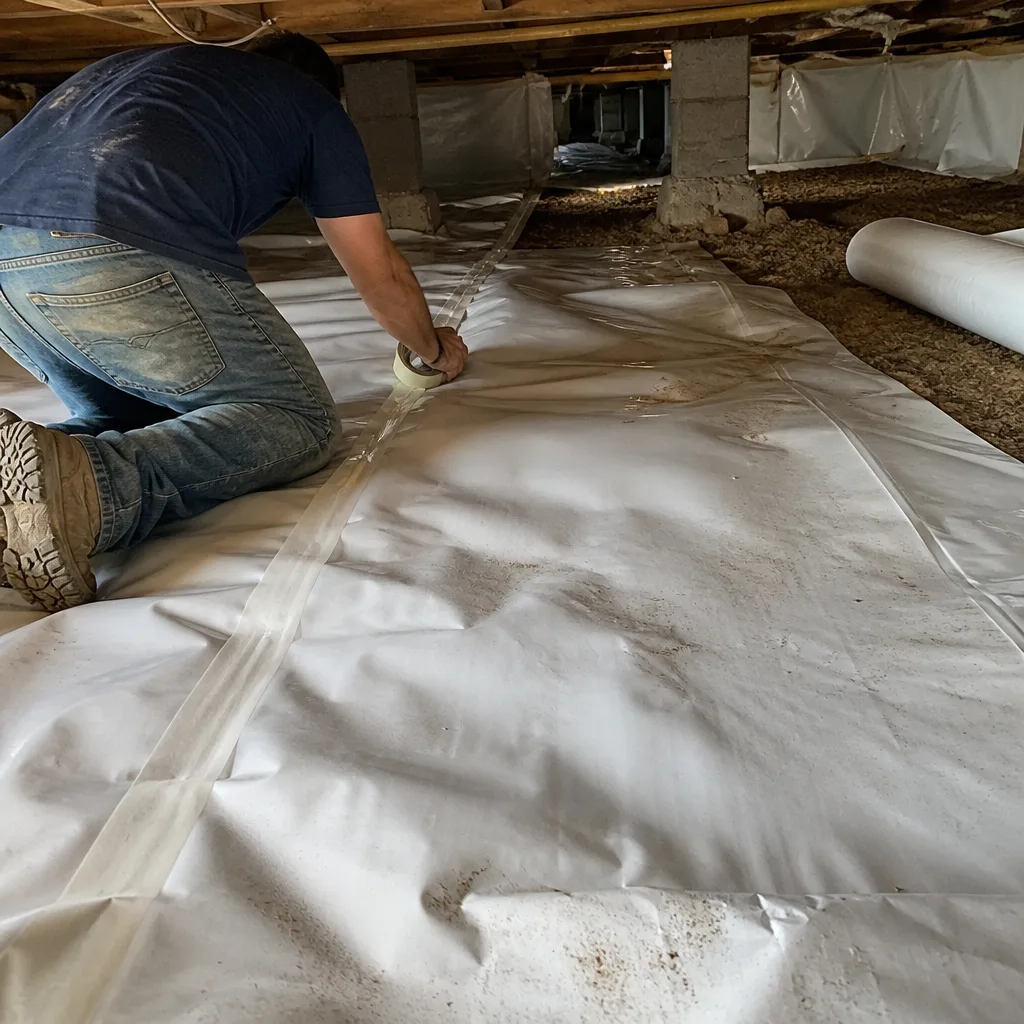
- Condensation on the barrier’s underside. This indicates the perm rating has degraded or the membrane was never properly sealed to the foundation walls. Warm, humid exterior air is reaching the cool surface and dropping moisture, which in Converse’s March through May season can reach 80% relative humidity daily.
- Pooling water on top of the barrier. The barrier has torn at seams or penetration points, or the original install lacked proper overlap at joints. Standing water above a vapor barrier means it’s acting as a bathtub, not a shield, and will wick into rim joists within weeks.
- Damp or compressed insulation above the barrier. Fiberglass or mineral wool loses R-value when moisture content exceeds 2% by weight. In Converse’s older ranch homes near Foster Road, we’ve pulled R-19 batts that were performing like R-7 due to vapor drive from below.
- Musty odor that intensifies after rainfall. This signals mold colonization on wooden subfloor or joist surfaces, typically occurring when relative humidity stays above 60% for 48 hours. The vapor barrier has either failed completely or was never extended to the full footprint.
- Visible mold on the barrier surface itself. Polyethylene vapor barriers can support mold growth when dust and organic debris accumulate on the surface, creating a food source. This is common in Converse homes with HVAC ductwork running through crawl spaces, where filter bypass deposits fine particulate year after year.
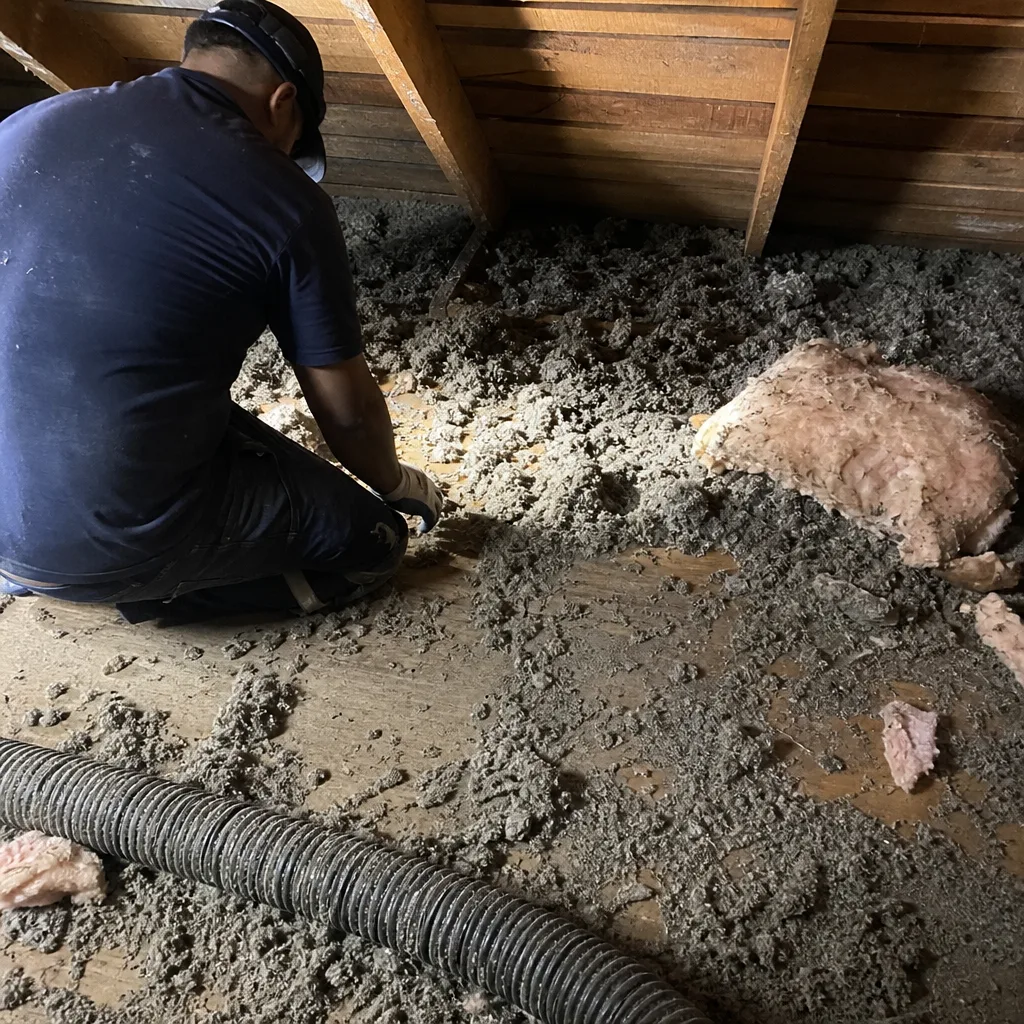 Before
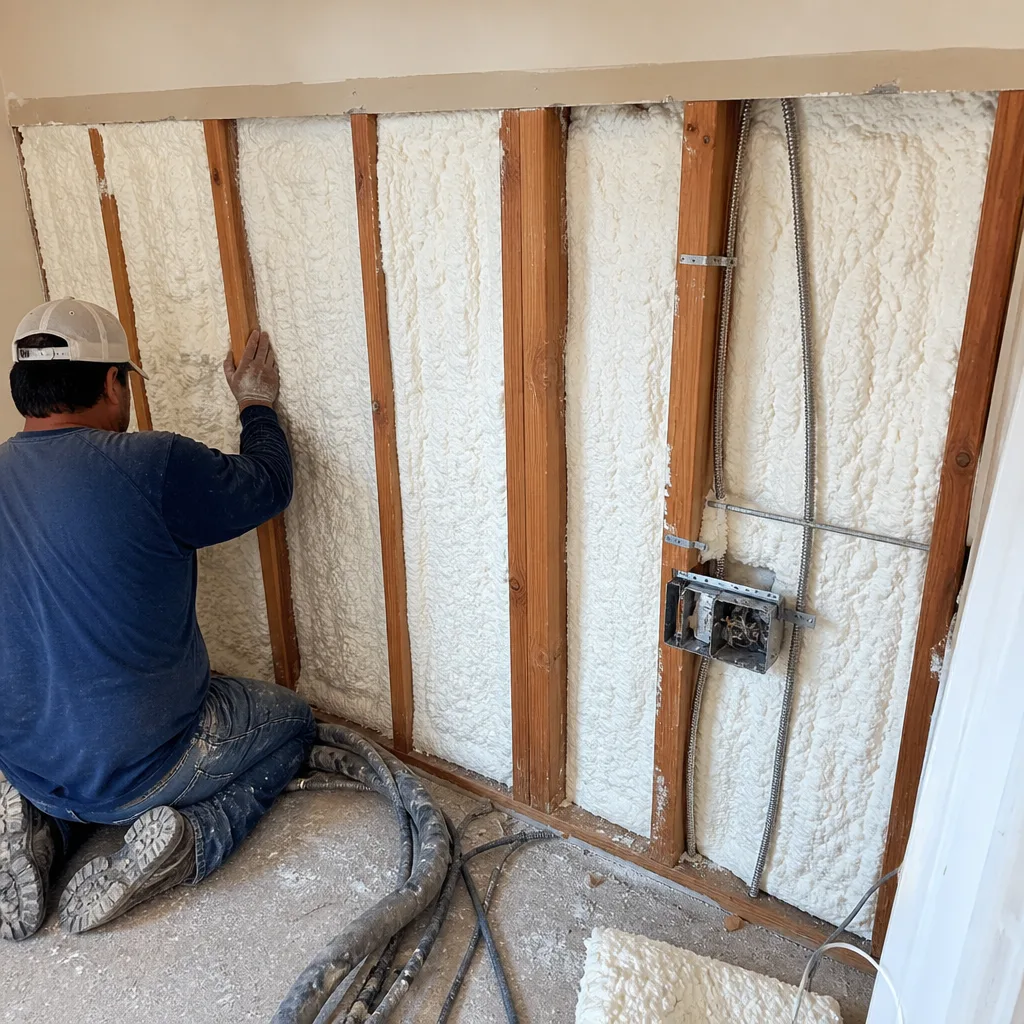 After
AfterReplacement Cost & What’s Included
Most Knauf vapor barrier replacements in Converse run $1,200 to $2,800 for residential crawl spaces under 2,000 square feet, and $800 to $1,800 for attic knee-wall or cathedral ceiling applications. The range depends on three factors: mil thickness upgrade (6-mil to 10-mil adds roughly $0.35 per square foot in material), whether we need to remove and dispose of failed existing barrier, and the extent of seam sealing required at foundation penetrations and piers.
Every Knauf vapor barrier install includes: full removal and disposal of existing failed membrane, dehumidification staging if standing water is present, installation of new Knauf-compatible or OEM-specified barrier with 12-inch minimum overlaps at all seams, mechanical fastening to foundation walls with pressure-treated furring strips, and sealing of all pipe and duct penetrations with Knauf-approved tape or closed-cell foam. We run a blower-door test, a pressurization reading that shows in one number how much air your building envelope is losing, before and after any attic-adjacent work so you have documented proof the envelope tightened. Our 365-Day Done Right Promise applies to all vapor barrier work, and you receive a written scope, written warranty, and Documented Photo Record before the crew departs. Written Price Before Any Work Starts, always, under Haven Standard Clause 1.
DIY or Call Us?
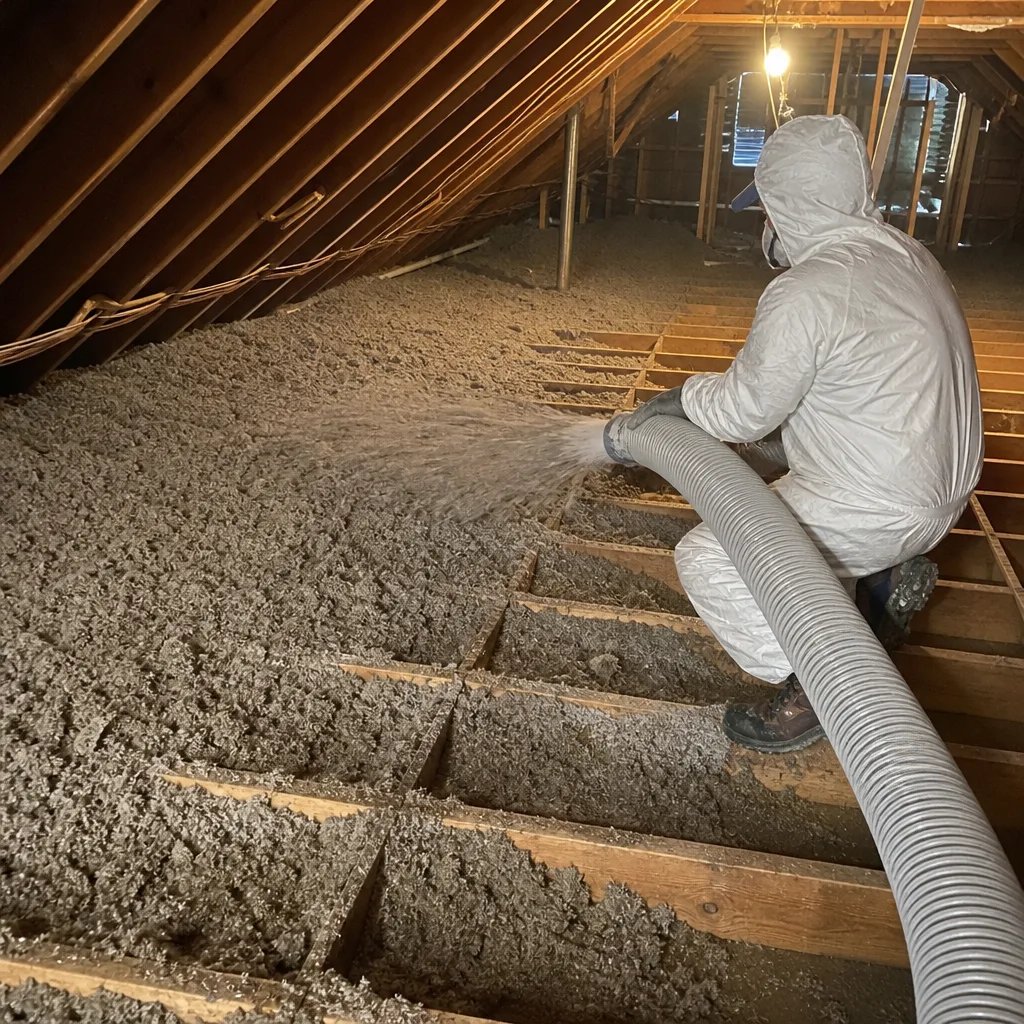
Homeowners can safely inspect their own vapor barrier with a flashlight and gloves: look for tears, pooling, and whether the barrier extends to all foundation walls with 6-inch minimum overlap. Measure any damaged sections and photograph the Knauf markings if present. What you cannot safely assess is whether the original install addressed vapor drive direction correctly, whether your HVAC ducts are creating pressure differentials that defeat the barrier, or whether mold remediation is needed before new membrane goes down.
In Converse’s expansive clay soils, we’ve found DIY vapor barrier installs fail prematurely because homeowners typically use 4-mil painter’s plastic from hardware stores, omit mechanical wall fastening, or seal seams with duct tape that degrades in 90 days. The material cost difference between a proper Knauf-spec install and a failed DIY attempt is usually under $400; the cost of re-doing it twice is not. Seal the leaks first. Then insulate. The numbers will tell you if it worked. Call (830) 420-0953 for a free estimate with written price.
FAQs
A properly installed Knauf vapor barrier in Converse typically lasts 15 to 20 years in a ventilated crawl space, or 10 to 15 years if the crawl space has experienced standing water events. Clay soil expansion and contraction in the Foster Road and Live Oak areas create pier movement that stresses seams, so we inspect mechanically fastened edges every 5 years as preventive maintenance. Call (830) 420-0953 to schedule a no-charge inspection.
Small punctures under 2 inches can be patched with Knauf-compatible tape if the surrounding membrane is still supple and the tear is not at a seam. Multiple tears, brittle membrane, or any mold on the subfloor means full replacement is the only warrantable solution, per our 365-Day Done Right Promise. We do not patch over mold. Call (830) 420-0953 and we’ll photograph the damage and give you a written price for either option.
Most residential crawl spaces in Converse are completed in one working day, typically 4 to 6 hours for spaces under 1,500 square feet with clear access. Attic applications or crawl spaces with limited clearance, HVAC ductwork to work around, or active water intrusion add 2 to 4 hours. We stock Knauf-compatible membrane on every truck, so material availability never delays your job.
Yes. We carry 6-mil and 10-mil reinforced polyethylene vapor barrier in rolls up to 1,500 square feet, plus Knauf-compatible seam tape, mechanical fasteners, and closed-cell foam for penetration sealing. For Knauf OEM membrane specifically, we typically source within 24 hours from our San Antonio distributor. Call (830) 420-0953 with your crawl space or attic dimensions and we’ll confirm stock and schedule same-day or next-day installation.
Written by Wes Okafor, Owner & Lead Insulation Technician, Topside Attic Insulation Converse at Topside Attic Insulation Converse, serving Converse and nearby areas.