
Owens Corning Blown-In Insulation in Converse: What to Know First
We provide independent Owens Corning blown-in insulation service in Converse, TX, with most attic jobs completed in one day and pricing put in writing before any work starts. As an independent Owens Corning service provider, we source materials from Owens Corning’s AttiCat and ProCat blown-in fiberglass lines, along with their blown-in cellulose systems, but we carry no manufacturer authorization and no exclusive product lock-in. Most Converse homeowners who call us are dealing with settled insulation in 1980s-2000s ranch homes near Foster Road, or they’re topping off original Owens Corning R-19 batts that have compressed to R-13 or lower in our heat. Call (830) 420-0953 for a free estimate with a written price delivered before anyone enters your attic.
How Owens Corning Products Fail - and How We Fix Them
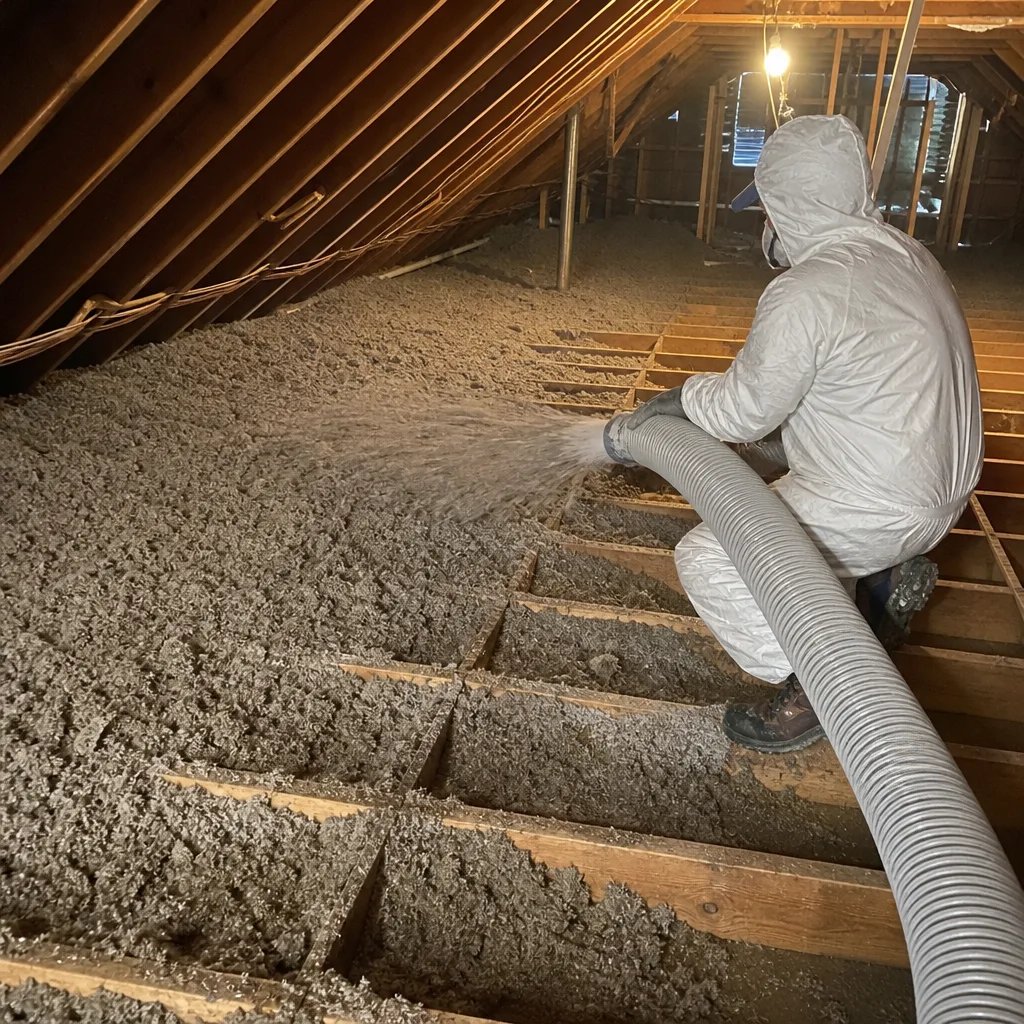
- AttiCat PINK Fiberglass settling in Converse’s heat cycles. The blown-in fiberglass we pull out of Converse attics has often dropped 20-30% from its original thickness after eight to twelve summers of 100°F+ days. The fibers don’t degrade, but they slump, especially near eaves where roof deck temperatures spike. We remove the settled layer, seal top plates and can-light penetrations, then blow fresh AttiCat to the full depth marked on the manufacturer’s card.
- ProCat Loose-Fill bridging over uneven joist bays. Owens Corning’s high-performance loose-fill can bridge across recessed framing in older Converse homes, leaving pockets of R-5 or less where air channels straight through. We spot these with thermal imaging during our pre-blow assessment, then use dense-pack technique in wall cavities or hand-work the fill in irregular attic floors before the main blow.
- Original R-19 batt compression in pre-2010 builds. The pink batts Owens Corning shipped to Texas builders in the 2000s were often compressed to fit 2×6 joist bays, or jammed under ductwork where they lost effective R-value immediately. We document the compression with photos, then recommend either batt removal plus blown-in top-up, or full replacement with blown-in fiberglass to eliminate the thermal bridging the compressed batts created.
- Vapor barrier deterioration on faced batts in humid shoulder seasons. Converse sees 70%+ humidity in March and October; Owens Corning kraft-faced batts in vented attics can trap moisture against the drywall when the facing degrades. We pull the faced material, air seal the ceiling plane properly, then switch to unfaced blown-in with a separate vapor retarder strategy based on your actual attic ventilation.
- AttiCat system hose abrasion creating inconsistent density. The AttiCat blowing machine’s OEM hose, when worn, can create density variations that read fine on depth inspection but perform poorly in a blower-door test. We check our equipment before every Converse job and keep backup hoses on the truck; if we’re topping off your existing Owens Corning system, we verify the original density with a core sample before matching it.
Our Owens Corning Blown-In Insulation Process
- 1
Call and scheduling. A live person answers, 24/7. We book a time; you get a text when Wes or a named technician is en route.
- 2
Attic inspection and blower-door baseline. We run a blower-door test - pressurizing the house to 50 pascals and measuring air leakage in CFM50 - then photograph your current Owens Corning product, depth, and any compression or settling. You get the numbers in writing.
- 3
Air sealing before any blow. Seal the leaks first. Then insulate. The numbers will tell you if it worked. We seal top plates, can lights, plumbing and electrical penetrations, and chimney chases with fire-rated caulk and rigid foam.
- 4
Material selection and written price. We specify Owens Corning AttiCat, ProCat, or another brand from our stock - Johns Manville, Knauf, GreenFiber - based on your attic’s condition and your preference. The price is flat, written, and signed before the blower starts.
- 5
Installation and density verification. We blow to the depth and density that matches the R-value on your written scope, then take core samples and thermal images to confirm.
- 6
Post-test, documentation, and cleanup. We run the blower-door again, print the before-and-after report, add the photos to your documented record, and leave the attic cleaner than we found it.
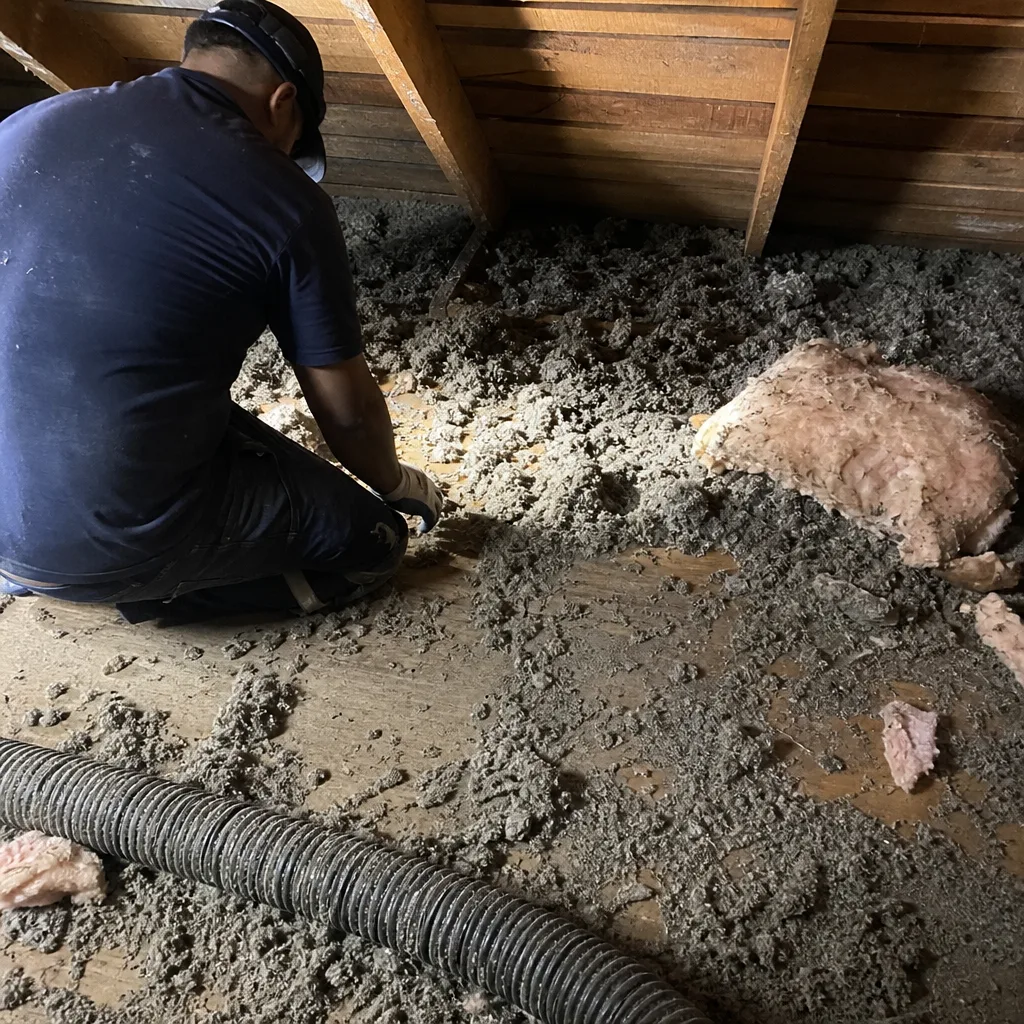 Before
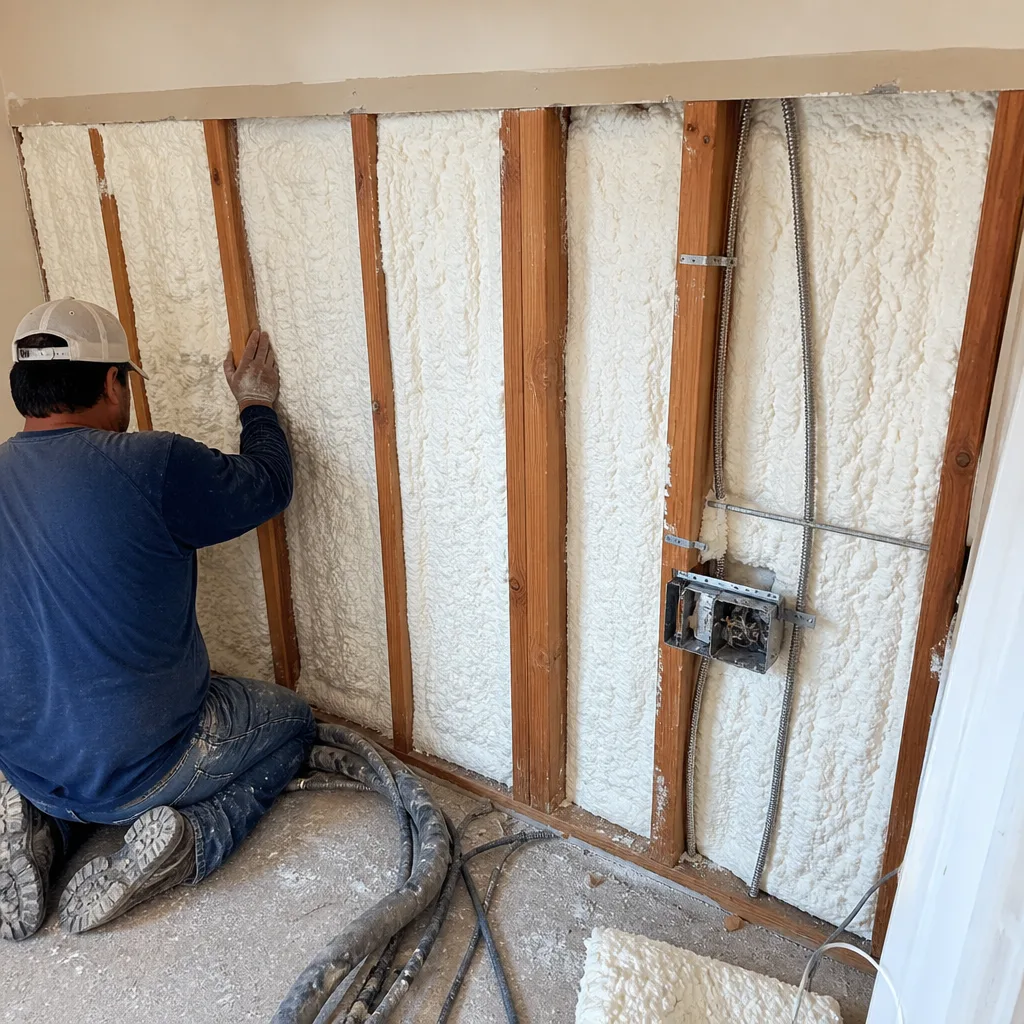 After
AfterWhat Owens Corning Blown-In Insulation Costs in Converse
Most attic top-up jobs in a Converse home between 1,600 and 2,400 square feet run $1,800 to $3,400, depending on current depth and how much air sealing the attic floor needs. Full removal of settled Owens Corning product, sealing, and re-blow to R-38 or R-49 typically falls between $3,200 and $5,800. Dense-pack wall insulation with Owens Corning materials in a standard three-bedroom ranch runs $2,400 to $4,200.
What moves the price: accessibility (hatch size, roof pitch), existing insulation condition requiring removal, extent of air sealing, and whether we need to build storage decking or baffles before blowing. We also service Reflectix radiant barrier systems when they’re part of the same envelope job.
Every estimate is free, every price is written before work starts, and we offer a free second opinion on any written estimate you’ve already received. Call (830) 420-0953.
Why Converse Homeowners Call Topside Attic Insulation Converse for Owens Corning Work
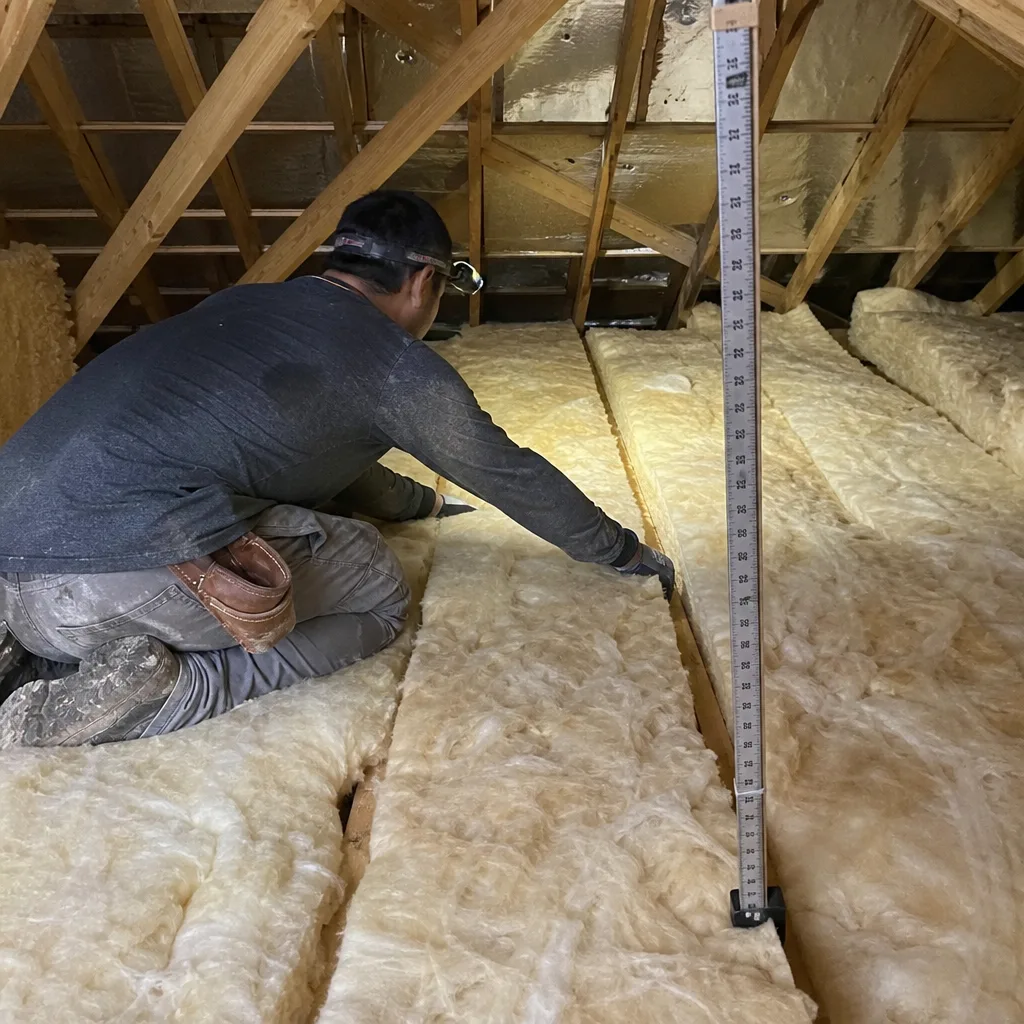
We’ve sealed and insulated over 9,000 homes since 2016, and every one started with a written price and ended with a documented record. Wes Okafor runs the blower-door test himself on Converse jobs - he’s been in Texas attics for two decades after cutting his teeth in Kennedy-King College’s building trades program - and the crew knows the difference between AttiCat and ProCat density requirements by feel. Our 365-Day Done Right Promise means if the insulation settles or the air sealing fails, we return and make it right, with the written warranty already in your file. Calls are answered by a live person, 24/7, and our technicians are background-checked and uniformed. We carry Owens Corning, Johns Manville, Knauf, Rockwool, and others, so your job isn’t held hostage to one supplier’s availability.
FAQs
No - Owens Corning’s product warranties cover material defects regardless of who installs, provided the product is applied to manufacturer spec. We document depth, density, and coverage on every job so you have proof of proper installation if a claim ever arises. Call (830) 420-0953 and we’ll walk through what’s covered.
We can top off matching Owens Corning blown-in fiberglass if the existing layer is dry, uncompressed, and free of pest debris. If it’s settled below half its labeled thickness, contaminated, or blocking ventilation, we remove it. We tell you which after inspection, with photos, before any price is written.
Most jobs are scheduled within three to five business days, and completed in one day for standard attic work. Dense-pack wall jobs or full removals with air sealing may take two days. Call (830) 420-0953 for current availability - a live person answers.
Top-up is cheaper short-term - typically $1,800 to $3,400 versus $3,200 to $5,800 for full removal and re-blow - but only makes sense if the existing product is clean and the air sealing is already tight. We run the blower-door test first so you’re not burying a leaky attic floor under fresh material. The numbers decide; we don’t guess.
We stock AttiCat and ProCat blown-in fiberglass, along with Johns Manville, Knauf, and GreenFiber alternatives. If your job calls for a specific Owens Corning product we don’t have on hand, we source it before scheduling - your crew doesn’t stand around waiting. Call (830) 420-0953 to confirm material availability for your scope.
Written by Wes Okafor, Owner & Lead Insulation Technician, Topside Attic Insulation Converse at Topside Attic Insulation Converse, serving Converse and nearby areas.