
Owens Corning Vapor Barrier Installation: The Converse Owner’s Guide
Owens Corning vapor barrier installation in Converse typically runs $1,800-$3,400 for a complete crawl space or attic application, depending on square footage and whether the existing barrier needs full removal. Most Converse homes built between 1985 and 2010 with Owens Corning foundation wrap or attic-grade poly can be completed same-day once we verify the existing substrate condition. We stock Owens Corning-compatible 6-mil and 10-mil reinforced polyethylene on every truck, along with the OSB seam tape and butyl-backed flashing that Owens Corning systems require for a warrantied seal.
Homeowners usually discover the failure during a humid summer month when the crawl space starts smelling musty, or when their HVAC runs continuously without dropping the indoor temperature. In Converse, where the clay soil holds moisture and summer dew points climb past 70 degrees, a compromised vapor barrier isn’t a slow leak. It’s an open invitation for condensation to form on the underside of floor joists, which is where mold starts and wood rot follows.
Which Owens Corning Models This Applies To
Owens Corning doesn’t sell vapor barrier as a standalone branded kit with a model number like they do with insulation batts. What you’ll find in Converse homes is Owens Corning foundation wrap, typically the 6-mil white poly installed during original construction, or the 10-mil reinforced product used in higher-end builds from the mid-2000s onward. The tell is the printed Owens Corning logo every 24 inches along the roll edge, plus a lot number that starts with OC-FW for foundation wrap or OC-AB for attic barrier applications.
Here’s where compatibility gets specific: Owens Corning’s foundation wrap uses a slightly thicker polyethylene blend than standard hardware-store poly, which means standard 4-mil replacement sheeting won’t carry the same perm rating (a measure of how much moisture vapor passes through). We’ve seen Converse homeowners tape generic 6-mil over the original Owens Corning and wonder why the crawl space humidity doesn’t drop. The original was closer to 10-mil effective thickness once you account for the reinforcing scrim. We match the original spec, or we upgrade it. No downgrades.
Topside Attic Insulation Converse is an independent service provider, not affiliated with Owens Corning. We source their materials through authorized distribution, but we also stock Johns Manville and CertainTeed equivalents when the original spec has been discontinued.
Signs Your Owens Corning Vapor Barrier Installation Is Failing
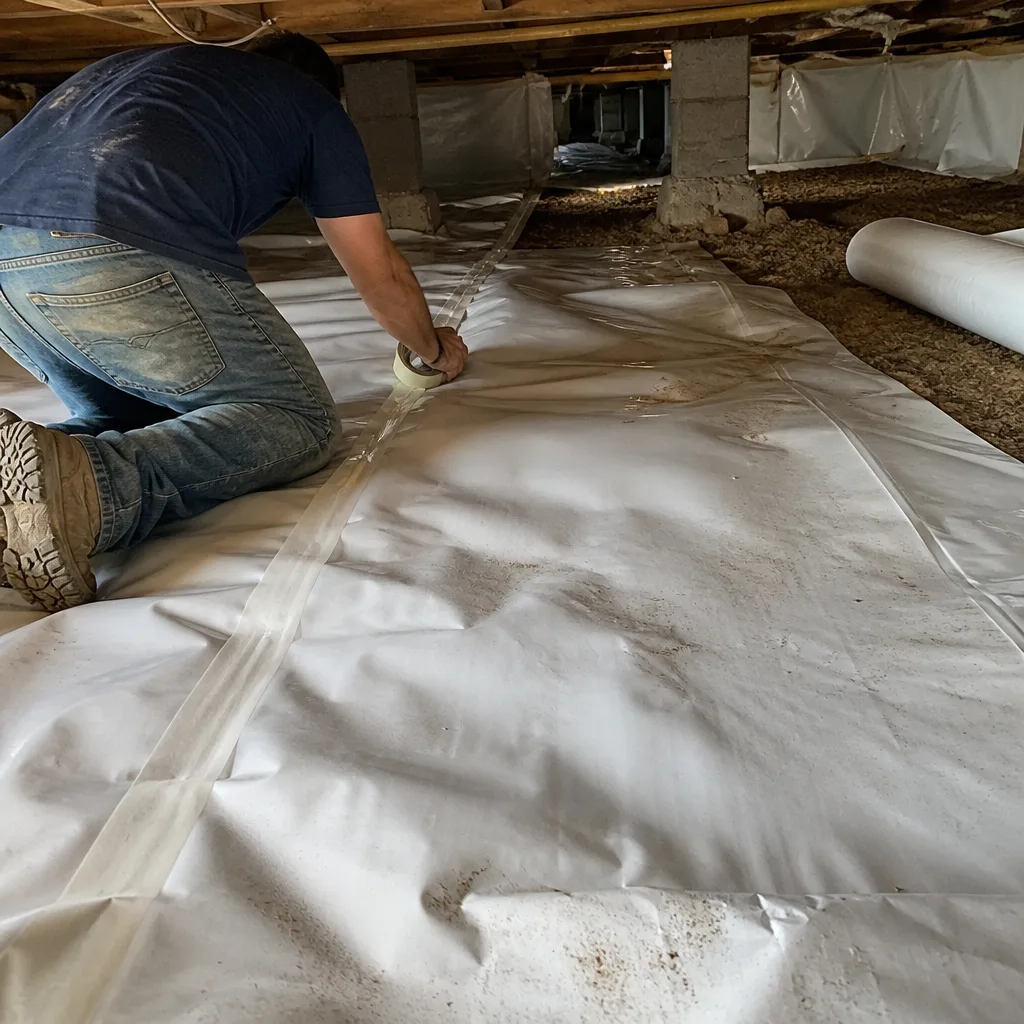
- Condensation droplets on the barrier underside. This means moisture is migrating through the soil, hitting the cooler air gap, and condensing on what should be the dry side of the membrane. In Converse’s gumbo clay soils, this happens when the barrier has thinned to below 4-mil effective or when seams have separated.
- White or gray fuzz on floor joists. That’s early-stage mold colonization, usually Aspergillus or Penicillium species that thrive at 60% relative humidity and above. The vapor barrier has lost its seal somewhere, often at perimeter walls where the barrier meets the foundation.
- Buckling hardwood floors from below. Moisture vapor passing through a failed barrier raises the equilibrium moisture content of subflooring. Oak and maple swell, then crown or cup. We’ve traced this exact pattern in ranch homes near Foster Road where the original Owens Corning wrap was never sealed to the walls.
- Insect activity concentrated in the crawl space. Termites and carpenter ants prefer damp wood. A functioning vapor barrier keeps the wood moisture content below the 20% threshold that attracts them. When the barrier fails, the ecology of the crawl space shifts within a single season.
- HVAC supply ducts sweating in summer. Cold conditioned air passing through a hot, humid crawl space causes condensation on the metal ductwork. The vapor barrier’s job is to keep that humidity down. If your ducts look like a cold beer on a patio table, the barrier isn’t doing its job.
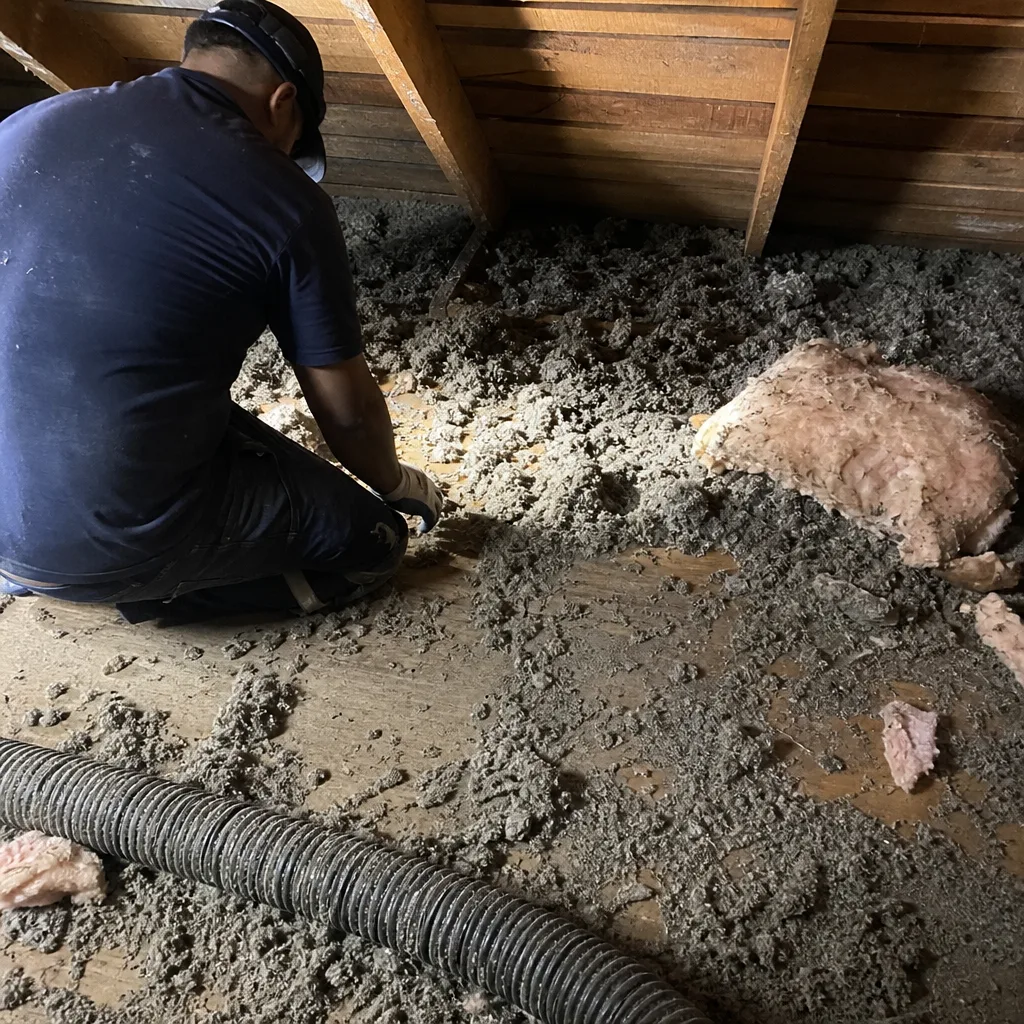 Before
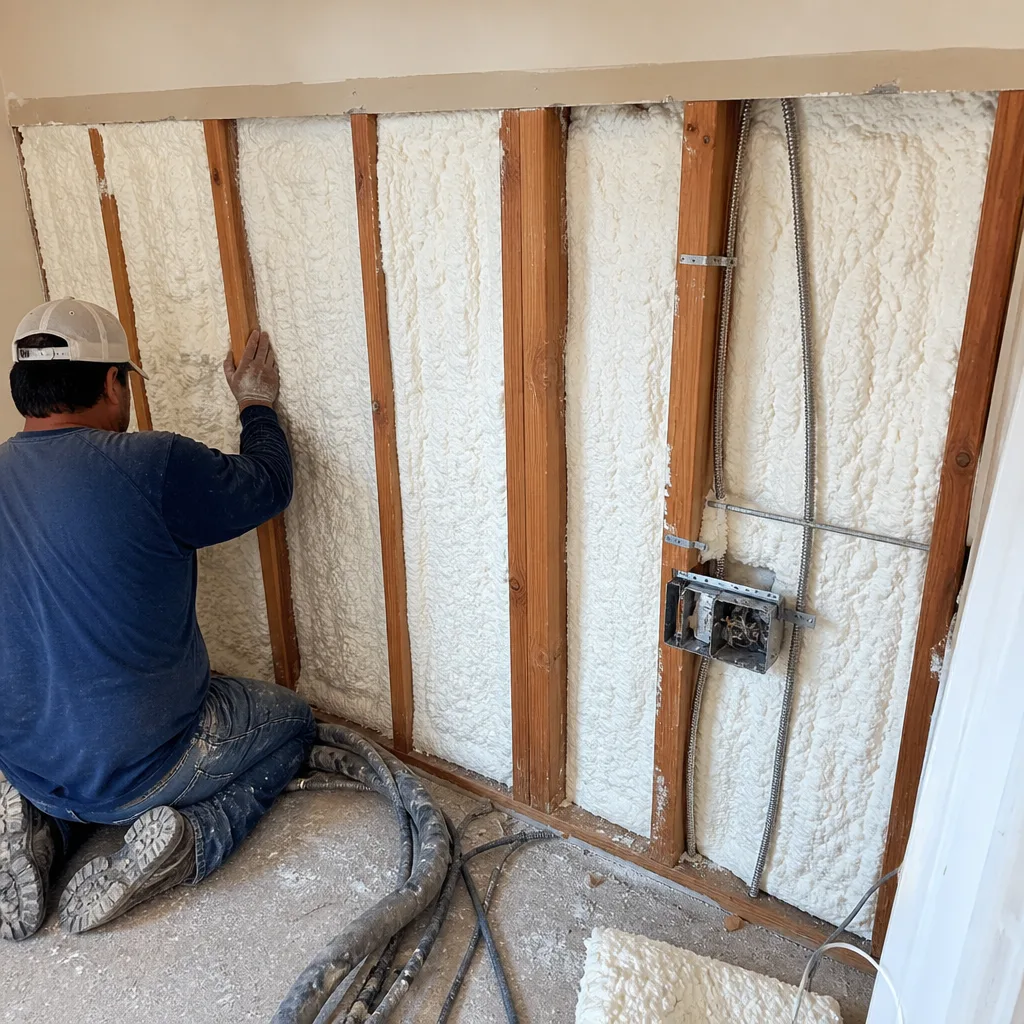 After
AfterReplacement Cost & What’s Included
| Scope | Price Range in Converse | Typical Home Size |
|---|---|---|
| Partial repair (seam re-tape, patch sections) | $650-$1,200 | Localized failure under 200 sq ft |
| Full vapor barrier replacement, standard 6-mil | $1,800-$2,600 | 1,200-1,800 sq ft crawl space |
| Full replacement with 10-mil reinforced + full seam seal | $2,400-$3,400 | 1,200-1,800 sq ft crawl space |
| Attic vapor barrier (over insulation, sealed to top plates) | $1,400-$2,200 | Standard gable or hip roof |
What drives the range: accessibility (how much headroom in the crawl space), whether the old barrier is intact enough to leave or must be fully removed and hauled out, and whether we find unsealed top-plate penetrations that need to be addressed first. Under Haven Standard Clause 1, you’ll get a written price before any work starts, and that price includes the Documented Photo Record we deliver when the crew leaves. The 365-Day Done Right Promise covers the installation and materials.
DIY or Call Us?
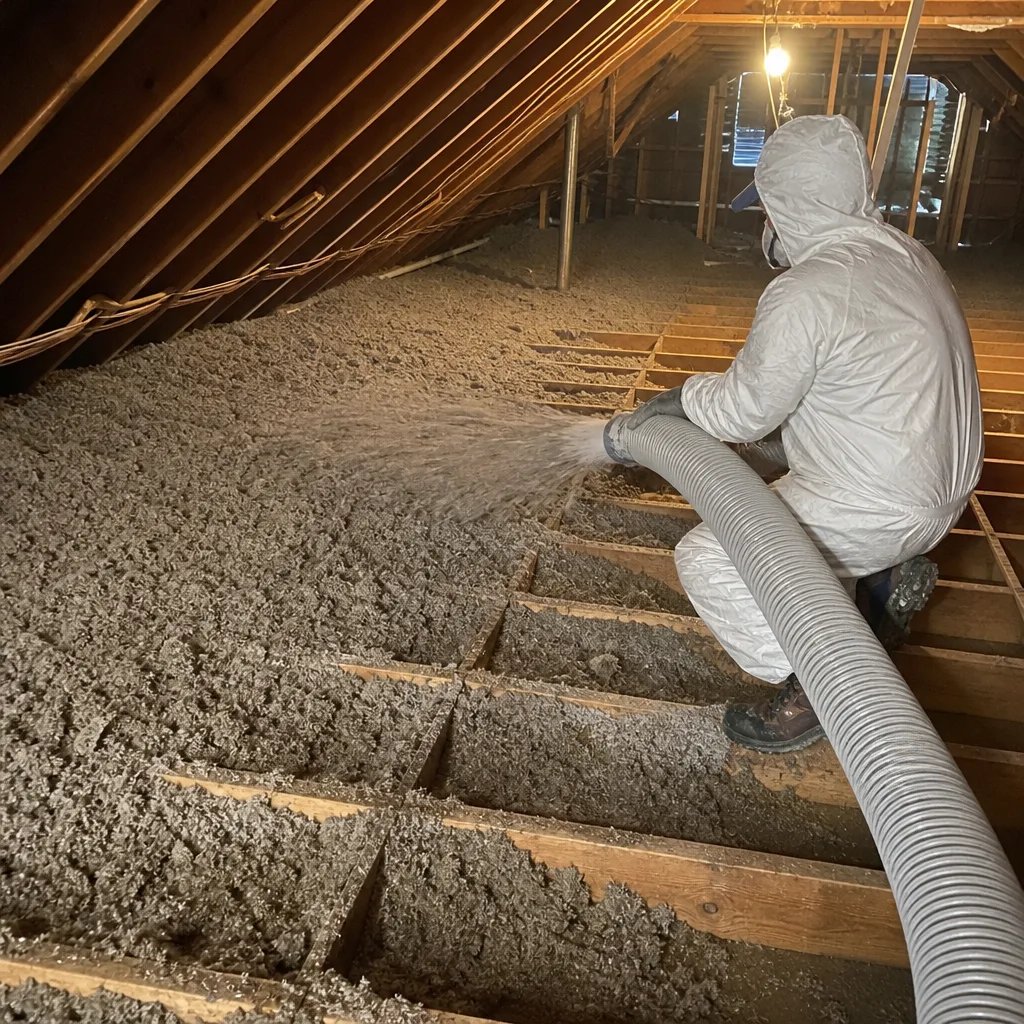
What you can safely check yourself: walk the perimeter of your crawl space with a flashlight and look for tears, separated seams, or places where the barrier has pulled away from the foundation walls. Note any standing water or white mold spots. Take photos. That’s useful information, and it costs nothing.
Where DIY goes wrong: vapor barrier installation looks like unrolling plastic, but the performance lives in the details. Seams must overlap 12 inches and be sealed with pressure-sensitive tape rated for polyethylene, not duct tape, which fails in months. The barrier must extend 6 inches up foundation walls and be mechanically fastened with compatible sealant, not staples that rust and create new penetration points. And in Converse’s expansive clay soils, the ground prep (grading, possibly adding a drainage mat) determines whether the barrier survives the first summer or the fifteenth.
We don’t recommend DIY for full replacement. The crawl space environment is confined, often hot, and the work is precise. Call (830) 420-0953 and we’ll read your situation with you. Estimates are free, and we bring a written price to the visit.
FAQs
In Converse’s climate, a properly installed 6-mil vapor barrier lasts 10-15 years; 10-mil reinforced can reach 20 years if the crawl space stays dry and the seams were sealed correctly at installation. The clay soils here shrink and swell with moisture cycles, so mechanical abrasion at the ground interface is usually what ends a barrier’s life, not UV degradation. Call (830) 420-0953 if you’re unsure of your install date - we can estimate age from material condition during a free visit.
Yes, if the tear is under 12 inches, the surrounding material is still flexible, and the tear isn’t at a seam or wall junction. We patch with matching polyethylene and double-tape the perimeter. If the barrier is brittle, extensively torn, or the seams are failing across multiple sections, patching becomes false economy. We’ll tell you which situation you’re in before any work starts.
Most Converse crawl spaces between 1,200 and 1,800 square feet take one full day, assuming clear access and no old-barrier removal complications. Attic applications run 4-6 hours. We schedule morning starts so the crew isn’t rushing the seam-sealing phase, which is where the performance lives.
We stock Owens Corning-compatible 6-mil and 10-mil reinforced polyethylene, the correct seam tapes, and wall-seal adhesives on every truck. For jobs requiring exact OEM continuity, we can source specific Owens Corning rolls within 24 hours through our distributor. Most Converse homeowners don’t need that wait - the compatible materials we carry meet or exceed the original spec.
Seal the leaks first. Then insulate. The numbers will tell you if it worked. In Converse, that means running a blower-door test before we touch anything, so we know how much conditioned air your home is losing through the envelope. After the vapor barrier and any air sealing is complete, we run it again. You get both numbers on a printed report, plus the photo record, before we leave.
Ready to stop the moisture migration? Call (830) 420-0953 for a free estimate. Wes Okafor and our crew serve Converse and the surrounding area, and we’ll bring a written price before any work starts. Haven Standard: Have it in writing.
Written by Wes Okafor, Owner & Lead Insulation Technician, Topside Attic Insulation Converse at Topside Attic Insulation Converse, serving Converse and nearby areas.