
Rockwool Vapor Barrier Installation: The Converse Owner’s Guide
Rockwool vapor barrier installation in Converse typically runs $1,800-$3,400 for a complete attic system, and we stock Rockwool-compatible barrier materials on every truck for same-day starts. Most homeowners notice the problem first as a musty attic smell after rain, or their AC running longer than it did last August despite the thermostat never moving. The vapor barrier sits between your conditioned space and the insulation layer; when it fails, humid Gulf Coast air migrates through, condenses against cooler surfaces, and starts degrading the Rockwool from the contact face inward.
Which Rockwool Models This Applies To
Rockwool’s residential line in Texas attics is almost always Comfortbatt or Safe ‘n’ Sound, with Comfortbatt being the vapor-barrier-relevant product for thermal applications. The barrier itself isn’t manufactured by Rockwool; it’s paired during installation, typically 6-mil polyethylene sheeting or a smart vapor retarder like CertainTeed’s MemBrain, depending on the assembly. What matters for compatibility is the cavity depth and whether the original installer used faced batts ( Kraft paper facing, which acts as a Class II vapor retarder) or unfaced batts with a separate poly sheet.
Here’s how to tell what you have: peel back a corner of insulation near your attic hatch. Faced batts will show a paper or foil backing bonded to the batt itself. Unfaced batts with a separate barrier will have loose fill or batts sitting on or beneath a plastic sheet. The critical measurement is cavity depth - Converse ranch homes near Foster Road often have 2×6 ceiling joists (5.5-inch actual depth), which takes R-23 Comfortbatt. Newer builds in the Olympia area frequently use 2×8 or raised-heel trusses for R-30+. Using the wrong barrier class for the cavity depth traps moisture or allows too much diffusion; we see this mismatch in about one in four attics we open in Converse.
OEM-spec barriers aren’t really a thing here - Rockwool doesn’t make vapor barriers. The decision is between commodity 6-mil poly (cheap, effective in cooling climates, unforgiving if installed with gaps) and smart retarders like MemBrain that adapt their permeability to seasonal humidity. We carry both, but for Converse’s mixed-humid climate zone (IECC Zone 2A), we typically spec smart retarders on homes with any history of moisture management issues.
Signs Your Rockwool Vapor Barrier Installation Is Failing
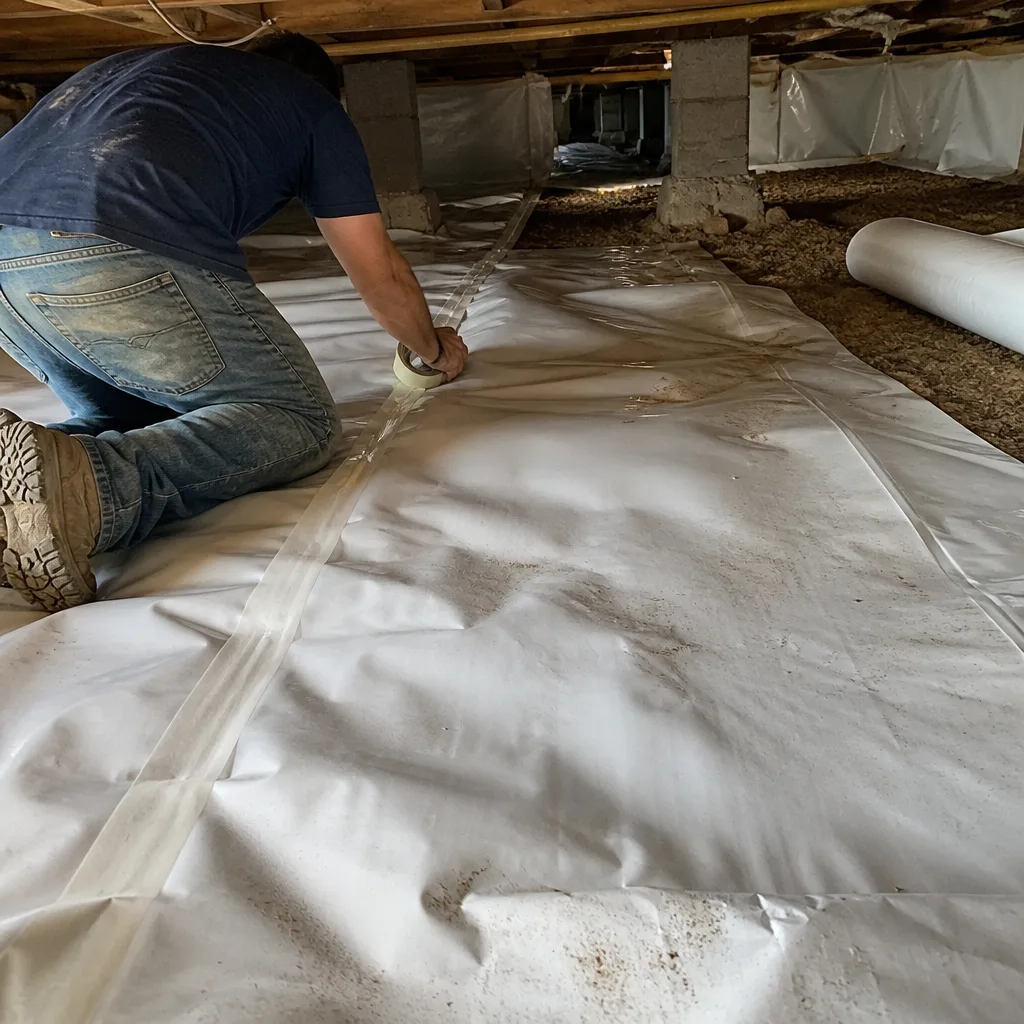
- Musty or earthy odor from attic access points. Warm, humid air from Converse’s spring and fall shoulder seasons hits the cooler attic sheathing and condenses; without an intact barrier, that moisture soaks the Rockwatt’s binder. The smell is mold metabolizing the organic binder components, not the mineral wool itself.
- Discolored or compressed batt edges near eaves or penetrations. This is where installers typically cut the barrier short or where settling has pulled it away from the top plate. The dark line you see is dust loading from years of air bypass - the barrier isn’t sealing, so filtration deposits dirt at the leak path.
- Water staining on ceiling drywall during temperature swings. Not a roof leak; this is interior moisture driven by stack effect, condensing at the first cold surface it hits. In Converse, we see this most in March and October when outdoor dew points spike but attic temperatures lag.
- Rockwool batts that fall away from the ceiling when disturbed. Properly installed, friction-fit batts stay put. When the facing fails or the barrier behind them degrades, the assembly loses structural integrity and batts sag or drop onto the attic floor.
- HVAC runtime increasing year-over-year with no equipment change. The insulation isn’t wet enough to notice, but the degraded barrier lets latent heat load into the conditioned space. Your system works harder to dehumidify, not just cool.
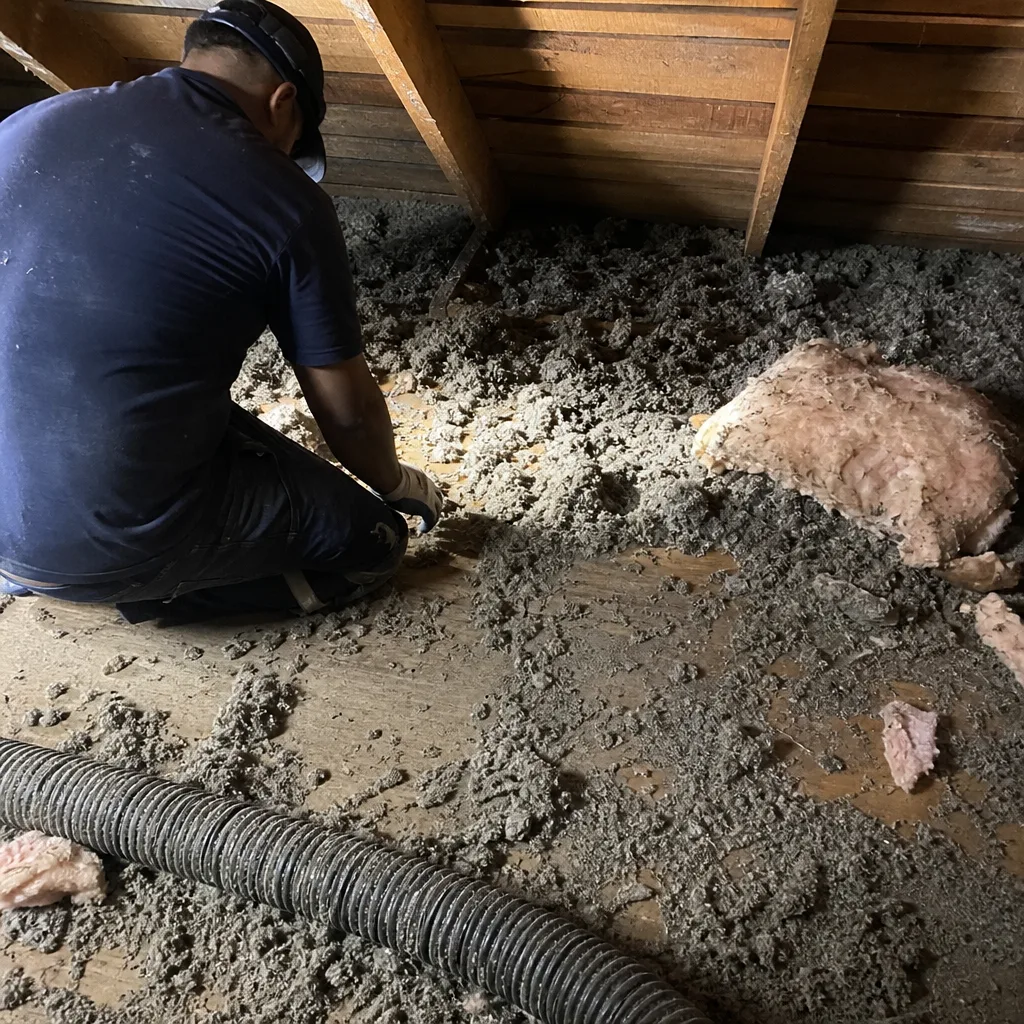 Before
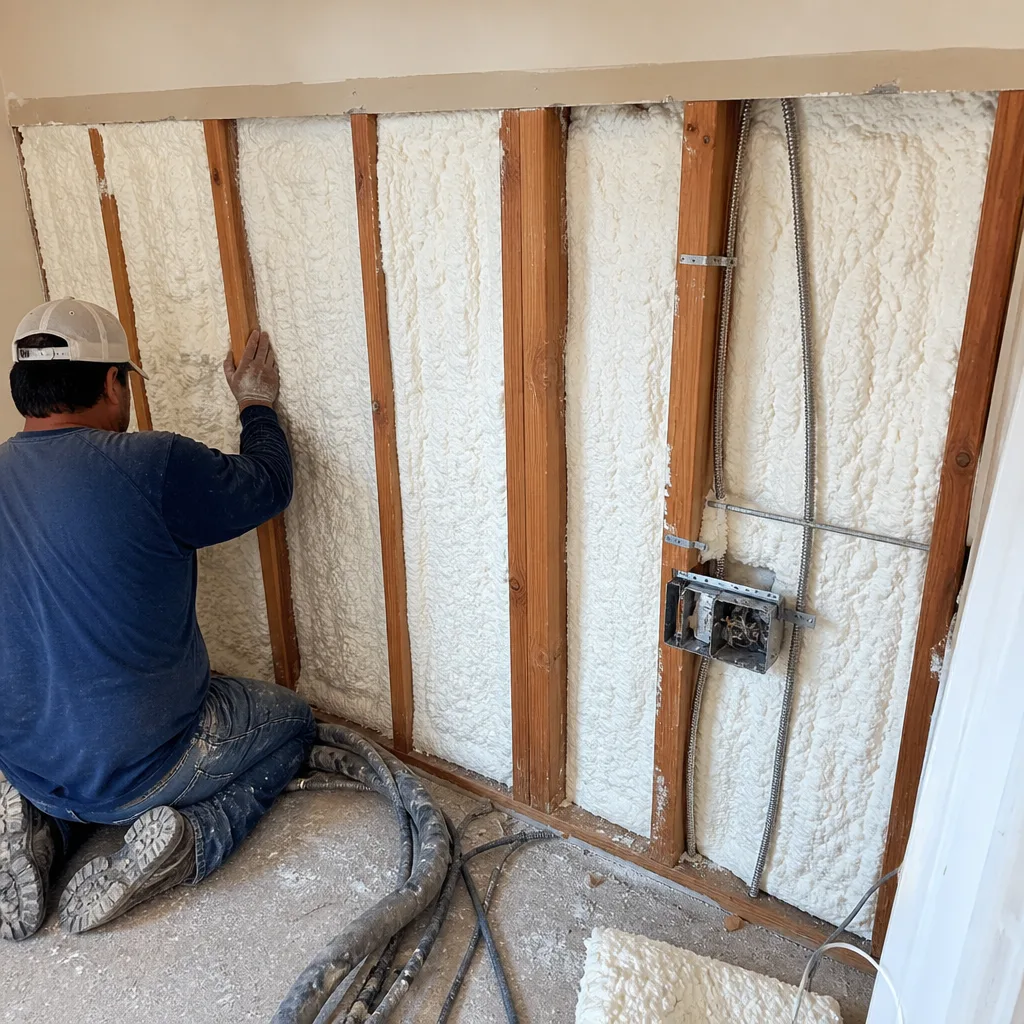 After
AfterReplacement Cost & What’s Included
| Scope | Price Range in Converse |
|---|---|
| Partial barrier replacement (localized failure, up to 400 sq ft) | $1,800-$2,400 |
| Full attic vapor barrier replacement with Rockwool repositioning | $2,600-$3,400 |
| Barrier replacement with full air-sealing package and blower-door verification | $3,200-$4,500 |
The range driver is access - Converse homes with 18-inch attic clearances move fast; 1960s ranches with 24-inch peak heights and truss webs every 24 inches take longer. Every quote includes removal of degraded barrier, inspection of the Rockwool for salvageability (mineral wool often survives if caught early), new barrier material cut to cavity dimensions, and sealing of all penetrations with acoustic sealant or appropriate tape. Under Haven Standard Clause 1, you get the written price before anyone lifts a tool, plus a written scope and warranty. Applicable jobs include before-and-after blower-door numbers - a pressurization reading that shows, in one figure, how much air your building envelope was losing before and after our work.
DIY or Call Us?
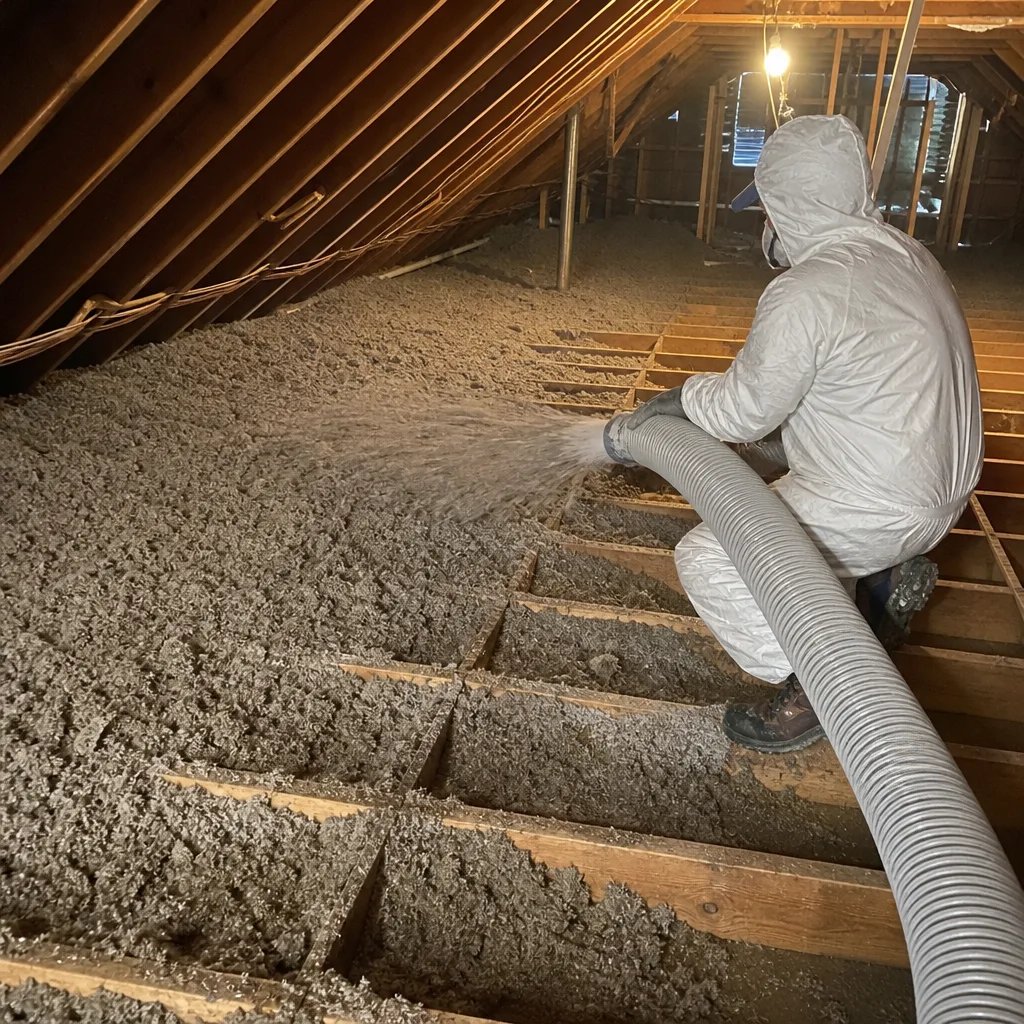
You can safely check what you have: note the batt facing type, measure cavity depth with a tape, and photograph any stained areas for reference. What you shouldn’t do is crawl around a Converse attic in July trying to wrestle 6-mil poly across joist bays without proper respiratory protection and without knowing where your feet can go - ceiling drywall won’t hold body weight between joists, and a misstep means a repair bill that dwarfs the insulation work.
The actual failure point is almost never the barrier material itself; it’s the installation detail at edges, penetrations, and the attic hatch. We use a blower-door test, which pressurizes the house to measure air leakage in CFM50, to find the paths that would undermine a DIY barrier job before we start. Seal the leaks first. Then insulate. The numbers will tell you if it worked. For a written price on your Rockwool vapor barrier replacement in Converse, call (830) 420-0953 - estimates are free, and we answer live.
FAQs
In Converse’s climate, a properly installed 6-mil poly barrier should last 15-20 years; smart retarders like MemBrain often exceed 25. The failure mode we see isn’t material degradation - it’s installation gaps that let air bypass the barrier, or disturbance from later trades (HVAC, electrical, rodent activity). Call (830) 420-0953 and we’ll inspect what you have; estimates are free.
Spot repairs work only if the failure is isolated and accessible - a torn section near the attic hatch, for instance. If you’re seeing symptoms across multiple rooms or the barrier was installed before 2010, partial fixes usually fail within two years because the original installation methods didn’t address top-plate sealing. We stock Rockwool-compatible barrier materials on every truck and can show you exactly what’s salvageable during a free estimate.
Most Converse homes under 2,500 square feet are a one-day job with a two-person crew. We arrive, run the pre-work blower-door test, remove degraded material, seal penetrations, install the new barrier, reposition or supplement Rockwool as needed, and run the post-test before we leave. You get the photo record and printed blower-door report that evening.
We stock 6-mil poly, smart vapor retarders, acoustic sealant, and specialized tapes on every truck; we don’t stock Rockwool batts themselves because every cavity depth and R-value requirement differs. We source Rockwool, along with Owens Corning, Johns Manville, Knauf, and other manufacturers, based on what your specific assembly requires - no proprietary lock-in. Topside Attic Insulation Converse is an independent service provider, not affiliated with Rockwool.
Written by Wes Okafor, Owner & Lead Insulation Technician, Topside Attic Insulation Converse at Topside Attic Insulation Converse, serving Converse and nearby areas.