
Last updated September 24, 2026
Insulation Cost Breakdown: The Converse Homeowner’s Reference for 2026
Here’s something we see on nearly every estimate review in Converse: the lowest bid in a stack of three quotes is missing one of three things - a pre-job blower-door test, itemized air-sealing labor, or post-installation depth verification. Each omission has a calculable cost. It doesn’t disappear; it transfers from the contractor’s invoice to your CPS Energy bill. In 2026, with residential electricity rates climbing and rebate documentation requirements tightening, understanding what each line item actually buys has become essential for any homeowner in the Converse market. This guide breaks down installed costs per square foot, explains why the labor-to-material ratio matters, and shows you how to sequence envelope work for return on investment rather than contractor convenience. For seasonal insulation care in Converse, see our year-round homeowner’s guide.
Quick Answer
Most attic insulation projects in Converse run between $1.80 and $4.50 per square foot depending on material and whether air sealing is included. A complete attic job with blown fiberglass, full air sealing, and blower-door verification on a typical 1,800-square-foot ranch typically costs $3,200 to $5,800. Spray foam projects run higher due to material density and labor certification requirements, with open-cell at $2.80-$4.20 per square foot and closed-cell at $4.50-$7.50 per square foot in the current Converse market.
Table of Contents
- Why Insulation Bids in Converse Vary by 40-60% for the Same Scope
- Installed Cost Per Square Foot by Material: 2026 Converse Market
- The Air-Sealing Line Item: What It Costs and What It Buys
- The Blower-Door Test: Diagnostic Cost and Payback Calculation
- Attic-Only vs. Whole-Envelope Projects: Sequencing for ROI
- CPS Energy Rebates: What Qualifies and What Documentation You Need
- Common Mistakes to Avoid
- When to Call a Professional
- Frequently Asked Questions
- The Bottom Line
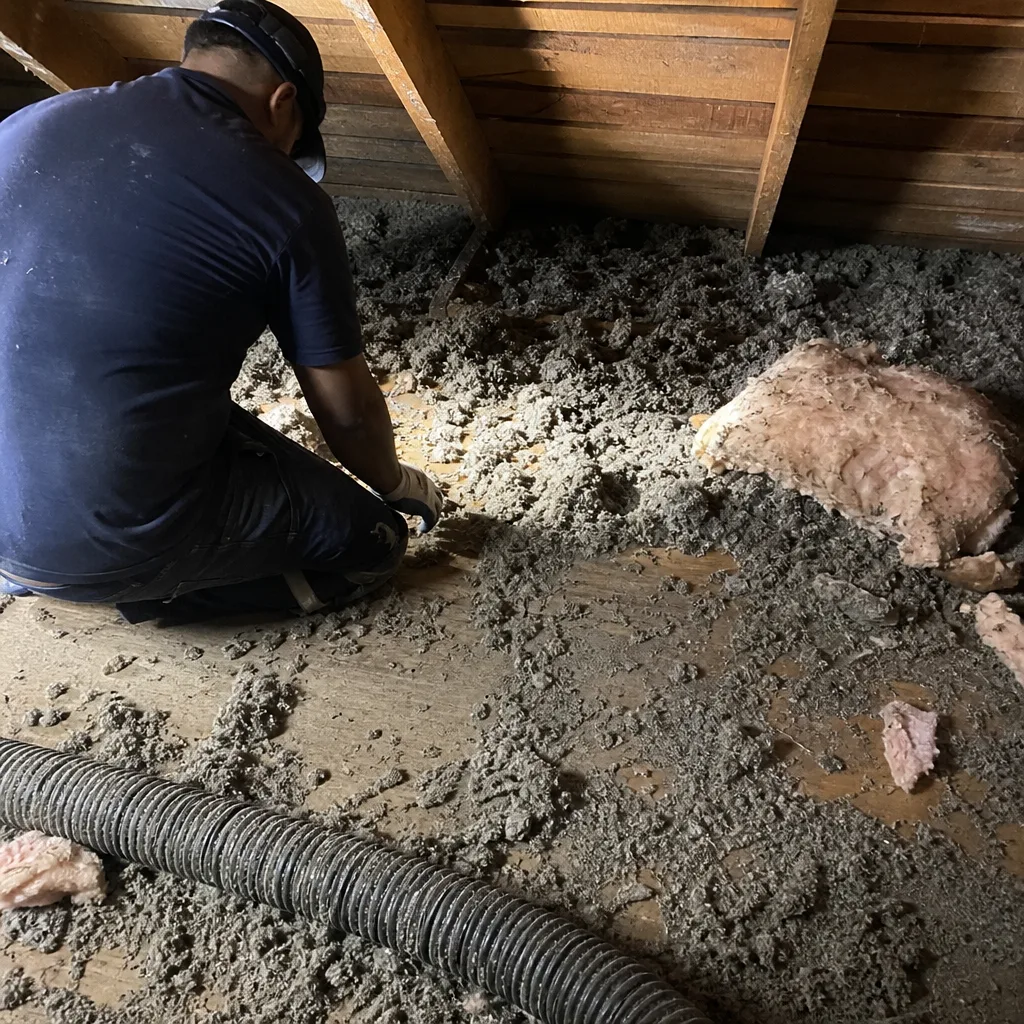 Before
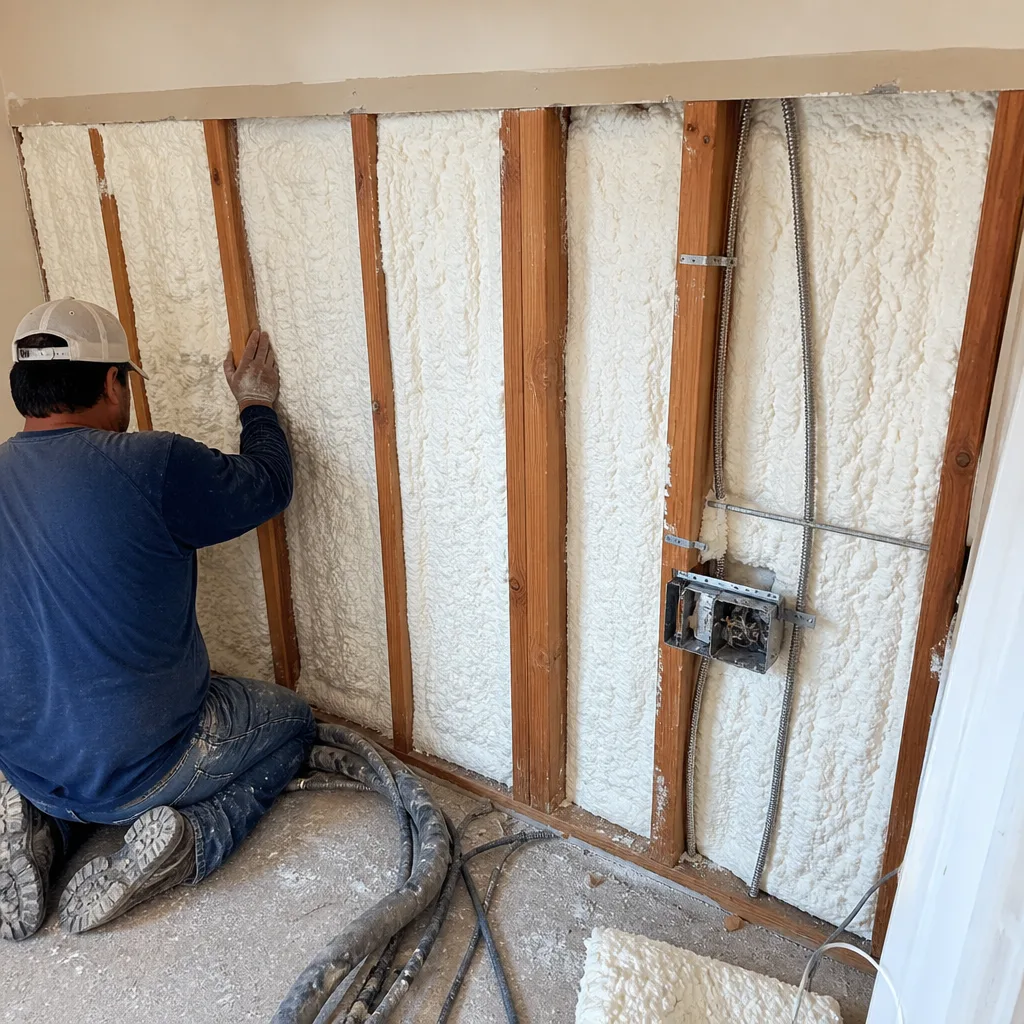 After
AfterWhy Insulation Bids in Converse Vary by 40-60% for the Same Scope
We review competitor quotes with homeowners several times a month through our Free Second Opinion service. The pattern is consistent. Three contractors describe “attic insulation” in their proposals. One bids $2,400, another $3,800, the third $5,200. The homeowner assumes the middle bid is fair and the high bid is greedy. Usually the opposite is true.
The low bid typically omits:
- Pre-installation blower-door testing - a pressurization reading that establishes baseline air leakage in CFM50 (cubic feet per minute at 50 Pascals of pressure)
- Top-plate and penetration sealing - the labor-intensive work of caulking and foaming gaps where interior walls meet the attic floor, around plumbing stacks, electrical chases, and can-light housings
- Post-installation depth verification with photos and written report
- Material specification by brand and R-value - “blown insulation” without stating Owens Corning AttiCat R-38 versus GreenFiber R-30 makes comparison impossible
In Converse specifically, this variation is amplified by two market factors. First, the 2012-2019 construction boom in neighborhoods like River Crossing, The Vistas, and Woodlake produced thousands of homes with code-minimum insulation that has settled below labeled depth. Contractors know homeowners in these subdivisions are price-sensitive and competing for the initial call. Watch for insulation warning signs common in these homes. Second, Converse sits in Bexar County’s mixed-humid climate zone where attic temperatures exceed 140°F in July. A contractor who skips air sealing can complete a job in four hours versus two days, and the homeowner won’t feel the consequence until August’s CPS Energy bill arrives.
The 40-60% spread isn’t markup variation. It’s scope variation dressed in identical language. Our Haven Standard Clause 1 requires a written price, written scope, and written warranty before any work starts precisely because “attic insulation” means too many different things on too many Converse driveways.
Installed Cost Per Square Foot by Material: 2026 Converse Market
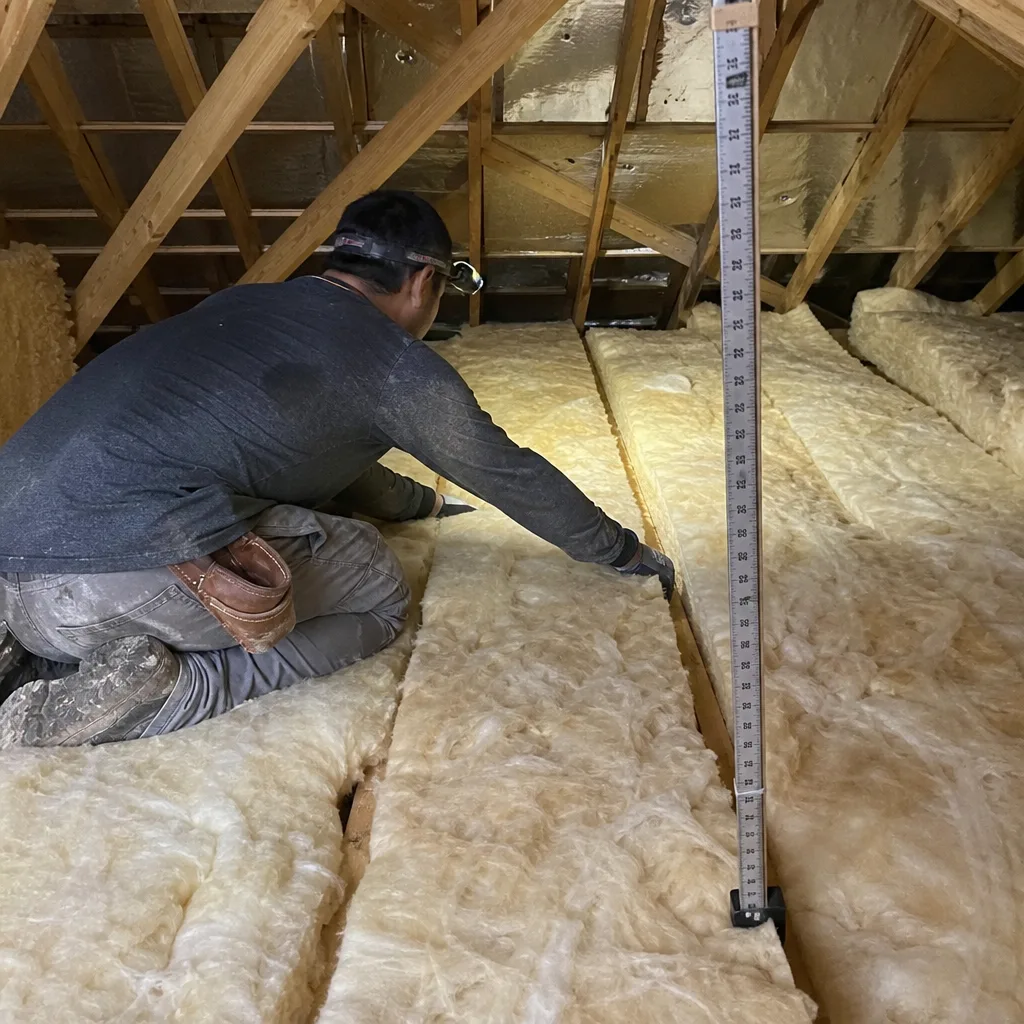
These ranges reflect what we’re quoting in Converse as of early 2026, including material, labor, equipment, and standard site preparation. They assume accessible attics with standard pitch, no active rodent infestations, and working electrical access. Prices move with petroleum-derived feedstock costs and freight from Gulf Coast manufacturing, so we update these quarterly.
| Material | Installed Cost / Sq Ft | Labor-to-Material Ratio | Typical Application |
|---|---|---|---|
| Blown fiberglass (Owens Corning AttiCat, R-38) | $1.80 - $2.60 | ~35% labor / 65% material | Attic floor retrofit, settled insulation top-off |
| Blown cellulose (GreenFiber, R-38) | $1.60 - $2.40 | ~40% labor / 60% material | Attic floor, dense-pack wall cavities |
| Open-cell spray foam (½ lb density, R-3.6/inch) | $2.80 - $4.20 | ~45% labor / 55% material | Attic roofline (conditioned attic), rim joists |
| Closed-cell spray foam (2 lb density, R-6.5/inch) | $4.50 - $7.50 | ~50% labor / 50% material | Crawl space walls, metal building, flood-prone zones |
| Mineral wool batts (Rockwool Comfortbatt, R-23) | $3.20 - $4.80 | ~55% labor / 45% material | Open wall cavities during remodel, fire-blocking |
The labor-to-material ratio matters for two reasons. Higher labor share means more of your dollar pays for technician time, diagnostic rigor, and documentation - the elements that distinguish a performance result from a product installation. Spray foam’s 50/50 split reflects certification requirements: applicators must maintain manufacturer training credentials for Demilec, Johns Manville, or Icynene systems, and the equipment requires daily calibration. A crew rushing through foam application to hit a low square-foot price risks off-ratio chemistry, which produces odor, shrinkage, and R-value loss that doesn’t appear for months.
In Converse’s 78239 and 78109 ZIP codes, we see particular demand for open-cell spray foam on Attic Insulation in Converse roofline conversions. These homes, many built in the 2005-2015 window with ductwork in vented attics, suffer 25-35% cooling loss through duct leakage and radiant gain. Converting to a conditioned attic with open-cell foam at the roofline and sealing the soffits typically runs $8,500-$14,000 for a 2,200-square-foot home, but drops attic duct leakage to near zero and reduces cooling load sufficiently that homeowners often downsize replacement HVAC equipment by half a ton.
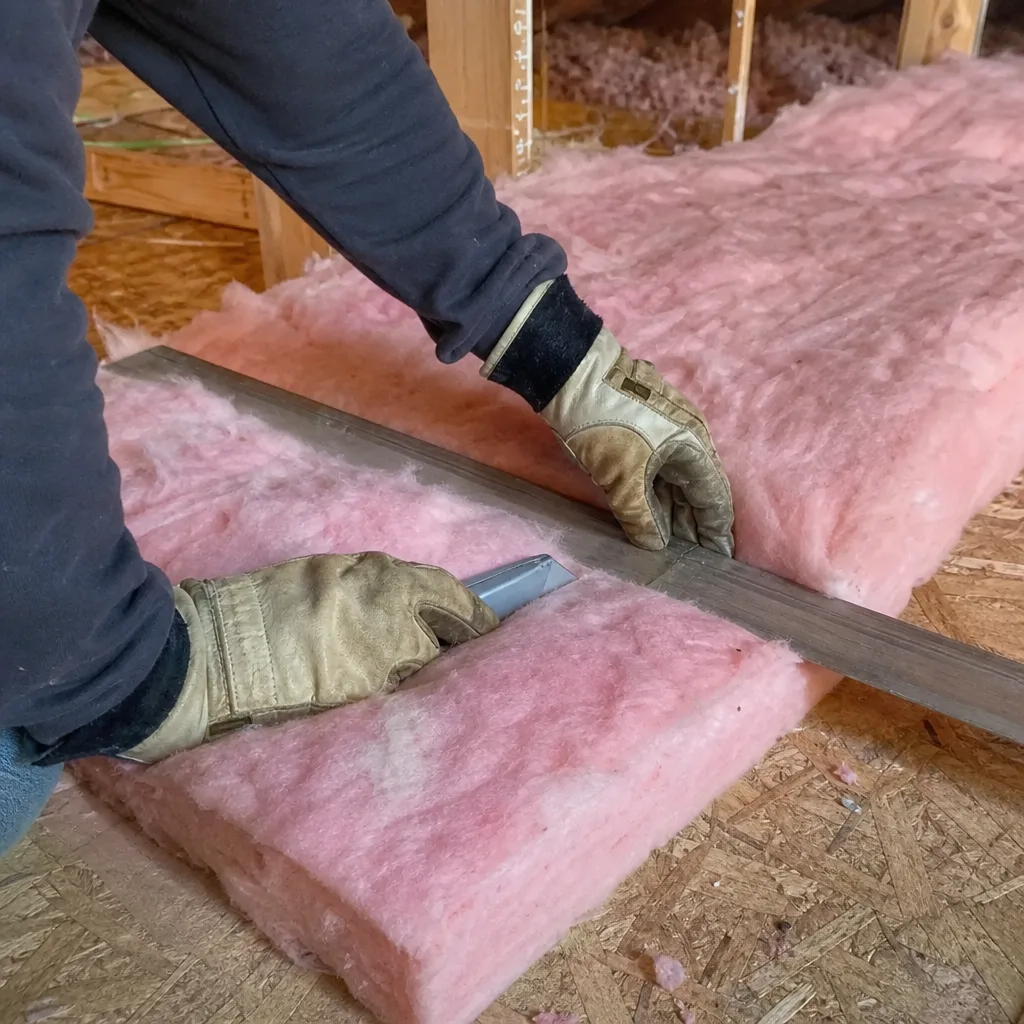
Blown fiberglass remains the dominant retrofit material for standard attic floors. At $1.80-$2.60 per square foot, a 1,500-square-foot attic floor to R-38 runs $2,700-$3,900. The material cost itself is roughly $1.10-$1.50 per square foot; the remainder pays for setup, protection, blowing equipment, and the labor to verify even distribution around obstructions like flues and platform framing.
The Air-Sealing Line Item: What It Costs and What It Buys
We will not blow insulation over an unsealed attic floor. That’s not policy preference; it’s physics. Adding R-value over a leaky ceiling is like wearing a wool coat with the zipper broken. The insulation performs its rated value only when air movement through the cavity is controlled.
In Converse, air sealing as a standalone line item runs $0.60-$1.40 per square foot of conditioned floor area, depending on access difficulty and existing condition. For that 1,800-square-foot ranch we reference throughout this guide, expect $1,100-$2,500 for comprehensive attic air sealing before insulation installation.
What that line item includes:
- Top-plate sealing - Every interior wall in the home has a double top plate where framing meets the attic floor. In pre-2015 Converse construction, these plates are rarely sealed. We caulk or foam the full perimeter where drywall gaps exist.
- Penetration treatment - Plumbing vents, electrical chases, bath fan housings, can-light housings (or replacement with airtight ICAT-rated units), chimney chase gaps, and HVAC platform seams.
- Duct boot and register sealing - Where flex duct connects to ceiling boots, mastic sealing prevents conditioned air from pressurizing the attic.
- Attic access treatment - Weatherstripping the hatch or constructing a sealed dam around a pull-down stair with attached R-10 rigid cover.
The performance context: on a 1,800-square-foot Converse ranch built in 2010, we typically measure 3,800-5,200 CFM50 before air sealing. After comprehensive sealing and before any insulation upgrade, that drops to 2,400-3,200 CFM50. That’s a 30-40% reduction in air leakage from labor alone, visible in a single number. When we then add insulation and run the post-job blower-door test, the final reading typically lands at 2,000-2,800 CFM50 depending on foundation and wall leakage we couldn’t access from the attic.
ACH50 - air changes per hour at 50 Pascals - puts this in living terms. That same ranch at 4,500 CFM50 equals roughly 8.5 ACH50. At 2,500 CFM50 after our work, it’s 4.7 ACH50. The 2018 IECC target for new construction in this climate zone is 5.0 ACH50. A 2010 Converse home can perform at or below new-construction tightness with proper attic air sealing, verified by documentation.
Contractors who omit this line item aren’t reducing your cost. They’re reallocating it to your utility bills over the next fifteen years. At current CPS Energy rates, the difference between 8.5 ACH50 and 4.7 ACH50 in a Converse summer typically runs $35-$55 monthly for homes with attic ductwork.
The Blower-Door Test: Diagnostic Cost and Payback Calculation
The blower-door test is a pressurization measurement that shows, in one number, how much conditioned air your building envelope is losing. We treat it as diagnostic equipment, not an add-on. Every applicable job at Envelope Insulation Co. begins with one and ends with one.
In the Converse market, blower-door testing as a standalone service runs $350-$600. When bundled with insulation work, the incremental cost drops to $150-$250 for the pre- and post-test pair. Here’s why that matters financially.
Take our 1,800-square-foot ranch example. Pre-test: 4,500 CFM50. Post-air-sealing and insulation: 2,500 CFM50. The 2,000 CFM50 reduction represents roughly 1,800 BTU/hr of reduced sensible cooling load in July conditions, or approximately 280 kWh monthly savings during peak summer months. At CPS Energy’s current residential rate of approximately $0.13/kWh (including base charges averaged), that’s $36 monthly, $432 annually.
The bundled blower-door cost of $200 pays for itself in 5.6 months of summer operation. But the real return is diagnostic accuracy. Without a pre-test, a contractor is guessing at leakage locations. Without a post-test, you have no verification that the work performed actually changed anything. We publish before-and-after numbers on every applicable job so homeowners can see the performance change they paid for. The photo record and written report are included; the numbers are real.
Some Converse homeowners ask whether they can skip the test and save the $200. They can, with another contractor. Under Haven Standard, we don’t start work without baseline data. The test protects both parties: it documents existing condition, guides labor allocation to the actual leakiest areas, and proves result. In nine years and 9,000 homes, we’ve never had a dispute about whether work improved performance. The numbers settle it.
Attic-Only vs. Whole-Envelope Projects: Sequencing for ROI
Not every home needs everything at once. The question is sequencing: which work pays back fastest, and which creates conditions that make subsequent work more effective?
Here’s how we break down typical Converse projects by scope and installed cost:
| Project Scope | Typical Cost (1,800 sq ft ranch) | Annual Utility Savings | Simple Payback |
|---|---|---|---|
| Attic air sealing + blown fiberglass to R-38 | $3,200 - $5,200 | $380 - $580 | 6-9 years |
| Above + attic duct sealing and wrapping | $4,500 - $6,800 | $520 - $780 | 6-8 years |
| Whole envelope: attic + crawl space encapsulation | $7,500 - $11,500 | $680 - $1,050 | 7-10 years |
| Whole envelope + spray foam roofline conversion | $12,000 - $18,000 | $850 - $1,400 | 8-12 years |
The sequencing principle: air sealing always comes first, and attic work typically outperforms crawl space work in Converse’s cooling-dominated climate. A vented crawl space in Converse introduces humid outdoor air that can raise cooling load, but the attic is where 140°F radiant heat drives the largest temperature differential.
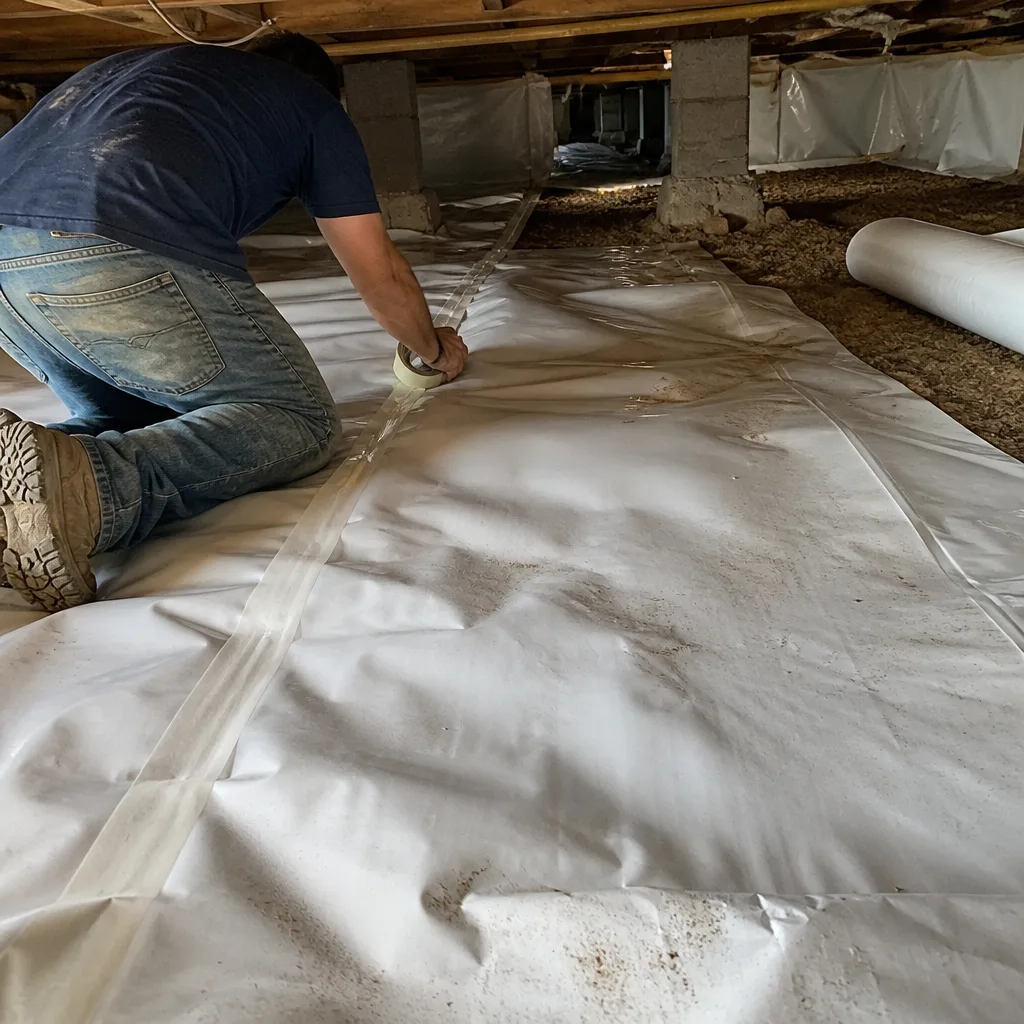
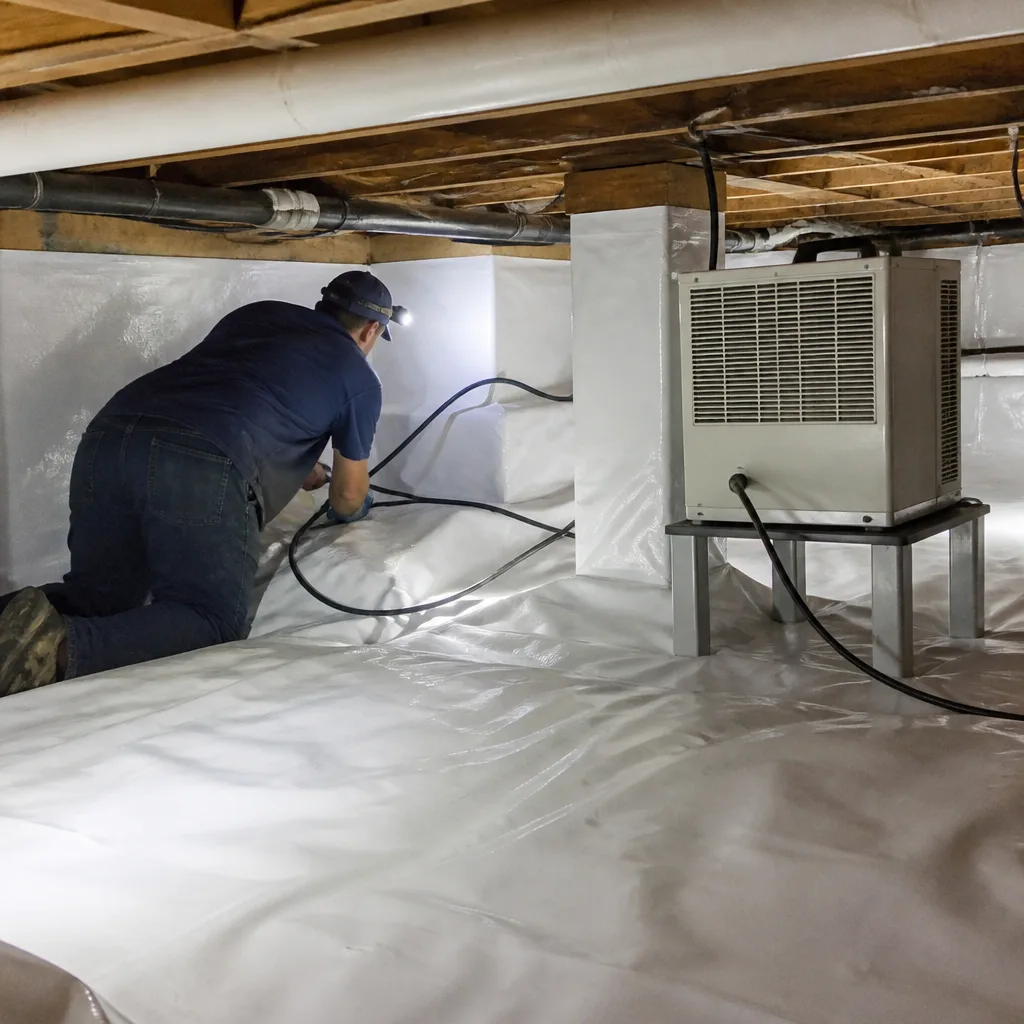
However, there’s an interaction effect. A Crawl Space Encapsulation & Vapor Barrier in Converse project that seals the crawl floor and walls with closed-cell foam reduces stack effect - the natural upward draw of air through the building - which makes attic air sealing more effective. We often see post-test numbers improve 15-20% more when crawl space work precedes or accompanies attic sealing, because there’s less pressure driving air through the ceiling plane.
For homeowners with limited budget, we recommend Phase 1: attic air sealing, blower-door test, and blown fiberglass to proper depth. Phase 2, 12-24 months later: crawl space encapsulation if accessible, with post-test to measure interaction effect. Phase 3: wall insulation only if walls are opened for other work - the cost of dense-pack cellulose through exterior siding or interior drywall rarely pays back in this climate compared to attic and foundation investment.
The 365-Day Done Right Promise applies to each phase independently. If Phase 1 doesn’t perform to the written scope, we make it right before any Phase 2 payment is discussed.
CPS Energy Rebates: What Qualifies and What Documentation You Need
CPS Energy maintains rebate programs for insulation and air sealing, but the landscape in 2026 requires more documentation than in prior years. We complete this paperwork with homeowners; understanding the requirements helps set expectations.
Current programs relevant to Converse residential customers:
- Home Energy Efficiency Rebate: Up to $2,500 for comprehensive improvements including insulation and air sealing, requiring pre- and post-installation assessment by a CPS Energy-approved rater. The blower-door test must be performed by a certified HERS rater or BPI analyst; our technicians hold BPI Building Analyst certification.
- HVAC Right-Size Rebate: $250-$400 when load calculations show downsizing eligibility after envelope improvements. Requires Manual J load calculation and contractor certification.
- Weatherization Assistance: Income-qualified program through CPS Energy’s partnership with Bexar County; not directly administered by contractors but we provide documentation for applicants.
Common misrepresentations we correct:
- “Any insulation upgrade qualifies.” False. The rebate requires minimum R-value increases and percentage improvement in blower-door numbers. Adding R-19 over existing R-30 may not meet the threshold.
- “The contractor handles all rebate paperwork.” Partially true. We provide the installation documentation, photos, and test results. The homeowner must submit to CPS Energy with proof of payment.
- “Rebates cover the full cost.” No current CPS Energy program approaches full coverage. The $2,500 maximum represents 25-45% of typical whole-envelope costs.
Documentation we deliver for rebate submission: written scope, before-and-after blower-door report with CFM50 and ACH50, installed R-value verification with depth photos, material invoices showing brand and specification, and paid invoice. This is standard on every job; no additional request is needed.
Timeline: rebate checks typically arrive 8-12 weeks after complete submission. We recommend homeowners submit within 30 days of project completion to avoid program year cutoff.
Common Mistakes to Avoid
- Comparing bids without line-item scope matching. A $2,400 “attic insulation” quote and a $4,800 “attic insulation” quote are not comparable products. Request itemized scope: air sealing labor hours, material brand and R-value, blower-door testing, and depth verification. Without these, you’re comparing a tire change to an engine rebuild because both mention “car service.”
- Installing insulation over active air leaks. In Converse’s older neighborhoods like Old Converse and areas near Randolph Air Force Base, homes from the 1960s-1980s often have unsealed can lights, open soffits, and plumbing chase gaps. Blowing fiberglass over these leaks creates a filter that loads with dust and loses effective R-value within seasons.
- Ignoring the interaction between attic and crawl space. A perfectly sealed attic with a vented, dirt-floored crawl space still loses efficiency through stack effect. The conditioned air you paid to cool leaks down through wall plates and electrical penetrations, while humid crawl air rises. Addressing only the attic treats the symptom.
- Accepting “R-38 equivalent” without depth verification. Settled blown insulation, uneven distribution around obstructions, and wind-washing at eaves can reduce effective R-value 20-30% below labeled depth. Demand post-installation depth photos at multiple locations.
- Skipping the post-test because “we can feel the difference.” Human thermal perception is unreliable. A home can feel more comfortable with unchanged air leakage if insulation reduced radiant heat gain. Only blower-door numbers verify envelope performance changed.
- Assuming all spray foam is equal. Open-cell and closed-cell serve different functions at different price points. Open-cell is vapor-permeable and appropriate for roofline applications in mixed-humid climates. Closed-cell is vapor-closed and necessary below grade or where flood risk exists. A contractor specifying closed-cell for an attic roofline in Converse is overselling material cost by 60-80% for no performance benefit.
- Neglecting rebate documentation at time of sale. CPS Energy requires specific pre-test dates and rater credentials. If your contractor doesn’t mention rebate documentation during the estimate, you’ll likely pay out of pocket for a separate assessment or miss the program year entirely.
When to Call a Professional
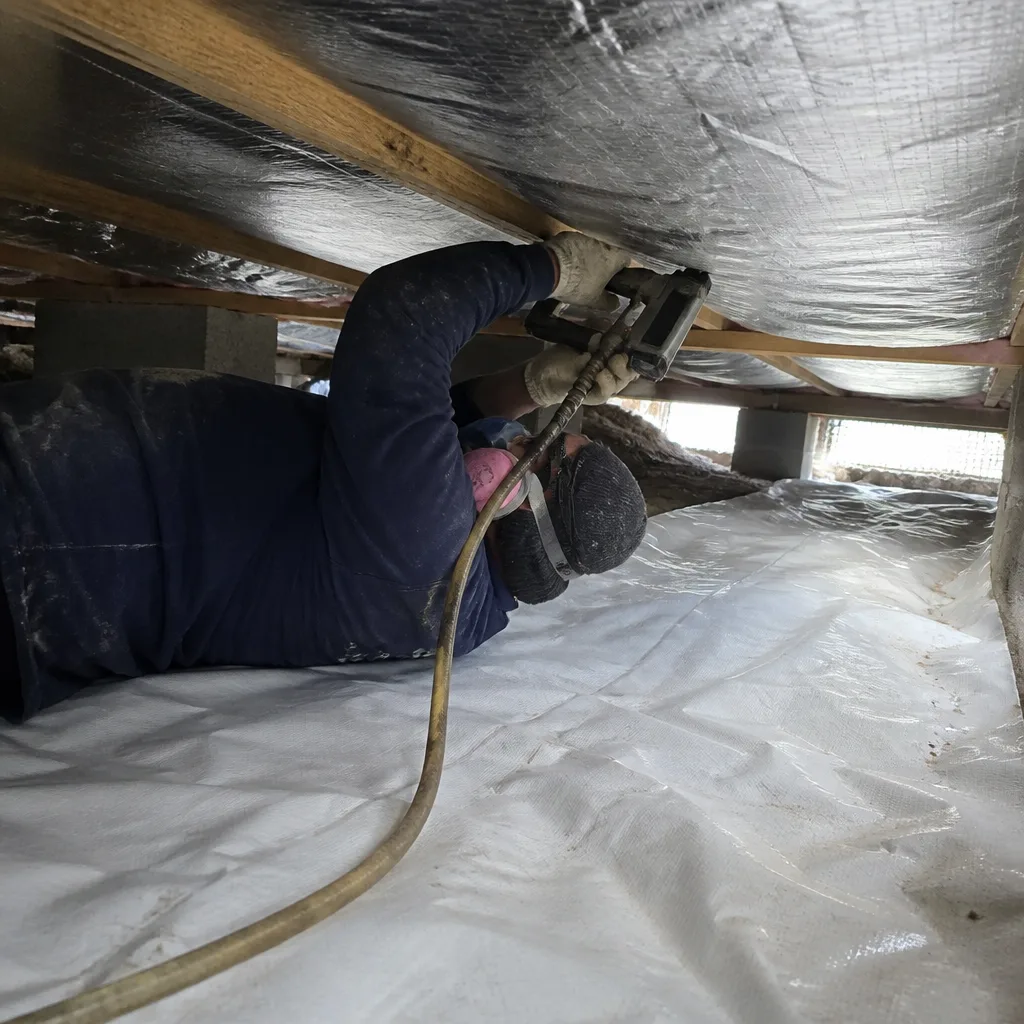
Certain conditions make DIY insulation work inadvisable or counterproductive. Call a professional when: your attic contains vermiculite insulation (possible asbestos), when knob-and-tube wiring is present, when roof decking shows active leaks or mold, when soffit ventilation is blocked or inadequate, or when you cannot safely navigate attic trusses at height. In Converse’s 2012-2019 construction, we also find improperly installed radiant barrier foil that traps moisture against roof decking - a condition that requires removal before additional insulation.
Topside Attic Insulation Converse offers free estimates in Converse. We’ll review your existing condition, perform a blower-door test on applicable jobs, and provide a written price before any work starts. Call (830) 420-0953 to schedule. Every estimate includes a Documented Photo Record and, if you have a competing quote, we’ll review it with you line by line at no charge.
Frequently Asked Questions
Most attic insulation projects in Converse run $1.80-$2.60 per square foot for blown fiberglass to R-38, or $3,200-$5,200 for a complete job with air sealing and blower-door verification on an 1,800-square-foot home. Spray foam conversions at the roofline run $2.80-$4.20 per square foot for open-cell. Call (830) 420-0953 for a written price on your specific home - estimates are free.
Repair is rarely economical. Settled or disturbed blown insulation cannot be restored to original R-value by topping off alone; the underlying layer has compressed and lost loft. Removal and replacement with verified depth typically costs 15-25% more than topping off, but delivers the full rated performance and allows air sealing of the attic floor that would otherwise be buried. For insulation contaminated by rodent activity, removal is necessary for health reasons. We provide removal, cleaning, rodent proofing, and replacement as a sequenced scope.
Simple top-offs in accessible attics can sometimes be completed same-day if materials are in stock and no air sealing is required. Comprehensive jobs with blower-door testing, air sealing, and insulation installation require scheduling, typically 3-7 days out in Converse’s peak season (May-September). Emergency situations - active roof leaks saturating insulation, for example - are prioritized. Call (830) 420-0953 to discuss timeline.
Air sealing adds $0.60-$1.40 per square foot of conditioned floor area, or roughly $1,100-$2,500 for a typical Converse ranch. This is separate from insulation material cost. The line item pays for technician labor to seal top plates, penetrations, duct boots, and attic access points. Without it, insulation performance drops 25-40% due to air movement through the cavity. We itemize this separately so homeowners see exactly what they’re paying for.
For standard attic floors, blown fiberglass or cellulose to R-38 is appropriate and cost-effective in Converse’s hot-humid summers. For homes with ductwork in vented attics, open-cell spray foam at the roofline creates a conditioned attic that eliminates duct leakage to outdoors. Closed-cell spray foam is reserved for below-grade applications like crawl space walls where vapor control and flood resilience matter. Material selection depends on your home’s specific construction, not generic climate recommendations.
CPS Energy rebates may cover spray foam if it meets program requirements for R-value increase and percentage air leakage reduction. However, spray foam projects must include pre- and post-blower-door testing by a certified rater, and the rebate maximum of $2,500 applies to comprehensive improvements, not material-specific coverage. Many spray foam-only projects in Converse fall below the percentage improvement threshold if the home has significant foundation or wall leakage. We assess rebate eligibility during estimate and document accordingly.
Correct installation is verified by three documents: post-installation depth photos showing uniform R-value across the attic floor, a blower-door test demonstrating reduced air leakage, and a written report matching the scope you approved. Under Haven Standard, every job closes with these deliverables. If your contractor provided only a verbal assurance or a single photo of the access hatch, you have verification, not proof. We deliver proof.
The Bottom Line
Insulation cost in Converse isn’t primarily a materials question. It’s a scope question. The 40-60% bid variation homeowners encounter reflects real differences in diagnostic rigor, air-sealing labor, and documentation - not markup games. In 2026, with CPS Energy rates elevated and rebate documentation requirements tightened, paying for verified performance has become the economically rational choice.
Key takeaways: expect $1.80-$2.60 per square foot for blown fiberglass with proper air sealing; demand itemized scope with blower-door numbers before and after; sequence attic work before foundation work for fastest payback; and maintain documentation for rebate submission. Browse our more guides & resources for deeper dives on each topic. The lowest bid rarely omits profit; it omits performance.
We’ve sealed and insulated 9,000 homes since 2016, every one with a written price before work started and a documented record when the crew left. If you’re evaluating quotes and want a second set of eyes, bring us any written estimate. We’ll read it with you.
Written by Wes Okafor, Owner at Topside Attic Insulation Converse, serving Converse since 2016.