
Last updated September 24, 2026
Seasonal Insulation Care for Converse: Year-Round Homeowner’s Guide
Converse averages 234 more cooling degree days per year than the national baseline used in generic insulation guides. That single statistic explains why the spring-cleaning checklist you found on a national home-improvement site is structurally wrong for your house before you read the first bullet point. The climate here isn’t four equal seasons. It’s a nine-month cooling load, a brief heating spike in January, and two shoulder periods where attic humidity does damage you won’t notice until your July electric bill arrives. This guide builds a maintenance calendar around Converse’s actual weather pattern, not a temperate-zone template written for Kansas City or Charlotte. For a deeper dive, see The Complete Guide to Insulation in Converse.
Quick Answer
Seasonal insulation care in Converse means sealing air leaks before the March humidity peak, checking for summer radiant-heat damage to faced batts in September, and inspecting ridge vents after spring hail season. Most homeowners here need two focused maintenance periods per year, not four, with the critical window running March through April when attic dew point exceeds indoor conditioned-air temperature. Download our Attic Insulation Maintenance Checklist for Converse Homeowners to track these tasks.
Table of Contents
- Why Converse Climate Breaks the Four-Season Template
- March-April: The Critical Humidity Window
- May-August: The Cooling Load Stress Test
- September-October: Post-Summer Damage Assessment
- November-February: The Short Heating Season
- Post-Storm Inspection Protocol for Converse
- The Thermal Bypass Effect, Season by Season
- HVAC Duct Leakage and Attic Temperature
 Before
 After
AfterWhy Converse Climate Breaks the Four-Season Template
Most insulation maintenance guides assume a climate where heating and cooling loads balance across the year. Converse doesn’t work that way. Our cooling degree days dominate, our heating season runs roughly six to eight weeks of real load, and our shoulder seasons carry moisture problems that temperate-zone writers never address.
Here’s what the data actually looks like for Converse:
- Cooling degree days: Approximately 2,800-3,000 annually, versus a national average near 2,600 for cities typically used in generic guides
- Peak cooling months: May through September, with sustained attic temperatures above 130°F from June through August
- Heating degree days: Roughly 1,400-1,600, concentrated in December and January
- Critical humidity window: March and April, when average dew point rises to 60-64°F before consistent air conditioning operation begins
- Hail frequency: Converse sits in Bexar County’s secondary hail corridor, with significant events most common in March, April, and May
That March-April humidity window matters more than most homeowners realize. During these weeks, outdoor air enters the attic through ridge vents, soffit gaps, and unsealed penetrations. The attic temperature hasn’t yet climbed to summer peaks, so the air doesn’t dry out as it does in June. Instead, it lingers at dew points above the temperature of your ceiling drywall. Moisture accumulates on the underside of the roof deck, on top of insulation, and inside any air leak path that connects attic to living space.
We’ve documented this pattern across hundreds of Topside Attic Insulation Converse home energy audits. The blower-door test, a pressurization reading that shows in one number how much air your building envelope is losing, often reveals 30-40% more effective leakage area in March than in January. The difference isn’t that your house changed. It’s that the stack effect, the natural pressure differential between indoor and outdoor air, reverses direction as outdoor temperatures rise above indoor setpoints. Warm, humid air pushes upward through ceiling penetrations instead of cold air sinking down.
A maintenance calendar built for Converse needs to front-load air-sealing work before this reversal happens. Waiting until May, when most national guides recommend “spring maintenance,” means fighting moisture accumulation that’s already underway.
March-April: The Critical Humidity Window
This is the most important six-week period for Converse homeowners who want to avoid fall-back repairs. The work you do now determines whether your insulation performs through summer or degrades from moisture loading.
What to Check
- Bathroom and kitchen exhaust fan terminations. In Converse, these often terminate into the attic rather than through the roof. The flex duct sags, creating a low point where March condensation pools. Look for water staining on the duct exterior or compressed insulation beneath the termination point.
- Can light housings. Non-IC-rated fixtures create a direct air path from conditioned space to attic. The heat from the bulb drives air upward in winter; in March, humid attic air sinks down around the housing. We replace these with airtight IC-rated LED housings as part of our Attic Insulation in Converse service line.
- Top plate seams. The horizontal framing member where wall studs meet the ceiling drywall rarely gets sealed in production construction. In Converse’s 1995-2010 housing stock, this gap typically runs continuous around the perimeter of every room. A smoke pencil test, using theatrical fog to visualize air movement, reveals the leakage path in seconds.
- Attic access hatch or pull-down stair. The worst single air leak in most Converse homes. The hatch sits unsealed, uninsulated, and often warped from years of humidity cycling. Check for daylight visible around the perimeter, which indicates a gap of 1/4 inch or more.
What the Documentation Should Show
Under Haven Standard Clause 1, any professional work during this window should produce a written scope before work starts, a blower-door reading before and after sealing, and a Documented Photo Record showing each penetration location. We’ve completed over 9,000 homes sealed and insulated since 2016, every one with this documentation delivered before the crew left. The photo record matters particularly in March because moisture damage won’t be visible until June; you need baseline documentation to prove where the air path existed.
If you’re doing this work yourself, photograph every penetration before you seal it. Date the images. When you call us for a free second opinion on your work in September, those photos let us verify whether your sealant held through summer temperature cycling.
May-August: The Cooling Load Stress Test
By May, consistent air conditioning operation stabilizes attic humidity. The threat shifts from moisture accumulation to radiant heat degradation and duct leakage interaction. This is where Converse’s climate separates well-maintained insulation from insulation that’s quietly failing.
Radiant Heat and Faced Batts
Faced fiberglass batts, the pink or yellow material with a kraft paper or foil vapor barrier on one side, degrade predictably under sustained radiant heat. The facing adhesive softens. The facing separates from the fiberglass, creating an air gap that eliminates the vapor barrier function. In some cases, the facing delaminates entirely and drapes like loose fabric between joists.
We’ve pulled batts from Converse attics where the facing had separated across 60% of the surface area. The homeowner didn’t notice because the insulation still looked present from the attic hatch. Only close inspection, touching the facing to check adhesion, revealed the failure.
Signs of summer radiant-heat damage to check in late August or early September:
- Facing that shifts or slides when lightly touched, indicating adhesive failure
- Fiberglass that has sagged below the joist tops, indicating compression from foot traffic during prior HVAC service
- Discoloration patterns that follow rafter lines, indicating where radiant heat concentrated
- Dust accumulation on the top surface of blown material, indicating air movement through the insulation rather than across it
Blown cellulose, including products from GreenFiber, handles radiant heat differently. It doesn’t have a facing to delaminate. But it can settle, particularly if installed below manufacturer’s specified density, or if summer humidity cycling caused temporary expansion and contraction. Check depth against original installation specs. In Converse, we typically specify R-38 to R-49 in attics, which translates to 10-14 inches of settled cellulose depending on product and density.
The HVAC-Insulation Interaction
This is the point most generic guides miss entirely. In Converse, your air conditioner runs 8-12 hours daily from June through August. If your ductwork runs through the attic, and if that ductwork leaks, you’re pumping 55°F supply air into a 130°F attic space.
The immediate effect is lost cooling capacity and higher electric bills. The less visible effect is what that leakage does to attic temperature distribution. Cold air falling from a leaky supply register creates a localized cool zone. Warm, humid attic air migrates toward that zone. Where the temperature differential meets insulation, you get condensation on the duct exterior, on the surrounding framing, and eventually in the insulation itself.
We’ve measured attic temperature variations of 25°F across a single attic floor due to duct leakage patterns. The insulation in the cool zone performs below its rated R-value because it’s damp. The insulation in the hot zone performs below its rated R-value because the temperature differential across it exceeds design assumptions. The homeowner pays for R-38 and gets something closer to R-25 in practice.
The fix isn’t more insulation. It’s sealed ducts, verified with a pressure pan test, a diagnostic that measures leakage at each register by pressurizing the duct system and reading pressure differentials. We perform this as part of our home energy audits in Converse, and we publish the before-and-after blower-door numbers so you can verify the envelope improvement separately from the duct improvement. Not sure whether to DIY or hire out? Read our DIY vs Professional Insulation: The Converse Homeowner’s Decision Guide.
September-October: Post-Summer Damage Assessment
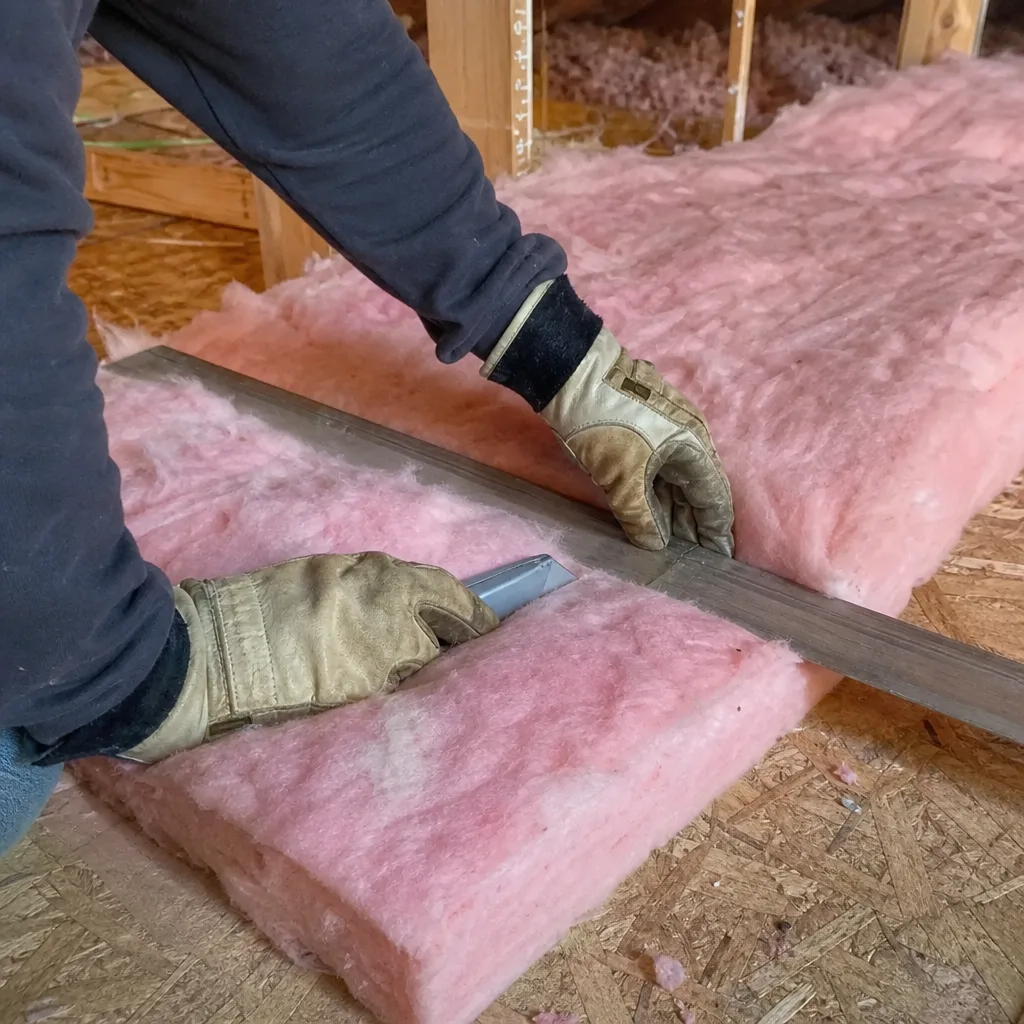
This is your inspection window. The cooling load is tapering. The attic has been through its maximum temperature cycle. Any damage from March humidity or summer radiant heat is now visible if you know what to look for.
Inspection Checklist
- Walk the attic floor with a headlamp, not a handheld light. You need both hands free to touch and lift insulation edges. Work from the hatch toward the eaves, stepping only on joists or a walk board. In Converse’s 1980s-2000s subdivisions like Woodlake and Live Oak, truss spacing is typically 24 inches on center; older homes near Converse’s original town center may have 16-inch spacing with true dimensional lumber.
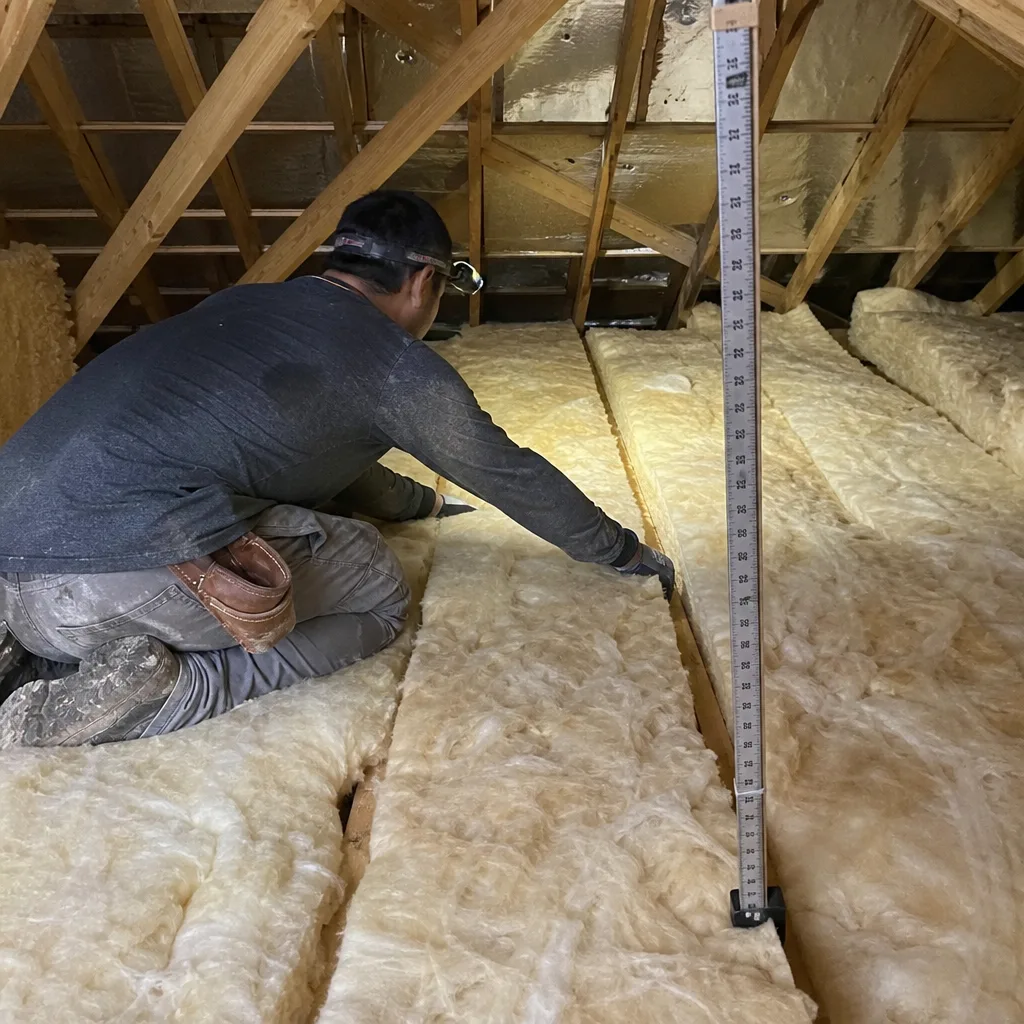
- Lift the edge of faced batts at five locations: near the hatch, at the center of the attic, near a bathroom exhaust fan, near a can light, and at the eaves. Check facing adhesion. Note any locations where the batt has compressed to less than its original thickness.
- Probe blown material depth with a yardstick. Measure at the same five locations. Compare to your installation documentation or to the depth markers that should be visible on trusses or joists. In Converse, code requires R-38 minimum for new construction; existing homes may have less, but any home built or reinsulated after 2012 should have depth markers installed.
- Inspect ridge vent covers from the attic side. Look for daylight patterns that indicate missing or displaced sections. The March-May hail season often cracks plastic ridge vent covers without dislodging them completely; by September, thermal cycling has widened the crack into a visible gap.
- Photograph everything. Date the images. These become your baseline for the following March.
When to Add, When to Replace
If blown cellulose has settled 15% or less from original depth, and if there’s no moisture staining or rodent activity, top-off installation is appropriate. We use GreenFiber or Owens Corning loose-fill products for this, blown to the manufacturer’s specified density to interlock with existing material.
If facing has delaminated across more than 30% of batt surface, or if you find moisture staining on the ceiling drywall below, remove and replace. Don’t add new insulation over damaged old insulation. The moisture trapped in the damaged layer will migrate into the new material over the following summer.
This is where our Crawl Space Encapsulation & Vapor Barrier in Converse service intersects with attic work. Homes with crawl space moisture problems often show attic moisture symptoms too, because the same air leakage dynamics connect both spaces to the living area. A comprehensive assessment checks both boundaries of the envelope.
November-February: The Short Heating Season
Converse’s heating load is real but brief. January averages 35°F for a low, with occasional hard freezes. The maintenance priority shifts from moisture management to heat loss verification and safety.
What Matters in Winter
Air leaks that were inconsequential in summer become significant in winter because the temperature differential, and therefore the stack effect pressure, is greatest when it’s cold outside and warm inside. A 1/2-inch gap around an attic hatch that leaked modestly in August becomes a visible heat loss path in January, often detectable by hand without instrumentation.
Check these specific items during Converse’s heating season:
- Recessed light patterns on snow. After a rare Converse snowfall, look at your roof from the street. Melt patterns in straight lines, following joist or truss locations, indicate thermal bridging or missing insulation at those points. Uniform melt suggests adequate coverage; patchy melt with clear lines demands inspection.
- Ice dam risk at valleys and north-facing eaves. Rare in Converse but not impossible during sustained freeze events. Ice dams form when attic heat melts roof snow, which refreezes at the colder eave. The root cause is almost always air leakage from conditioned space to attic, not insufficient insulation alone.
- Combustion safety. If your furnace or water heater vents through the attic, verify that insulation hasn’t been pushed against single-wall vent pipe. This is a fire hazard and a code violation. Converse follows the International Residential Code with local amendments; clearances are typically 1 inch to combustibles for single-wall pipe, 0 inches for Type B vent.
- Humidity sources. Winter is when homeowners notice dry indoor air and add humidifiers. If your humidifier output exceeds roughly 30-35% relative humidity at 70°F indoor temperature, you’re pushing moisture into wall and ceiling cavities that will appear as attic dampness in March. Monitor with a digital hygrometer, not the analog dial on your thermostat.
We’ve found that Converse homes built 2005-2015, particularly in the Copperfield and Converse Heights areas, often have adequate insulation depth but poor air sealing at the attic floor. The blower-door test reveals this immediately: a home with R-38 batts and unsealed top plates typically tests at 3,500-4,500 CFM50, while the same home with sealed top plates, can lights, and attic access tests at 2,200-2,800 CFM50. The insulation didn’t change. The effective performance did.
Post-Storm Inspection Protocol for Converse
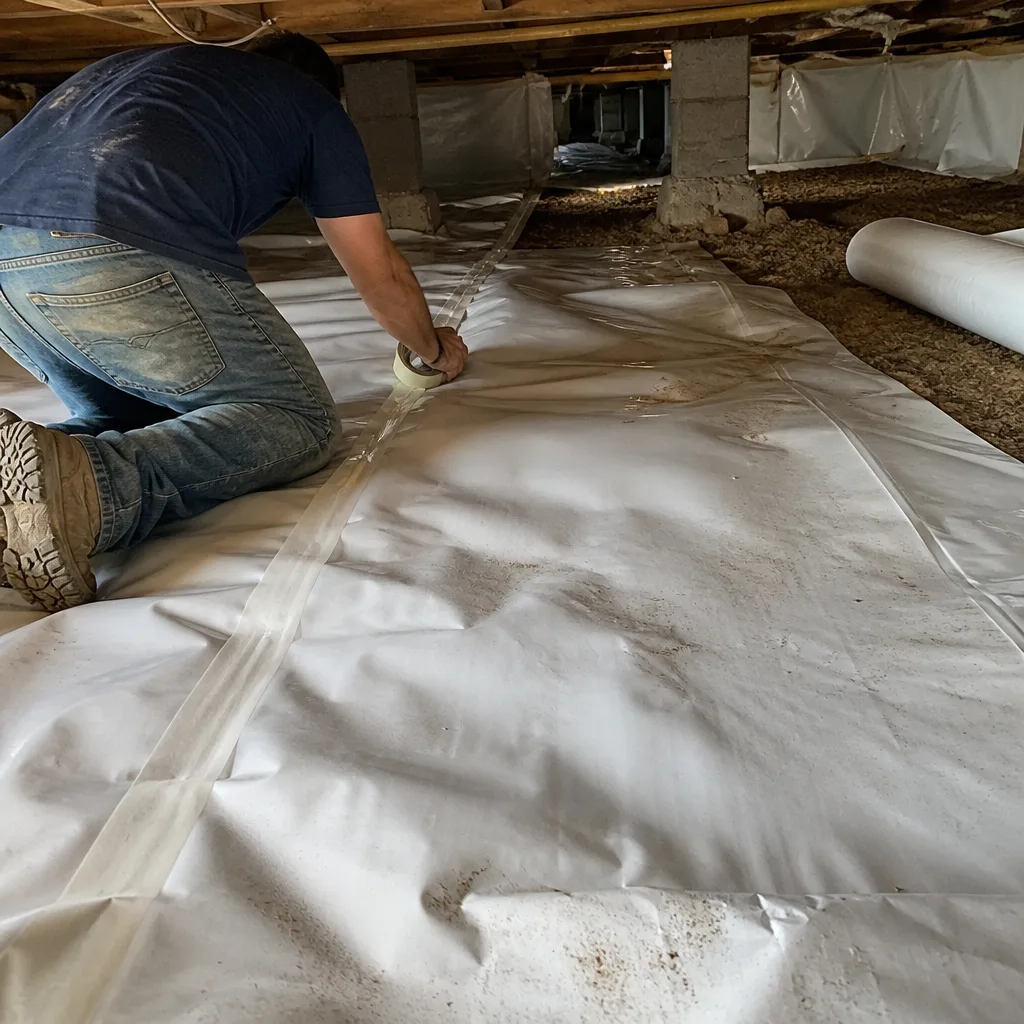
Bexar County’s secondary hail corridor doesn’t produce the monster hail of the northern Plains, but Converse sees enough 1-inch-plus events to damage roofing components that protect insulation integrity. The critical insight: insulation damage from storms is almost always delayed, not immediate. A displaced ridge vent cover admits water for weeks before ceiling staining appears.
Inspection Timing
Inspect within 48 hours of any hail event with stones exceeding 3/4 inch, or any wind event with sustained gusts above 50 mph. These thresholds match the damage patterns we’ve documented across Converse since 2016.
Roof-Level Inspection Points
- Ridge vent covers. Plastic covers crack; metal covers dent and separate at seams. From the attic, look for new daylight lines. From outside, binoculars are adequate for single-story homes; we use drone documentation for two-story structures.
- Turbine vent bearings. High wind can spin turbines to failure, after which they become passive holes. A seized turbine is obvious; a bearing-worn turbine that spins slowly or with grinding noise is less obvious but equally leaky.
- Soffit vent screens. Hail drives moisture through unscreened soffit vents, wetting insulation at the eaves. Check that screens are intact and not clogged with debris from storm runoff.
- Chimney and pipe flashing. Wind lift separates flashing from the roof deck. Water enters at the separation, runs under shingles, and appears in the attic at locations distant from the visible problem.
- Skylight wells. If your home has skylights, the insulated well framing is a common storm leak point. Check for water staining on the well interior, not just the ceiling below.
Documentation for Insurance
If you find damage, photograph before you disturb anything. Date-stamp the images. Most homeowner policies cover storm damage to roofing components that subsequently damage insulation, but they require documentation that the roofing damage preceded the insulation damage. Our Documented Photo Record on every visit includes this sequence explicitly: roof component condition, attic condition, insulation condition, with date and time metadata.
We’ve processed hundreds of storm-related assessments in Converse. The homeowners who recover full replacement costs are those who documented the storm date, photographed immediately, and had a written scope from a licensed contractor before the insurance adjuster arrived. Under Haven Standard Clause 1, we provide that written scope within 24 hours of inspection.
The Thermal Bypass Effect, Season by Season
Thermal bypass is the industry’s term for air movement that short-circuits insulation. In Converse, the bypass paths change direction and severity by season, which means the same leak causes different problems at different times of year.
Winter Bypass: Stack Effect Dominance
When outdoor temperature is below indoor temperature, warm air rises through ceiling penetrations. The leak path is upward: from living space, through can lights, around attic hatches, past top plates, into the attic. The penalty is direct heat loss. Every cubic foot of 70°F air that escapes must be replaced by heated outdoor air. The insulation doesn’t stop this; only air sealing does.
In January 2024, we tested a home in the Valley Hi area of Converse. Blower-door reading: 4,100 CFM50. Thermal imaging showed a 12°F temperature differential at the ceiling directly below a bathroom exhaust fan with a disconnected duct. The fan was dumping conditioned air into the attic continuously, even when switched off, because the damper was stuck open. The insulation above that location, R-38 blown cellulose, was performing effectively as R-10 because the air movement was washing through it.
Summer Bypass: Reverse Stack Effect
When outdoor temperature exceeds indoor temperature, the pressure reverses. Hot attic air pushes downward through the same penetrations. The penalty isn’t just heat gain; it’s moisture delivery. That 130°F attic air in Converse carries significant water vapor. When it meets the 75°F surface of your ceiling drywall, it cools below its dew point. Condensation forms inside the wall cavity or on the drywall face.
We see this pattern most in homes with unsealed can lights and unsealed top plates. The homeowner reports “a musty smell in summer” or “the ceiling feels damp.” The insulation is dry to touch at the attic side, because the moisture condensed on the cold side and either evaporated back or wicked into the drywall. By the time we inspect, the evidence has often disappeared.
Shoulder Season Bypass: The Worst Case
March and April in Converse present the most complex bypass condition. Outdoor temperature fluctuates above and below indoor setpoint across a single day. The stack effect reverses direction twice daily. Air moves up, then down, through the same leak paths. Each reversal deposits moisture on whichever surface is coldest.
This is why we prioritize pre-March air sealing. Once the shoulder season begins, the damage mechanism is active and self-sustaining. Sealing in May, when most national guides recommend spring maintenance, means you’ve already absorbed six weeks of moisture cycling.
HVAC Duct Leakage and Attic Temperature
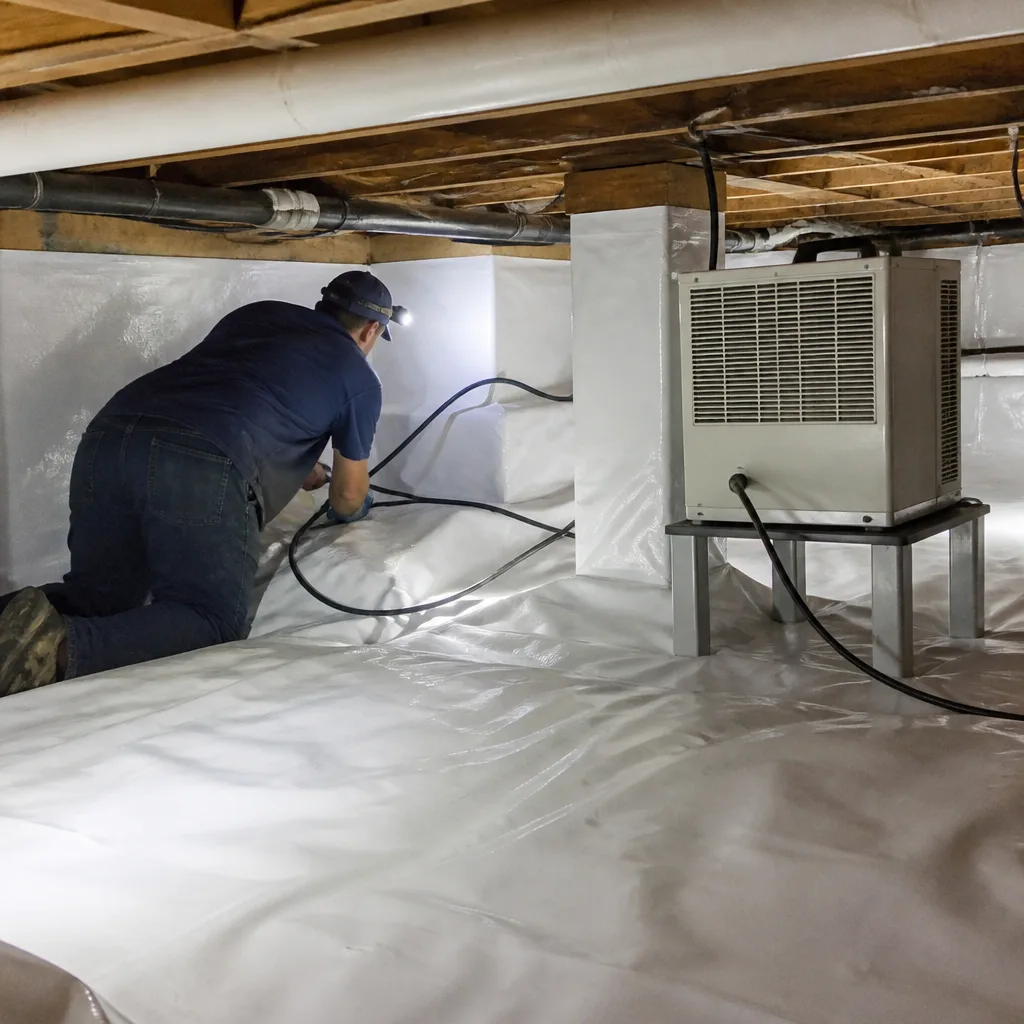
This section addresses the interaction we referenced in the summer discussion, in more technical detail for homeowners who want to understand why their electric bills spike disproportionately to outdoor temperature.
How Duct Leakage Raises Attic Temperature
Supply ducts in Converse attics typically carry 55°F air during cooling operation. Return ducts carry 75°F return air. When supply leaks occur, 55°F air enters the attic at the leak point. This air is denser than 130°F attic air, so it falls. As it falls, it mixes with attic air, cooling a localized zone.
The cooling seems beneficial, but it’s not. The mixed air, now at 90-100°F, is still hotter than the insulation design temperature. More critically, the cooling creates a pressure differential that draws replacement attic air from hotter zones. The net effect is increased air movement across the entire attic floor, increasing convective heat transfer through the insulation.
We’ve measured this with temperature loggers in Converse attics. A home with 15% supply duct leakage, measured by pressure pan, shows attic temperature fluctuations of 8-12°F across the day, correlated with compressor cycling. A home with sealed ducts, tested to less than 5% leakage, shows attic temperature that tracks outdoor temperature smoothly, with no compressor-correlated spikes.
Insulation R-Value Under Real Conditions
Insulation R-value is tested in laboratories at 75°F mean temperature with no air movement. Your attic in Converse in July is nothing like that environment. At 130°F attic temperature and 75°F indoor temperature, the mean temperature across your insulation is 102.5°F. Fiberglass and cellulose both lose effective R-value at elevated mean temperatures; the loss is typically 10-15% at 100°F mean versus 75°F.
Add air movement from duct leakage, and the effective R-value drops further. A study by the Florida Solar Energy Center, applicable to Converse’s climate zone, found that 2 mph air movement across fiberglass batts reduced effective R-value by 40%. Two mph is barely perceptible; it’s the airspeed from a small supply leak falling through an attic.
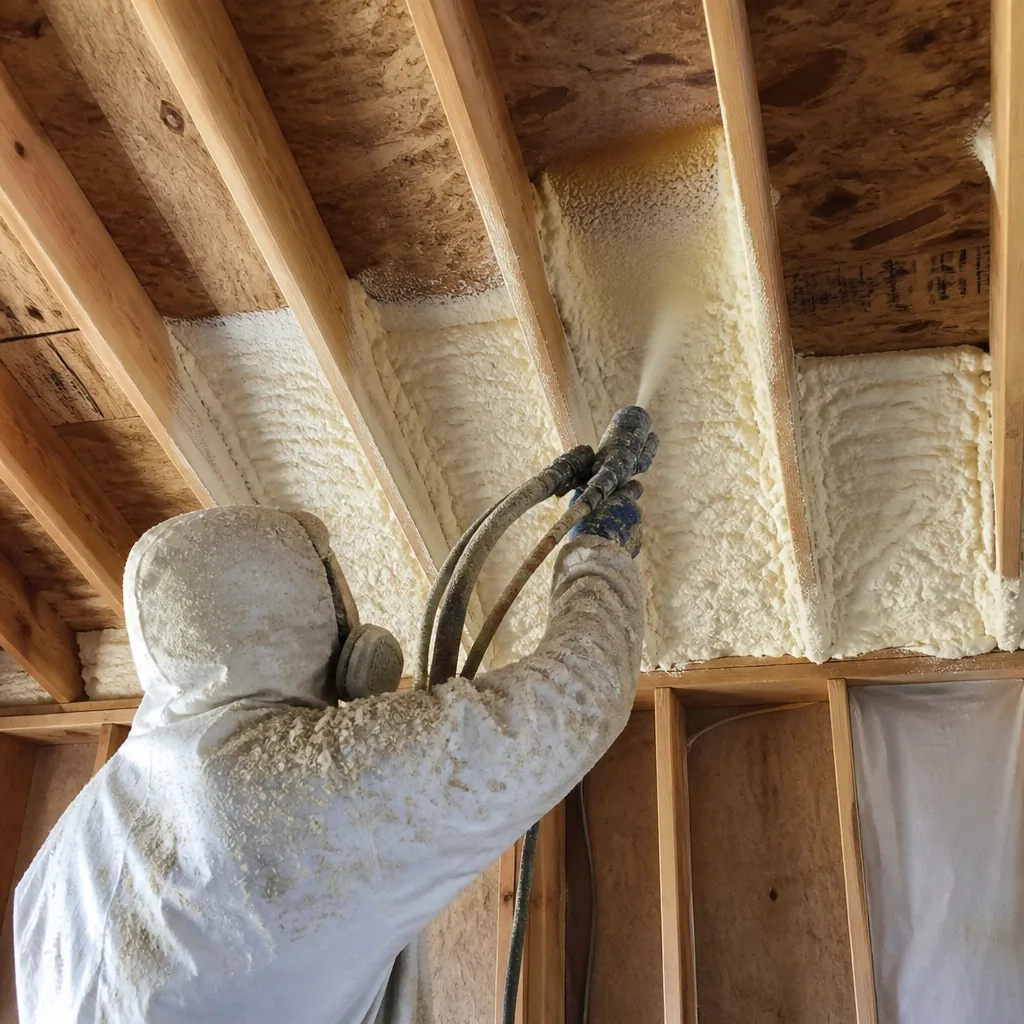
The practical implication: your R-38 insulation may perform as R-22 to R-28 under real Converse summer conditions if ducts leak and air sealing is incomplete. Adding more insulation without fixing the air movement is treating the symptom. We won’t do it. Under our sealed-first-then-insulated protocol, every Spray Foam Insulation in Converse job and every blown-in job begins with air sealing verified by blower-door test.
What the Documentation Shows
On applicable jobs, we provide before-and-after blower-door numbers. A typical Converse attic air sealing job reduces CFM50 by 25-40%. The homeowner receives a written report with:
- Pre-work blower-door reading in CFM50 and ACH50 (air changes per hour at 50 Pascals)
- Post-sealing blower-door reading
- Target ACH50 for the home’s size and stories, per IECC 2021 guidelines
- Photo documentation of each sealed location, with thermal imaging where applicable
- Written scope confirming what was sealed, with what materials
The 365-Day Done Right Promise applies. If the blower-door reading doesn’t hold, or if you find a missed penetration, we return and correct it. The promise is in writing before work starts, not a verbal assurance after.
Common Mistakes to Avoid
- Blowing new insulation over old without inspecting the old layer. In Converse’s humid climate, old insulation may harbor March moisture that won’t dry under new material. We remove and inspect before adding, or we use moisture meters to verify dryness.
- Sealing attic ventilation instead of sealing air leaks. Some homeowners, confused by “seal your attic” advice, caulk ridge vents or soffit vents closed. This traps moisture and violates code. Seal the floor, not the roof.
- Ignoring the access hatch. The hatch is the largest single leak in most homes. A $20 weatherstrip kit and rigid foam board cut to fit solves it. We see homeowners spend thousands on new insulation while ignoring this $20 fix.
- Using kraft-faced batts in summer-dominant cooling loads. The facing adhesive fails predictably under Converse’s radiant heat. Unfaced batts with separate vapor retarder, or blown material, perform more reliably.
- Skipping post-hail inspection because “the roof looks fine from the street.” Ridge vent damage and flashing separation aren’t visible from ground level. The insulation damage appears weeks later.
- Adding humidifier output without monitoring attic moisture. Winter humidification in leaky homes deposits moisture in attic insulation that appears as damage in March. Keep indoor relative humidity below 35% in Converse’s winter.
- Trusting “R-value is R-value” without considering installation quality. Compressed batts, gaps around obstructions, and wind-washed blown material all reduce effective performance below labeled R-value. We photograph density and coverage as part of our Documented Photo Record.
When to Call a Professional
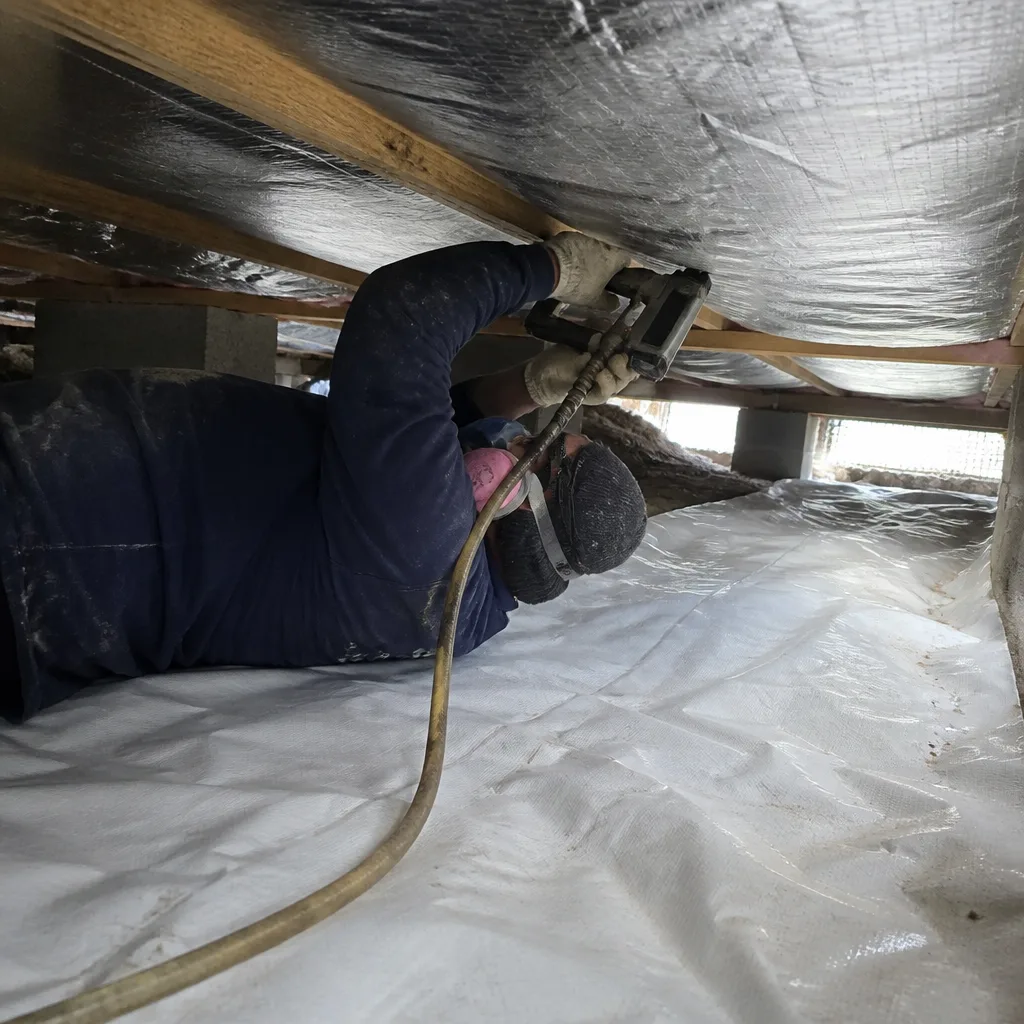
Call for assessment when you find moisture staining on ceiling drywall, when your summer electric bills increase year-over-year without rate changes, when you detect musty odors after compressor cycling, or when post-storm inspection reveals any roof component damage. These symptoms indicate envelope problems that DIY sealing won’t fully resolve.
Topside Attic Insulation Converse offers free estimates in Converse. Every estimate includes a written scope and written price before any work starts, per Haven Standard Clause 1. We provide before-and-after blower-door numbers on applicable jobs, and a Documented Photo Record on every visit. Call (830) 420-0953 to schedule. A live person answers 24/7.
Frequently Asked Questions
Inspect twice yearly: once in late February before the March humidity window, and once in late September after summer heat stress. Add a post-storm inspection within 48 hours of any hail or high-wind event. This schedule matches Converse’s actual climate pattern, not the four-season template used in national guides.
Adding insulation over dry, undamaged existing material costs 40-60% less than removal and replacement. But if existing material shows moisture staining, facing delamination, or rodent contamination, removal is necessary. Adding new insulation over damaged old insulation traps moisture and accelerates degradation. We assess with moisture meters and photo documentation before recommending either approach. Call (830) 420-0953 for a free evaluation - estimates are free.
Most attic insulation jobs in a Converse home of 1,800-2,400 square feet run between $2,800 and $5,500 for blown cellulose or fiberglass to R-38, including air sealing of top plates, can lights, and attic access. Spray foam applications, including our Spray Foam Insulation in Converse service, typically range $4,500-$8,500 for the same footprint, with higher performance in constrained spaces. Every job begins with a written price before work starts. Call (830) 420-0953 for an exact quote - estimates are free.
Yes, but only when combined with air sealing. Insulation slows heat transfer; air sealing stops conditioned air loss. In Converse’s climate, air sealing alone typically reduces cooling load 15-25%, while air sealing plus insulation to proper depth reduces it 25-40%. We’ve documented these ranges across hundreds of blower-door-verified jobs since 2016. Insulation without sealing produces smaller, less predictable savings.
Musty summer odors in Converse attics almost always indicate reverse stack effect: hot, humid attic air is pushing downward through unsealed ceiling penetrations into wall cavities or living space. The moisture condenses on cooler surfaces, creating conditions for mold growth. The smell appears when the compressor cycles because the air movement intensifies with HVAC operation. Air sealing at the attic floor, verified by blower-door test, eliminates the path.
Rarely, but not never. Converse averages one to two hard freeze events per decade with conditions suitable for ice dam formation. The risk is highest in homes with significant air leakage to attic space and inadequate insulation at eaves. If you’ve experienced interior water staining after a freeze, inspect attic air sealing before the next event. Prevention is cheaper than ceiling repair.
The Bottom Line
Converse’s climate demands a two-peak maintenance calendar: pre-March air sealing before humidity reversal, and post-September inspection after summer heat stress. The nine-month cooling load, not four equal seasons, should drive your priorities. Focus on air sealing before insulation additions, verify with blower-door documentation, and inspect after every hail event. Generic advice from temperate-zone sources will steer you wrong on timing, on moisture risk, and on the HVAC-insulation interaction that determines your actual electric bill.
We’ve sealed and insulated over 9,000 homes since 2016, every one with a written price before work started and a documented record when we left. The 365-Day Done Right Promise applies to everything we do. If your attic hasn’t been assessed with a blower-door test in the last five years, you’re operating without data on the single largest factor in your cooling load.
Written by Wes Okafor, Owner at Topside Attic Insulation Converse, serving Converse since 2016.