
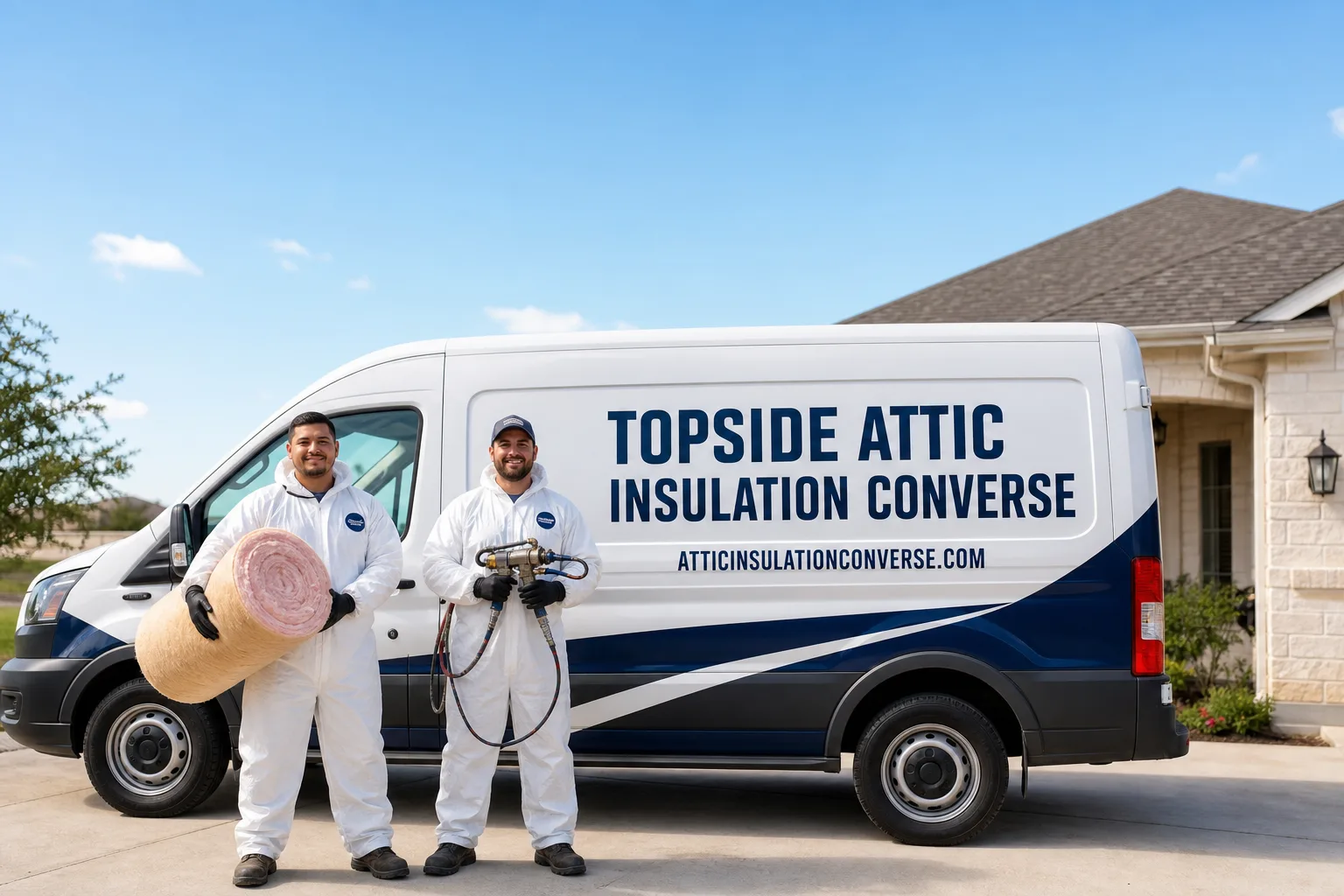
Fast, Reliable Spray Foam Insulation Across Converse
Spray foam insulation in Converse typically runs $2,800-$7,500 for most residential jobs, with same-week scheduling available and crews dispatched from our San Antonio office. We serve the full Converse area including Millers Point, Converse Heights, and neighborhoods along FM 78 and Gibbs Sprawl Road. Call (830) 420-0953 for a written price before any work starts.
We’ve worked in enough Converse attics to know the pattern. The subdivisions that filled out between 1997 and 2006 - built fast for Randolph AFB families - share a specific set of envelope problems that generic insulation crews miss. Our Spray Foam Insulation team treats air sealing as a hard prerequisite, not an upsell, and we publish before-and-after blower-door numbers on every job so you can verify the performance change.
Why Topside Attic Insulation Converse Is Converse’s Preferred Spray Foam Insulation Company
We’ve sealed and insulated over 9,000 homes since 2016, and a significant concentration sits right here in Converse. The reviews we get from Converse homeowners tend to mention the same thing: the crew found problems the previous contractor never mentioned, then showed the photo documentation to prove it.
Response time to Converse is typically same-day or next-day, depending on blower-door test scheduling. Dispatch coordinates from our San Antonio office, but the crew that arrives knows the local housing stock - they know to check for the uninsulated attic hatch before quoting, and they know which 2004-era subdivisions near Kitty Hawk Middle School have the compacted fiberglass that reads R-19 on paper but performs like R-12.
Wes Okafor built this operation under The Haven Standard, and that standard applies the same way in Converse as everywhere else: written price before any work starts, documented photo record when the crew leaves, and a 365-Day Done Right Promise if anything needs correction. No exceptions.
Our Spray Foam Insulation Services in Converse
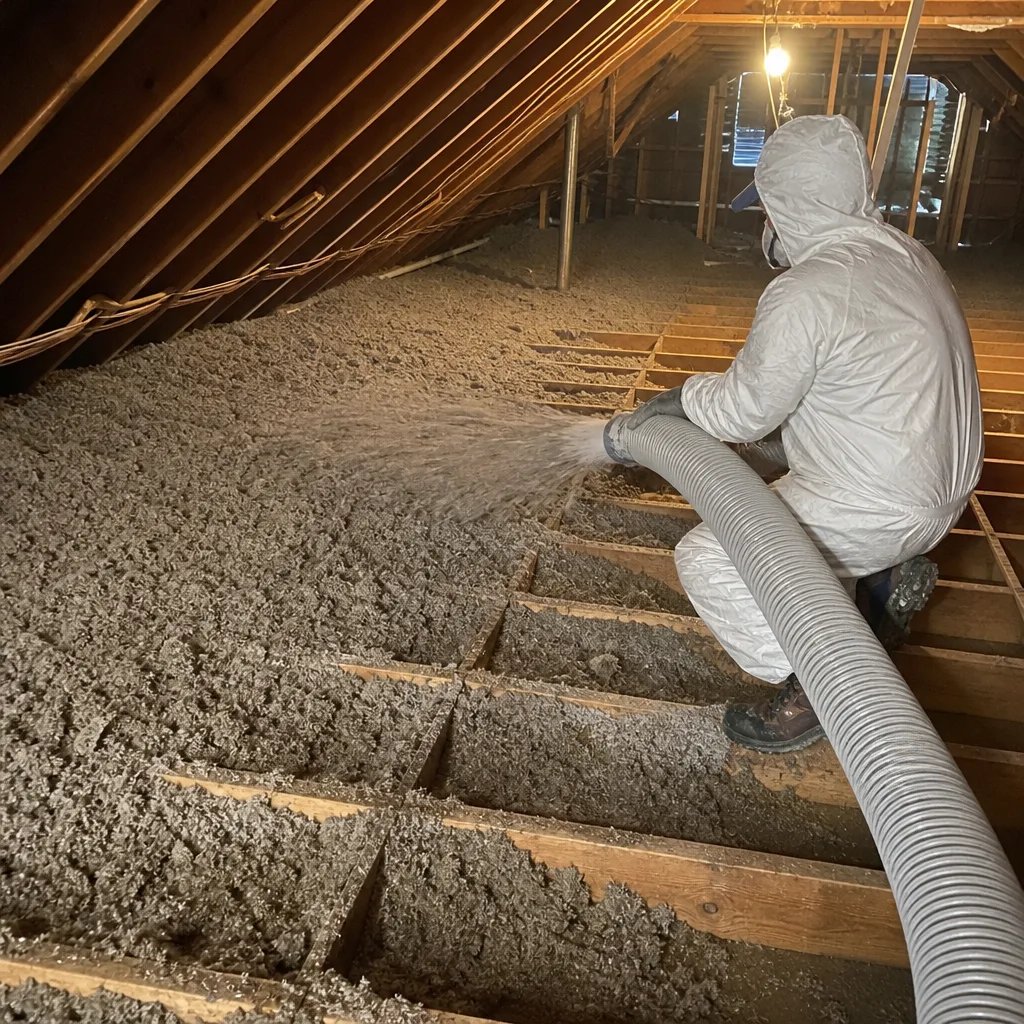
Open-Cell Spray Foam
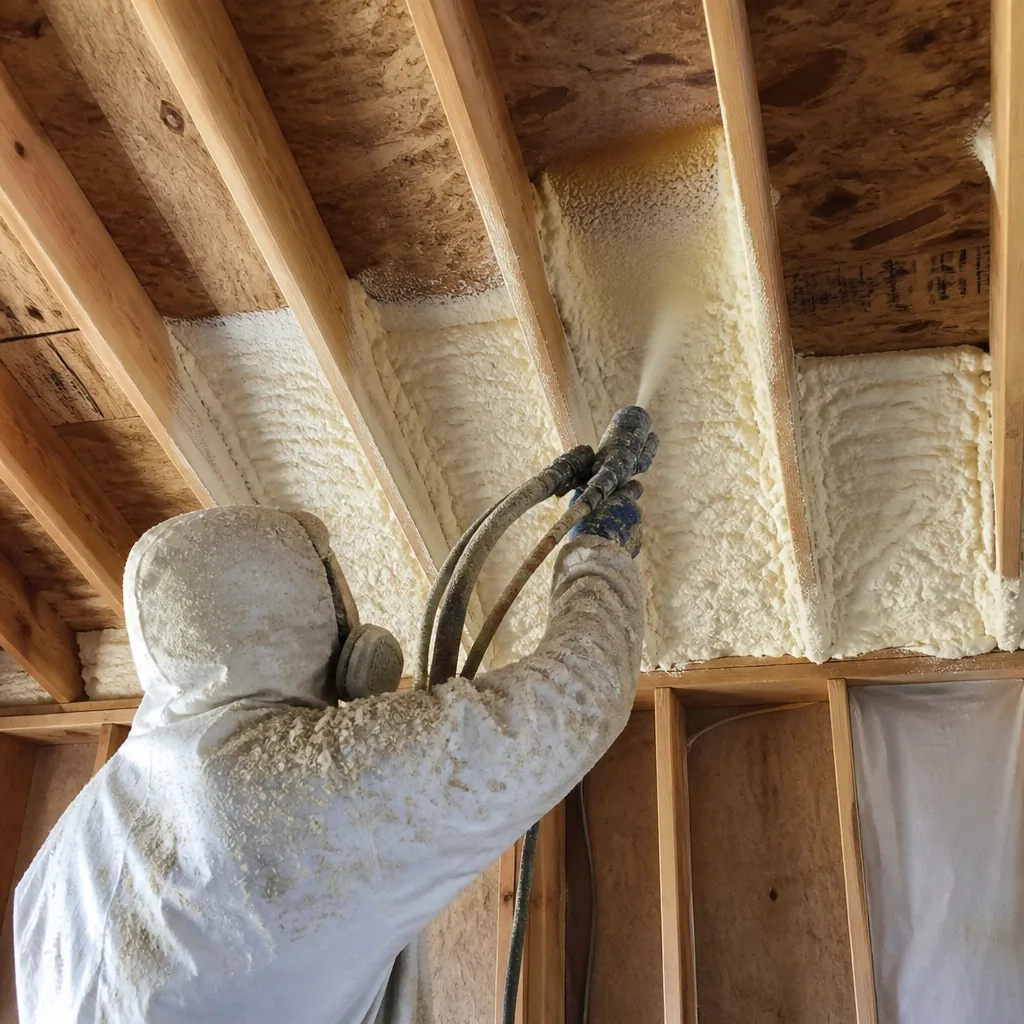
Open-cell spray foam - the half-pound density material that expands to fill framing cavities - is what we use most often in Converse attics. It’s vapor-permeable, which matters in Climate Zone 2 where Gulf humidity pushes dewpoints into the mid-70s and you don’t want to trap existing moisture against the attic floor. For the 1997-2006 tract homes that dominate Converse, open-cell at 6-7 inches on the attic floor typically gets the assembly past current IECC R-38 targets while allowing the assembly to dry toward the interior. We source this material from Icynene and Demilec, among others.
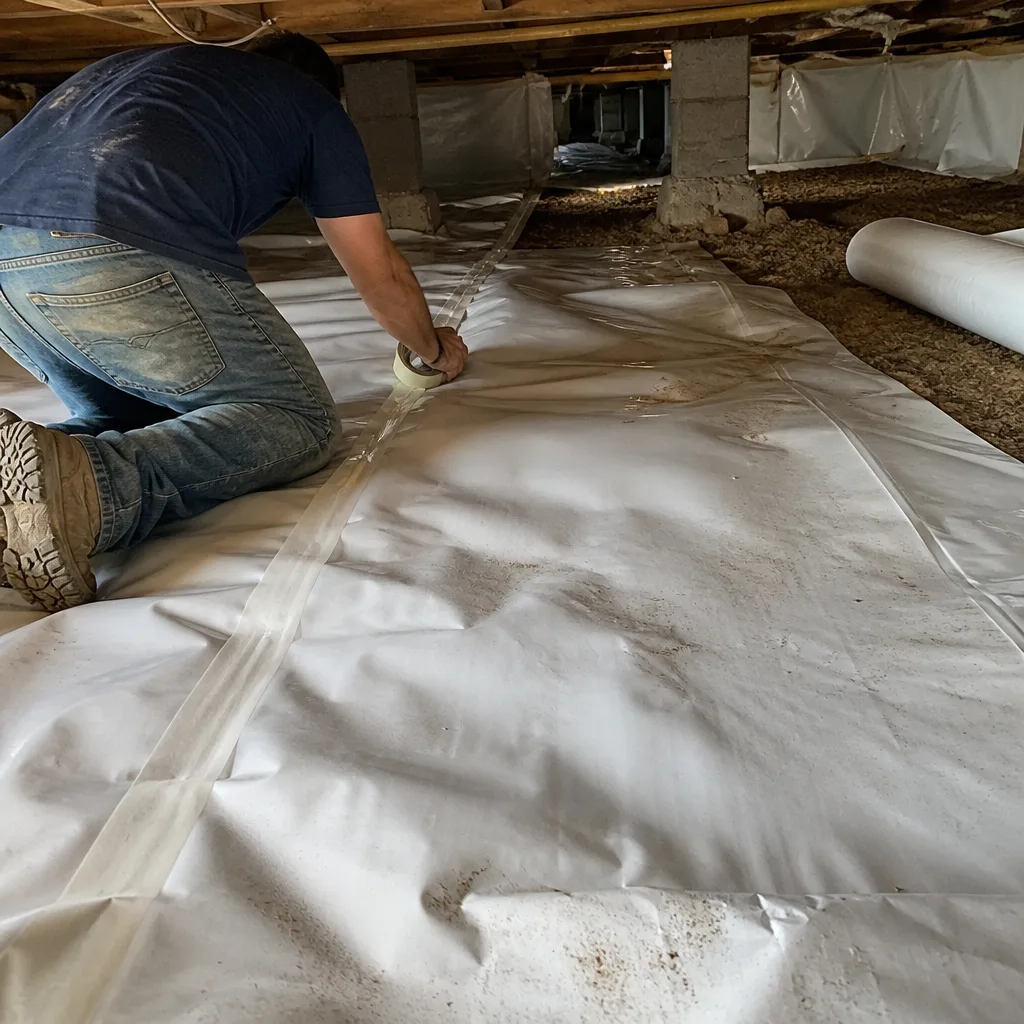
Closed-Cell Spray Foam
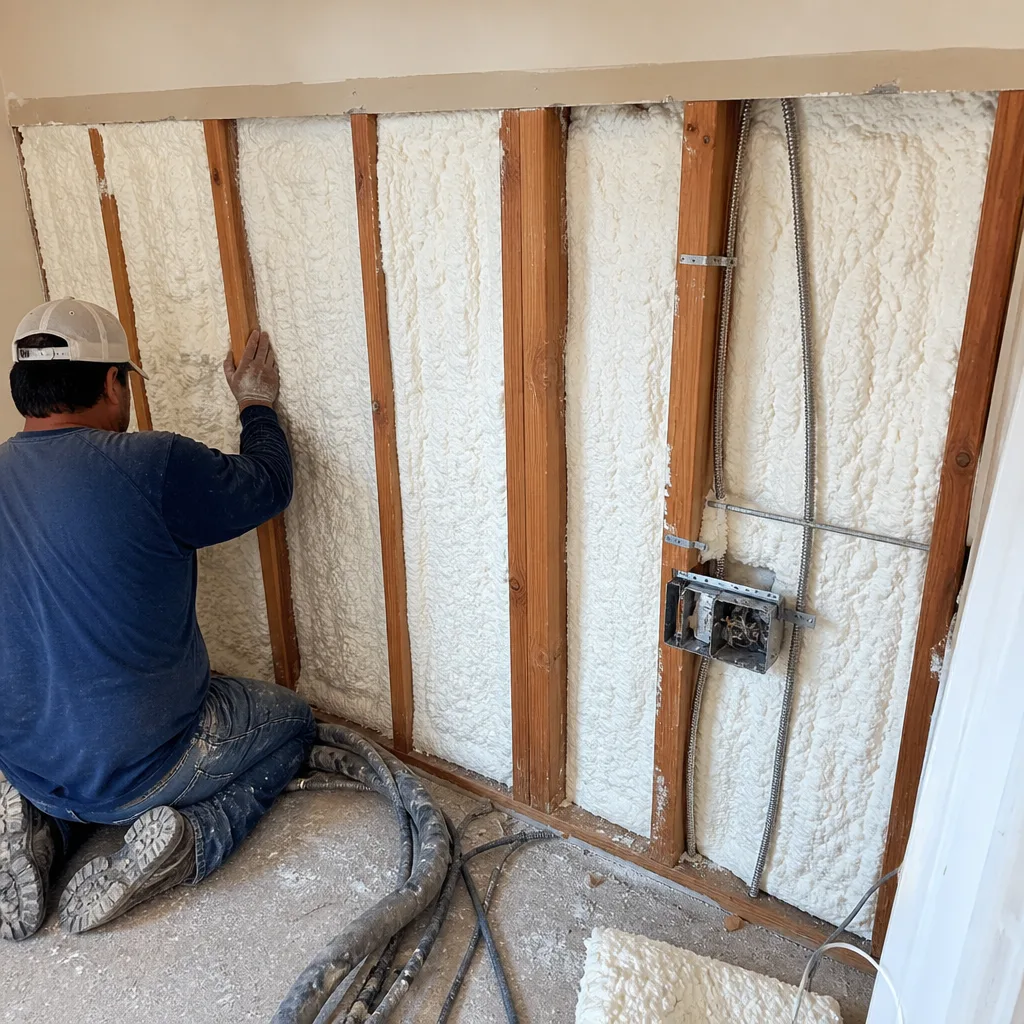
Closed-cell spray foam - the two-pound density material that acts as its own vapor barrier - has specific applications in Converse homes. We use it for rim joist sealing in slab-on-grade construction (which is nearly universal here), for garage ceiling applications where the foam needs to serve as both insulation and air barrier, and for roof deck applications where the homeowner wants to condition the attic. Closed-cell costs more per board foot, but at 2-3 inches it achieves comparable R-value to 6 inches of open-cell and adds structural rigidity. We don’t apply closed-cell over wet existing insulation; we remove the compromised material first and document the condition with photos.
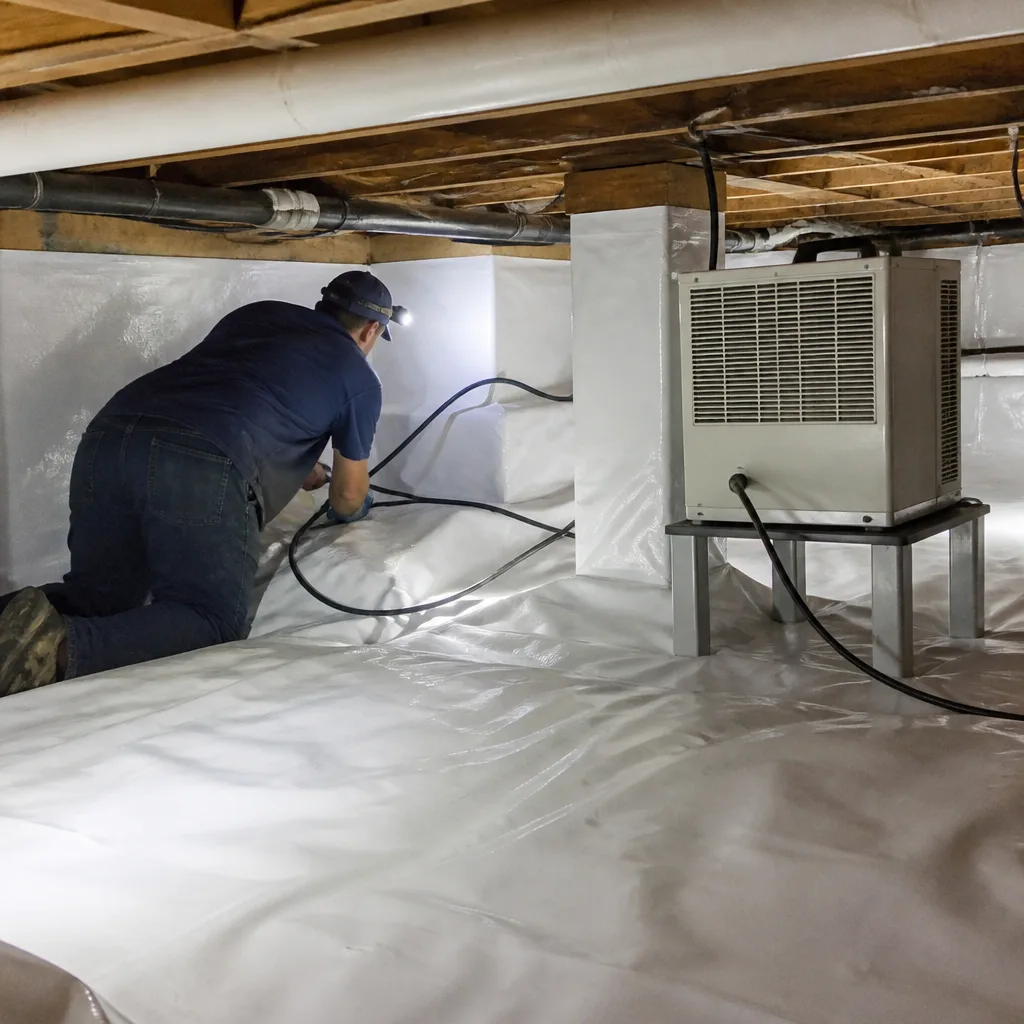
Rim Joist Spray Foam
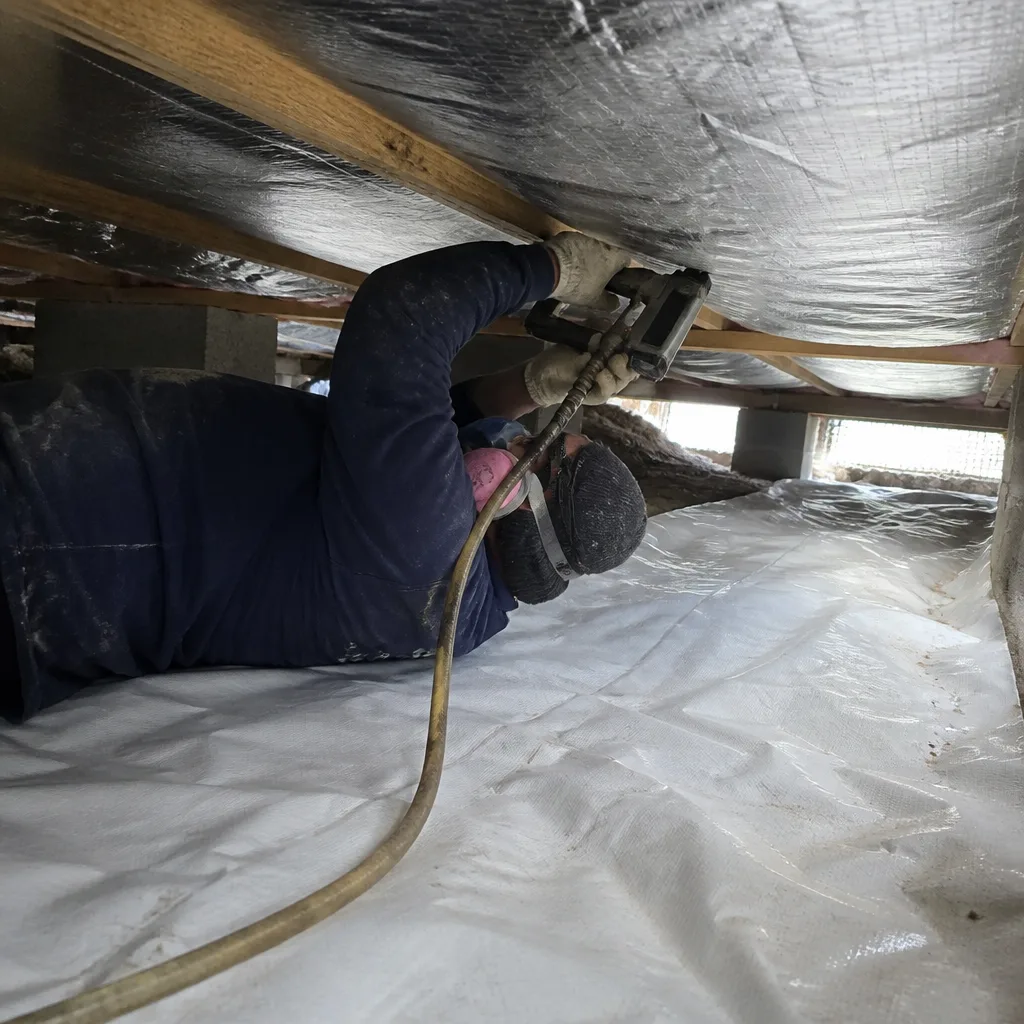
The rim joist - the perimeter band where the house frame meets the slab - is the single largest unsealed surface in most Converse slab-on-grade homes. Builder-grade construction here typically left this area with no air sealing at all, just a fiberglass batt stuffed loosely against the concrete. We remove those batts, clean the surface, and apply closed-cell spray foam to seal the rim joist against soil gas, humidity, and the convective loops that make floors feel cold even when the thermostat reads 72°F.
Garage Ceiling Spray Foam
Garage ceiling spray foam is one of the most impactful upgrades for Converse homes with attached garages, which describes most of the housing stock built after 1997. An uninsulated garage ceiling acts as a thermal radiator against conditioned bedrooms above, and in Converse’s five-month cooling season with routine 100°F days, that radiant load forces the HVAC system to work harder than the load calculation ever anticipated. We apply open-cell or closed-cell foam to the garage ceiling, seal all penetrations, and air-seal the door header - a detail almost never addressed in original construction.
What happens when you call
- 1
A real person answersNo phone trees - you reach a local pro.
- 2
You get an upfront price rangeHonest numbers before anyone is dispatched.
- 3
A background-checked tech heads outLicensed & insured, dispatched right away.
- 4
You approve before work beginsNothing starts until you say go.
 Before
 After
AfterTrusted Brands We Service in Converse
We don’t lock customers into proprietary products. Our materials come from Owens Corning, Johns Manville, Knauf, and other manufacturers, selected job-by-job based on what the assembly actually needs. For Converse’s Climate Zone 2 conditions, we stock open-cell and closed-cell formulations rated for the humidity and temperature cycling this market sees. That local inventory means faster turnaround - no waiting on a freight shipment from out of state when the crew is ready to start.
Common Spray Foam Insulation Problems We See in Converse Homes
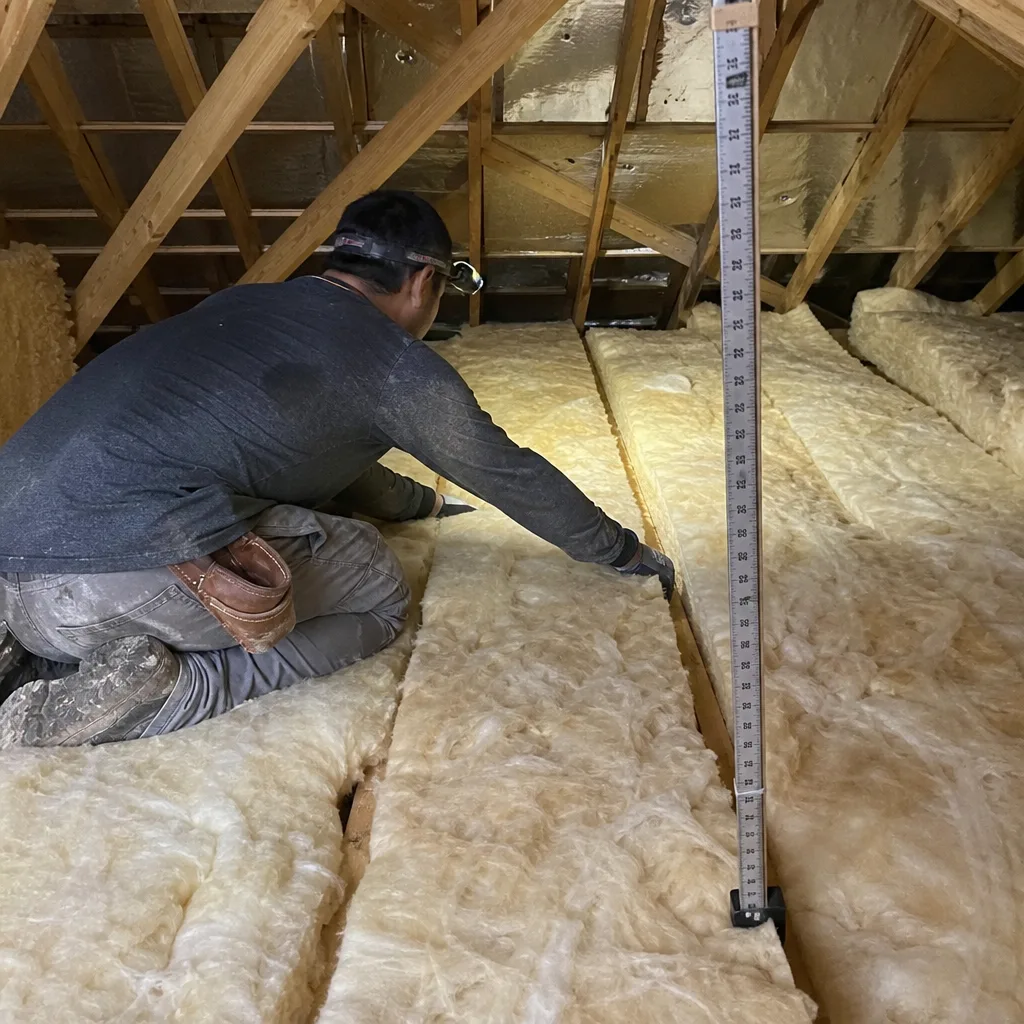
- Uninsulated attic hatches in 1997-2006 tract homes. The access hatch detail was almost universally skipped in Converse’s Randolph AFB-era subdivisions, leaving a bare plywood square with no weatherstripping and no insulation. Spray foam applied to the attic floor without sealing this bypass leaves a hole that undermines the entire R-value upgrade.
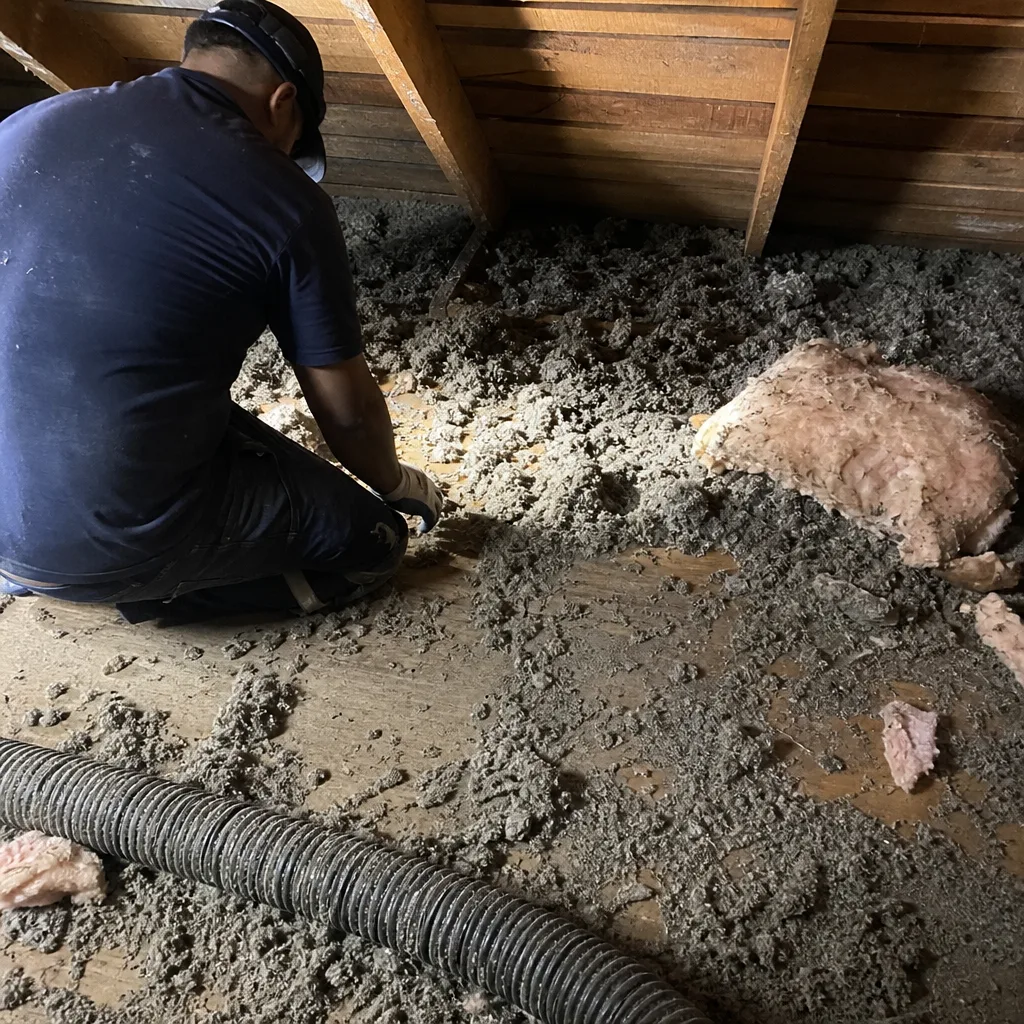
- Compacted blown fiberglass performing at half its labeled R-value. Two decades of 150°F+ attic cycling compresses original blown fiberglass to roughly R-19 or less. A simple top-off without air-sealing the top plates first delivers far less performance than the label suggests because convective air movement bypasses the material.
- Moisture trapped by closed-cell applied over wet existing insulation. Gulf-driven humidity in Converse means existing batts often hold more moisture than they appear to. Closed-cell spray foam applied over this substrate traps that moisture against the attic floor, creating a condensation risk that didn’t exist before.
- Garage ceilings left completely uninsulated against 100°F+ radiant heat. The bedroom-over-garage configuration common in Converse’s two-story tract homes creates a thermal boundary that original construction never addressed, forcing the cooling system to overcome a radiant load it wasn’t sized for.
Pricing for Spray Foam Insulation in Converse, TX
Most residential spray foam jobs in Converse fall between these ranges:
| Open-cell attic floor (typical 1,600-2,200 sq ft home) | $2,800-$4,800 |
| Closed-cell rim joist (perimeter seal only) | $1,400-$2,600 |
| Garage ceiling (two-car attached, open-cell) | $1,800-$3,200 |
| Closed-cell roof deck (conditioned attic conversion) | $4,500-$7,500 |
| Full envelope package (attic + rim joist + garage ceiling) | $5,500-$9,000 |
What moves a job toward the higher end: existing insulation removal and disposal, extensive air-sealing of top plates and penetrations, access limitations in tight attics, and the need for moisture remediation before foam application. What we don’t do: quote a low number to get the signature, then add line items once we’re in the attic. The written price you receive before work starts is the price you pay. We also offer a Free Second Opinion on any written estimate from another contractor - bring us their scope and we’ll review it with you, line by line.
Call (830) 420-0953 for a written estimate. Estimates are free, and every one includes a Documented Photo Record of existing conditions.
We Also Serve Cities Near Converse
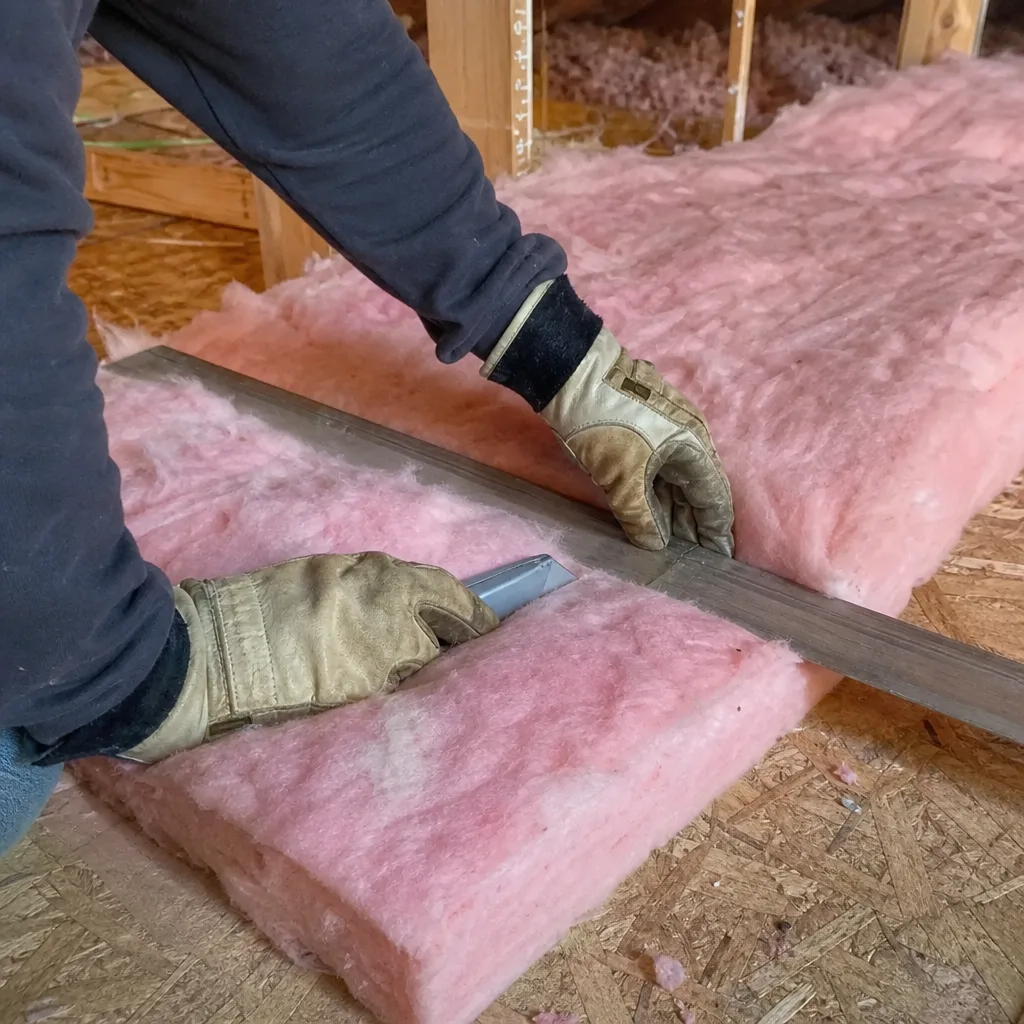
Our crews work throughout northeast Bexar County and into Guadalupe County, including Spray Foam Insulation in Converse proper plus Universal City, Schertz, Cibolo, and San Antonio. Dispatch coordinates from our San Antonio office, but the technician who arrives knows the local housing stock and building patterns specific to your area.
Serving Converse, TX - Our Local Coverage Area
We’re based in the Converse area and know this community well. Use the map below to see our service coverage - if you’re nearby, we can almost certainly help.
FAQs - Spray Foam Insulation in Converse
Jobs in the 1997-2006 subdivisions typically require insulation removal, extensive air-sealing of top plates and uninsulated hatches, and often moisture assessment before foam can be applied - steps newer homes don’t need. The compacted fiberglass and skipped details in that era’s construction add 20-40% to labor hours compared with a clean attic in a 2015 build. Call (830) 420-0953 for a written scope and exact price for your specific home.
For attic floor applications in Converse’s Climate Zone 2 conditions, open-cell is usually the right choice because it allows vapor permeability and achieves R-38 at a lower cost per square foot. Closed-cell is specified for rim joists, garage ceilings, and roof decks where vapor barrier performance or space constraints matter. We make the recommendation after inspecting the existing conditions, not before.
Yes. An uninsulated, unsealed hatch acts as a thermal bypass that can negate 15-25% of your attic R-value upgrade, and this detail is almost universal in Converse’s 1997-2006 construction. We air-seal the hatch frame with gasketed weatherstrip and insulate the cover as part of our standard scope - never an upsell. The field vignette: in the Millers Point area off FM 78, our crew pulled the attic hatch on a 2002 single-story tract home and found the original blown fiberglass compacted to roughly R-19, with the hatch cover completely bare - no batt, no weatherstrip, no gasket. We air-sealed the top plates and hatch frame, then applied 6 inches of open-cell Icynene to the attic floor to bring the assembly past current IECC Zone 2 targets, and the homeowner’s thermostat set-point stopped fighting the afternoon attic load.
Climate Zone 2 requires R-30 to R-49 in ceilings depending on the specific code cycle, which translates to roughly 6-7 inches of open-cell spray foam or 3-4 inches of closed-cell. Converse’s extended cooling season and 100°F+ peak temperatures push us toward the higher end of that range, especially when the attic ductwork runs through unconditioned space. We specify thickness based on blower-door test results and existing conditions, not a one-size-fits-all chart.
Yes. An attached garage in Converse can reach 120°F on a July afternoon, and that radiant heat transfers directly through an uninsulated ceiling into bedrooms above. Garage ceiling spray foam breaks that thermal bridge and reduces the cooling load the HVAC system must overcome. Most homeowners we work with in Converse report more stable bedroom temperatures and shorter AC cycle times after this upgrade.
Written by Wes Okafor, Owner at Topside Attic Insulation Converse, serving Converse since 2016 under The Haven Standard.