
Last updated September 24, 2026
DIY vs Professional Insulation: The Converse Homeowner’s Decision Guide
Home Depot’s insulation blower rental pushes material at roughly 20% less air pressure than a contractor’s truck-mounted unit. That gap matters more than most Converse homeowners realize. Six months after a DIY blown-in job, the settled depth will be measurably less than what your ruler showed on installation day, and the R-value shortfall is undetectable without a depth probe. This guide draws the practical line by task type, not by capability. You’ll learn which insulation work you can legally and effectively handle yourself in Converse, which scopes trigger Texas permit requirements for licensed contractors, and what documentation you’ll sacrifice when you skip the professional route.
Quick Answer
DIY insulation in Converse makes sense for batt replacement in accessible floor assemblies, attic hatch upgrades, and rim joist work in unconditioned spaces. Blown-in attic insulation, spray foam, and any air-sealing scope that moves existing material should be handled by a licensed contractor with truck-mounted equipment and blower-door verification. The dividing factor isn’t skill, it’s equipment access and permit law.
Table of Contents
- Where DIY Insulation Actually Works
- Where DIY Creates Measurable Performance Problems
- Texas Permit Law: What Homeowners Can and Cannot Pull
- The Real DIY Cost vs. Professional Install
- What You Lose Without a Blower-Door Test
- How Converse Climate Affects the Decision
- The Documentation Difference
- Common Mistakes to Avoid
- When to Call a Professional
- Frequently Asked Questions
- The Bottom Line
 Before
 After
AfterWhere DIY Insulation Actually Works
Some insulation tasks are genuinely suitable for a motivated homeowner with basic tools and a Saturday. The key is distinguishing between work that rewards careful hand placement and work that requires calibrated equipment.
Here are three scopes where DIY is technically sound and code-compliant in Texas:
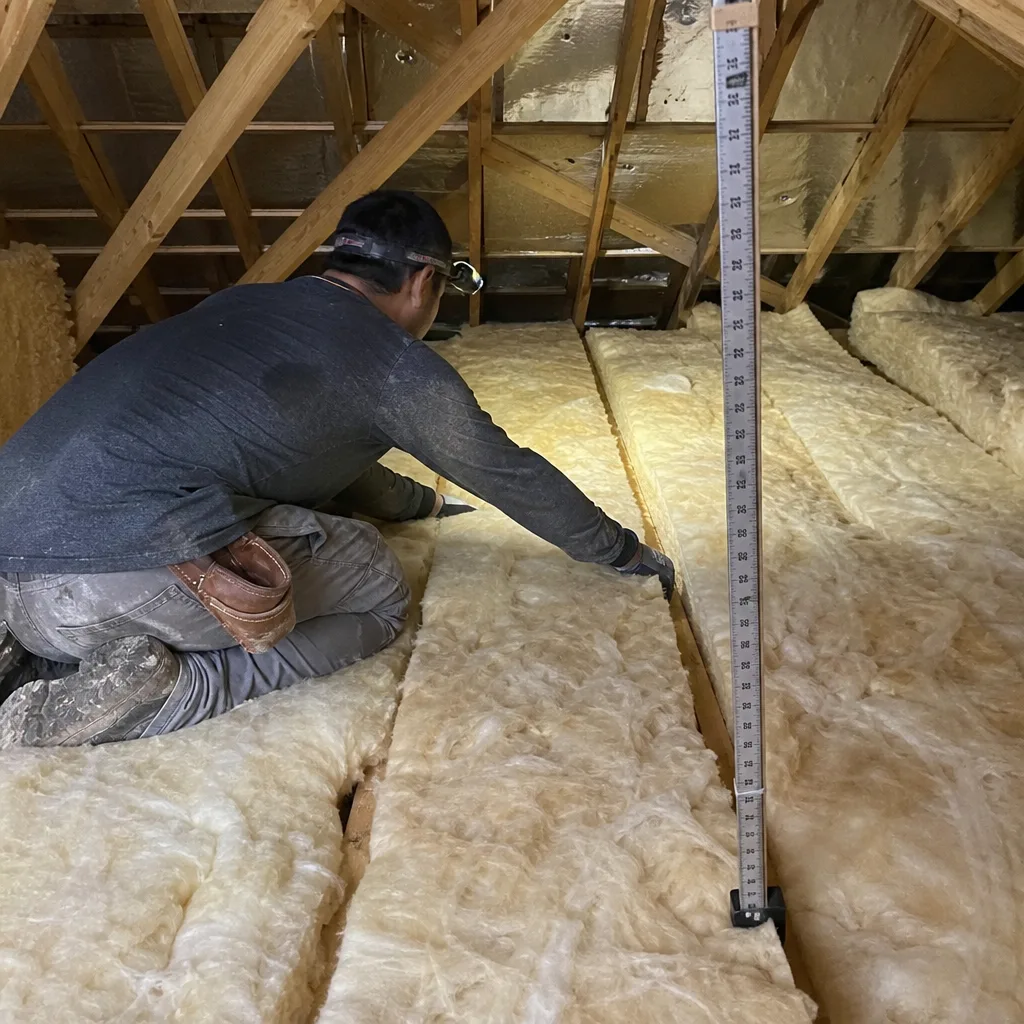
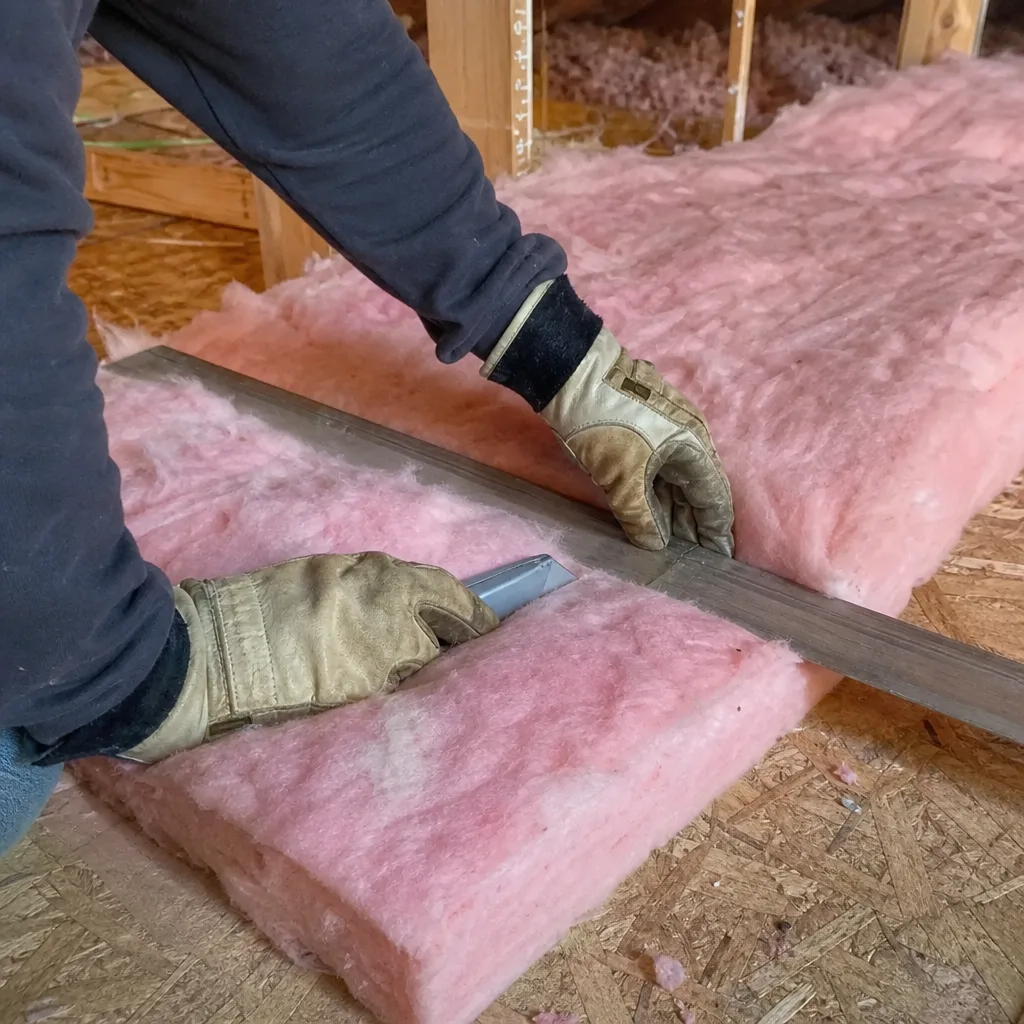
- Batt replacement in accessible floor assemblies. If you have a crawl space or basement with exposed joist bays, unfaced fiberglass or mineral wool batts can be friction-fit without specialty tools. Rockwool batts, for instance, cut cleanly with a bread knife and hold their position through density alone. The critical detail is ensuring the batt fills the full joist depth without compression. Compressed insulation loses R-value fast. A 6.25-inch batt squeezed into a 5.5-inch bay performs like a 4-inch batt.
- Attic hatch insulation and weatherstripping. The attic hatch is often the most neglected thermal bridge in a Converse home. Rigid foam board, cut to fit and sealed with foil tape, plus compression weatherstripping on the stop molding, is straightforward work. No permit required. No special equipment. The payoff is immediate. We’ve measured attic hatches in Converse homes leaking 150 CFM50 or more on a blower-door test, equivalent to a 6-inch square hole in the ceiling.
- Rim joist batts in unconditioned spaces. The rim joist, where the foundation meets the first floor, is a common convection path. Faced fiberglass batts, cut to fit and supported with mechanical fasteners or friction, address this adequately in our climate zone. The work is uncomfortable, not complex. Wear a respirator rated for fiberglass, not a dust mask.
What these three tasks share: no loose-fill distribution, no two-component chemical mixing, no disturbance of existing insulation that could release contaminants, and no work above the thermal envelope where air sealing must precede insulating.
In Converse neighborhoods like Woodlake and The Heights, where homes built 2005-2015 often have accessible crawl spaces and simple attic hatches, these DIY scopes can yield real comfort improvement for under $200 in materials.
Where DIY Creates Measurable Performance Problems
The problems start where equipment requirements outpace what a homeowner can rent or operate accurately. Three scopes stand out:
Blown-In Depth Consistency
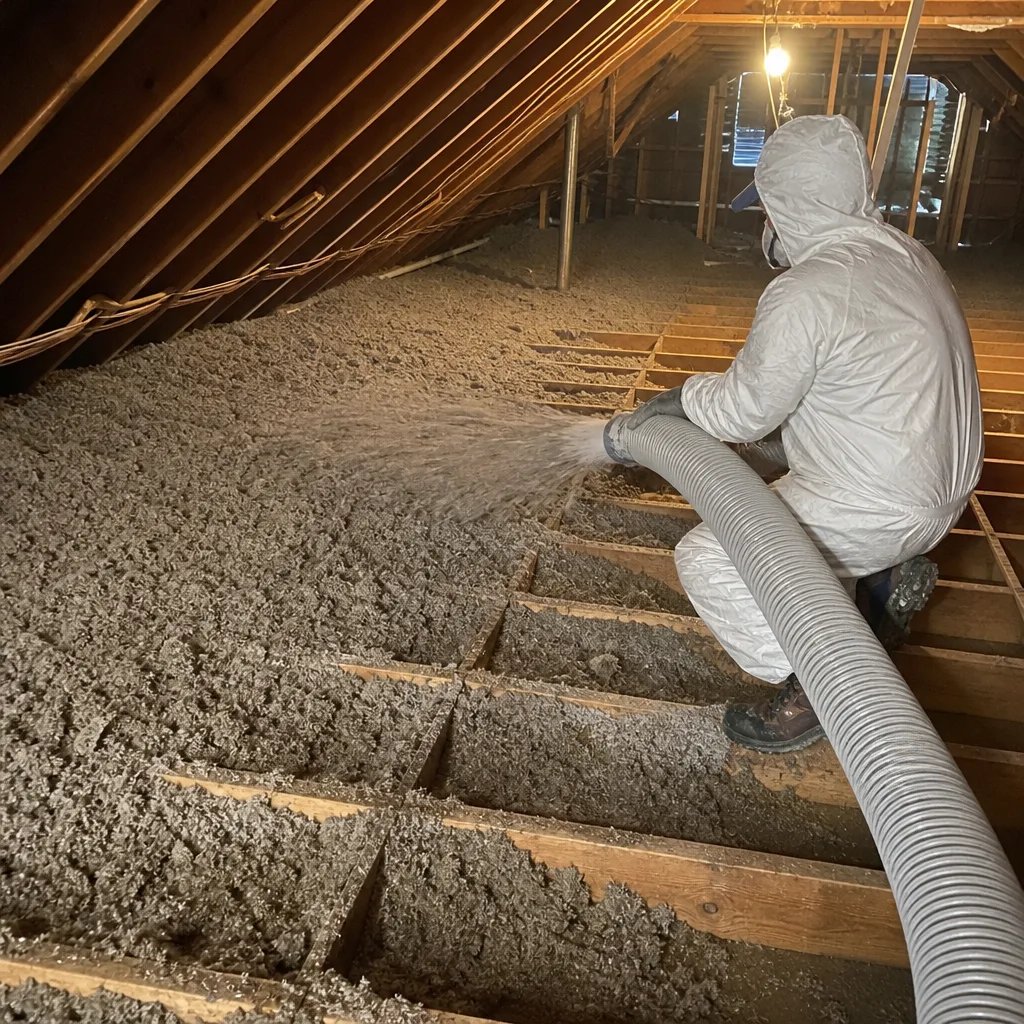
Attic blown-in insulation, whether fiberglass or cellulose, requires uniform depth across the entire plane. Rental machines from home improvement stores deliver material at lower velocity and pressure than truck-mounted units. The result is inconsistent loft, with thin spots near eaves and valleys where the hose couldn’t maintain adequate throw distance.
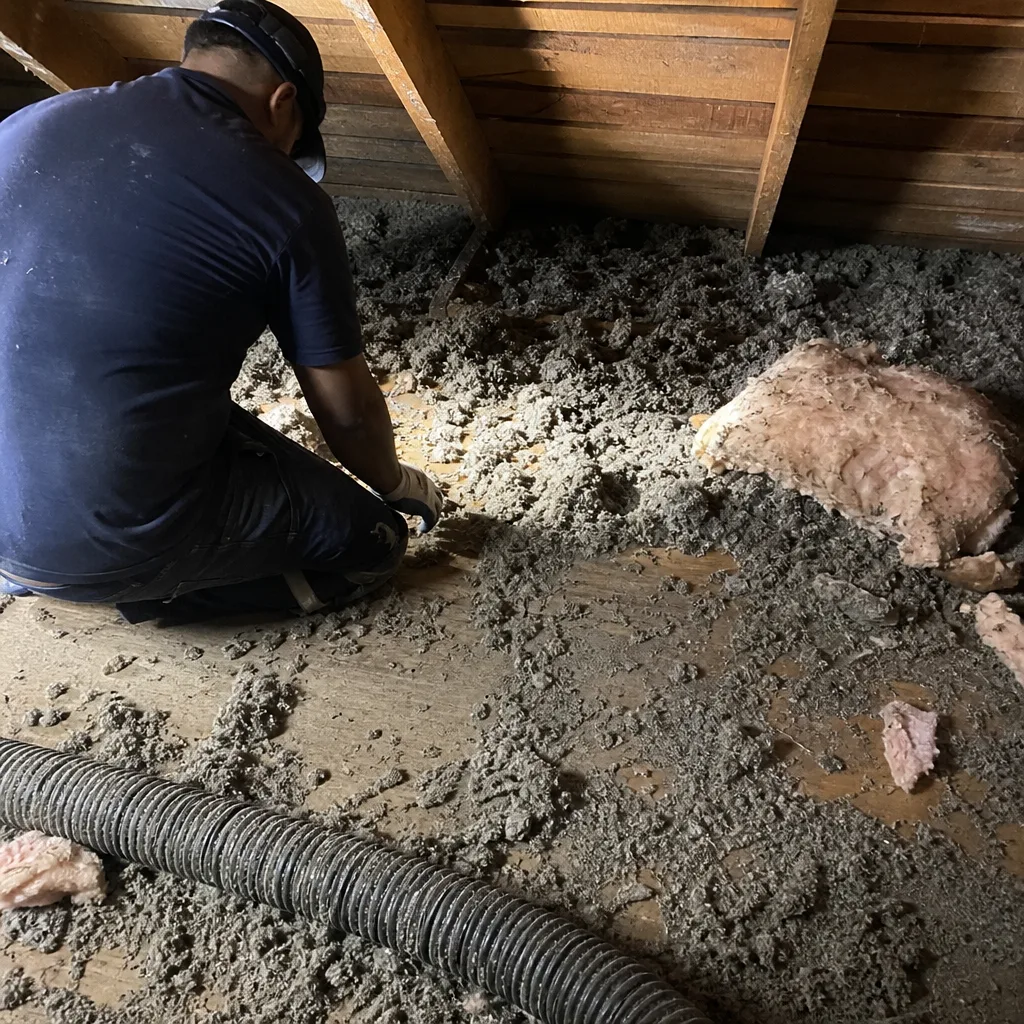
After six months of settlement, a DIY blown-in job typically measures 15-25% below target depth in 30% or more of the attic footprint. The homeowner has no way to know this without a systematic depth probe survey, which almost no DIYer performs. The R-value shortfall is invisible until the summer electric bill arrives or a thermal camera reveals hot spots.
Professional crews use depth markers, hose calibration, and real-time density checks. At Topside Attic Insulation Converse home, we verify depth with a 16-point grid before the crew leaves.
Spray Foam Two-Component Mixing
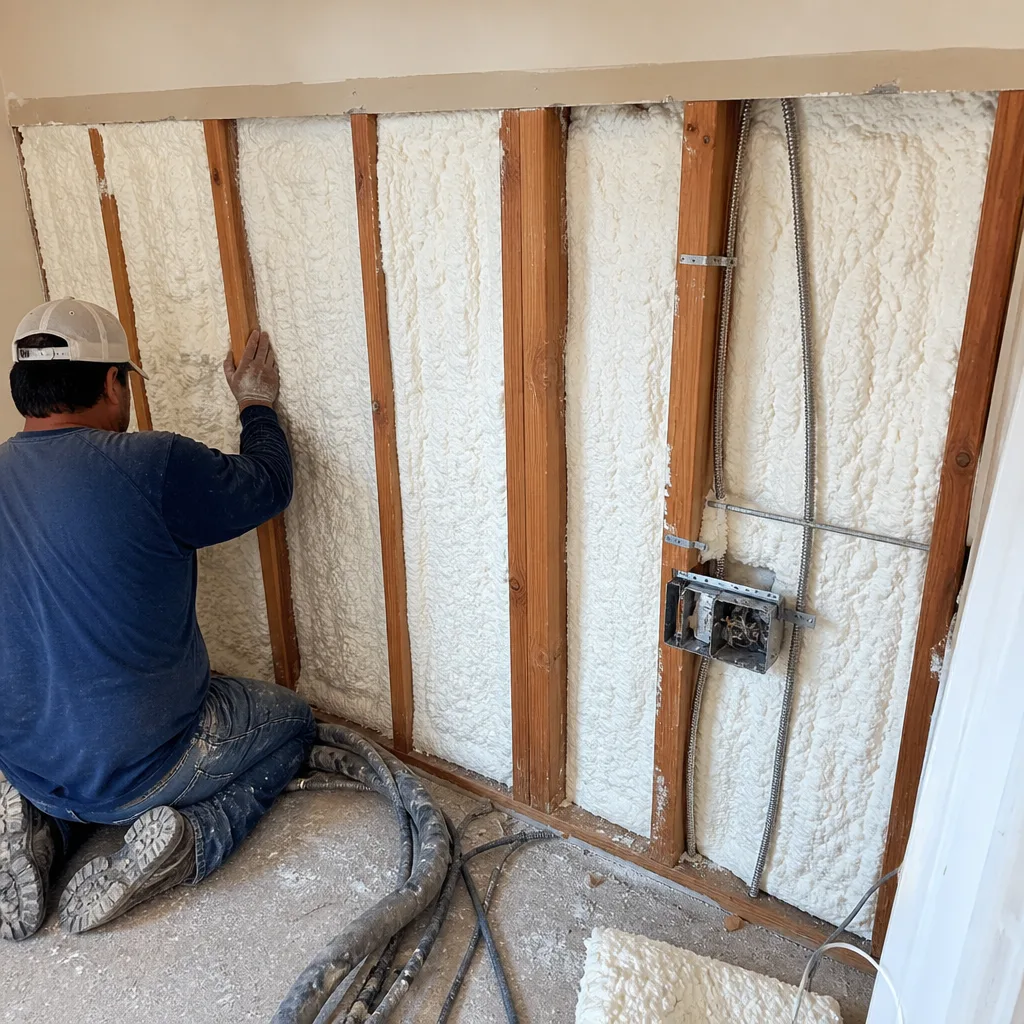
Open-cell and closed-cell spray foam insulation requires precise A-side/B-side chemical ratios, substrate temperature monitoring, and application thickness control. Off-ratio foam fails to cure properly, leaving sticky, odorous residue that must be removed mechanically. Too-thick passes in a single lift generate exothermic heat that can scorch framing or, in extreme cases, self-ignite.
DIY spray foam kits exist, but they’re limited to small patches and carry no training requirement. A whole attic or wall cavity with a kit is a recipe for incomplete cure, density variation, and trapped moisture. Icynene and Demilec, two manufacturers we work with, require certified installer training for warranty coverage. A DIY application voids material warranty and, in Texas, may complicate insurance coverage if moisture damage develops.
Air Sealing at Top Plates
The top plate, where interior and exterior walls meet the ceiling drywall, is the primary path for conditioned air to escape into the attic. Sealing it requires moving existing insulation, applying caulk or foam to every seam and penetration, then replacing insulation without compressing it. This work is performed from the attic side, often in 130-degree summer heat, with headlamp visibility only.
Most Converse homes built before 2010 have minimal top plate sealing. A homeowner who adds insulation without sealing first is burying the problem, not fixing it. The new insulation performs below spec because air is still moving through it. This is why attic insulation in Converse should always follow air sealing, never precede it.
We’ve inspected attics in the Rolling Creek and Converse Meadows subdivisions where homeowners blew cellulose over unsealed top plates. The insulation was full of dark streaks from years of air filtration. The material was doing almost nothing. Removing and re-installing properly cost more than doing it right the first time.
Texas Permit Law: What Homeowners Can and Cannot Pull
Texas law draws a sharp line between homeowner-permitted work and contractor-required work. Understanding this line protects you from stop-work orders, failed inspections, and sale complications.
A homeowner can pull their own permit in Texas for insulation work that does not alter structural elements, electrical, plumbing, or HVAC systems. This covers:
- Batt installation in existing cavities
- Attic hatch insulation upgrades
- Rim joist insulation in accessible crawl spaces
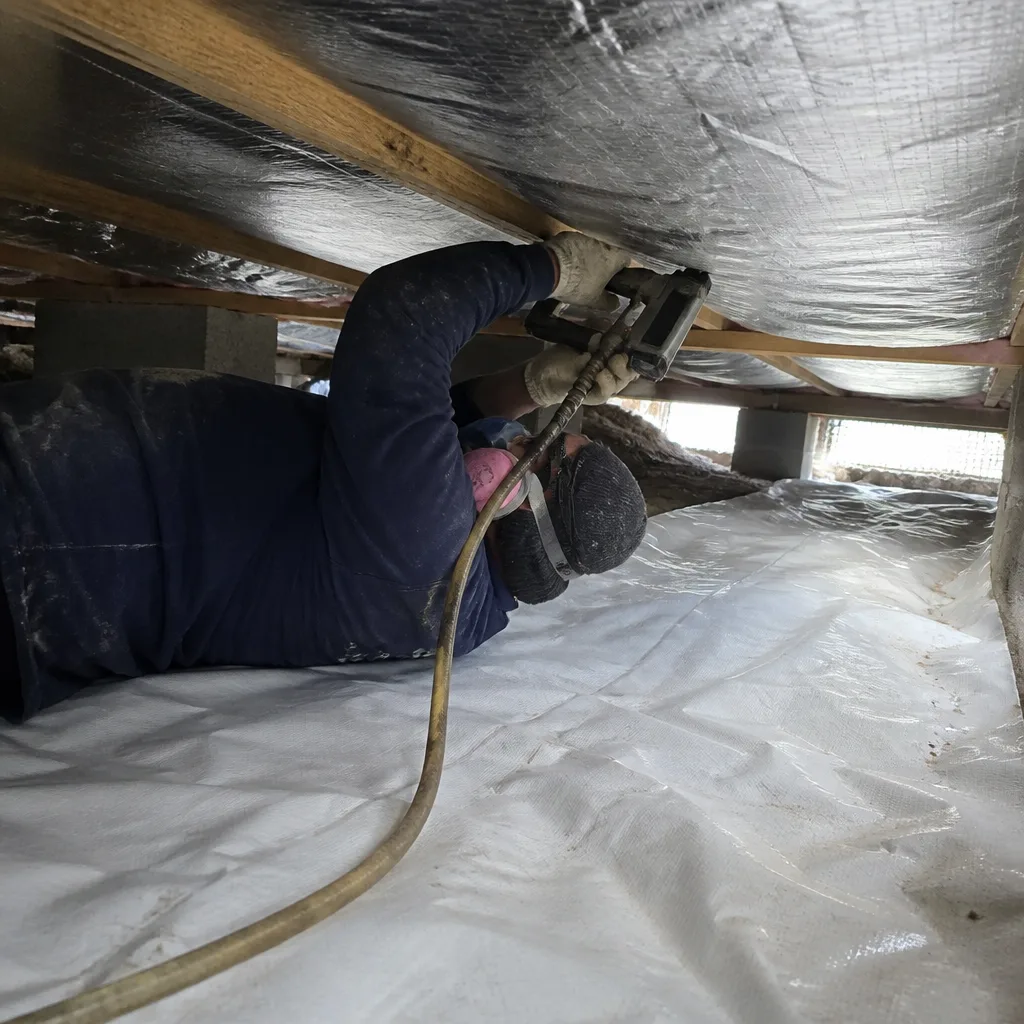
- Radiant barrier installation (stapled, not attached with fasteners into structural members)
A licensed contractor is required by statute for:
- Any scope that requires a building permit for structural modification, including removal of roof decking for top-down dense-pack wall insulation
- Spray foam insulation in occupied spaces, which triggers fire-separation and ignition-barrier requirements under the International Residential Code as adopted by Bexar County and Converse
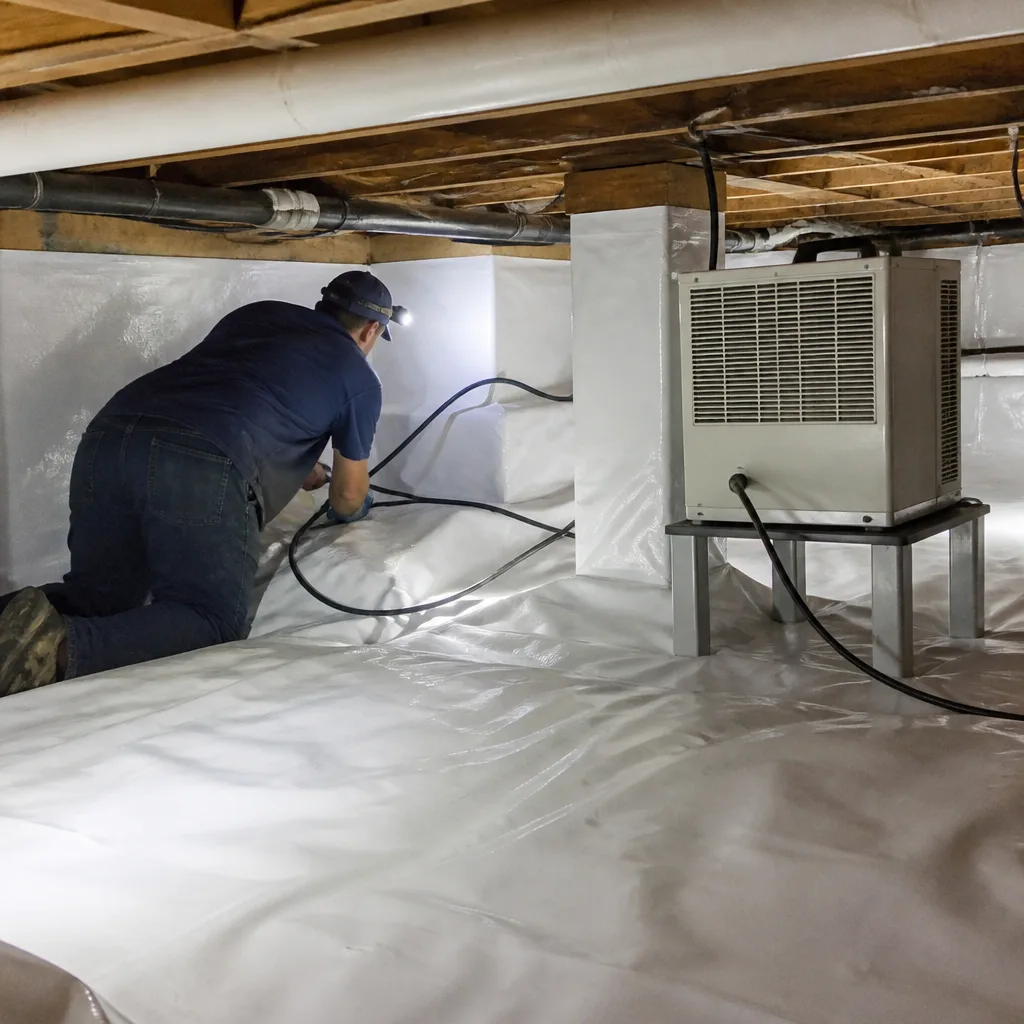
- Crawl space encapsulation with vapor barrier installation that includes dehumidification or conditioned air supply, which crosses into HVAC permitting
- Insulation removal where asbestos or vermiculite is suspected, requiring licensed abatement
The practical implication: if your Converse home needs attic air sealing combined with blown-in insulation, and the scope includes sealing recessed can lights or penetrations near electrical junctions, you’re in contractor territory. The permit office will require a licensed insulation contractor’s license number on the application.
We’ve handled permit corrections for Converse homeowners who started DIY and hit this wall mid-project. The stop-work order adds two to four weeks, and the re-inspection fee is $150-$300. Starting with a licensed contractor avoids this entirely.
The Real DIY Cost vs. Professional Install
The sticker price on a bag of Owens Corning AttiCat or GreenFiber cellulose is misleading. For a detailed look at what professional work actually costs versus DIY, see our Insulation Cost Breakdown: The Converse Homeowner’s Reference for 2026. Here’s the full accounting for a typical 1,500 square foot attic in Converse:
| Cost Item | DIY | Professional |
|---|---|---|
| Material (R-38, 1,500 sq ft) | $650-$850 | $1,100-$1,400 |
| Blower rental (2 days) | $250-$320 | Included |
| Respirator, coveralls, lighting | $80-$120 | Included |
| Waste from over-ordering/under-ordering | $100-$200 | Minimal (measured takeoff) |
| Depth correction (if needed, 30% probability) | $400-$700 | N/A (done right first) |
| Blower-door test | Not available DIY | Included |
| Documented photo record | Self-generated | Included |
| Total realistic cost | $1,480-$2,190 | $1,100-$1,400 |
The DIY column assumes no major problems. In practice, about one in three DIY blown-in jobs we see in Converse has depth deficiencies requiring correction. The correction cost includes removing material, re-distributing, and adding make-up insulation. The homeowner pays twice for the same R-value.
The professional column reflects our actual pricing for attic insulation in Converse at time of writing. It includes truck-mounted equipment, calibrated installation, and the post-job blower-door test that verifies air-sealing performance.
Under Haven Standard Clause 1, that professional price is written before any work starts. No surprises, no callback pricing. The DIY route has no equivalent price protection.
What You Lose Without a Blower-Door Test
The blower-door test, a pressurization reading that shows in one number how much air your building envelope is losing, is the single most valuable diagnostic in insulation work. A DIY insulation project cannot produce this number. Here’s what that costs you:
No baseline ACH50. Air changes per hour at 50 pascals of pressure is the standard metric for envelope tightness. A typical Converse home built 1990-2010 tests at 8-12 ACH50. After proper air sealing and insulation, 5-7 ACH50 is achievable. Without a baseline, you have no target and no verification. You’re guessing.
No thermal scan correlation. Infrared imaging during blower-door depressurization reveals air leakage paths that are invisible to the eye. The cold spot at the corner of your master bedroom ceiling might be a missing top plate seal, a duct chase, or compromised roof decking. A thermal scan without simultaneous blower-door pressure gives ambiguous results. We perform both together, then mark findings directly on photos in your documented record.
No before-and-after record for resale or insurance. When you sell your Converse home, buyers and their inspectors increasingly ask for energy performance documentation. A blower-door report with dated before-and-after numbers is objective evidence. When you file an insurance claim for moisture damage in an attic, the adjuster wants to know whether the insulation and ventilation were installed to code. Your DIY photos on your phone carry no procedural weight.
We’ve provided blower-door documentation for Converse homeowners that accelerated sales by two weeks and resolved insurance disputes that would have otherwise required litigation. The $400-$600 value of a standalone blower-door test is included in our standard scope on applicable jobs.
How Converse Climate Affects the Decision
Converse sits in IECC Climate Zone 2, hot-humid, with roughly 2,800 cooling degree days and 1,400 heating degree days annually. This asymmetry shapes insulation priorities in ways that differ from northern markets.
Attic insulation here is primarily a cooling-load defense. Roof deck temperatures in July exceed 150°F. Without adequate R-value and air sealing, that heat radiates through the ceiling plane, forcing your HVAC system to run longer cycles. The humidity matters too. A leaky attic in summer pulls moist outdoor air into the conditioned space, raising indoor relative humidity and creating condensation risk on cool ductwork.
DIY batt installation in a Converse attic often leaves gaps at eaves and around penetrations where humid air enters. The homeowner feels the result as a “sticky” house in August, not as an insulation problem. Professional installation with blower-door verification confirms that the envelope is tight enough to keep humidity controlled.
In neighborhoods like Valley Hi and Meadowbrook, where 1970s and 1980s homes have original R-19 or less, the upgrade to R-38 with proper air sealing typically reduces summer peak cooling load by 20-30%. A DIY job that achieves only R-30 effective due to thin spots and unsealed leaks captures perhaps half that benefit.
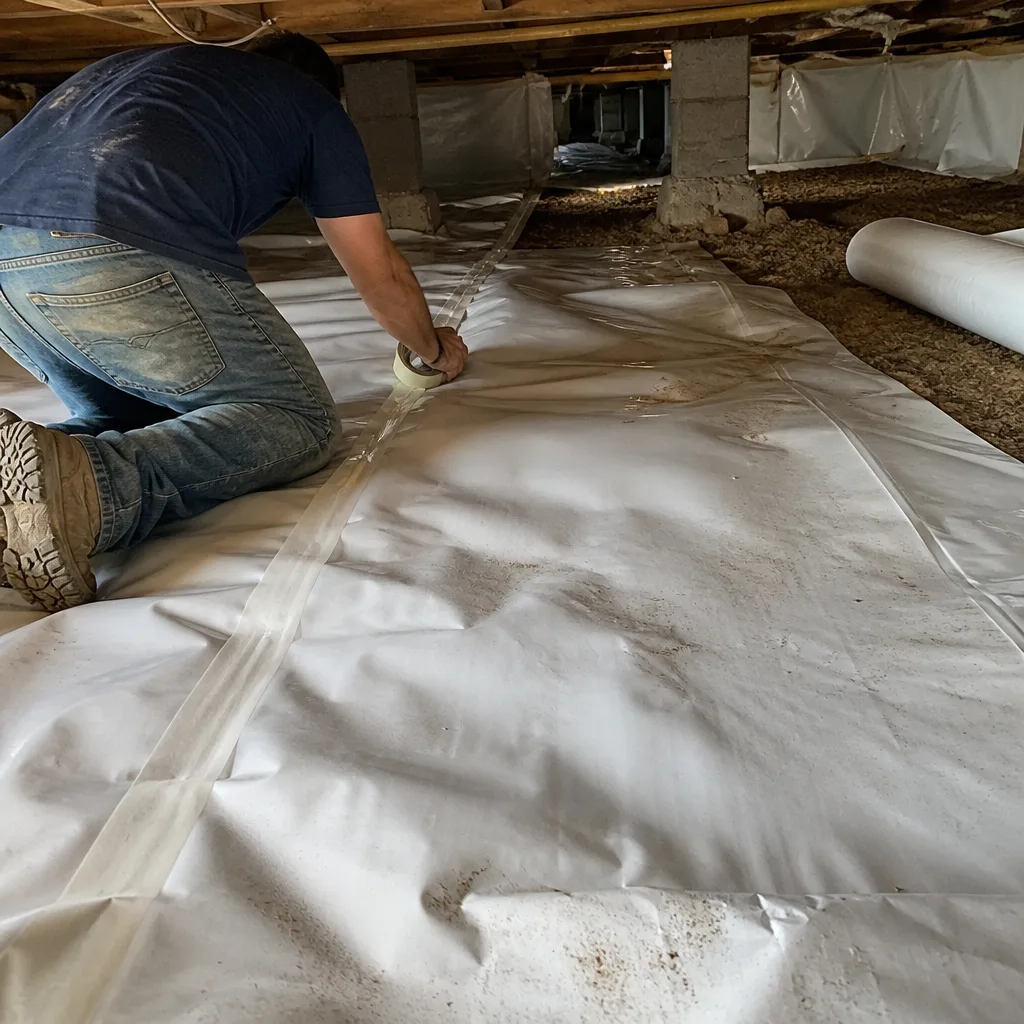
Crawl space encapsulation and vapor barrier in Converse is another climate-specific consideration. Our high water table and clay soils make crawl spaces particularly vulnerable to ground moisture. A homeowner who installs floor insulation without addressing crawl humidity is building a mold farm. This scope requires vapor barrier installation, often with dehumidification, which crosses into licensed contractor territory for permitting.
The Documentation Difference
What you receive when the work is done matters as much as what happens during installation. Here’s the comparison:
| Documentation Element | DIY | Professional (Haven Standard) |
|---|---|---|
| Written scope of work | Self-generated notes | Provided before work starts |
| Written price | Receipts accumulated | Flat price, no change orders |
| Written warranty | Material warranty only | 365-Day Done Right Promise |
| Photo record | Phone photos, if remembered | Documented Photo Record on every visit |
| Blower-door readings | Not available | Before-and-after on applicable jobs |
| Material specifications | Bag labels | Brand, product, and lot documentation |
The Haven Standard requires all six elements on every job. Since 2016, we’ve completed this documentation for over 9,000 homes. The record protects the homeowner, the contractor, and the next buyer. A DIY project has no equivalent paper trail.
When we say “documented record,” we mean timestamped photos of every critical detail, the written scope you signed, the written price you agreed to, and the warranty terms. If you sell your Converse home in five years, this packet transfers to the buyer. If you have a concern in month ten, we pull the file and compare current conditions to the photo record. No memory required, no dispute possible.
Common Mistakes to Avoid
- Installing insulation before air sealing. This is the most expensive mistake we correct in Converse attics. Once insulation covers the top plates and penetrations, finding and sealing leaks requires removing material. The fix costs 40-60% more than doing sealing first.
- Compressing batts to fit. A batt compressed into a cavity narrower than its designed thickness loses up to 50% of its rated R-value. We’ve seen homeowners stuff R-30 batts into 2×8 joist bays, achieving effective R-18 performance while paying for R-30 material.
- Blocking soffit vents with insulation. Converse homes need attic ventilation to exhaust summer heat and winter moisture. Insulation pushed tight to the roof deck at eaves blocks airflow and can cause sheathing rot. Baffles are required; most DIYers omit them.
- Using faced insulation in already-insulated attics. The paper facing is a vapor retarder. In a hot-humid climate, adding faced batts over existing insulation creates a double vapor barrier that can trap moisture. Use unfaced material for top-ups.
- Ignoring recessed can lights. Standard recessed lights protruding into the attic are penetration points that leak air and create fire hazards when buried in insulation. Only IC-rated (insulation contact) fixtures can be covered. Non-IC fixtures need protective covers or replacement.
- Spray foam without ignition barriers. Texas adopts the IRC requirement for thermal or ignition barriers on spray foam in occupied attics and crawl spaces. A DIYer who foams a rim joist in a basement without the required barrier faces a code violation and insurance complication.
- Skipping the respirator. Fiberglass and mineral wool fibers are respiratory irritants. Cellulose dust is heavy and choking. We’ve seen homeowners develop persistent coughs from one afternoon of unprotected attic work. A $40 respirator is non-negotiable.
When to Call a Professional
Call a licensed insulation contractor when your scope includes blown-in material, spray foam, air sealing that requires moving existing insulation, or any work that might trigger a building permit. Call when you need documentation for a home sale, insurance claim, or energy rebate program. Call when you want verification that the work actually performed, not just that it was installed.
Spray foam insulation in Converse should always be handled by a certified installer. The material warranty, code compliance, and safety requirements are not negotiable.
Topside Attic Insulation Converse offers free estimates in Converse. We’ll review your scope, identify any permit requirements, and provide a written price before any work starts. For additional guidance, explore our more guides & resources. Call (830) 420-0953 or request an estimate. Every estimate includes a free second opinion on any written estimate you’ve already received.
Frequently Asked Questions
Most attic insulation jobs in a Converse home between 1,500 and 2,500 square feet run between $1,100 and $2,400, depending on existing insulation depth, accessibility, and whether air sealing is included. Spray foam ranges higher, typically $2.50-$4.00 per board foot for open-cell and $4.50-$7.00 for closed-cell. We provide a written price before any work starts, with no change orders. Call (830) 420-0953 for an exact quote on your home.
Yes, for batt installation, attic hatch upgrades, and rim joist work that doesn’t alter structural, electrical, or HVAC systems. You can pull your own permit for these scopes. Blown-in attic insulation, spray foam, and any scope involving electrical penetrations or structural modification requires a licensed contractor under Texas law and Bexar County adoption of the International Residential Code.
Rarely, when full costs are counted. The material plus blower rental, safety equipment, and waste from inexperience typically totals $1,480-$2,190 for a 1,500 square foot attic. Our professional install for the same scope runs $1,100-$1,400 and includes truck-mounted equipment, depth verification, and a blower-door test. If you need depth correction later, the DIY route becomes the more expensive option.
IECC Climate Zone 2 requires R-30 minimum for attic insulation in new construction, but R-38 to R-49 is recommended for retrofits given our extreme summer roof deck temperatures. Many Converse homes built before 2010 have R-19 or less. The upgrade to R-38 with proper air sealing typically pays back in 4-7 years through reduced cooling load.
Signs include dark streaks or dust patterns on existing insulation (air filtration), hot or cold ceilings in specific rooms, and high summer humidity despite HVAC operation. The definitive test is a blower-door test with infrared scanning. We perform this as part of our standard assessment. Without it, you’re guessing whether sealing is needed.
Possibly. Buyers and insurers increasingly request documentation of energy improvements. A DIY installation without permit, blower-door verification, or material specifications creates ambiguity. A professional installation with documented before-and-after performance, written warranty, and photo record transfers cleanly to the next owner and satisfies adjuster inquiries.
The Bottom Line
The DIY-versus-professional question in Converse isn’t about whether you’re capable of handling insulation material. It’s about whether you have access to the equipment, permitting authority, and verification tools that determine whether the work performs as intended. Batt replacement in accessible spaces is genuine DIY territory. Blown-in attic work, spray foam, and any scope requiring air sealing before insulating belongs with a licensed contractor who can document the result. The cost comparison, when honestly calculated, favors professional installation for most whole-attic scopes. The documentation you receive, a written price, written scope, photo record, and blower-door verification, protects your investment for as long as you own the home.
Written by Wes Okafor, Owner at Topside Attic Insulation Converse, serving Converse since 2016.