
Attic Batt Insulation in Converse, TX
Attic Insulation services in Converse, TX typically cost between $1.50 and $3.20 per square foot installed, depending on the R-value specified, the existing attic conditions, and whether air sealing is completed first. Most Converse homes we work in fall between $900 and $2,800 for a full attic batt installation. Work is usually scheduled within the week, and every job closes with a written scope, a Documented Photo Record, and a written warranty before the crew leaves.
Batt insulation – pre-cut fiberglass or mineral wool panels sized to fit between joists – is one of the most practical choices for attic floors in Converse homes built before 2005, where standard 16-inch and 24-inch joist spacing is the norm and the framing is predictable enough for batts to sit flush and tight. When installed correctly, after the attic floor has been properly air-sealed, batts perform reliably for decades without settling the way loose-fill can in a vented attic that sees extreme summer heat cycling. That last part matters more than most homeowners expect: Converse sits at the edge of the San Antonio metro’s heat corridor, where July attic temperatures routinely exceed 140°F. Insulation that was installed without sealing the top plates and can-light penetrations first will underperform regardless of its R-value rating – and most of what we find in older Converse attics was installed exactly that way.
Our full Attic Insulation in Converse service covers batt installation as part of a broader building-envelope approach. Wes Okafor has led Envelope Insulation Co. since 2016 under The Haven Standard, which means every job here begins with a written price and ends with documentation you can actually use. If you want to get on the schedule or talk through what your attic needs, call us at (830) 420-0953 – a live person will answer, every time.
When You Need Attic Batt Insulation
- Your summer electric bills have climbed past $220/month on a home under 2,000 sq ft. In Converse neighborhoods like Woodcreek and Classen Oaks, we regularly see 1,500-square-foot homes running cooling loads that belong to homes twice the size – traced back to attic floors with R-11 batts where R-38 is the current Bexar County code minimum for climate zone 2.
- The attic floor insulation is visibly compressed, dirty, or missing in sections. Compressed batts lose effective R-value fast. A batt that was R-19 new and is now flattened to half its original thickness may be performing closer to R-10. Dirty batts are also an air-infiltration signal – air moving through insulation carries particles into the fibers and discolors them.
- You’re buying or recently bought a home built between 1975 and 2000. Most attic insulation in that era was installed to codes that are two or three revisions behind today’s standards. We see a lot of R-11 and R-19 batt work in Converse homes from that period, and a single layer of batts over an unsealed floor is rarely adequate for a Texas summer.
- You’ve had HVAC work done but rooms still don’t reach set temperature. When ductwork or equipment has been upgraded and comfort problems persist, the attic envelope is frequently the next variable. Batts that have shifted or been disturbed during previous attic work can leave gaps that bypass the R-value rating of the material itself.
- Rodent or pest activity has disturbed existing insulation. Attic batt panels that have been tunneled through or compressed by pests need to be removed, the attic floor cleaned and sealed, and new batts installed. We pair this work with our attic cleaning and rodent proofing service when the scope calls for it.
- You’re finishing or re-conditioning a previously unconditioned attic space. If a bonus room, HVAC air handler, or storage area is being added under a currently uninsulated attic floor, batt installation on that floor – after air sealing – is often the most cost-effective first step to separating the conditioned space below from the unconditioned attic above.
Our Attic Batt Insulation Process
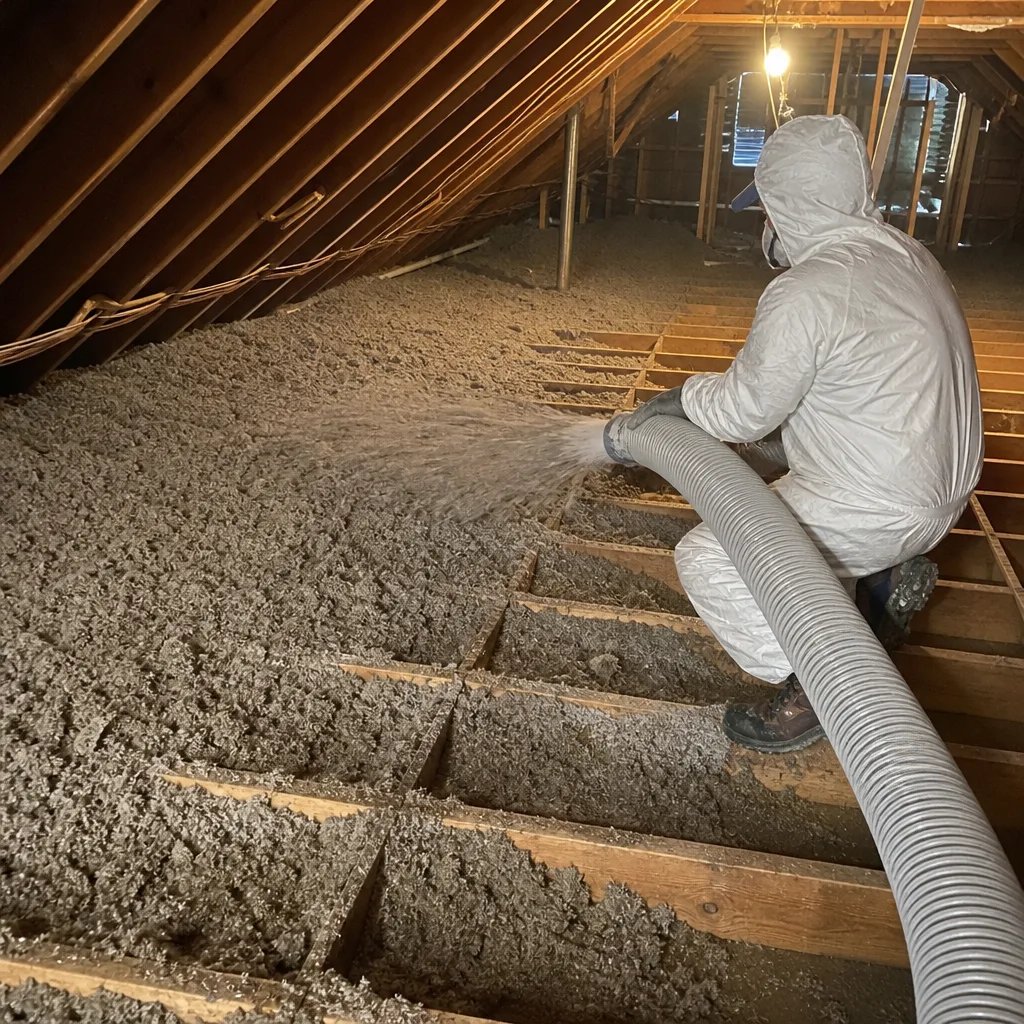
We do not skip steps to move faster. The sequence below is the same on every job, and the documentation you receive at the end reflects each stage.
- Pre-installation inspection and blower-door baseline. Before any insulation is quoted, we walk the attic floor and run a blower-door test – a pressurization measurement that produces a single CFM50 number showing exactly how much conditioned air the building envelope is currently losing. This baseline goes into your written job record. On applicable jobs, we post the before-and-after readings so you can see the measured result of the air-sealing work, not just take our word for it. This step also confirms joist spacing, existing R-value, and whether any moisture, pest damage, or prior insulation removal is needed before we proceed.
- Air sealing of the attic floor – completed before insulation is added. Top plates, plumbing penetrations, can lights, and any gaps where conditioned air escapes into the attic are sealed with fire-rated caulk or two-component spray foam, depending on the gap size. Under The Haven Standard, Envelope Insulation Co. will not install batts over an unsealed attic floor. This is not an upsell. It is a prerequisite, because insulation added over active air leaks does not deliver the R-value it promises. We document the sealing work in photos before the batts go in.
- Material selection and written price confirmation. We specify the batt product – most Converse jobs use Owens Corning EcoTouch or Johns Manville fiberglass batts rated at R-38 or R-49 depending on the existing attic depth and the target R-value the homeowner has chosen. The written price you received at estimate is confirmed unchanged before any material is staged. Haven Standard Clause 1: a flat price, written scope, and written warranty before anyone lifts a tool.
- Batt installation – cut-to-fit, no compression, vapor retarder orientation confirmed. Batts are cut to fit around obstructions without compressing the fibers – a compressed batt loses R-value in proportion to how much it’s squeezed. Vapor retarder facing (where applicable) is oriented toward the conditioned space. Seams are butted, not overlapped. Batts are not forced into spaces where they don’t fit; odd dimensions get custom-cut pieces, not shoved remnants.
- Post-installation blower-door reading and photo documentation. After installation, we run a second blower-door measurement. The before and after numbers go into your Documented Photo Record alongside installation photos showing coverage, seam placement, and air-sealed penetrations. You receive this record the same day the crew leaves – not on request, not at a later date.
- Written warranty delivery and 365-Day Done Right Promise activation. Your written warranty and the 365-Day Done Right Promise are delivered with the job record. If anything is not done right, we make it right – that’s in writing, not a verbal assurance. The job isn’t closed until you have the scope, the photos, the blower-door readings, and the warranty in hand.
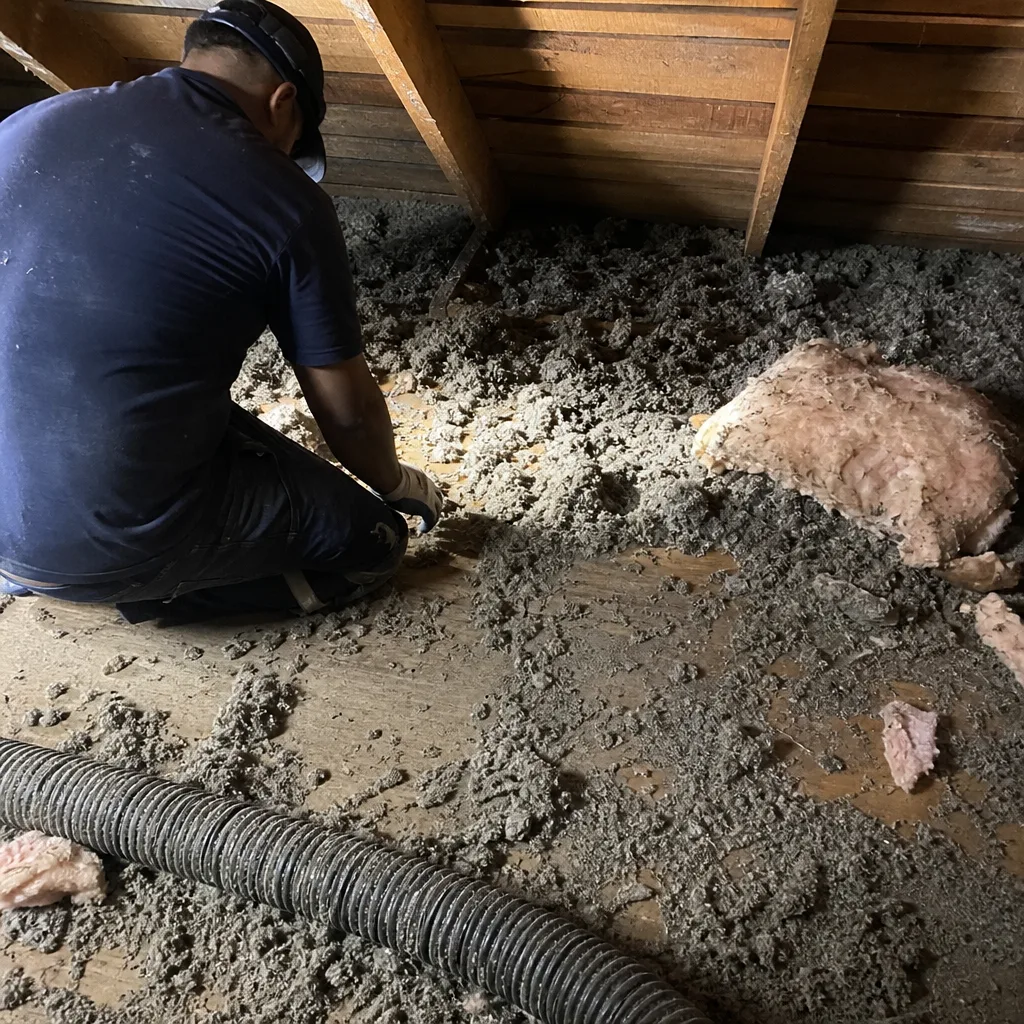 Before
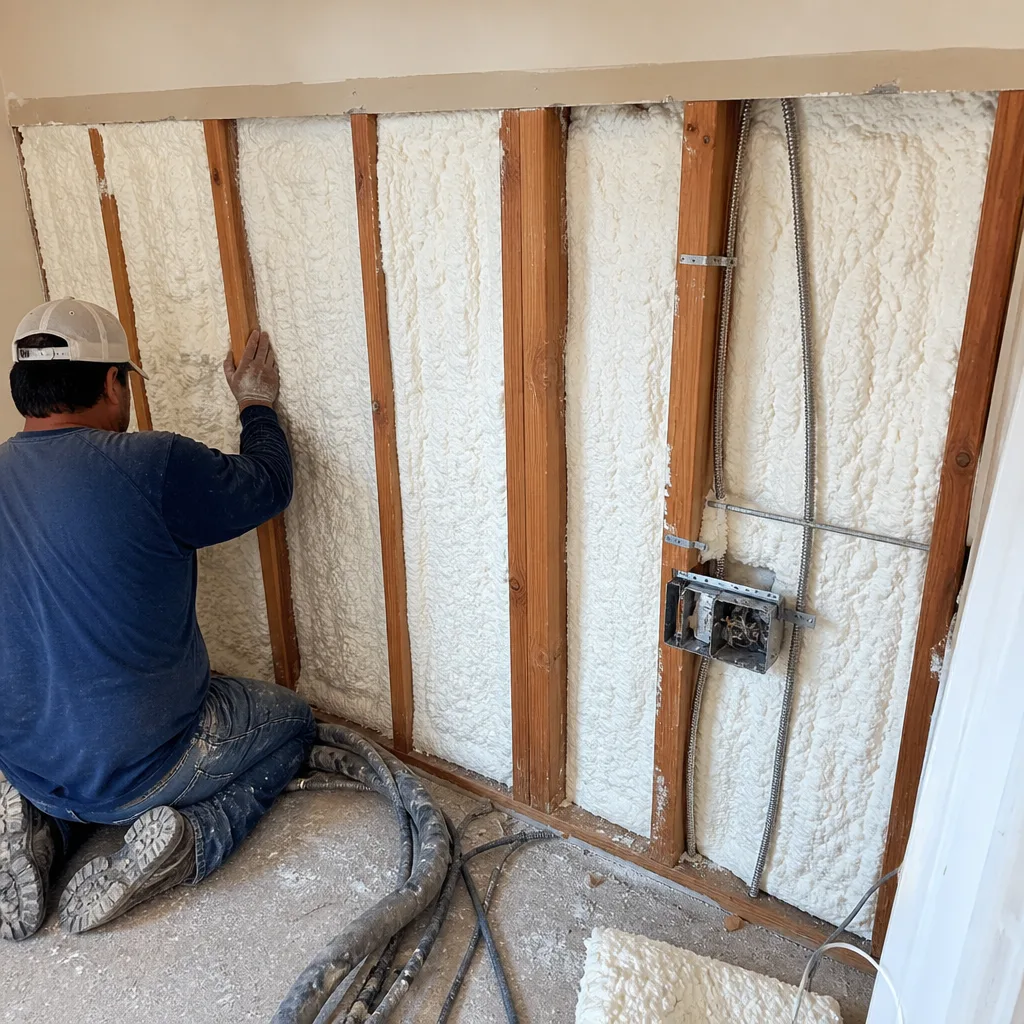 After
AfterAttic Batt Insulation Pricing in Converse
Most attic batt insulation jobs in Converse run between $900 and $2,800 installed, with the spread driven almost entirely by four variables: attic square footage, target R-value, whether air sealing is being done at the same time, and whether existing insulation needs to come out first.
| Scenario | Typical Installed Range |
|---|---|
| New batt installation, sealed attic floor, 1,000-1,500 sq ft, R-38 | $900 – $1,400 |
| New batt installation, sealed attic floor, 1,500-2,200 sq ft, R-38 | $1,300 – $2,000 |
| Removal of existing batts + replacement, 1,000-1,500 sq ft, R-38 | $1,400 – $2,200 |
| Full install with air sealing, 2,000-2,500 sq ft, R-49 | $2,000 – $2,800 |
| Partial replacement or spot repair (under 400 sq ft) | $300 – $650 |
These ranges reflect Converse market conditions as of 2025. They include labor, material, air-sealing work on the attic floor, and the Documented Photo Record. They do not include attic cleaning or rodent proofing if pest damage is found during the inspection – that scope is priced separately and presented in writing before any decision is required from you.
A few factors that push a quote toward the higher end: attic access that requires equipment staging through a tight hatch, attic depth under 30 inches that slows installation, significant existing debris or damaged insulation that has to come out, or a homeowner targeting R-49 rather than the code-minimum R-38. None of these are surprises on our jobs – the pre-installation inspection catches them, and the written price you receive reflects whatever we found.
Under Haven Standard Clause 1, you receive a flat written price before any work starts – no estimates that balloon after the crew arrives. If you have a written quote from another contractor, bring it. We offer a Free Second Opinion on any written estimate and will read it with you line by line.
FAQs – Attic Batt Insulation
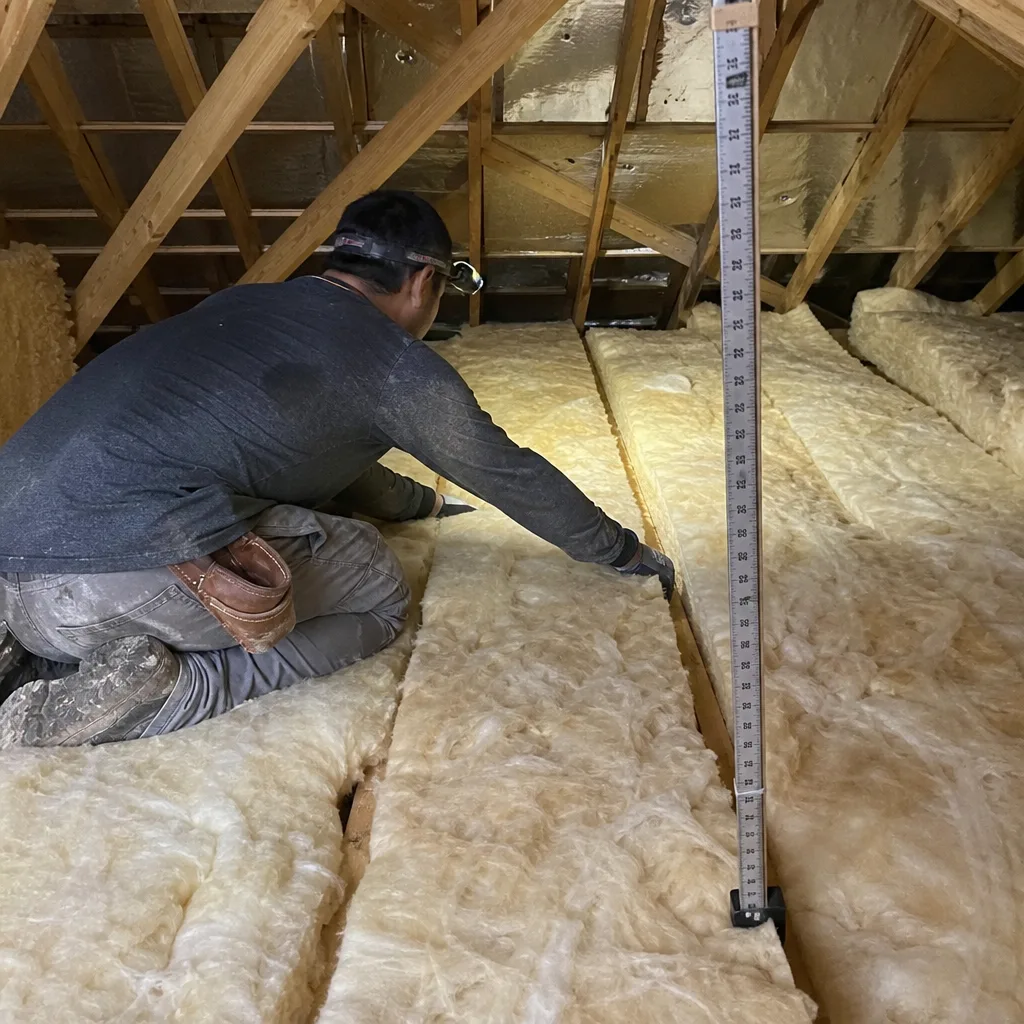
What R-value do I need for attic batt insulation in Converse, TX?
Converse falls in IECC climate zone 2, where the current code minimum for attic insulation in new construction and major retrofits is R-38. Most homes we work on in the Converse area – particularly those built before 2010 – have existing insulation that tests out between R-11 and R-22, well below that threshold. We typically recommend R-38 as the baseline and quote R-49 for homeowners whose cooling bills suggest a higher-performance target is worth the additional cost. The blower-door test we run before installation helps distinguish how much of your energy loss is an insulation problem versus an air-sealing problem, so you’re not paying for R-value you won’t actually recover in savings. Call (830) 420-0953 to schedule an inspection – the written price is included, no separate fee.
Is batt insulation or blown-in insulation better for my Converse attic?
Batt insulation performs better when joist bays are standard and unobstructed – typically 16-inch or 24-inch on-center framing, which covers most Converse homes built before the mid-2000s. Blown-in loose-fill, including blown fiberglass or cellulose, outperforms batts in attics with irregular framing, heavy obstruction from HVAC equipment, or very shallow joist bays where batts can’t reach their rated depth without compression. The honest answer is that the attic’s framing and existing conditions determine the better material, not a blanket preference. We’ll tell you which one the inspection points to, and if blown-in is the right call, we’ll quote that instead. Our full Attic Insulation in Converse page covers both options in detail.
Can you install batts over my existing insulation?
Sometimes, yes – but only after the existing layer has been inspected and the attic floor has been air-sealed. If the existing batts are in sound condition (no moisture damage, no pest disturbance, no significant compression), adding a second layer perpendicular to the first joists is a standard and cost-effective approach. If the existing material is compromised, Attic Insulation Replacement is needed instead-installing over it traps the problem rather than solving it. Our pre-installation inspection documents what’s there and the written price reflects whichever scope the conditions require. We won’t quote a two-layer install over material that needs to come out first.
How long does attic batt insulation last in a Converse home?
Properly installed fiberglass batts – products like Owens Corning EcoTouch or Johns Manville Spider – are rated to maintain R-value for the life of the structure when installed in a dry, pest-free attic environment. In practice, the variables that degrade batt performance in Converse attics are moisture intrusion from roof leaks, pest disturbance, and compression from foot traffic during HVAC service calls. The Documented Photo Record you receive at job completion gives you a baseline to compare against if a future contractor or inspector opens the attic hatch and the condition looks different from what we installed. That record is yours, and it’s included on every job at no additional charge.
Why Converse Homeowners Work with Envelope Insulation Co.
Since 2016, Wes Okafor and the team at Envelope Insulation Co. have completed work in more than 9,000 homes across the San Antonio metro area, every one of them with a written price before work started and a documented record when the crew left. That’s not a marketing line – it’s the operating structure the business was built on, and it hasn’t changed since the first job.
Converse is a specific market. The housing stock is a mix of 1980s and 1990s construction in established neighborhoods like Woodcreek Farms, newer builds east of Converse Crossing, and a corridor of older homes along Loop 1604 where attic insulation was rarely a priority during original construction. What we find most consistently in this market is attic floors insulated to 1990s code minimums, with can-light penetrations and top-plate gaps that were never sealed. The insulation looks fine from the hatch, but the blower-door number tells the actual story.
We source materials from Owens Corning, Johns Manville, and Knauf, among others. There is no proprietary product lock-in – the material specified on your job is the one the attic conditions call for, not the one we happen to stock. Background-checked, uniformed technicians handle every installation, and when you call (830) 420-0953, a live person answers. Every time.
The 365-Day Done Right Promise applies to every completed job. If it’s not right, we make it right – in writing, with a named technician, not a callback window measured in business days. You can also read more about our full building-envelope approach on the home page.
If you’re ready to get a flat written price for attic batt insulation in Converse – with no obligation to proceed – call (830) 420-0953. The estimate is free, the price is in writing before anyone starts, and the job record is yours when we leave.
Written by Wes Okafor, Owner at Topside Attic Insulation Converse, serving Converse.