

How Much Does Crawl Space Encapsulation & Vapor Barrier Cost in Converse?
Crawl Space Encapsulation & Vapor Barrier services in Converse, TX typically run between $3,200 and $8,500 for a standard single-family home, with most projects landing around $4,500 to $6,000 once vapor barrier, drainage matting, and perimeter sealing are included. A vapor barrier-only installation - no full encapsulation - usually falls between $1,200 and $2,800 depending on crawl space square footage and existing moisture conditions. Written price before any work starts is how we handle every job at Envelope Insulation Co., so you’ll know the exact number before a crew member sets foot under your home.
Crawl Space Encapsulation & Vapor Barrier Cost Breakdown (2026)
These are real price ranges for the Converse market as we see it in 2026 - not national averages pulled from a content farm. Crawl spaces in this part of Bexar and Guadalupe County tend to run humid from late spring through early fall, and the clay-heavy soil around communities like Turning Stone and Indian Hills holds moisture longer than sandy central Texas soils, which pushes remediation scope up on some jobs.
| Scope of Work | Typical Cost Range (Converse, TX) | Notes |
|---|---|---|
| 6-mil poly vapor barrier only (existing crawl) | $1,200 - $1,800 | Ground cover only; no wall or rim joist sealing |
| Heavy-duty 12-20 mil vapor barrier | $1,800 - $2,800 | Appropriate for homes with active seepage or standing history |
| Partial encapsulation (ground + walls, no conditioning) | $2,800 - $4,200 | Covers most older slab-edge crawl spaces in Converse |
| Full encapsulation (ground, walls, rim joists, taped seams) | $4,500 - $6,500 | Most common scope for 1,400-2,200 sq ft homes |
| Full encapsulation + crawl space dehumidifier | $5,500 - $8,500 | Required when relative humidity consistently exceeds 60% |
| Mold remediation add-on (light surface mold) | $400 - $900 | Before encapsulation - skipping this voids long-term results |
| Crawl space insulation (after encapsulation) | $1,200 - $2,400 | Spray foam or rigid board on walls/rim joists |
| Old vapor barrier removal | $300 - $700 | Thin poly that has degraded or grown mold underneath |
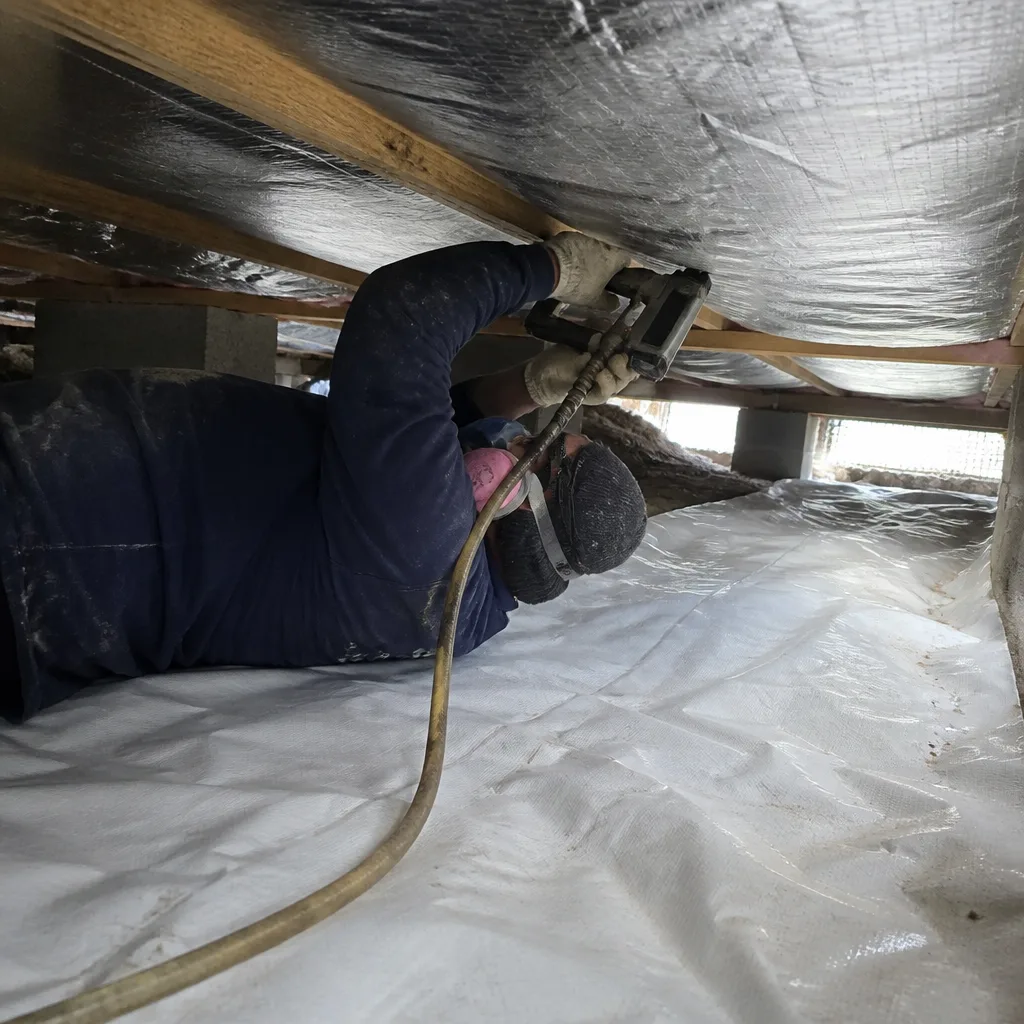
What moves a job toward the lower end of these ranges: a clean, dry crawl space with consistent clearance above 24 inches, no standing water history, no existing mold, and a simple rectangular footprint. What pushes it toward the higher end: low clearance that forces crew members to work flat on their backs the entire time, prior water intrusion that has compromised the subfloor, pier-and-beam construction with many penetration points to seal, or a crawl space that wraps around HVAC equipment.
In the Converse neighborhoods of Meadow Oaks and Country Lane, we see a disproportionate share of mid-1980s construction where the original 4-mil poly has either shredded or trapped decades of debris underneath it. Removing that material and starting clean adds cost, but encapsulating over degraded existing barriers is one of the most common mistakes we correct in a second-opinion visit. Under Haven Standard Clause 1, our price for every one of these scenarios is written down before we start - flat, scoped, no hourly surprises.
What Affects Crawl Space Encapsulation & Vapor Barrier Pricing in Converse
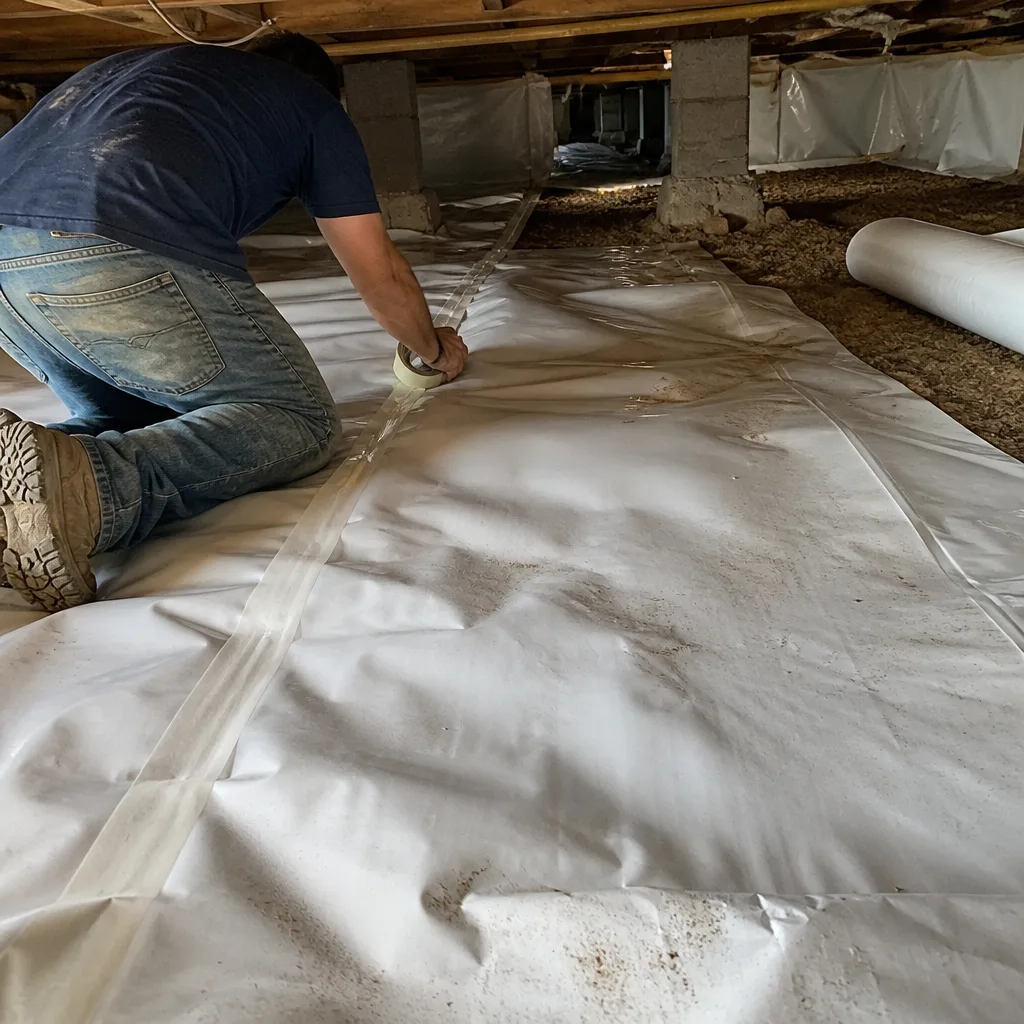
- Crawl space square footage. Material cost scales directly with the ground area being covered. A 900 sq ft crawl space under a 1,200 sq ft Converse ranch costs less than a 1,600 sq ft crawl under a two-story with a partial basement footprint. Most quotes you get should state the square footage explicitly - if they don’t, ask.
- Clearance height. A crawl space with 36 inches of clearance allows a crew to work on hands and knees. One with 14 inches of clearance is entirely flat-work, which takes longer and requires more care with seaming and taping. Labor cost can increase 20-35% on very low-clearance jobs common in some of the older Converse tracts built before modern building codes raised minimum clearance requirements.
- Soil moisture and existing conditions. Clay-heavy soils in the Converse area, particularly on the northwest edge near the Randolph Air Force Base corridor, retain moisture between rain events and push humidity readings high even in dry weather. When a moisture meter reads above 18% at the subfloor joists before encapsulation begins, the remediation scope typically expands. We document this with photos before quoting so there are no surprises later.
- Vapor barrier thickness and type. A 6-mil poly sheet is the minimum code requires in most Texas jurisdictions, but it tears during installation and degrades within a few years in an active crawl space. A reinforced 12-mil or 20-mil barrier with anti-microbial facing costs more per square foot but holds up under foot traffic from future HVAC service calls and routine inspections. For most Converse homes, we recommend a minimum of 12-mil.
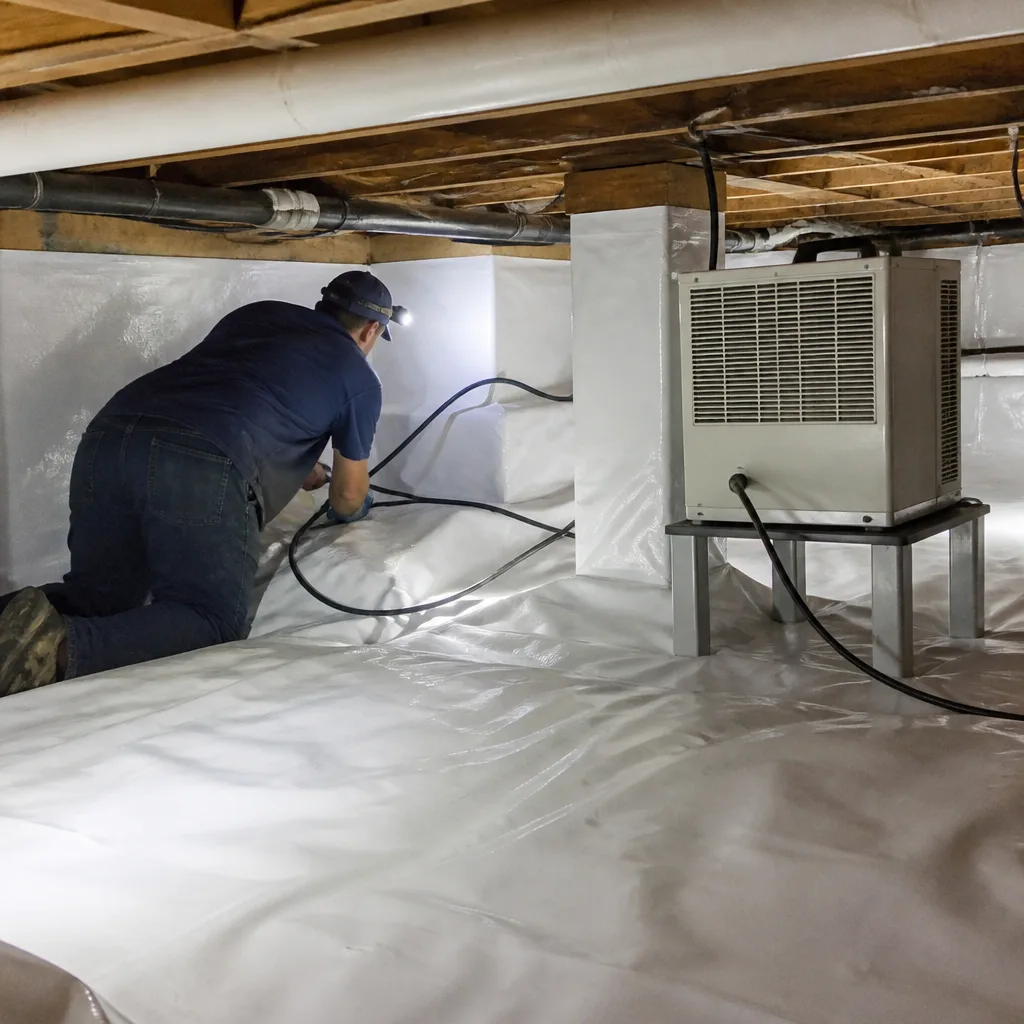
- Whether a dehumidifier is needed. In parts of Converse that see consistent relative humidity above 60% in the crawl space even after encapsulation, a permanently mounted crawl space dehumidifier adds $800 to $1,800 in equipment cost plus electrical rough-in. This isn’t always necessary, but in a sealed crawl space, you can’t rely on passive ventilation anymore, and ignoring humidity in a sealed space creates exactly the mold problem you were trying to prevent.
- Access conditions and obstructions. Crawl spaces with multiple HVAC units, ductwork hanging low, plumbing runs through the center of the space, or access hatches that require a 90-degree turn to enter all add labor time. We measure access and obstructions during the assessment so the written price reflects the actual job, not an idealized version of it.
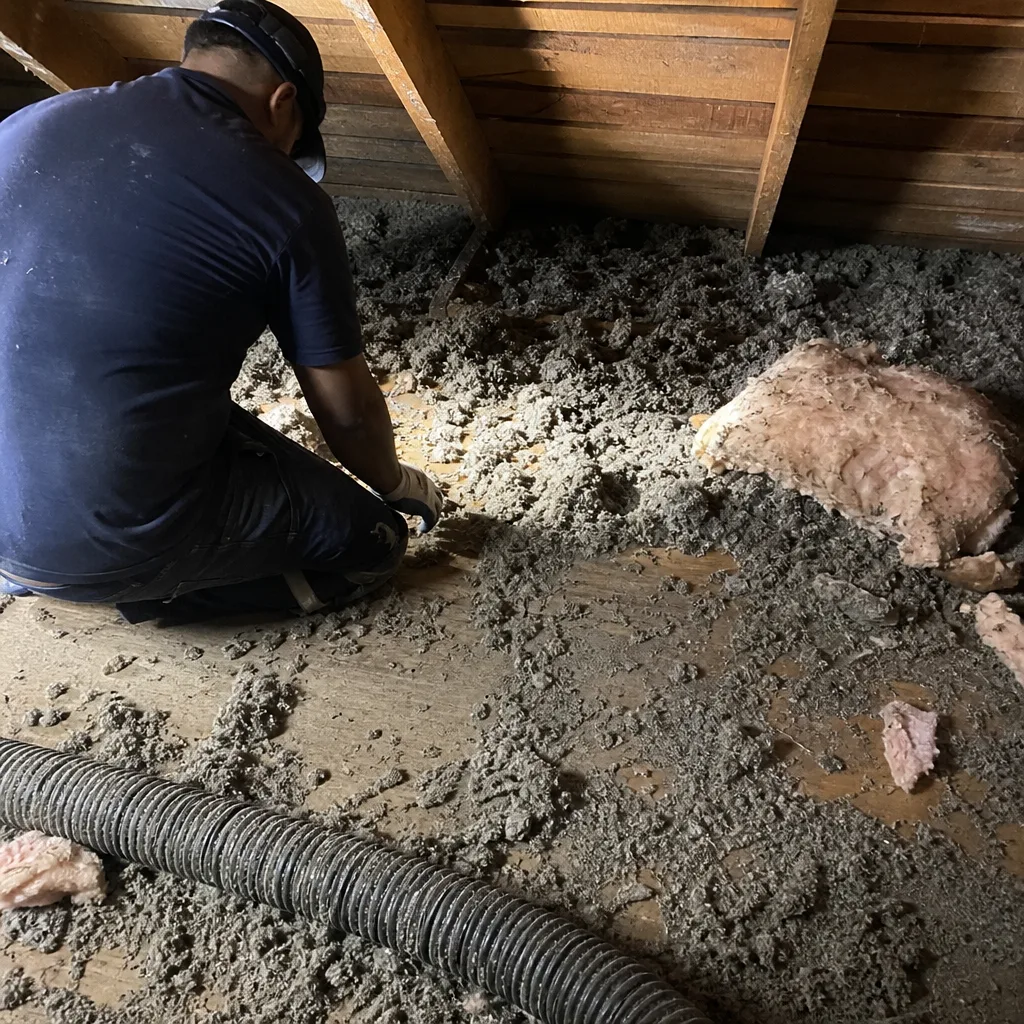 Before
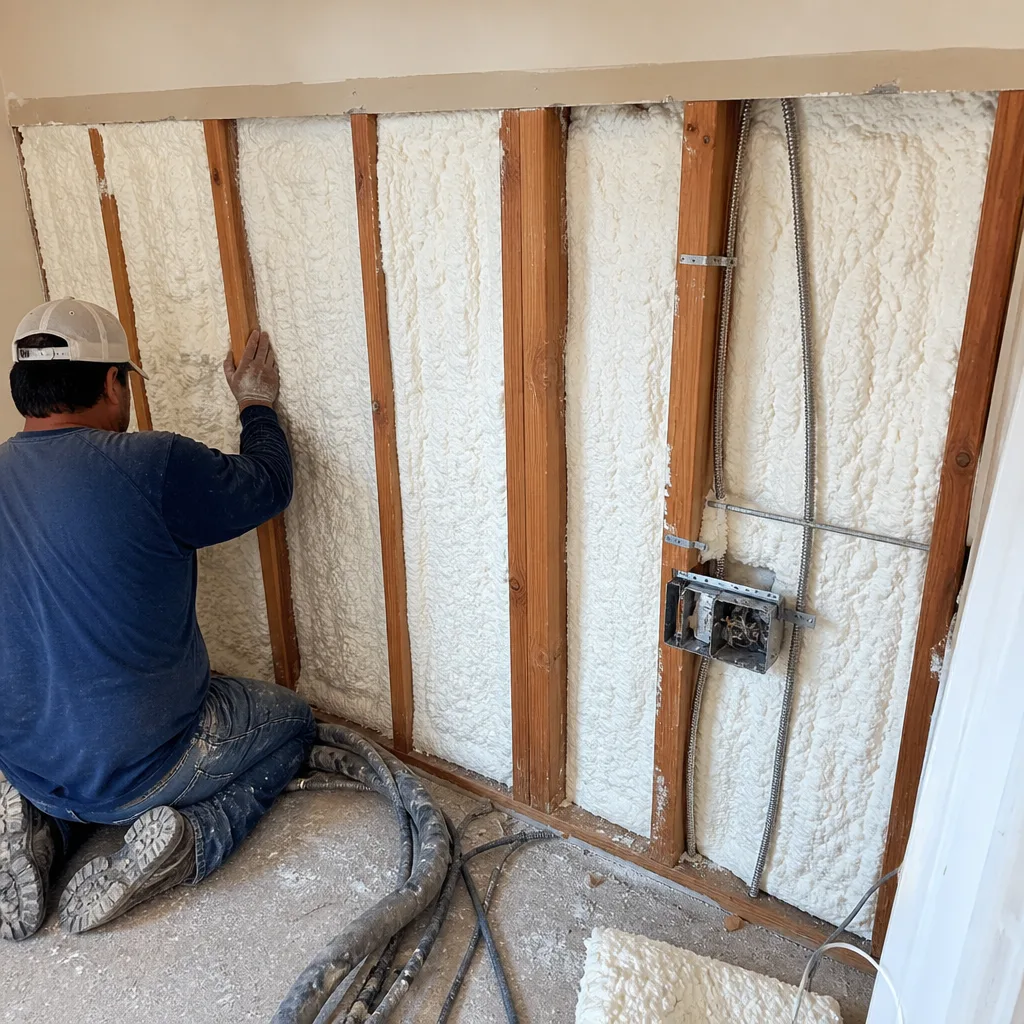 After
AfterWhy Converse Homes Specifically Need This Work
Converse sits in a band of north Bexar County where summer humidity is compounded by afternoon thunderstorms from June through September. Ground moisture evaporates upward through unprotected crawl spaces, and that water vapor migrates into subfloor assemblies, floor joists, and eventually into the living space. The practical result is higher indoor humidity, musty odors that no amount of air freshener addresses, and subfloor framing that softens over time.
Homes built in Converse between 1975 and 1995 – the bulk of the existing housing stock in neighborhoods like Windmill Farms, Singing Hills, and Heritage – were permitted under older ventilation standards that assumed passive cross-ventilation would handle ground moisture. That strategy works reasonably well in drier climates. In this part of Bexar County, it doesn’t. The result is that many of those homes have subfloor moisture readings we’d consider problematic on the first day we inspect them.
Newer construction in Converse – developments like The Crossvine-adjacent properties and parcels closer to Loop 1604 – often uses a code-minimum 6-mil vapor barrier installed by a framing crew, not an encapsulation specialist. The seams aren’t taped, the barriers stop before the foundation walls, and penetrations around pipes are left open. That’s not encapsulation. It’s a ground cover. The distinction matters because a true encapsulation turns the crawl space into a dry, controlled environment; a ground cover just slows the problem down.
For a full picture of what the service includes and how we assess each crawl space, see our Crawl Space Encapsulation & Vapor Barrier in Converse service page. And if you want to understand how crawl space work fits into a broader home energy strategy, start on our home page where we outline all of our building-envelope services.
How to Save on Crawl Space Encapsulation & Vapor Barrier in Converse
Get competing written quotes, then use them. Crawl space encapsulation is a category where pricing varies enough that a second opinion pays for itself. Our Free Second Opinion on any written estimate isn’t a sales tactic – it’s a line-item review where we read the scope with you, flag what’s included, flag what’s missing, and give you a written price on the spot. Wes Okafor built that offer into the Haven Standard because vague estimates with undocumented scope are how homeowners end up paying for unexpected add-ons at the end of a job.
Don’t over-spec the barrier if your conditions don’t require it. A 20-mil reinforced barrier is the right choice for a crawl space with a history of active water intrusion. It’s not necessary for a dry, stable crawl under a 1990s Converse ranch with no moisture history. A good contractor should match spec to conditions, not upsell you on the heaviest product in every case. If the quote you received is for a dehumidifier-plus-premium-barrier combo but your crawl space moisture readings were never shared with you, ask for those readings before signing.
Address the cause, not just the symptom. In Converse, we periodically see homes where a crawl space moisture problem is primarily driven by grading that sends runoff toward the foundation, not from ground evaporation. If that’s the case, encapsulation without grading correction will reduce the problem but won’t eliminate it. A good assessment should include a look at the foundation perimeter before any scope is written.
Bundle with adjacent work when the timing makes sense. If your Crawl Space Insulation is also degraded – and in Converse homes from the mid-1980s, it often is – doing encapsulation and insulation in the same mobilization saves on labor cost versus two separate visits. We don’t blow insulation over an unencapsulated or moisture-compromised crawl; air sealing and moisture control come first, in that order. But when the sequence is right, bundling saves real money.
Prioritize the free estimate before the season changes. We see encapsulation demand rise in Converse from April through June as homeowners start smelling musty air when they run their AC for the first time. Getting your assessment done before that rush – and before conditions have worsened through another wet spring – typically means faster scheduling and no emergency upcharges. Call (830) 420-0953 to get a written price, and that price doesn’t move when the crew arrives.
What the Job Looks Like From Start to Finish
Before any material goes into your crawl space, we send a technician – named, background-checked, uniformed – to assess the space and document what’s there. That means photos of the access point, the ground condition, any existing vapor barrier, subfloor framing, penetrations around plumbing and HVAC, and a moisture reading at the joists. Those photos are yours. They’re part of the Documented Photo Record included on every Envelope Insulation Co. visit.
After the assessment, you get a written scope and a flat price. If mold remediation is needed before encapsulation, that’s a separate line item in the same document – not a discovery we make on day one of installation and tell you about at a markup. Under Haven Standard Clause 1, no work starts without that written price in your hand.
Installation sequence for a full encapsulation: any old barrier or debris is removed first; the ground surface is checked for low spots or standing water evidence; drainage matting goes down where grading creates low points; the heavy-duty vapor barrier is rolled out, overlapped at seams, and sealed with manufacturer-specified tape; the barrier runs up the foundation walls and is mechanically fastened at the top; all penetrations – pipes, posts, supports – are cut around and sealed; and rim joists are sealed with spray foam or rigid board depending on the thermal spec for the job. We don’t move to the next step until the previous one passes inspection.
When the crew leaves, you get a Documented Photo Record of the completed installation. The 365-Day Done Right Promise is in writing before work starts, so if anything about the installation needs to be addressed in the following year, it gets addressed.
FAQs – Crawl Space Encapsulation & Vapor Barrier Cost in Converse
How much does crawl space encapsulation cost in Converse, TX?
Most full encapsulation jobs in Converse run between $4,500 and $6,500 for a home in the 1,400 to 2,200 sq ft range – that’s ground cover, wall liner, taped seams, and rim joist sealing included. Smaller homes or jobs scoped to Crawl Space Vapor Barrier only (no wall liner) can come in at $1,200 to $2,800. Homes with low clearance, moisture damage, or mold will fall toward the higher end or require separate remediation work before encapsulation begins. Call (830) 420-0953 and we’ll get a technician out to give you a written price specific to your crawl space.
Is a vapor barrier alone enough, or do I need full encapsulation?
A vapor barrier alone – meaning a ground cover without wall liner or sealed penetrations – is enough for crawl spaces that are dry, well-ventilated, and show no moisture history in the subfloor framing. For most Converse homes built before 2000, that description doesn’t hold. If your relative humidity in the crawl reads above 55%, if your joists show any staining or softness, or if your AC runs with a persistent musty smell, full encapsulation is the right spec. A vapor barrier-only approach in a high-humidity Converse crawl typically buys you two or three years before the problem returns in force.
How long does crawl space encapsulation last in the Converse climate?
A properly installed heavy-duty barrier – 12-mil or heavier, mechanically fastened, seams taped – should hold up for 20 years or more under normal conditions. The 6-mil poly installed by framing crews on many Converse new builds starts degrading in 5 to 7 years, especially in areas with foot traffic from service calls. The product and installation quality determine longevity more than any other factor. We document what we install so you have a record of the barrier spec if you ever need to revisit the assessment.
Can I install a vapor barrier myself and skip the professional encapsulation?
You can lay a ground cover yourself, and for a dry, simple crawl space with no moisture history, that may be adequate. Full encapsulation – wall liner, rim joist sealing, taped seams, penetration sealing – requires working in confined spaces, making correct product overlaps, and sealing around structural elements and HVAC components. Errors in seaming or penetration sealing create moisture traps that are often worse than no barrier at all because they concentrate the problem in one area. If you’re considering DIY, at minimum get a professional assessment first so you know what you’re working with. That assessment from us includes a written scope you can compare against your own plan.
Does crawl space encapsulation in Converse require a permit?
Vapor barrier installation and crawl space encapsulation typically do not require a building permit in the Converse area under current Bexar County and City of Converse requirements – they’re classified as maintenance work on existing structures. If the scope includes electrical work for a dehumidifier, that installation requires a permit and a licensed electrician. We confirm permit requirements as part of scoping every job and won’t start work that requires a permit without it being pulled first.
What’s the difference between encapsulation and a vapor barrier – and does it affect the price?
A vapor barrier is a single component – typically a poly sheet on the ground. Encapsulation is a system: ground cover, foundation wall liner, mechanical fastening at the top of the wall, taped seams, and sealed penetrations at every pipe, post, and HVAC entry point. Encapsulation costs 2 to 3 times more than a ground-cover-only install because it turns the crawl space into a conditioned, controlled environment rather than just slowing ground moisture. In Converse’s humidity range, that distinction directly affects whether the solution holds for 2 years or 20.
Key Takeaways
- Full crawl space encapsulation in Converse typically costs $4,500 to $6,500 for a standard single-family home; vapor barrier only runs $1,200 to $2,800.
- Clearance height, soil moisture, existing mold, and barrier thickness are the four variables that most affect your final price in this market.
- Converse’s clay-heavy soils and high summer humidity make a ground-cover-only approach inadequate for most homes built before 2000.
- Under Haven Standard Clause 1, every Envelope Insulation Co. job starts with a written price and a documented scope – no work starts before you have both in writing.
- A Documented Photo Record is included on every visit. The 365-Day Done Right Promise is in writing before the crew starts.
- Wes Okafor’s team offers a Free Second Opinion on any written estimate – bring a competing quote and we’ll review it with you, line by line.
- Since 2016, Envelope Insulation Co. has completed work on more than 9,000 homes, every one with a written price before work started and a documented record when the crew left.
If you’re trying to figure out whether your Converse crawl space needs a vapor barrier, full encapsulation, or something in between, the clearest first step is an assessment with a written price at the end. Call (830) 420-0953 and a live person will answer – no voicemail, no callback window. Wes Okafor and the team at Envelope Insulation Co. have been documenting crawl space conditions in Converse since 2016, and we’ll give you a flat written price before anyone touches anything under your home.
Written by Wes Okafor, Owner at Envelope Insulation Co. (operating as Topside Attic Insulation Converse), serving Converse, TX since 2016.
Pricing reflects the Converse market as of 2026. Topside Attic Insulation Converse offers free estimates – call (830) 420-0953.
What Our Customers Say
"The winter gas bill dropped by about a third. They had estimated a quarter, so they under-promised."
- Genevieve R."They photographed rodent damage in the old insulation that we had no idea about, and priced the exclusion work separately so we could decide."
- Harriet N."Turned up on time, protected the hallway, and the written scope matched what was actually done."
- Bruno S.