
Crawl Space Vapor Barrier in Converse, TX
A crawl space vapor barrier is a polyethylene sheet – typically 6 to 20 mil thick – installed across the soil floor and up the foundation walls of your crawl space to block ground moisture before it migrates into your living area. Most Converse homes need one because the clay-heavy soil along Salado Creek and throughout Bexar County holds water long after a rain event, and an open dirt floor will push that moisture upward steadily. At Topside Attic Insulation Converse, our Crawl Space Encapsulation & Vapor Barrier services are treated as precision installations, not roll-and-staple jobs – and every visit closes with a Documented Photo Record so you can see exactly what was installed and where.
This page covers what a vapor barrier does, how to tell when your crawl space needs one, what our installation process looks like step by step, and what the job costs in the Converse market. If you want the full picture on crawl space moisture control – including encapsulation, drainage, and conditioning – our Crawl Space Encapsulation & Vapor Barrier in Converse page covers the complete scope. If you are ready to schedule an assessment, call us at (830) 420-0953. A live person picks up every time.
Why Ground Moisture Is a Specific Problem in Converse
Converse sits on expansive clay soils that shrink and crack in summer and swell when the San Antonio area gets its seasonal heavy rains. That soil movement keeps crawl space floor surfaces perpetually unsettled, which means any vapor barrier that was stapled loosely or lapped without a sealed seam will shift, separate, and leave gaps within a few seasons. We see this regularly in neighborhoods like Candlewood, Converse Crossing, and Forest Oaks – homes built in the late 1990s through mid-2000s where the original barrier, if one was installed at all, is now torn, bunched, or covered in standing condensation.
The other factor is temperature differential. Converse summers regularly push air temperatures past 100°F above the foundation while the soil a few inches down stays cooler. That difference drives moisture-laden air directly into the wood framing above an unprotected crawl space. Wood rot, elevated interior humidity, HVAC systems working harder than they should, and musty odors in ground-floor rooms are all downstream effects of the same root condition: uncontrolled ground moisture. A properly installed vapor barrier – sealed at seams, overlapping at penetrations, and anchored to the foundation wall – interrupts that cycle at the source.
When You Need a Crawl Space Vapor Barrier
- Standing water or damp soil after rain. If you can see moisture on the crawl space floor 24-48 hours after a storm, the ground is holding water at a level that will continuously evaporate into your sub-floor assembly. This is common near the low-lying sections of Converse east of I-10 where drainage slopes toward residential lots.
- Musty or earthy smell inside the home. That odor is almost always airborne mold spores or soil gases migrating through an unprotected floor system. If it is stronger in the morning before the HVAC cycles on, the source is almost certainly below the floor, not in the walls or attic.
- Wood floor or subfloor buckling. Hardwood and engineered wood floors that cup, crown, or develop gaps between boards are absorbing moisture vapor from below. By the time you see movement at the floor surface, the subfloor assembly has likely been elevated above 19% moisture content – the threshold at which mold growth becomes likely – for some time.
- Higher-than-expected energy bills. An unconditioned crawl space with no vapor barrier allows humid outside air to contact cooled ductwork and floor joists. That latent load – the energy your HVAC system burns just to pull moisture out of the air – adds up. Converse homeowners with unprotected crawl spaces often see a measurable drop in cooling costs after a proper barrier installation.
- Visible mold or efflorescence on the foundation walls. White mineral deposits (efflorescence) on concrete block or poured walls are a sign that water is moving through the foundation material. Active mold growth in the crawl space requires immediate remediation before any barrier work begins.
- The existing barrier is torn, displaced, or less than 6 mil thick. A 4-mil sheet stapled to the floor joists and left floating on soil is not a vapor barrier in any functional sense. We find this condition frequently in Converse homes built before 2000, where the original builder installed minimum-code plastic that has since degraded.
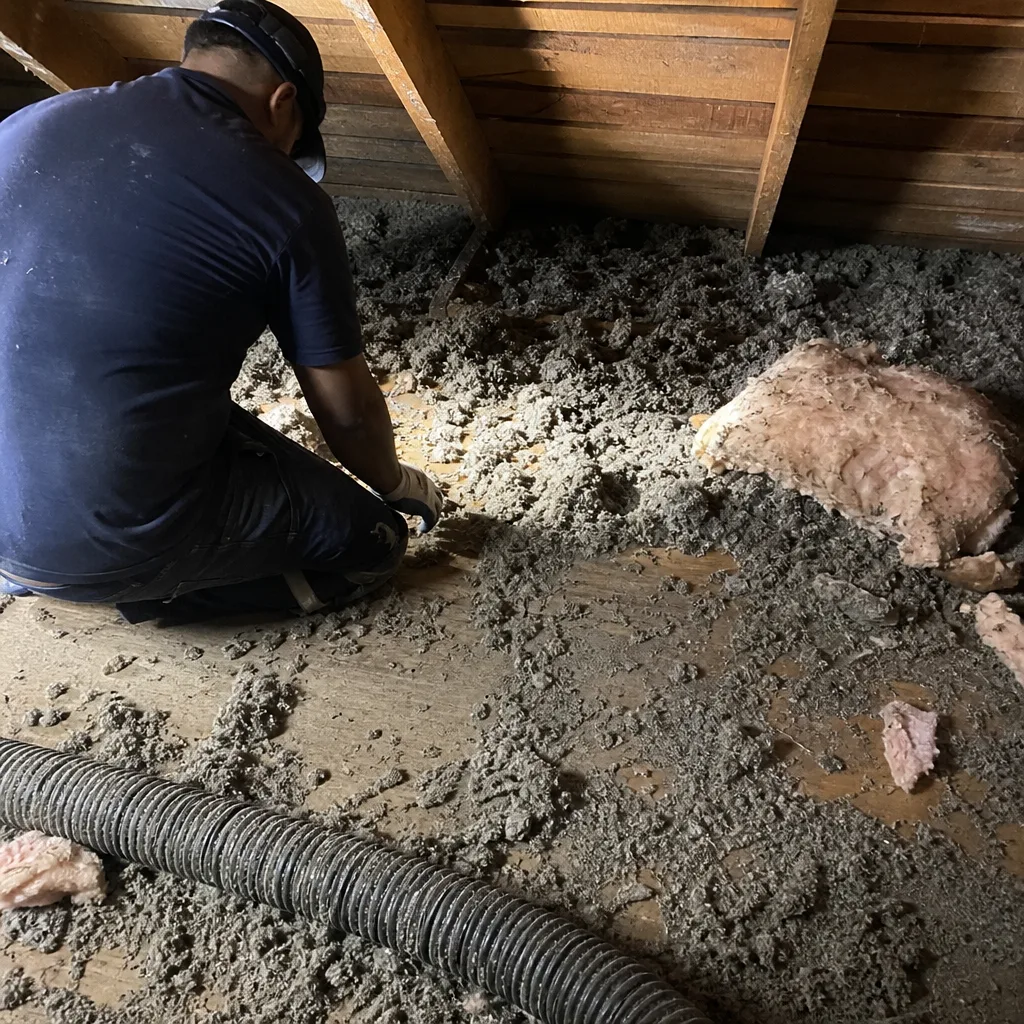 Before
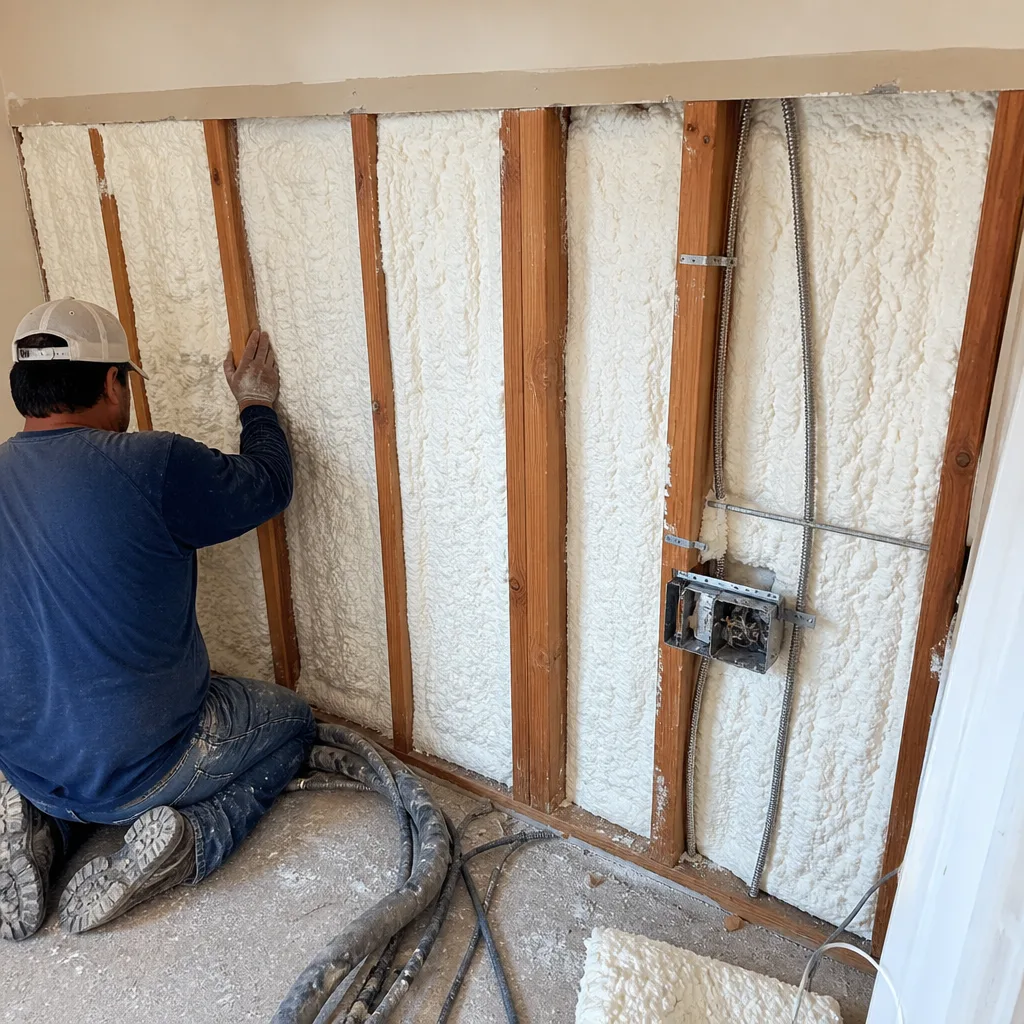 After
AfterOur Crawl Space Vapor Barrier Process
Under Topside Attic Insulation Converse, every vapor barrier installation follows a fixed sequence. We do not skip steps to reduce labor time, and the written scope you receive before work starts describes each step so you know what you paid for when we leave.
- Written assessment and documented baseline. Before we quote anything, a uniformed, background-checked technician photographs the entire crawl space – floor, walls, joists, existing vapor retarder if present, and any moisture intrusion points. You receive those baseline photos before we discuss price. The assessment identifies the square footage, the current moisture levels at the soil surface (measured with a pin-type meter), and any pre-existing damage – mold, rot, pest activity – that needs to be addressed before a barrier goes in. Under Haven Standard Clause 1, no work starts without a written price and scope you have reviewed and signed.
- Debris removal and surface preparation. Old plastic sheeting, scrap lumber, insulation fragments, and standing debris are removed from the crawl space floor. Any soil grading that would create a low point where water can pool beneath the barrier is corrected. This step matters because a barrier installed over debris or uneven soil will develop pressure points that tear over time.
- Penetration sealing before the barrier goes down. Pipe penetrations through the foundation wall and floor joists, wire chases, and HVAC trunk lines that pass through the crawl space floor are sealed with compatible mastic or closed-cell foam before the barrier is installed. Sealing these openings first – rather than cutting around them after the fact – is the same logic behind our attic air sealing protocol: you address the gaps before you cover them, not after.
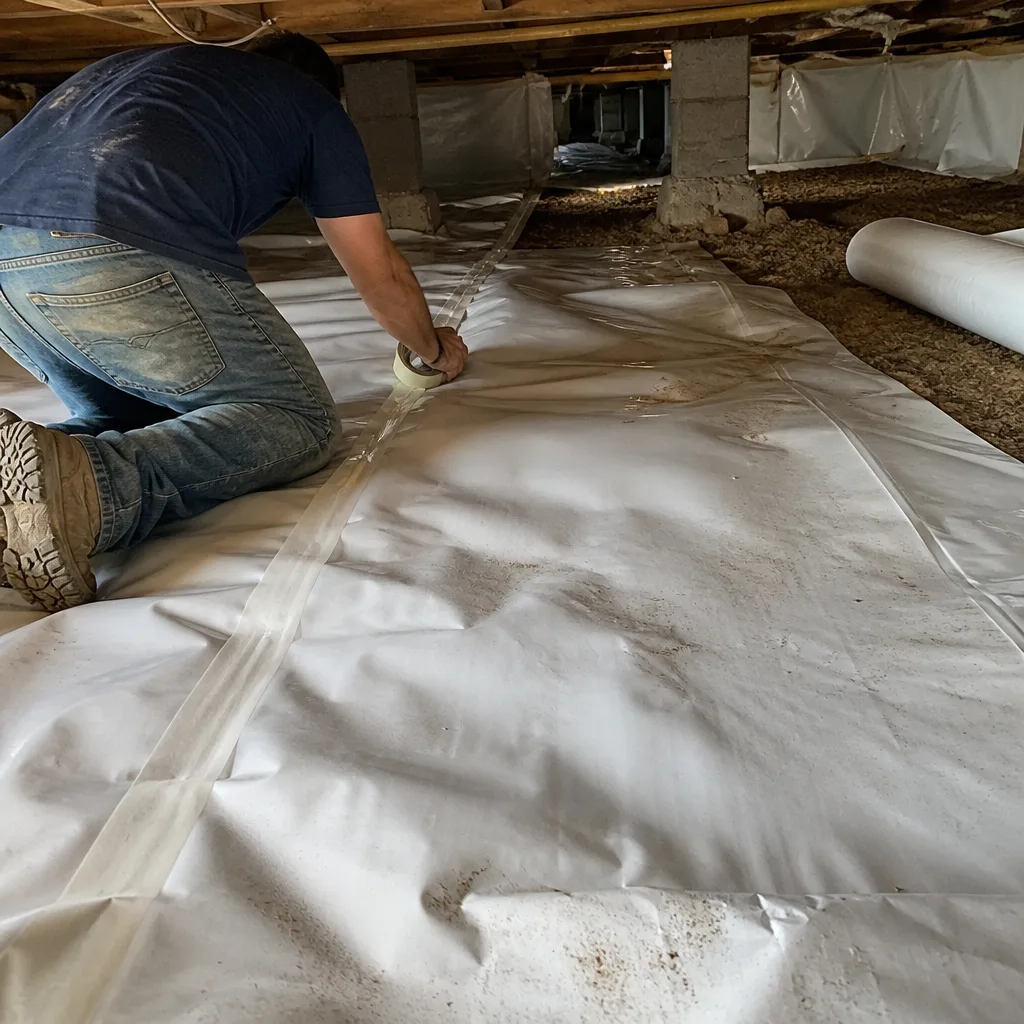
- Barrier installation – floor and wall overlap. We install a minimum 12-mil polyethylene barrier across the entire soil floor, running the material 6 to 12 inches up the foundation wall and securing it with masonry fasteners and termination bar. Seams are overlapped a minimum of 12 inches and sealed with manufacturer-specified tape – not stapled or left to gravity. For Converse homes with block foundations that have visible cracks or seasonal movement, we spec a 16-mil or 20-mil reinforced liner rather than standard 12-mil.
- Vent and access point detailing. Foundation vent covers and the crawl space access hatch perimeter are sealed or fitted with insulated covers as part of the scope. An open vent in a vapor-controlled crawl space defeats the installation – humid outside air enters and condenses on the cool barrier surface.
- Final documentation and walk-through. After installation, the technician photographs every seam, every wall termination, and every penetration detail. Those photos, along with the written scope and the 365-Day Done Right Promise documentation, are delivered to you before the crew leaves the property. If anything in those photos does not match the written scope, that discrepancy is resolved before the job closes.
Crawl Space Vapor Barrier Pricing in Converse
Most crawl space vapor barrier installations in Converse run between $1,200 and $3,800 for a standard single-family home. For a detailed breakdown, see our guide on How Much Does Crawl Space Encapsulation & Vapor Barrier Cost? (2026 Price Guide) - Converse, TX. The range is wide because crawl space conditions vary more than almost any other part of a home. Here is how that breaks down:
| Scope | Typical Range (Converse market) |
|---|---|
| Basic 6-mil barrier, floor only, under 800 sq ft | $1,200 – $1,600 |
| 12-mil barrier, floor and partial wall termination, 800-1,400 sq ft | $1,600 – $2,400 |
| 16-20 mil reinforced liner, full wall termination, seam-taped, 1,400-2,200 sq ft | $2,400 – $3,800 |
| Add-on: debris removal and surface prep (heavy accumulation) | $200 – $500 |
| Add-on: foundation vent covers (per vent) | $35 – $75 |
What moves the number up: a low-clearance crawl space (under 18 inches) that requires slower hand-over-hand work; significant debris removal or mold remediation that must be completed before any barrier goes in; block foundations with crack repairs needed at the termination line; and partial-encapsulation upgrades that add conditioning or drainage components.
What keeps the number down: a clean, dry crawl space with good access height, no existing vapor barrier to remove, and a straightforward rectangular footprint. A 900-square-foot crawl space in a newer Converse Crossing home with no active moisture issues often comes in under $1,800 for a properly installed 12-mil system.
We do not give estimates verbally. Every price is written, scoped, and signed before a crew is scheduled – Haven Standard Clause 1, without exception. If you have a competing written estimate, bring it. We offer a Free Second Opinion on any written quote: we will read it line by line with you and tell you what it includes, what it omits, and what the installed result will likely look like.
Call (830) 420-0953 for your written assessment. No voicemail, no callback window – a live person answers every call.
FAQs – Crawl Space Vapor Barrier in Converse
What thickness of vapor barrier do I actually need in Converse?
For most Converse homes, a 12-mil polyethylene liner is the practical minimum for a durable installation. The 6-mil material you find at hardware stores meets older building codes on paper but tears easily during routine crawl space access and degrades faster on the clay-heavy, occasionally damp soils common in this part of Bexar County. Homes with block foundations, a history of water intrusion, or crawl spaces used for any storage or mechanical access benefit from a 16-mil or 20-mil reinforced liner – the added cost is usually $200 to $400 for the full floor area, and the liner will outlast the thinner material by a decade or more. We specify the right mil rating in writing before the job starts, not as a job-site upgrade.
Is a vapor barrier the same thing as full crawl space encapsulation?
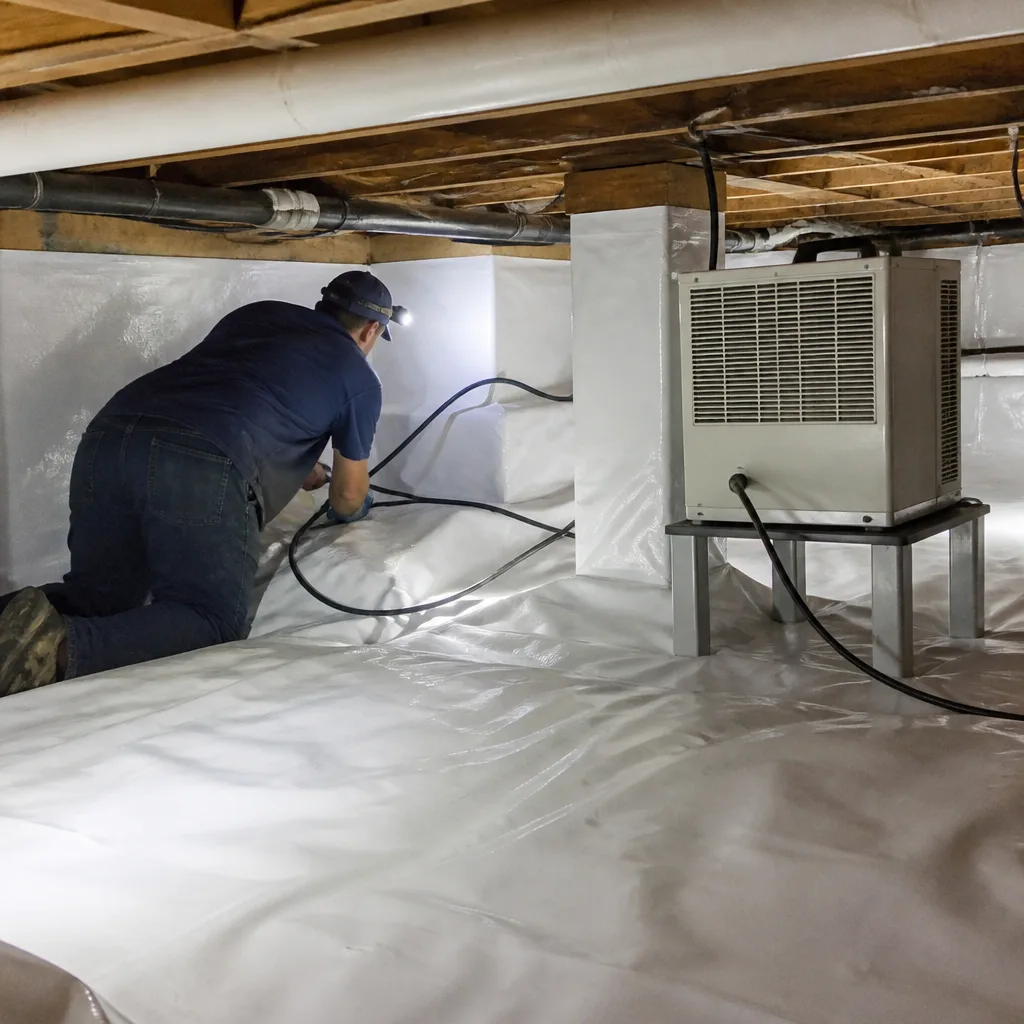
A vapor barrier is one component of full crawl space encapsulation, but they are not the same scope. A vapor barrier addresses the soil floor and, in a proper installation, runs up the foundation walls to block ground moisture. Full encapsulation also seals the foundation vents, insulates the walls, and often includes a conditioned air supply or dehumidifier to control relative humidity inside the closed crawl space. Our Crawl Space Encapsulation & Vapor Barrier in Converse page explains when a barrier alone is sufficient and when the full encapsulation scope is the better long-term answer. In general, if your crawl space shows active moisture or mold history, encapsulation is worth the additional investment. If the space is dry and well-drained and you are primarily looking to reduce vapor migration, a properly installed barrier handles the job.
How long does a crawl space vapor barrier installation take?
Most single-family crawl space vapor barrier installations in Converse take four to eight hours in a single visit. A 1,000-square-foot crawl space with reasonable access height, no debris removal, and a standard rectangular footprint is typically complete in a half day. Add a few hours if the space is heavily littered, has complex geometry around HVAC equipment or plumbing stacks, or requires significant seam work along a stepped foundation wall. We tell you the estimated duration in the written scope – not a vague “one day” estimate. The Documented Photo Record closes the job before the crew leaves, so there is no return visit needed for documentation.
Will a vapor barrier fix the musty smell in my Converse home?
A vapor barrier eliminates the moisture source that feeds the mold and microbial growth causing the odor, but it does not neutralize mold that is already established on wood framing or soil surfaces. If active mold is present in the crawl space, it needs to be remediated – properly cleaned and treated – before a barrier goes in; otherwise you are sealing the mold inside a low-circulation environment, which accelerates its spread rather than stopping it. Our assessment documents what is present before we price anything. If remediation is needed first, we tell you that in writing and scope it separately. Once the mold is addressed and the barrier is installed and sealed, most homeowners notice a measurable improvement in interior odor within two to four weeks as the residual moisture in the framing dries out.
What the Job Looks Like When We Leave
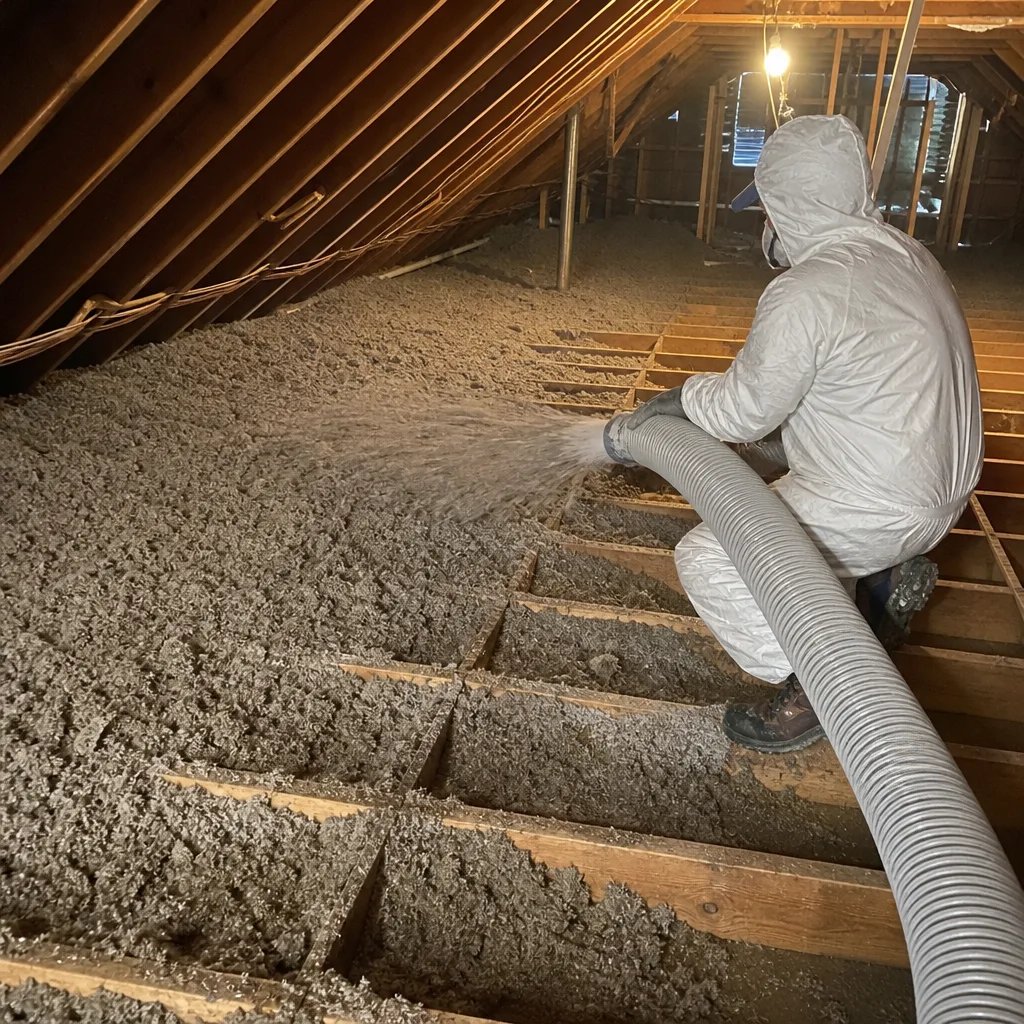
This is the part most contractors skip explaining. When a Topside Attic Insulation Converse technician closes out a vapor barrier job, you receive a complete Documented Photo Record – every seam, every wall termination, every penetration detail – alongside the written scope that describes what was installed, the mil rating and brand of the liner used, and the 365-Day Done Right Promise in writing. If it is not right, we come back and make it right. That promise is not conditional on who was on the crew or how busy the schedule is.
We source liner materials from manufacturers like Johns Manville and Owens Corning, and we specify the product used in your written scope so you are not left guessing what is under your crawl space floor. There is no proprietary product requirement and no pressure to upgrade to a product tier we happen to carry more of.
Since 2016, Wes Okafor and the team at Topside Attic Insulation Converse have completed Crawl Space Insulation, vapor barrier and encapsulation work across more than 9,000 homes in the San Antonio metro. Every one of those jobs started with a written price and closed with a documented record. That process does not change based on job size or neighborhood.
If you are in Converse and your crawl space has visible moisture, a failing old barrier, or you simply do not know what is under your floor, call (830) 420-0953 to schedule a written assessment. A live person answers every call, around the clock. Your assessment includes baseline photos and a written price before any work is scheduled – no obligation, no estimate given on the phone without a site visit.
Written by Wes Okafor, Owner at Topside Attic Insulation Converse, serving Converse.